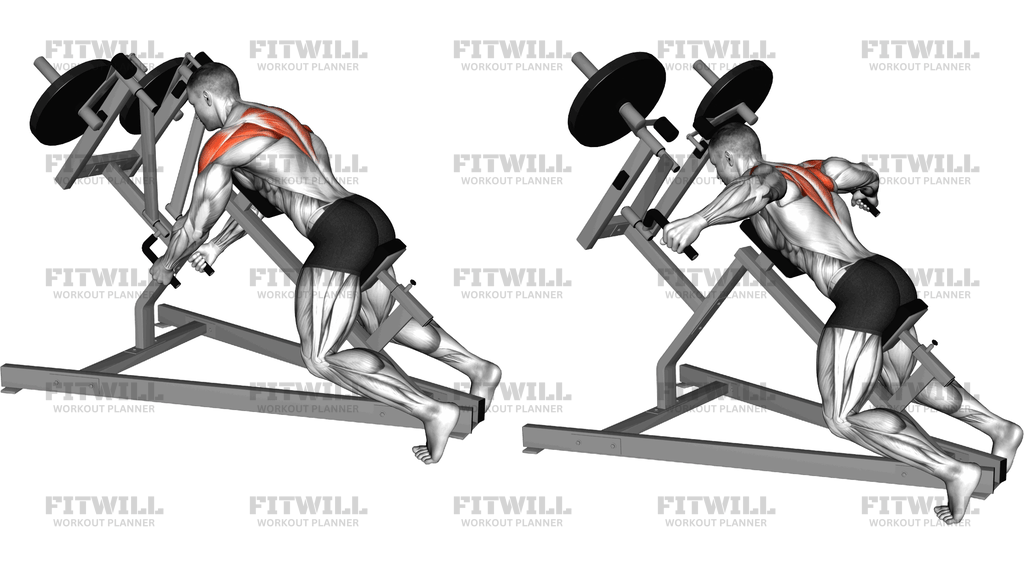
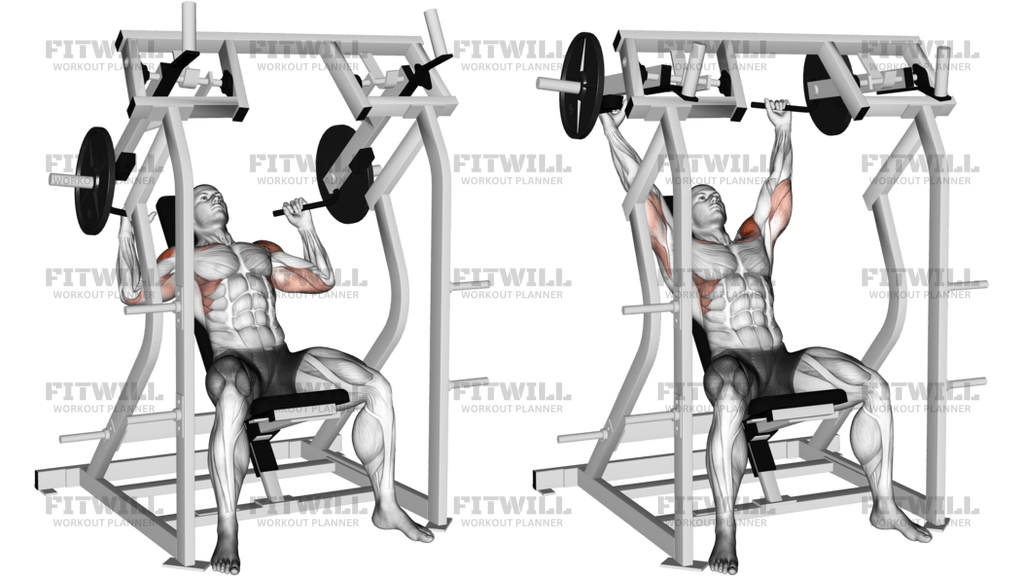
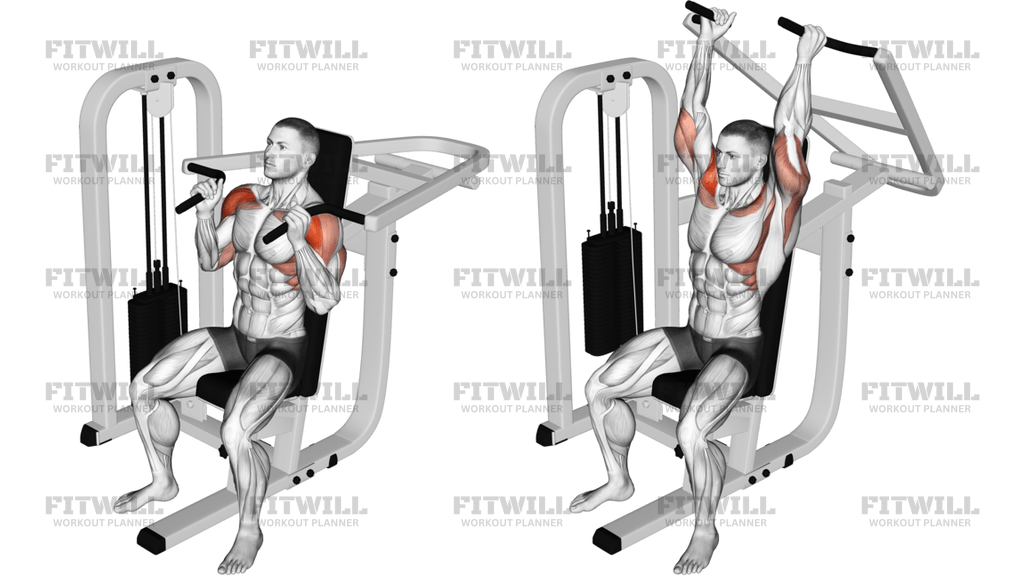
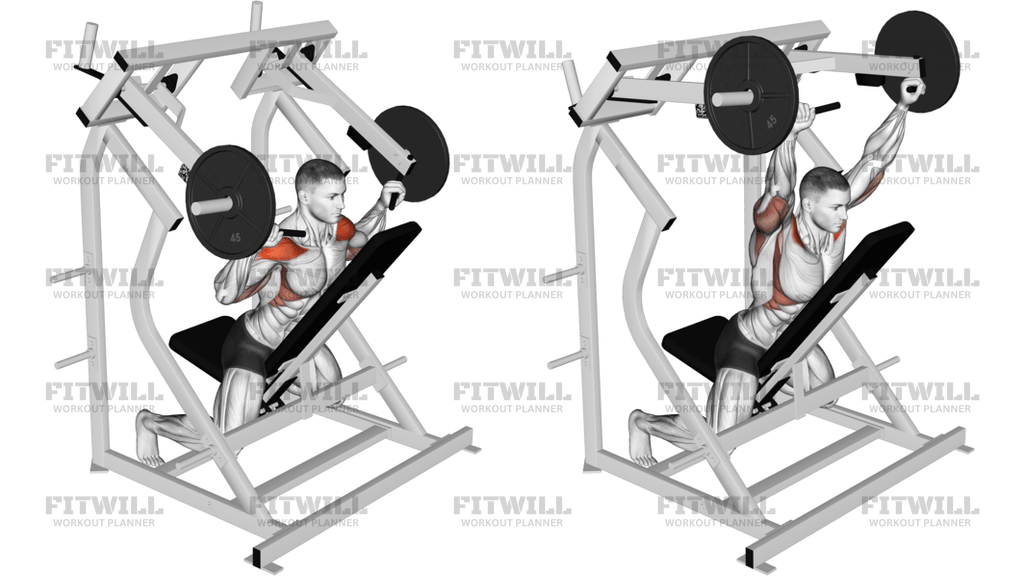
Lever One-Arm Shoulder Press Plate Loaded
Lever One-Arm Shoulder Press Plate Loaded is a standing, unilateral machine press that trains the deltoids through a guided arc. Because the leverage arm fixes the path, it is useful for building shoulder strength without asking you to stabilize a free weight overhead. The one-arm setup also exposes side-to-side differences, so you can work each shoulder on its own and keep the torso from drifting or twisting.
The setup matters more than with a two-arm press. Stand close enough to the pad or frame that the pressing shoulder can stay stacked over the working foot, set the handle so the first rep begins around shoulder height, and keep the wrist straight under the elbow. A small split stance or staggered stance usually feels steadier than standing square, and the nonworking hand should stay quiet on the frame or at your side.
Press the lever along the machine's natural up-and-forward path until the arm is almost straight, but do not chase lockout by shrugging the shoulder toward the ear. Lower the handle slowly until the elbow returns near shoulder level and the front of the shoulder stays packed. The best reps feel smooth, repeatable, and centered through the shoulder rather than driven by body sway or a hard lean.
This movement is a good accessory press for shoulder-focused sessions, upper-body splits, or unilateral strength work when you want guided resistance and clean technique. It is usually easier on coordination than a free-bar overhead press, but load still needs to stay honest: if the ribs flare, the torso rotates, or the shoulder pinches at the bottom, the range or resistance is too aggressive for that set.
Use each side with the same setup and the same tempo so the weaker shoulder cannot hide behind momentum. Exhale as you press and inhale on the lowering phase. If the machine feels cramped, adjust your foot position or the start height before increasing load. The goal is a smooth line of force through the shoulder, not a bigger range at the cost of rotation, shrugging, or wrist strain.
Fitwill
Log Workouts, Track Progress & Build Strength.
Achieve more with Fitwill: explore over 9600 exercises with images and videos, access built-in and custom workouts, perfect for both gym and home sessions, and see real results.
Start your journey. Download today!




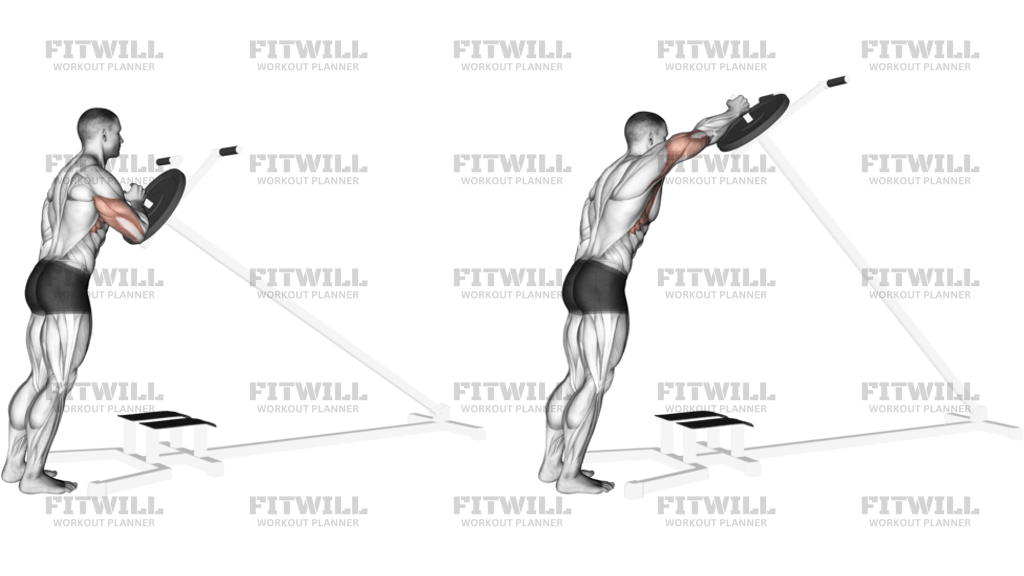
Instructions
- Stand facing the machine with the working side lined up to the lever, feet about hip-width or in a small split stance, and your chest lightly close to the pad or frame.
- Grip the handle with the wrist stacked over the elbow and the elbow slightly in front of the shoulder line so the first rep starts at shoulder height.
- Keep the nonworking hand on the frame or still at your side so your torso does not rotate as the lever moves.
- Brace your ribs down, keep the glutes active, and take the slack out of the handle before the first press.
- Drive the elbow up and forward along the machine's arc until the arm is nearly straight.
- Keep the shoulder down as the handle rises and stop before you have to shrug or lean back.
- Lower the lever under control until the hand returns to the start and the elbow is again near shoulder height.
- Breathe out as you press, breathe in as you lower, then switch sides after the planned reps are complete.
Tips & Tricks
- Set the handle so the first rep begins around shoulder height, not down by the rib cage.
- A small staggered stance usually reduces torso twist on the pressing side.
- Keep the wrist stacked over the elbow; a bent wrist turns the press into a wrist fight.
- If the machine has a chest pad, stay lightly connected to it instead of hovering away from the frame.
- Think about moving the elbow, not punching the handle with the hand.
- Stop the set when the shoulder starts to shrug forward or the low back arches.
- Use less load than you would on a two-arm machine press because one side has to stabilize more.
- If the bottom position pinches, shorten the range and keep the lowering phase slow.
Frequently Asked Questions
What muscles does Lever One-Arm Shoulder Press Plate Loaded target most?
The deltoids do most of the work, with the triceps and upper traps helping stabilize and finish the press.
Is this better than a two-arm machine shoulder press?
It is better when you want to train one shoulder at a time, clean up side-to-side imbalances, or keep the stronger side from taking over.
Where should the handle start before the first rep?
Set it so the working elbow begins around shoulder height and slightly in front of the torso, not dropped low under the chest.
Should I press straight up or follow the machine path?
Follow the machine's up-and-forward arc. Forcing a vertical path usually makes the shoulder shrug or the torso lean back.
Why do I feel my torso twisting during this press?
The load is probably too heavy, your stance is too narrow, or the free hand is not staying quiet. Reset with a wider base and a lighter plate.
How low should I lower the lever?
Lower only until the shoulder stays packed and the front of the shoulder feels smooth. If the bottom pinches, shorten the range.
Can beginners use this exercise?
Yes. The guided path makes it beginner-friendly, but the first priority is learning to keep the wrist stacked, the torso square, and the shoulder from shrugging.
How can I make the set more comfortable on my shoulder?
Use a lighter plate, keep a slight staggered stance, and choose the grip angle that lets the wrist stay neutral instead of bent back.