Lever Reverse Hyperextension Plate Loaded
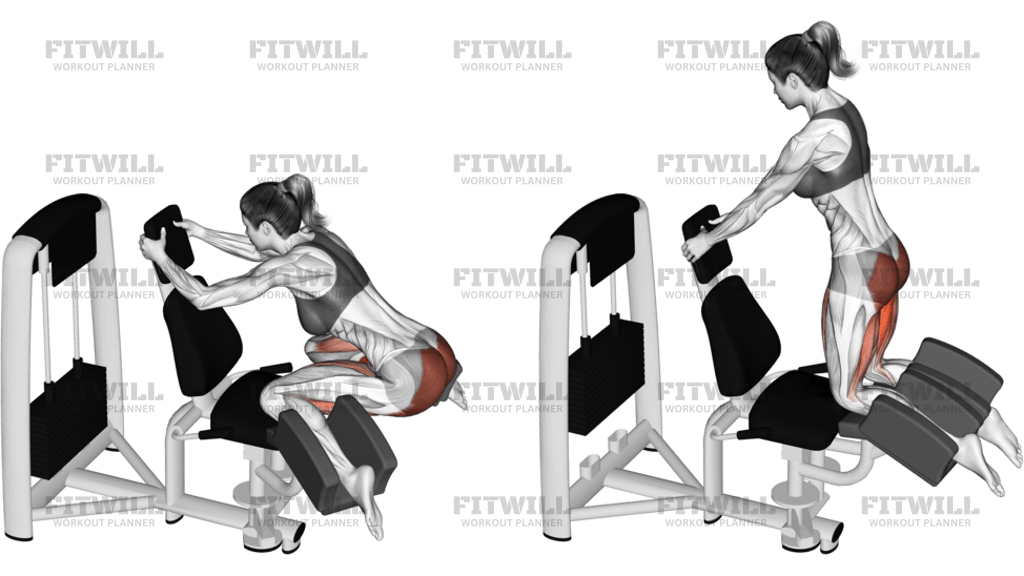
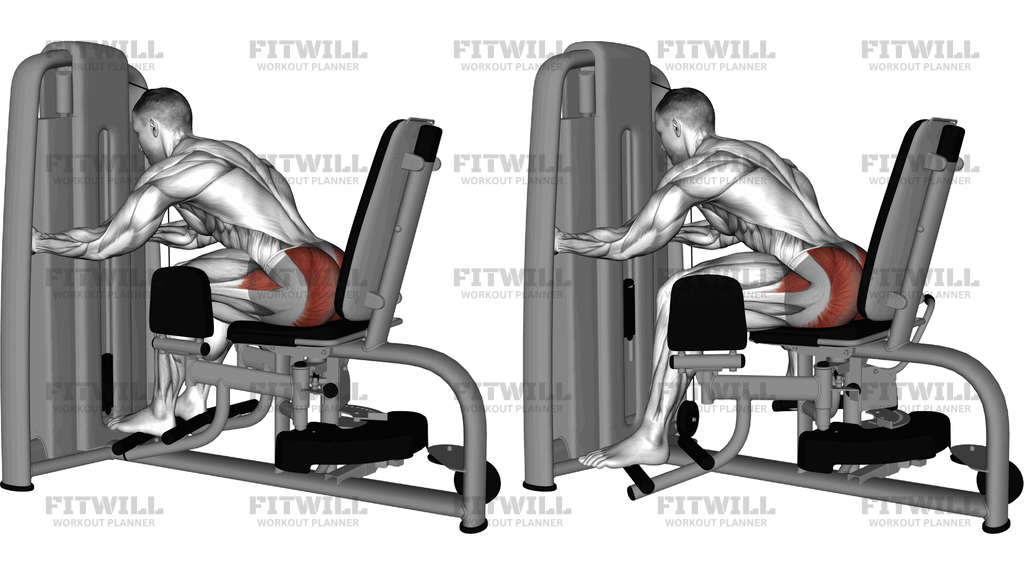
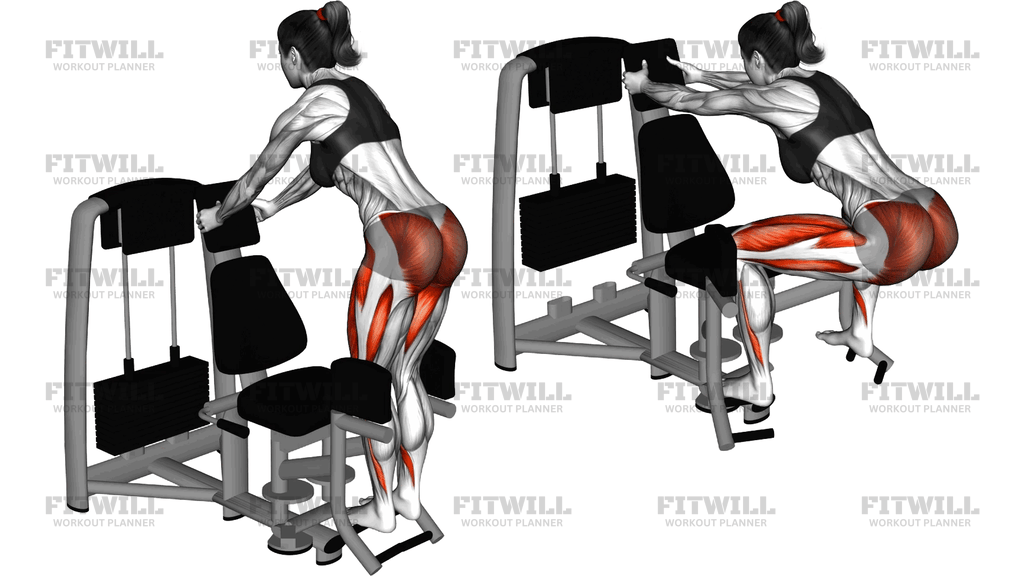
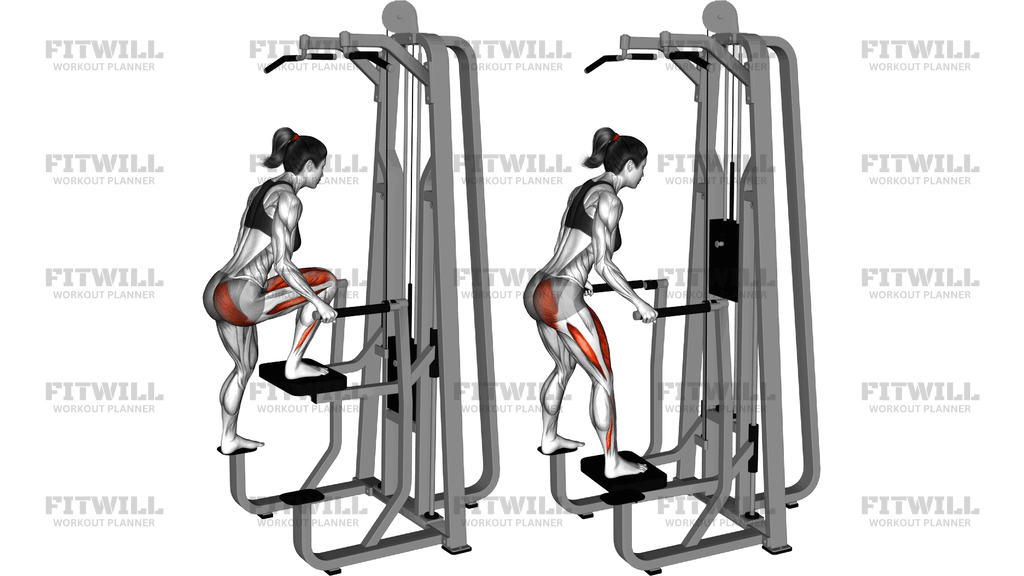
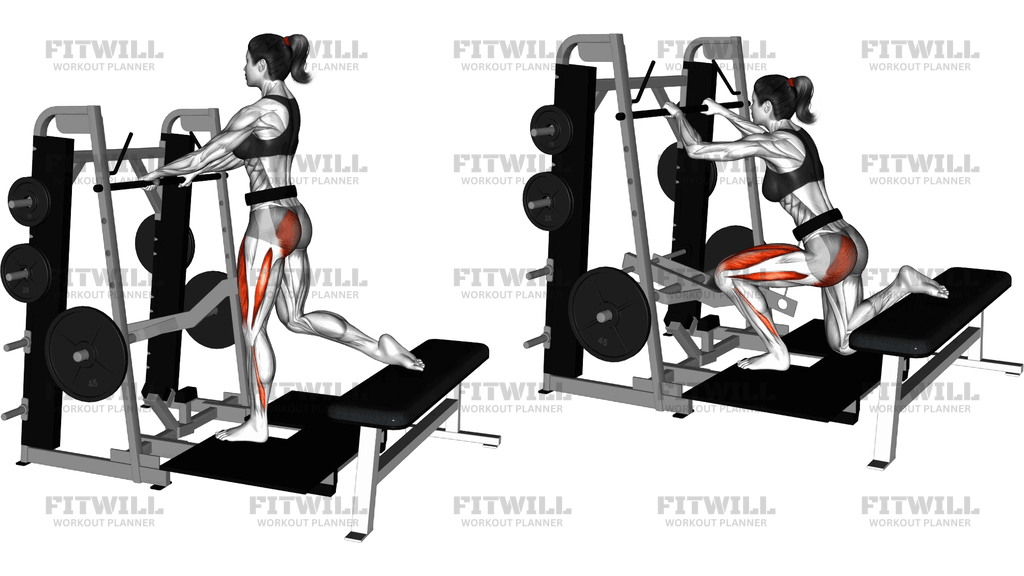
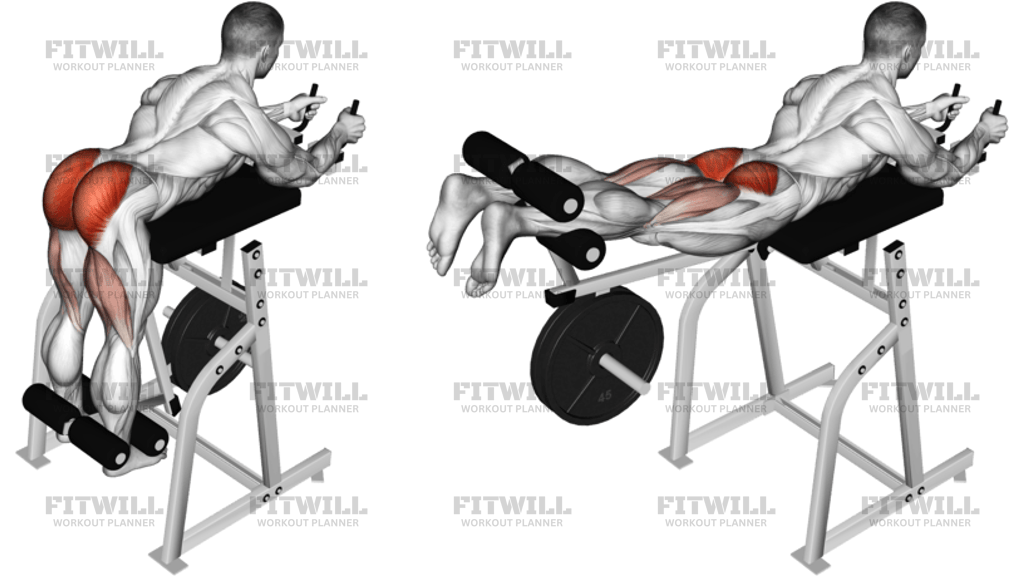
Lever Reverse Hyperextension (Plate Loaded) is a hip extension exercise performed on a leverage machine with your torso supported on the pad and your legs moving freely behind the bench. It is built to train the glutes first, with the hamstrings, spinal erectors, and deep trunk muscles helping you control the swing and keep the pelvis steady. The plate-loaded setup makes the resistance feel smooth, but the exercise still depends on precise positioning and a controlled range.
The pad and foot support matter because the machine is only effective when your hips can hinge without the lower back taking over. Set your hips near the edge of the pad, keep your torso anchored, and use the handles to stop your body from sliding. From there, the repetition should come from hip extension, not from throwing the legs up or letting the lumbar spine overarch at the top.
A good rep starts from a long, stretched bottom position and finishes when the legs line up with the torso or just slightly above it. Think about driving the heels back and squeezing the glutes to lift the legs, then lowering under control until the machine returns you to a loaded stretch. If the movement becomes a swing, shorten the range, slow the tempo, or reduce the load until the machine feels stable again.
This exercise is useful as an accessory lift for glute growth, posterior-chain strength, or low-back-friendly hip work when the machine is set up correctly. It can also work well in warmups or higher-rep conditioning blocks because the machine guides the path and makes the hip hinge easy to repeat. Beginners can use it if they keep the load light, stay braced, and avoid forcing extra height through the lower back.
[ Workout Log & Planner ]
Put your next workout in Fitwill
Keep your plan and training log ready when you are.


Instructions
- Adjust the pad so your hips sit on the edge and your torso is supported firmly; place your hands on the handles and let your legs hang freely behind the machine.
- Set your feet or ankles against the roller or lower support, keep a slight bend in the knees, and brace your trunk before the first rep.
- Start from the bottom with the legs hanging under control so you feel a stretch through the glutes and hamstrings without losing your brace.
- Drive the heels back and lift the legs by extending the hips, keeping the pelvis level and the chest pressed into the pad.
- Raise the legs until they are in line with your torso or just slightly above it, but do not arch the lower back to get higher.
- Squeeze the glutes briefly at the top while keeping the handles steady and the neck relaxed.
- Lower the legs slowly until they return to the loaded bottom position and the machine swings back under control.
- Repeat for the planned number of reps, breathing out as you lift and breathing in as you lower.
Tips & Tricks
- Set the hip crease right at the pad edge; if you lie too far forward, the machine can turn the rep into a low-back extension.
- Keep a small knee bend throughout the set if the hamstrings start cramping or taking over the motion.
- Stop the lift when your torso and legs are roughly in one line; extra height usually comes from lumbar extension, not more glute work.
- Use the handles to anchor your upper body so the torso does not slide as the weight moves.
- Lower the legs on a slow count and let the bottom position stretch the hips instead of bouncing off the machine.
- Choose a load that lets the machine move smoothly; if the weight makes you swing, it is too heavy for this exercise.
- Keep the ribs down and the abdomen braced so the pelvis stays level through the whole rep.
- A brief pause at the top works well here because it forces the glutes to finish the rep instead of momentum.
- If your lower back feels pinched, reduce the range first before you reduce the load.
Frequently Asked Questions
What muscles does Lever Reverse Hyperextension (Plate Loaded) train most?
The glutes are the main driver, with the hamstrings helping extend the hips and the lower back and core stabilizing the torso.
Where should my hips sit on the machine pad?
Your hips should be near the edge of the pad so the legs can swing freely and the movement stays centered at the hip joint.
How high should I lift my legs on the reverse hyper?
Lift until the legs match the torso or sit just slightly above it. Going higher usually turns the rep into a lower-back arch.
What is the most common mistake on this machine?
The biggest mistake is swinging the legs and arching the low back to finish the rep instead of using the glutes to extend the hips.
Should I keep my knees straight or bent?
A slight bend is usually best. It keeps tension where you want it and can reduce hamstring cramping on longer sets.
Is this exercise good for beginners?
Yes, if the load stays light and the movement stays slow. Beginners should learn the hip hinge before chasing a bigger range or heavier plates.
What should I do if my lower back feels it more than my glutes?
Shorten the range, keep your ribs down, and lower the load. The rep should stay anchored at the hips, not the spine.
Where does this exercise fit best in a workout?
It works well as accessory posterior-chain work, after main lifts or in a glute-focused session where controlled reps matter more than maximal load.