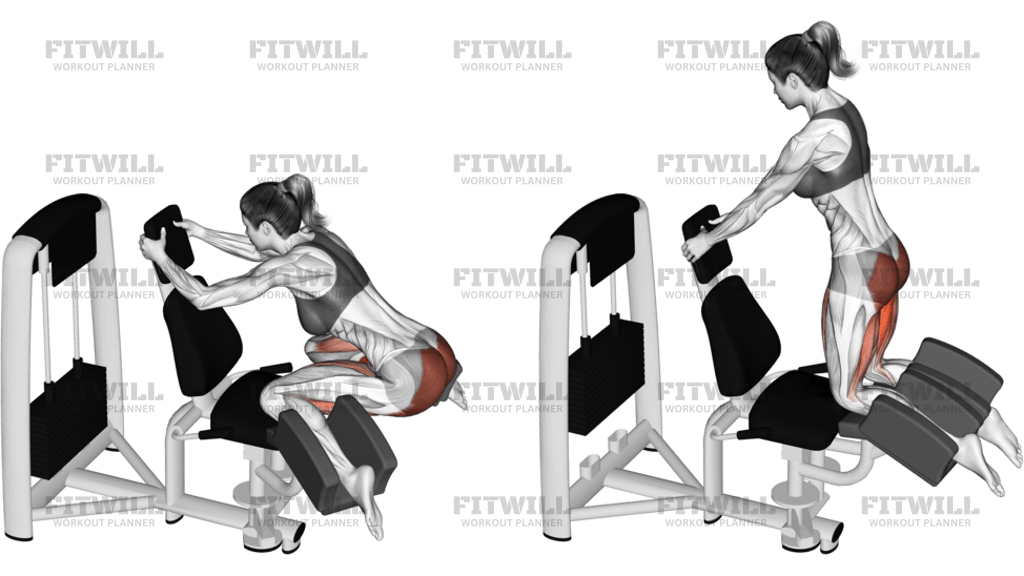
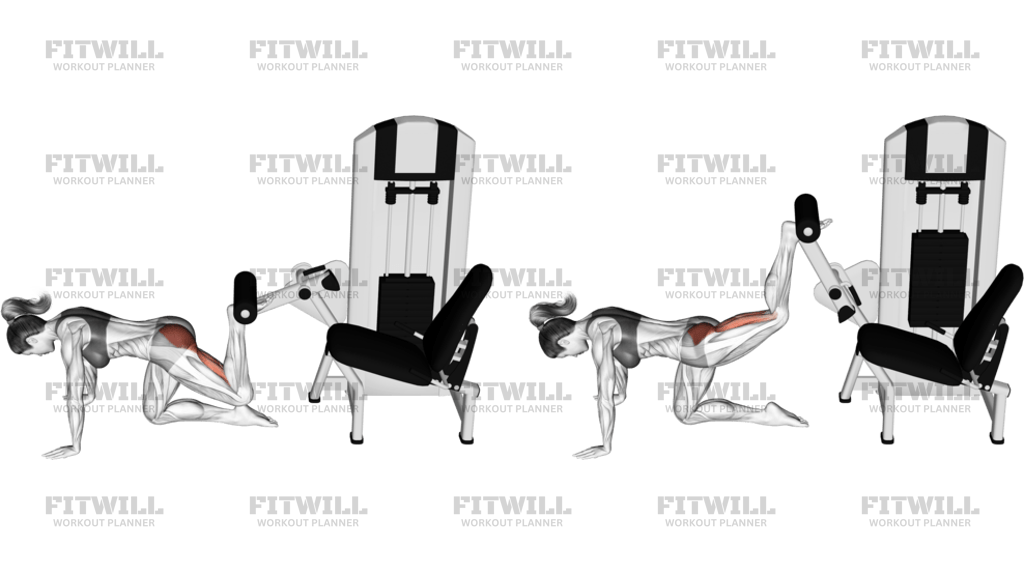
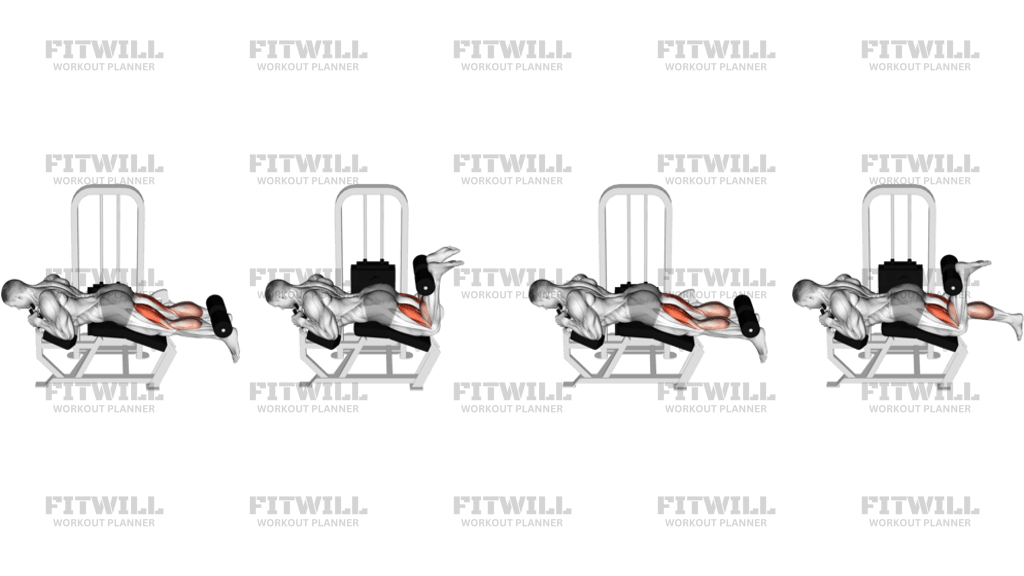
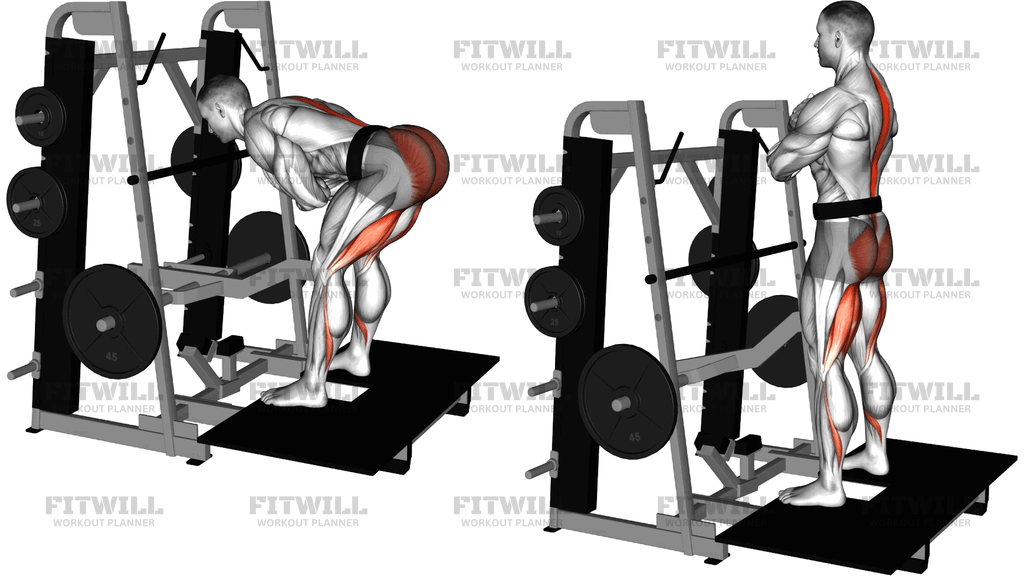
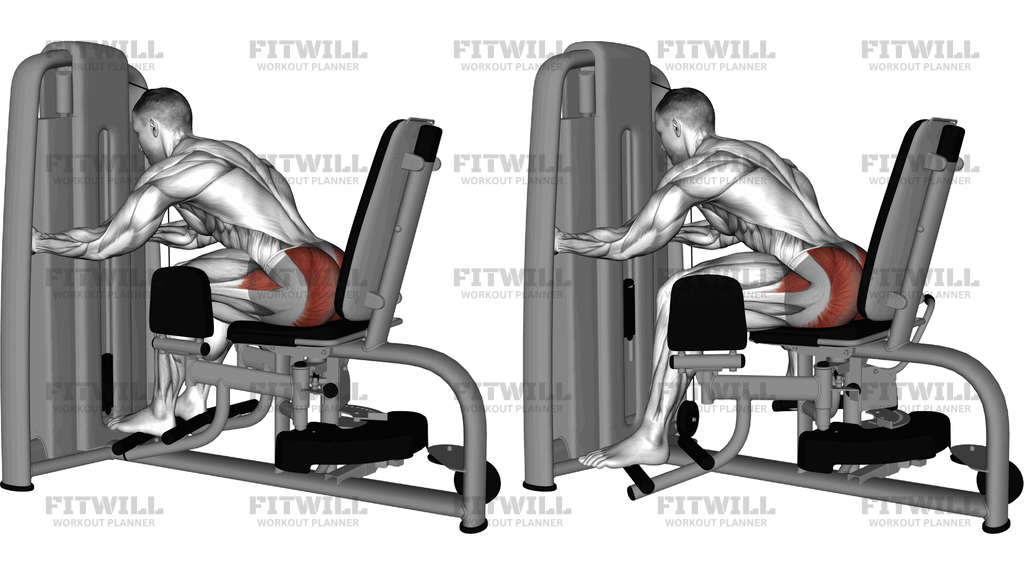
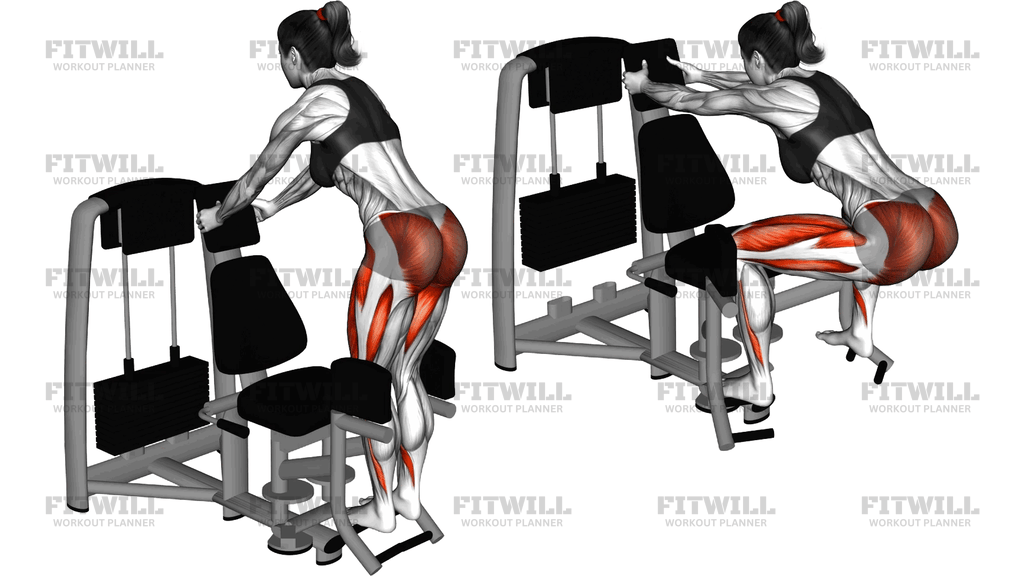
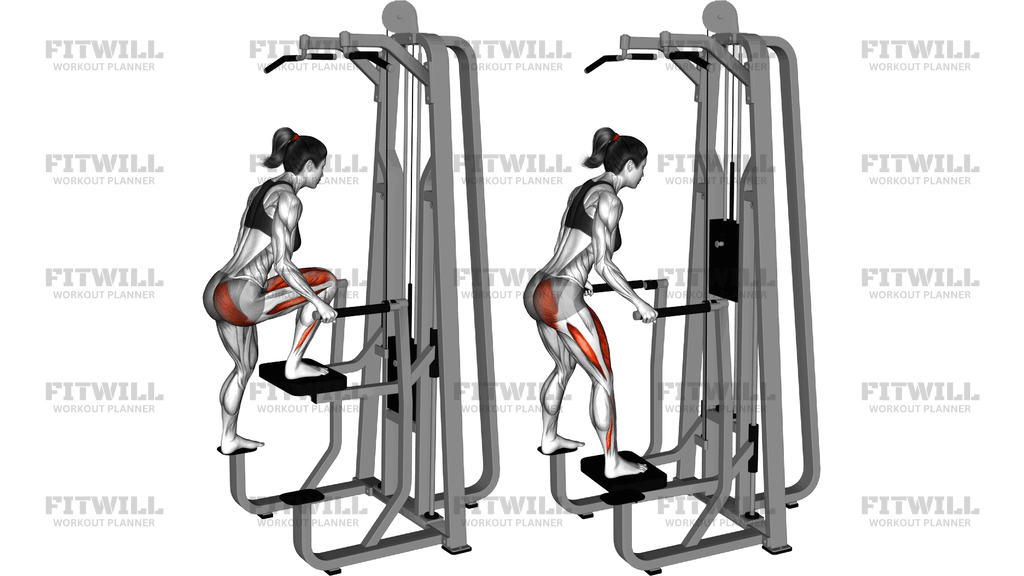
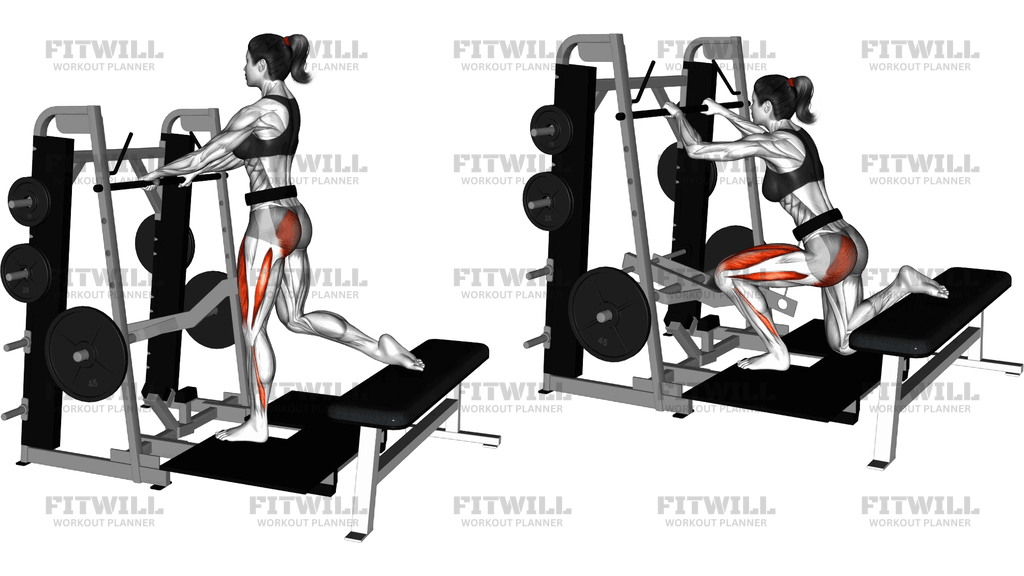
Lever Hip Thrust With Stepbox Version 2
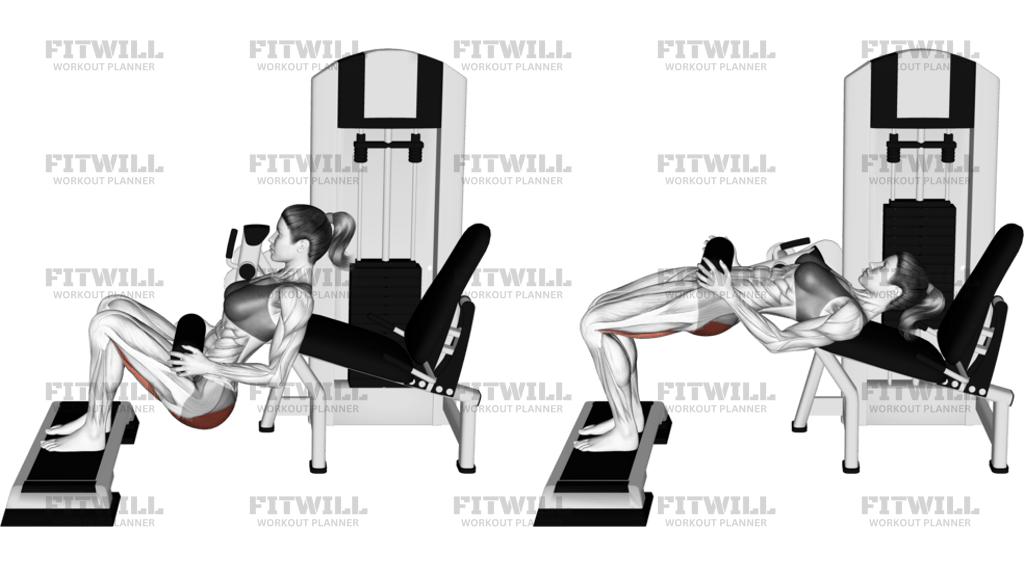
Lever Hip Thrust With Stepbox Version 2 is a machine-assisted hip extension exercise built around a strong glute squeeze at the top and a controlled stretch at the bottom. The leverage machine supports the upper back and torso, while the stepbox under the feet changes the leg angle and makes the foot placement part of the setup. That combination makes the exercise feel more stable than a free barbell thrust, but it still depends on precise positioning to hit the glutes instead of drifting into the lower back.
This variation is mainly a glute builder. The gluteus maximus does the largest share of the work, with the hamstrings helping extend the hips and the core and spinal erectors helping keep the ribcage and pelvis stacked. If the feet are too close, too far away, or too high on the box, the movement can shift away from the glutes and turn into a hamstring-dominant pull or a lower-back arch. The stepbox matters because it changes the start angle, the bottom stretch, and how much pressure you can keep through the heels.
A clean rep starts with the upper back set firmly on the pad, both feet planted on the stepbox, and the knees bent enough that you can drive straight through the heel and midfoot. Brace before you lift, then press the hips up until the torso and thighs are roughly in line. At the top, squeeze the glutes without throwing the ribs up or overextending the spine. The rep finishes with a slow, controlled descent so the machine returns under tension instead of dropping back into the bottom position.
Because the machine guides the path, this exercise works well for lifters who want a repeatable glute movement with less balance demand than a barbell version. It fits well in lower-body strength work, glute-focused hypertrophy sessions, or accessory blocks after squats and deadlifts. The biggest payoff comes from using a foot position and range of motion you can repeat cleanly for every rep. If the low back takes over, the step height, foot distance, or load usually needs to change before the set gets heavier.
[ Workout Log & Planner ]
Put your next workout in Fitwill
Keep your plan and training log ready when you are.


Instructions
- Sit with your upper back across the machine pad, then place both feet hip-width on the stepbox with your heels flat and toes turned slightly out.
- Scoot until the shoulder blades are supported and your hips can travel freely without the box forcing your knees too far forward or too far back.
- Grip the handles or side pads, set your ribcage down, and brace your core before the first rep starts.
- Press through your heels and midfoot to drive the hips up along the machine path.
- Lift until your torso and thighs are nearly in line and the glutes are fully squeezed.
- Keep the chin relaxed and avoid arching the lower back to chase a higher lockout.
- Lower the hips slowly until you feel a controlled stretch through the glutes and hamstrings.
- Reset your breath at the bottom, then repeat for the planned number of reps.
Tips & Tricks
- Keep the heels planted on the stepbox. If they start floating, the load is usually too heavy or the feet are too far away.
- A slightly farther foot position usually shifts more work to the hamstrings; a slightly closer stance usually makes the glutes easier to feel.
- Do not finish the rep by arching the low back. The top position should come from hip extension, not from rib flare.
- The box height should let you keep pressure through the whole foot. If the knees feel jammed or the pelvis rocks, adjust the setup before loading the machine.
- Pause for a brief squeeze at the top so the glutes do the work instead of bouncing through the lockout.
- Lower under control until you feel a stretch, but stop before the pelvis tucks hard or the lower back rounds off the pad.
- Keep the knees tracking over the toes instead of letting them cave inward as the weight gets harder.
- If the movement turns into a hamstring cramp, move the feet slightly closer and shorten the range for that set.
Frequently Asked Questions
What does Lever Hip Thrust With Stepbox Version 2 train most?
It primarily trains the glutes, especially the gluteus maximus, with the hamstrings and core assisting.
Why are my feet on a stepbox instead of the floor?
The stepbox changes the hip and knee angle, which affects the stretch, the lockout, and how stable the foot pressure feels.
How should I place my feet on the box?
Start hip-width with heels flat and toes slightly turned out. From there, adjust a little closer or farther until you can still drive through the heels without losing control.
Should I feel this in my lower back?
No. A little support work is normal, but the main effort should stay in the glutes. If the low back takes over, reduce the range or correct the rib and pelvis position.
Can beginners use this machine version?
Yes. It is often easier to learn than a free barbell hip thrust because the machine guides the path and the stepbox fixes the foot position.
How is this different from a regular hip thrust?
The leverage machine gives you a guided path, and the stepbox changes the leg angle. That can make the setup feel more stable and slightly different in the glutes and hamstrings.
What is the biggest form mistake on this exercise?
Overextending at the top. The rep should finish with the glutes squeezed and the torso aligned, not with the ribs flared and the lower back arched.
What if I cramp in my hamstrings during the set?
Bring the feet a little closer, reduce the load, and shorten the range for that set. Hamstring cramps usually mean the lever length or fatigue is off.