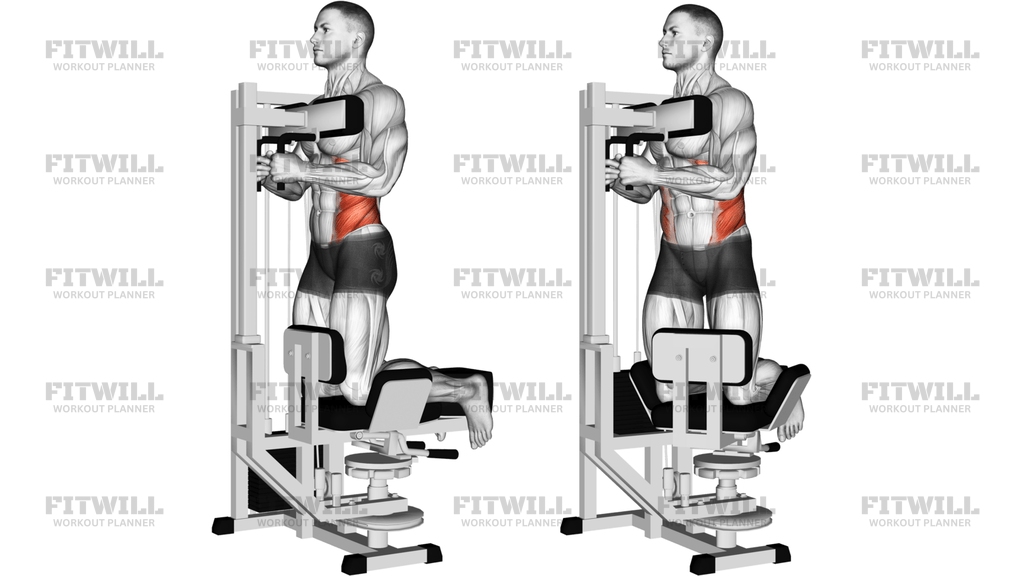
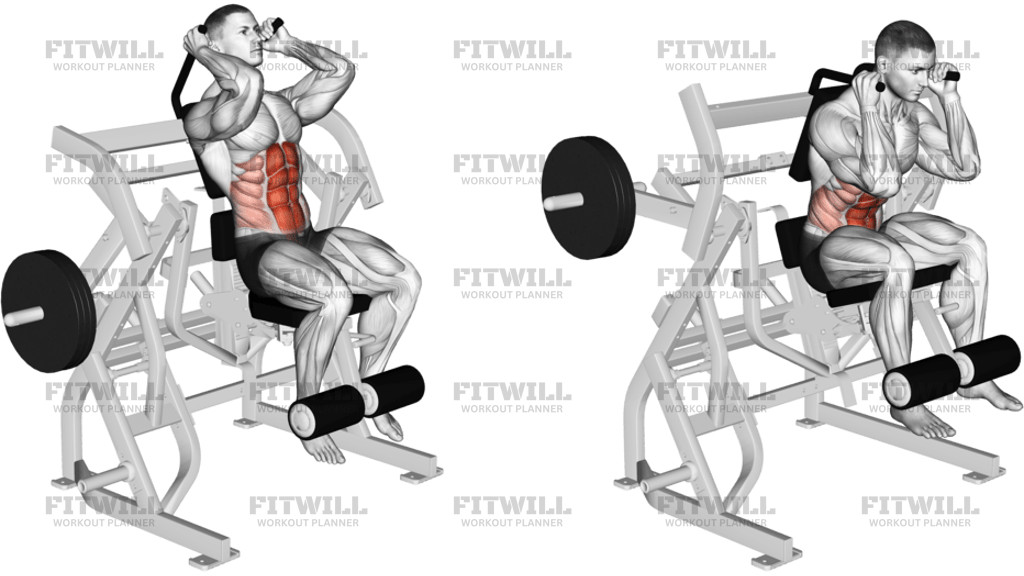
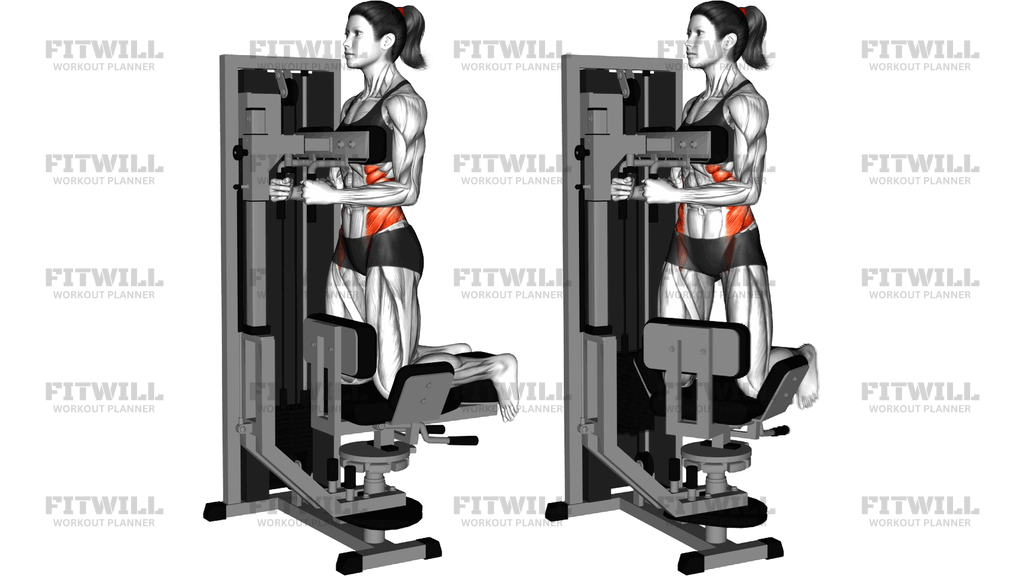
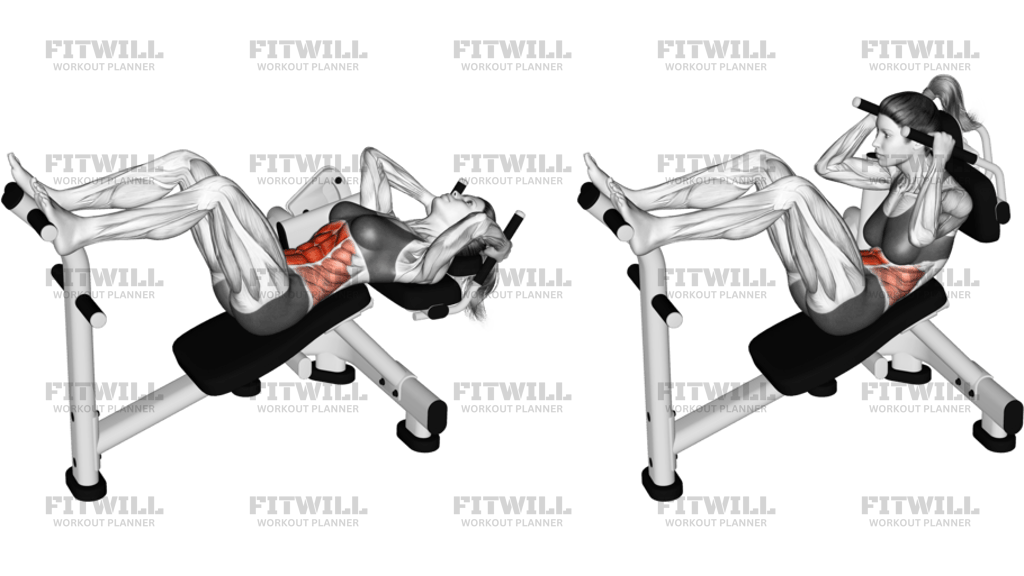
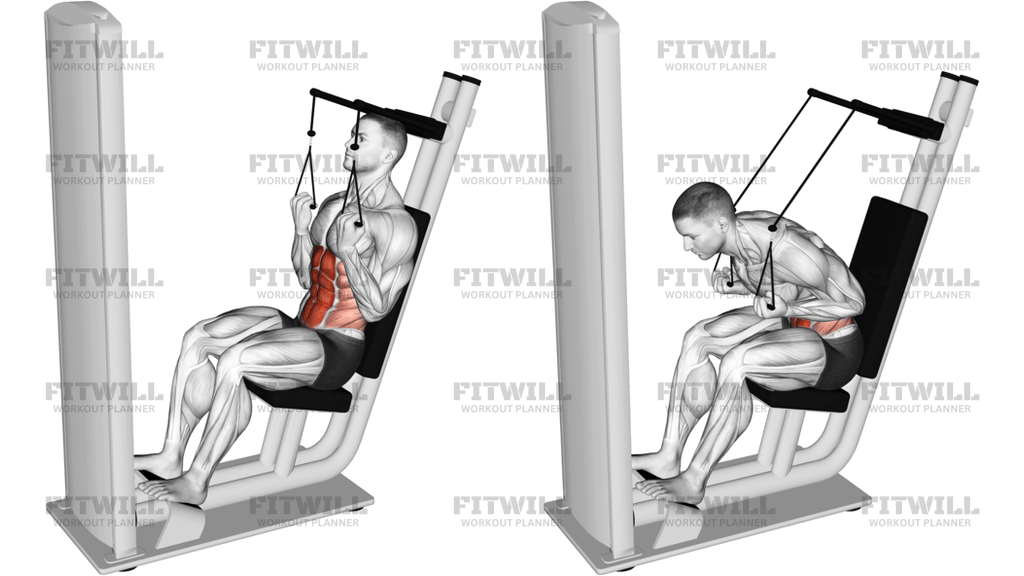
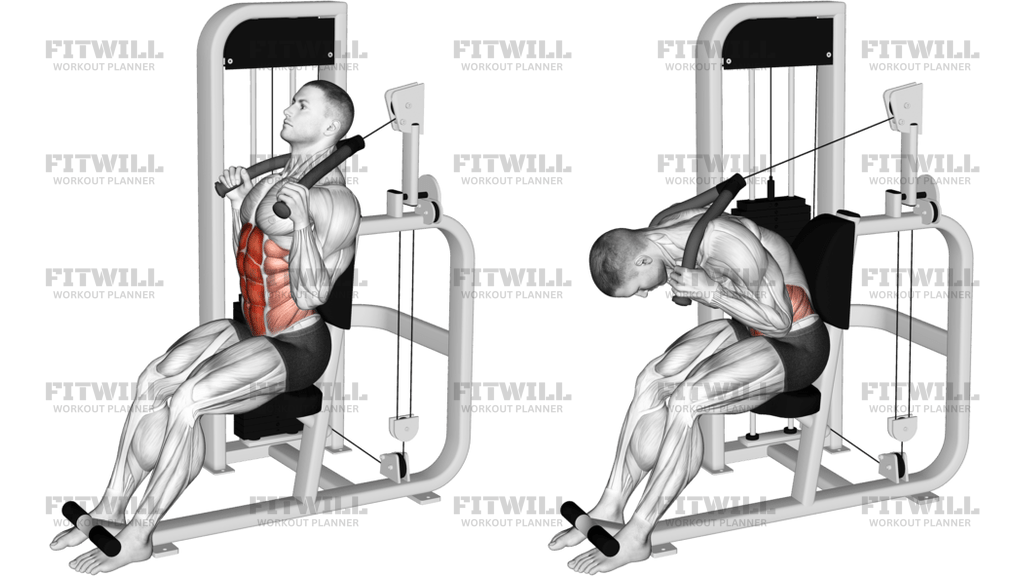
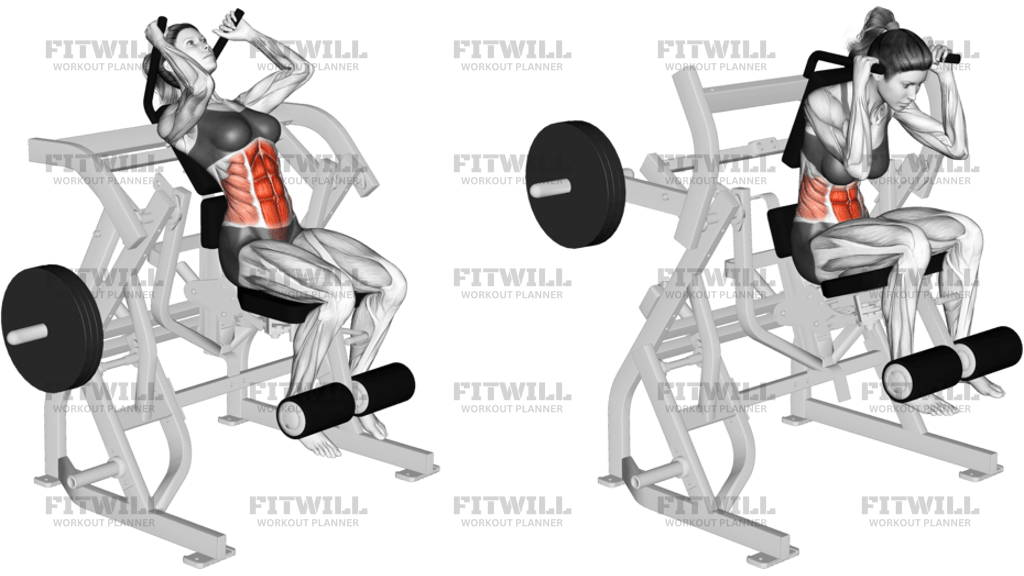
Lever Seated Crunch Chest Pad
Lever Seated Crunch Chest Pad is a machine-based abdominal crunch that lets you train spinal flexion with the torso supported by a chest pad. The machine gives you a fixed path, which makes it easier to load the abs without balancing a free weight or swinging through the rep. It is a useful option when you want direct abdominal work with repeatable resistance and a simple setup.
The chest pad changes the feel of the exercise in a meaningful way: if the pad is set too low, you tend to fold at the hips and let the hip flexors take over; if it is set too high or loose, you lose leverage and end up shrugging or yanking with the shoulders. A good setup keeps the ribs stacked over the pelvis at the start, with the pad firmly contacting the upper torso so the abs can initiate the curl instead of the machine pulling you out of position.
During each repetition, think about shortening the distance between your lower ribs and your pelvis. The movement should feel like a controlled ribcage curl rather than a fast sit-up. Exhale as you crunch down, pause briefly in the contracted position, and return under control until your torso is back in the starting arc. The neck stays relaxed, the shoulders stay down, and the pelvis stays anchored so the repetition stays focused on the abdominal wall.
This exercise works well as accessory abdominal work in a strength session, a core-focused circuit, or the finish of a lower-body or upper-body workout when you want to add direct trunk flexion without a lot of skill demand. It primarily trains the rectus abdominis, with the obliques and deep core helping stabilize the torso and the hip flexors assisting if the setup or range gets sloppy. Use a load and range that let you keep the crunch smooth, centered, and free of momentum.
[ Workout Log & Planner ]
Put your next workout in Fitwill
Keep your plan and training log ready when you are.


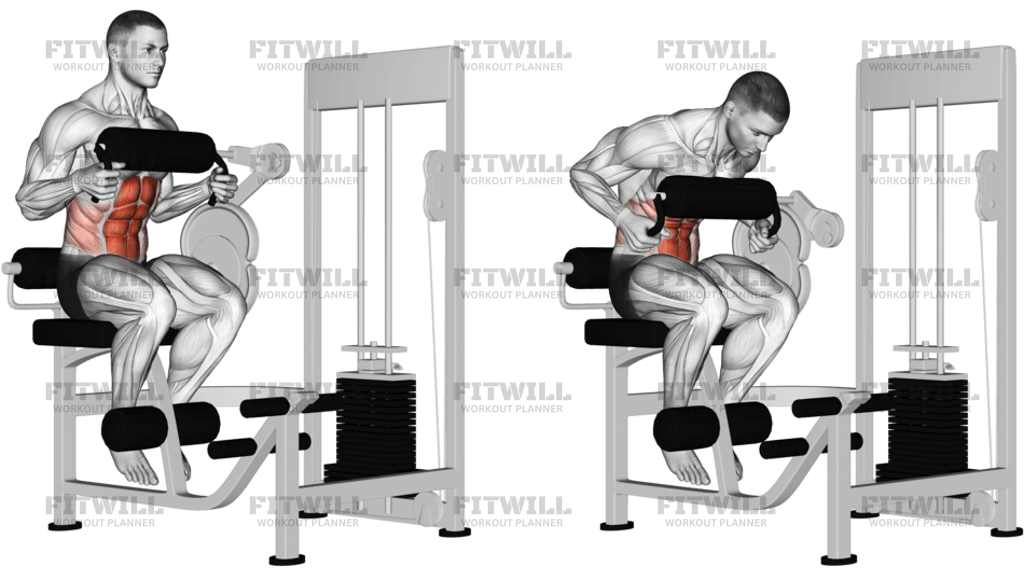
Instructions
- Set the seat so the chest pad contacts your upper chest firmly while you sit tall with your ribs stacked over your pelvis.
- Plant your feet flat and brace your midsection before you start the first rep.
- Hold the side handles or pad grips lightly so your shoulders stay down and relaxed.
- Exhale and curl your ribcage toward your pelvis, letting the chest pad move with your torso.
- Keep your neck neutral and think about closing the space between your lower ribs and hips.
- Squeeze hard at the bottom for a brief pause without bouncing off the machine stop.
- Inhale as you return slowly until your torso is back in the starting arc.
- Reset your brace before the next rep and keep every repetition smooth and controlled.
Tips & Tricks
- Start with the chest pad high enough that you can begin from a tall torso instead of already folded forward.
- If your hips slide forward on the seat, the load is probably too heavy or the setup is too deep.
- Let the abs begin the curl before your elbows, shoulders, or hands do any meaningful work.
- Keep your chin slightly tucked so the rep comes from the trunk, not from crunching your neck.
- Use a range that keeps your low back controlled; if you lose position at the bottom, shorten the arc.
- A slow return keeps tension on the rectus abdominis and reduces the temptation to bounce out of the bottom.
- Exhale through the crunch to help the ribs drop and the pelvis stay still.
- Choose a load that lets you pause briefly in the contracted position without shaking or jerking.
Frequently Asked Questions
What muscle does Lever Seated Crunch Chest Pad target most?
The rectus abdominis is the main target, with the obliques and deep core helping stabilize the torso.
Can beginners perform this exercise?
Yes. The machine path and chest pad make it beginner-friendly if you start with light resistance and a short, controlled range.
Where should the chest pad sit on my body?
It should press firmly against the upper chest or sternum area so you can brace and curl from the torso without sliding out of position.
Why do I feel this in my hip flexors?
That usually means the pad is set too low, the range is too deep, or you are pulling the torso with the hips instead of curling the ribs down.
Should I round my lower back a lot on this machine?
You should allow the torso to flex, but not collapse or jerk. The movement should stay smooth and controlled through the abdominal wall.
How do I keep my neck from straining?
Keep your chin slightly tucked, eyes relaxed, and shoulders down so the crunch comes from your trunk instead of your head.
Is this better as a heavy or light abdominal exercise?
It usually works best with moderate resistance and strict control, since the goal is clean trunk flexion rather than max loading.
When should I use Lever Seated Crunch Chest Pad in a workout?
It fits well near the end of a session or in a dedicated core block when you want direct abdominal work without much setup complexity.