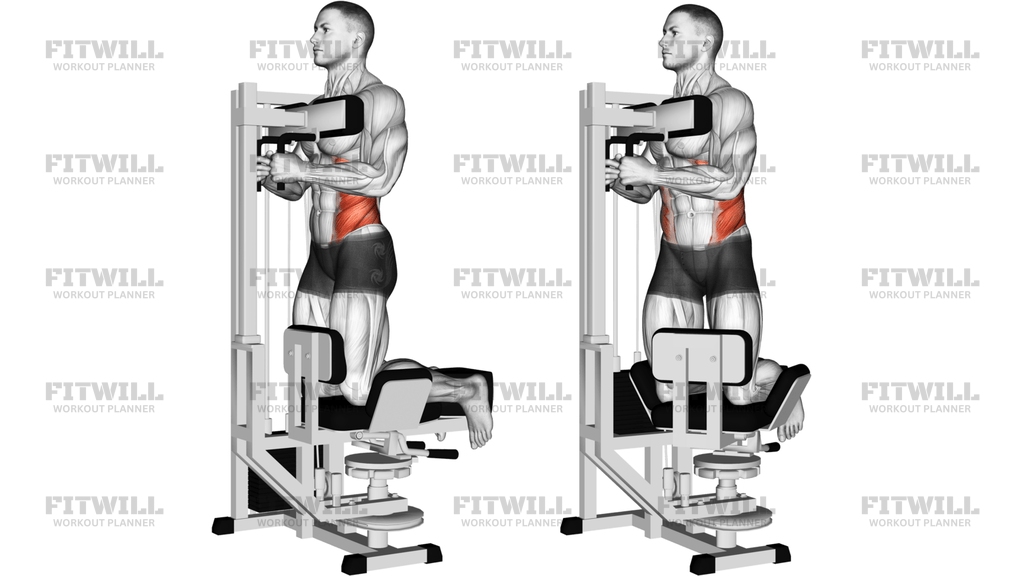
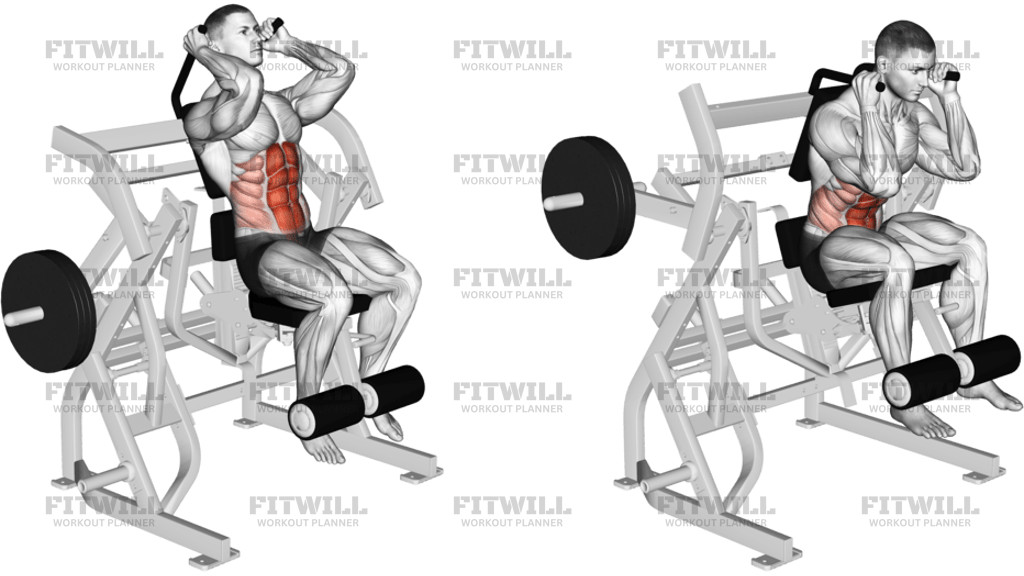
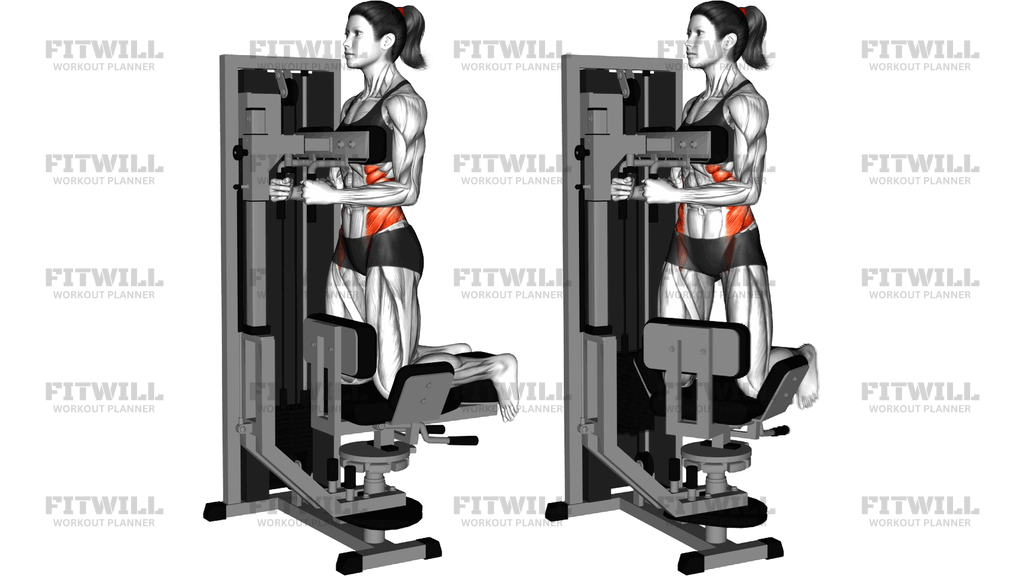
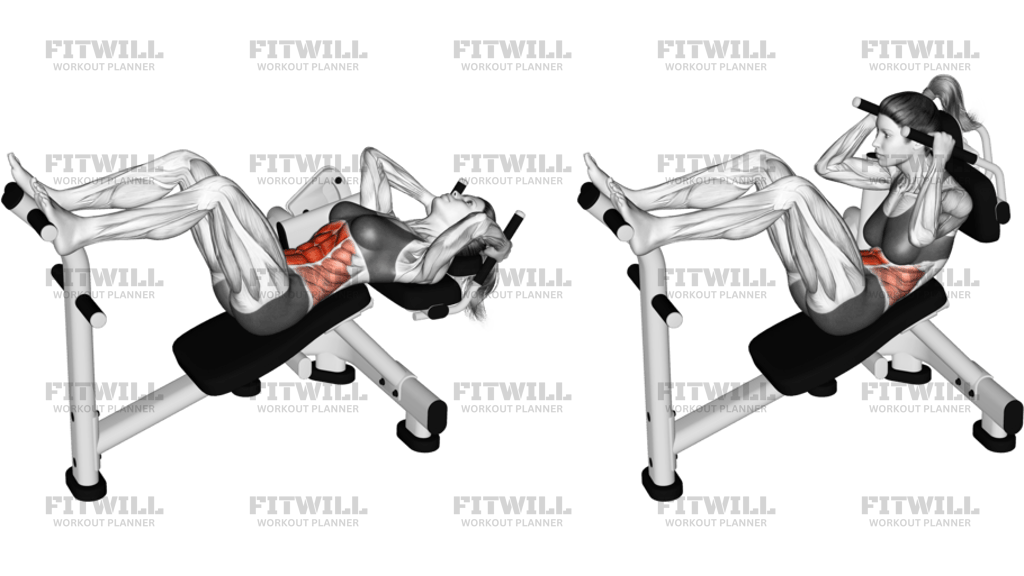
Lever Seated Leg Raise Crunch Plate Loaded
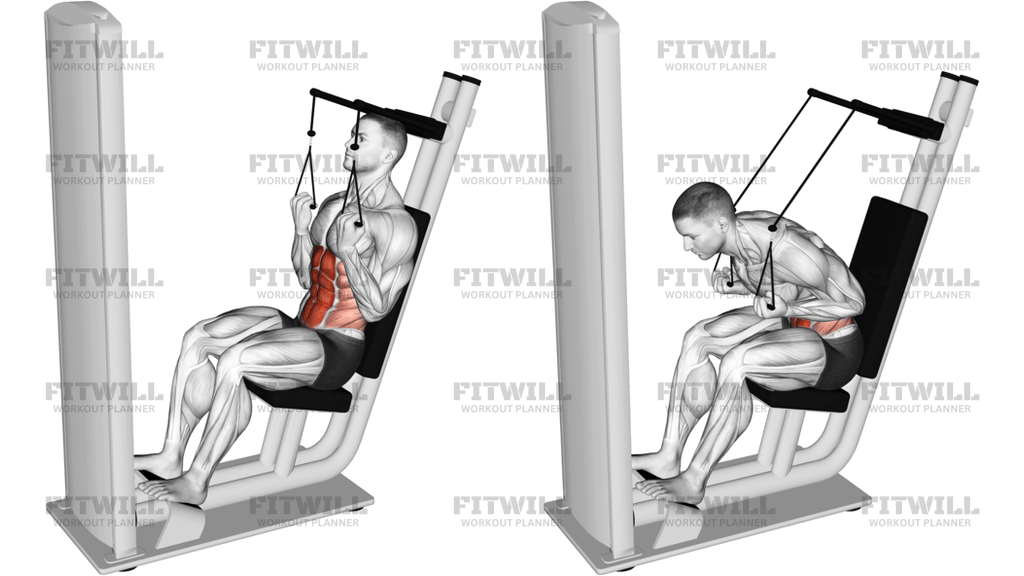
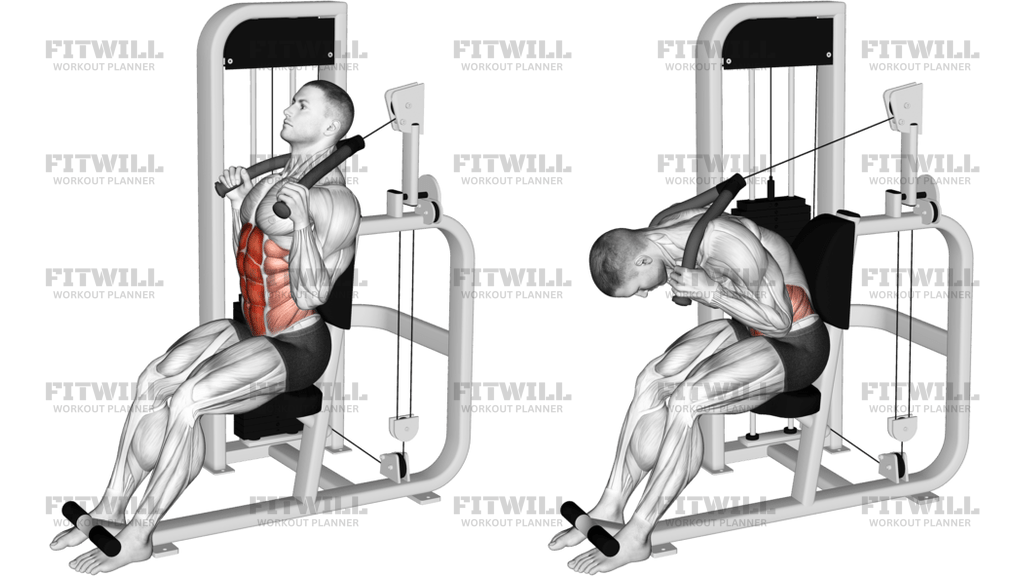
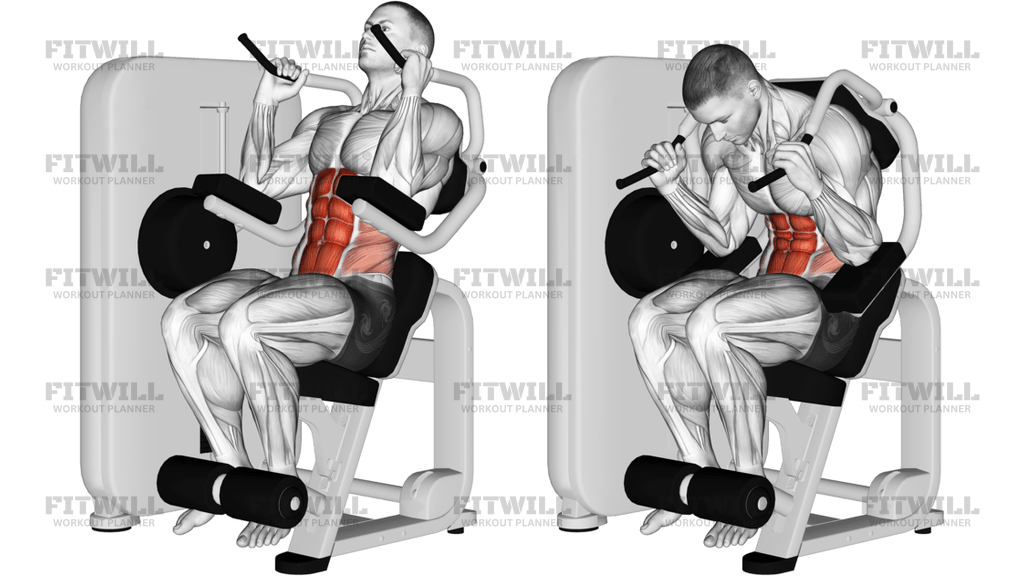
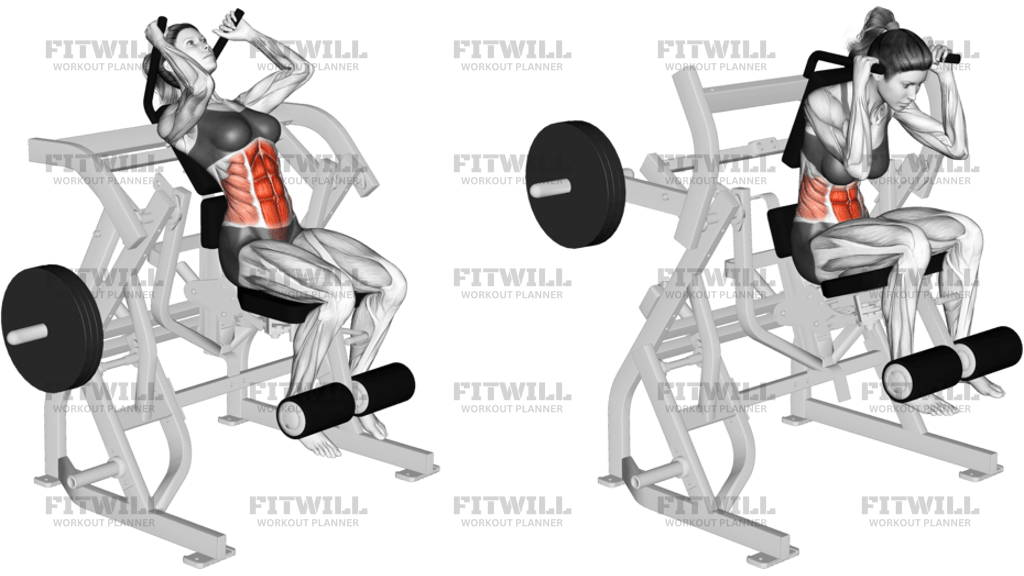
Lever Seated Leg Raise Crunch Plate Loaded is a machine-based core exercise that combines a seated crunch with a knee-raise pattern. It is built around a fixed path, so the target muscles have to do the work while the machine supports your body position. That makes it useful when you want focused abdominal training without having to balance or swing through the rep.
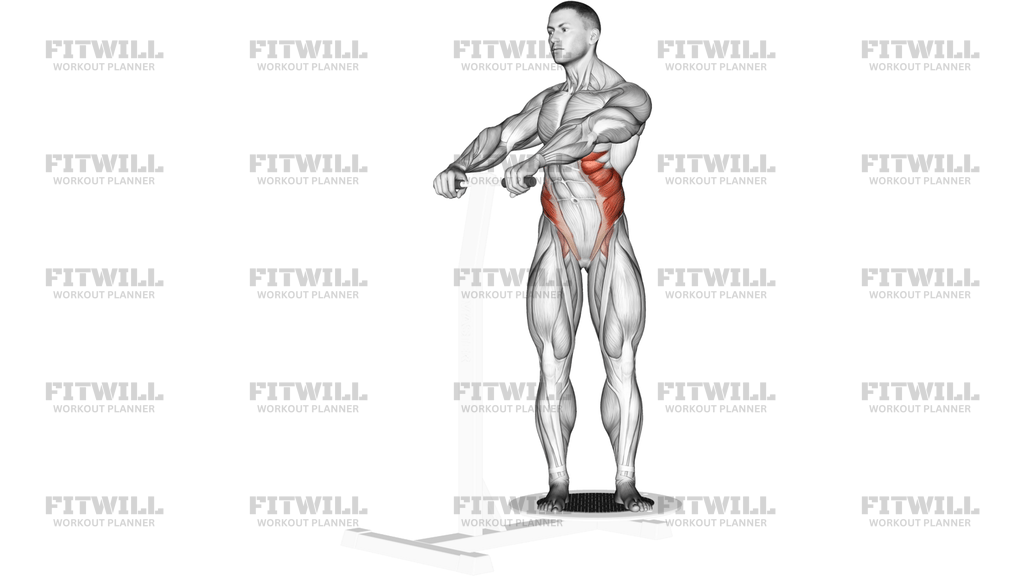
The main emphasis is on the abs, with the hip flexors and obliques helping as you curl the torso and lift the knees. In anatomy terms, the primary driver is the Rectus abdominis, supported by the External obliques, Iliopsoas, and Transversus abdominis. The leverage machine lets you load the movement gradually, but the exercise still depends on clean spinal flexion and controlled hip movement rather than momentum.
Setup matters more here than on many simple ab exercises. Sit fully into the pad, anchor your back and hips against the seat, and place your arms and shoulders on the machine contact points so your upper body starts from a stable base. Your feet or lower legs should rest securely on the lower roller so the machine can guide the leg raise while your torso stays organized.
Each rep should feel like a coordinated curl from the ribs down through the pelvis. Exhale as you crunch and bring the knees upward, then pause briefly when the abs are shortened and the pelvis has tucked. Lower slowly until your torso and hips are back under control, keeping the movement smooth enough that the stack or lever never yanks you out of position.
This exercise is a good choice for direct core work after compounds, during an abdominal block, or as a controlled finisher when you want more load than a floor crunch can provide. It can also suit beginners because the machine reduces balance demands, but it still rewards a light-to-moderate load and a strict tempo. If your hips take over or your neck starts pulling, the resistance is too heavy or the setup is off.
The best sets are the ones that stay crisp from the first rep to the last. Keep the motion short enough to stay honest, use the lower abs to initiate the tuck, and stop before your lower back starts to arch or your shoulders drift away from the pad. Done well, Lever Seated Leg Raise Crunch Plate Loaded gives you a clear abdominal contraction with a stable, repeatable machine setup.
[ Workout Log & Planner ]
Put your next workout in Fitwill
Keep your plan and training log ready when you are.


Instructions
- Sit on the leverage machine with your lower back against the pad, your hips centered on the seat, and your forearms or upper arms secured on the front pads or handles.
- Set your feet or lower legs on the roller pad so you can lift smoothly without sliding, and keep your knees slightly bent at the start.
- Grip the handles lightly, brace your midsection, and keep your chest tall before the first rep.
- Exhale as you curl your ribs toward your pelvis and drive your knees upward in a smooth arc.
- Let your pelvis tuck slightly at the top so the abs finish the crunch instead of only the hips.
- Pause briefly in the shortened position without losing contact with the back pad or handles.
- Lower the knees and torso under control until your spine and hips return to the start position.
- Keep the descent slow enough that the weight stack or lever does not pull you out of alignment.
- Reset your breathing and repeat for the planned number of repetitions.
Tips & Tricks
- If the machine has separate arm pads and handles, keep the elbows anchored so the torso does not slide forward as the knees rise.
- Treat the rep as a crunch first and a leg raise second; if the knees move but the ribs stay open, the abs are not finishing the job.
- Keep your chin softly tucked so you do not pull on the neck when the torso curls.
- Do not slam the top position. A brief squeeze is enough to keep tension on the abs without using momentum.
- Use a lighter plate load if your hip flexors start lifting the legs while your trunk stays almost still.
- Stop the descent before the low back arches hard off the pad; that usually means the machine range is bigger than your control.
- Keep the feet or lower legs planted on the roller pad through the whole set so the machine path stays consistent.
- A slower lowering phase usually makes this movement feel harder and cleaner than chasing more repetitions.
Frequently Asked Questions
What muscles does Lever Seated Leg Raise Crunch Plate Loaded train most?
It mainly targets the abs, especially the rectus abdominis, while the obliques and hip flexors assist during the crunch-and-raise pattern.
Can beginners perform this exercise?
Yes. The machine makes it beginner-friendly because it supports your body, but start light so you can keep the torso curled and the knees moving together.
Where should my back and hips be on the Lever Seated Leg Raise Crunch Plate Loaded machine?
Keep your hips centered on the seat and your lower back in contact with the pad so the machine guides the rep instead of letting you slide forward.
Should I feel Lever Seated Leg Raise Crunch Plate Loaded more in my abs or hip flexors?
You should feel a strong abdominal curl with some hip flexor help. If the front of the hips dominates, reduce the load and focus on rounding the ribs toward the pelvis.
What is the most common mistake on this machine?
Letting the knees lift without a real crunch is the big one. Keep your rib cage moving toward your pelvis so the abs stay in charge.
How low should I lower on Lever Seated Leg Raise Crunch Plate Loaded?
Lower only until you can keep your back and hips controlled against the pad. If the machine pulls you into an arch or swing, the range is too deep.
What load should I use on Lever Seated Leg Raise Crunch Plate Loaded?
Use a load that lets you pause at the top and lower slowly without losing contact with the pad or using your arms to yank yourself through the rep.
Can I use this as a replacement for floor crunches?
Yes, if you want more machine support and a more repeatable path. It is a good option when bodyweight crunches become too easy or too awkward to load.