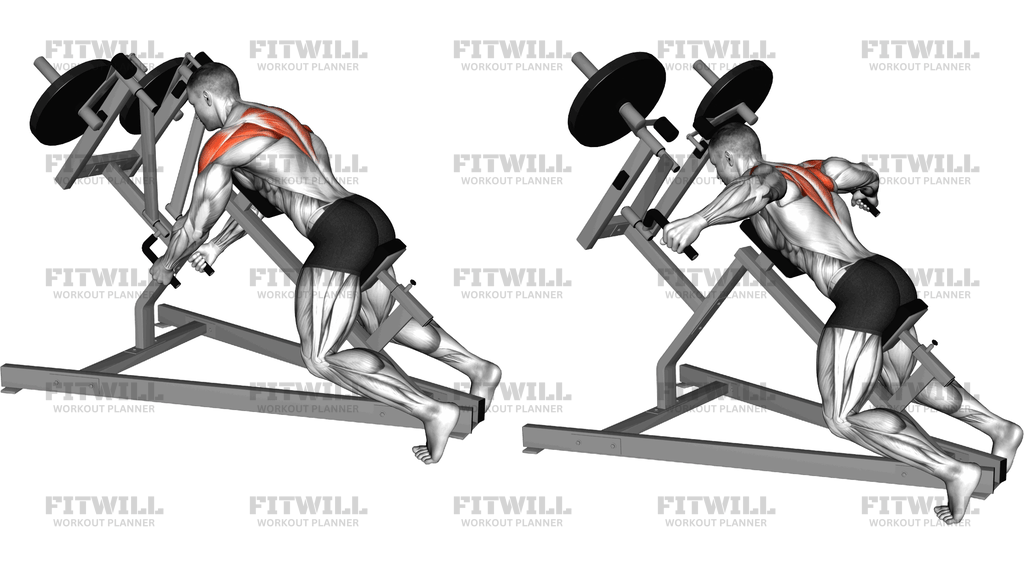
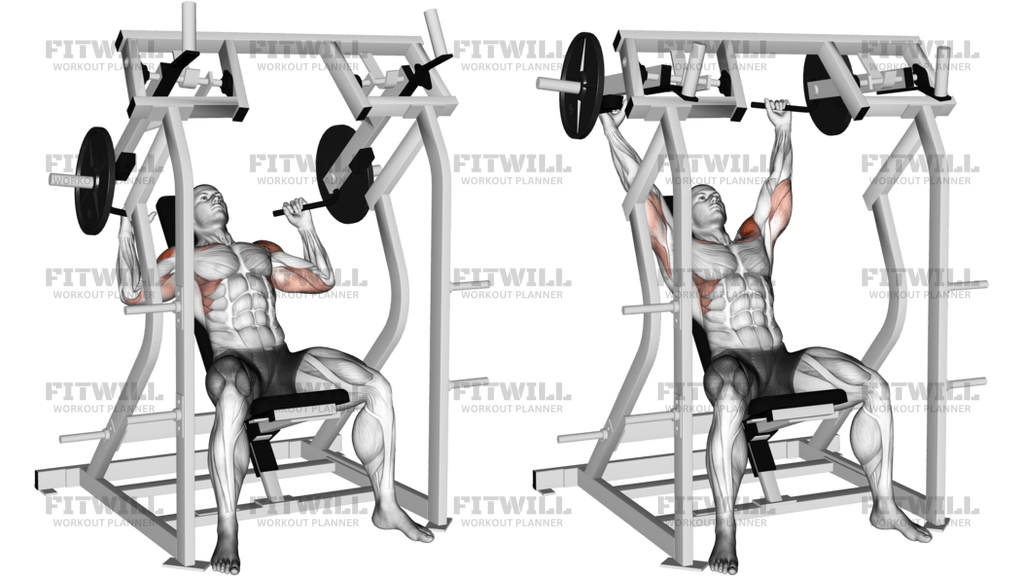
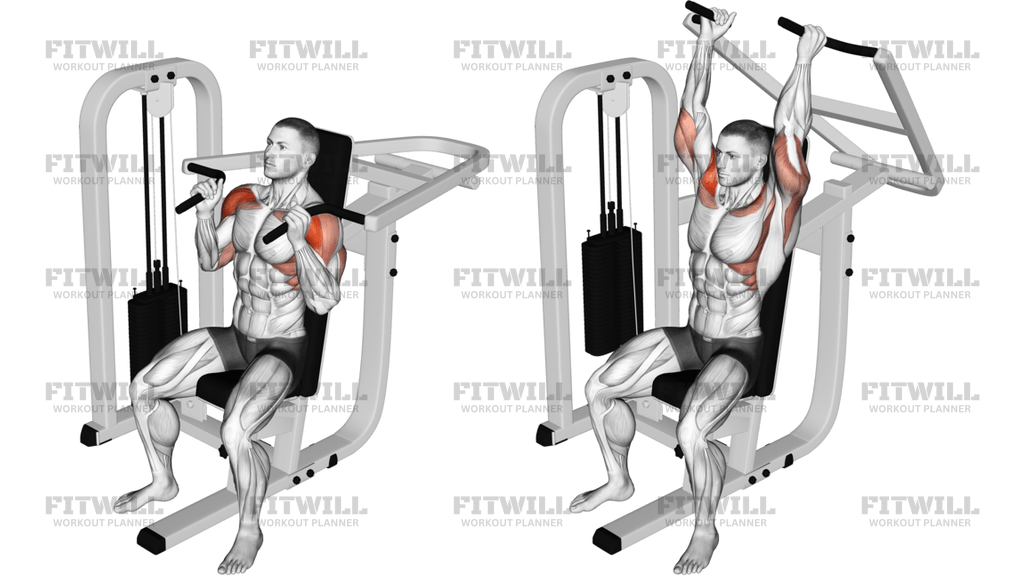
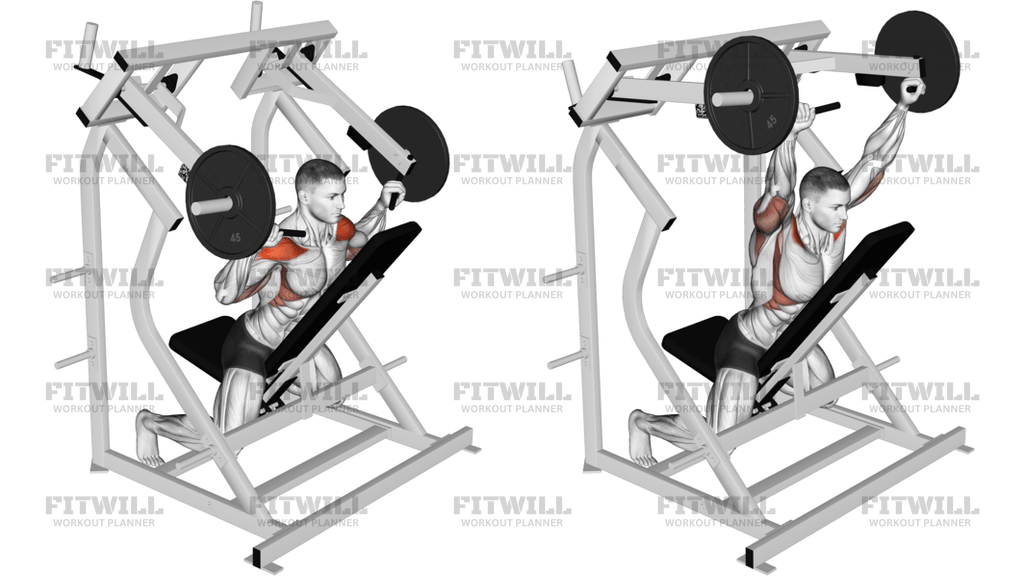
Lever Shoulder Press Plate Loaded
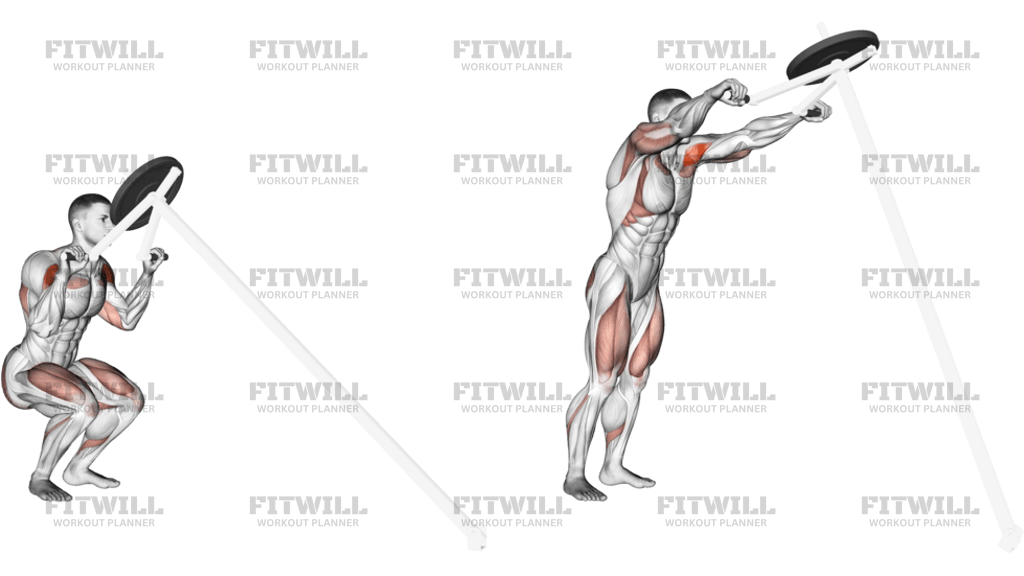
Lever Shoulder Press Plate Loaded is a standing machine press that lets you train the shoulders through a fixed path while still demanding balance, bracing, and clean upper-body mechanics. The lever arm gives you a guided arc, which makes the exercise useful for building pressing strength and muscle without having to stabilize dumbbells in space on every rep. It also makes it easier to repeat the same bar path from set to set, which is helpful when you want steady overload instead of a different feel on every rep.
The main work comes from the delts, especially the front and side heads, while the traps, upper back, and triceps help keep the press smooth and controlled. Because the machine locks you into a set path, the setup matters more than it does on many free-weight presses. If your feet, torso angle, and hand position are off, the rep can quickly turn into a shrugging, back-bending push instead of a strict shoulder press. A clean setup also makes it easier to tell whether the load is appropriate, because the machine should move without forcing you to compensate.
A good Lever Shoulder Press Plate Loaded rep starts with the handles at about upper-chest to face height, elbows bent in front of the body, and feet planted firmly under the hips. Keep the ribs stacked over the pelvis, brace the midsection, and let the shoulders stay down instead of drifting toward the ears. That position gives the delts a better line of force and keeps the lower back from taking over. If the machine starts too low or too high, adjust your stance before you add weight so the first inch of the rep does not feel awkward.
Press the handles upward and slightly forward until the arms are nearly straight, then lower them under control along the same arc. The path should feel smooth and repeatable, not bouncy or rushed. This exercise fits well in shoulder-focused sessions, upper-body days, or accessory work after your main compound lift, especially when you want a stable pressing pattern that still allows meaningful loading. Use a range that stays pain-free and a load that does not force you to arch, twist, or shrug to finish the rep. When the set gets hard, the goal is to keep the machine moving with the delts and triceps, not to turn it into a standing leg drive or a half-rep grind.
[ Workout Log & Planner ]
Put your next workout in Fitwill
Keep your plan and training log ready when you are.


Instructions
- Stand centered on the machine with your feet about hip-width apart and take the handles so they start around upper-chest or face height with your elbows bent in front of your torso.
- Plant both feet evenly, soften your knees, and stack your ribs over your pelvis so you are tall without leaning back into the pads or handles.
- Set your shoulders down and slightly back, keep your wrists straight, and brace your midsection before the first press.
- Drive the handles upward and slightly forward in the machine's fixed arc until your arms are nearly straight without forcing a hard lockout.
- Keep your elbows tracking just in front of your shoulders as you press so the machine path stays smooth and your shoulders do not flare outward.
- Exhale through the sticking point while keeping your chest tall and your lower back quiet.
- Lower the handles slowly along the same path until your elbows return to about shoulder height or slightly below.
- Pause briefly at the bottom, then reset your breath and repeat for the planned reps before stepping away from the machine under control.
Tips & Tricks
- If the handles start below shoulder height, adjust your stance or the machine height so you do not have to shrug to begin the rep.
- Keep your forearms close to vertical under the grips; bent wrists usually mean the load is too heavy or your elbow position is drifting.
- Pressing slightly forward, not straight up, usually matches the lever arm better and keeps the rep in the front and side delts.
- Do not chase a giant range if the bottom position pinches the shoulder joint; stop where the movement stays smooth and pain-free.
- A slow lowering phase helps keep tension on the delts and prevents the lever from dropping into the bottom under momentum.
- If your lower back arches as you fatigue, shorten the set rather than turning the press into a standing lean-back.
- Think about pushing the machine away while keeping your shoulders away from your ears to limit trap dominance.
- Choose a load that lets you pause briefly at the bottom without bouncing the handles or losing your torso position.
Frequently Asked Questions
What does Lever Shoulder Press Plate Loaded train most?
It mainly trains the delts, especially the front and side heads, with the triceps and upper back helping stabilize the press.
Is Lever Shoulder Press Plate Loaded supposed to be done standing?
This version is shown as a standing press, so your legs and trunk have to stay braced while you drive the handles overhead.
Where should the handles start on Lever Shoulder Press Plate Loaded?
Start with the handles around upper-chest or face height and your elbows bent slightly in front of your body, not flared straight out to the sides.
Should I use a pronated or neutral grip on this machine?
Use whatever grip the handles are built for, but keep your wrists stacked over the handles and avoid letting them bend back as you press.
Why do my traps take over on Lever Shoulder Press Plate Loaded?
That usually happens when you shrug at the top or start too heavy. Keep your shoulders down, finish without jamming into lockout, and lower the load if you cannot control the path.
Can beginners use Lever Shoulder Press Plate Loaded?
Yes. The fixed path makes it beginner-friendly, but the first priority is learning a stacked torso and smooth press before adding weight.
How deep should I lower the handles?
Lower only until your elbows are around shoulder height or slightly below. If the bottom position feels unstable or pinchy, shorten the range a little.
What is a good rep range for Lever Shoulder Press Plate Loaded?
Moderate reps usually work well, because the machine lets you load the shoulders without needing a maximal grind. Stop the set when your torso starts leaning back or the handles stop moving smoothly.