Lever T-Bar Row Plate Loaded
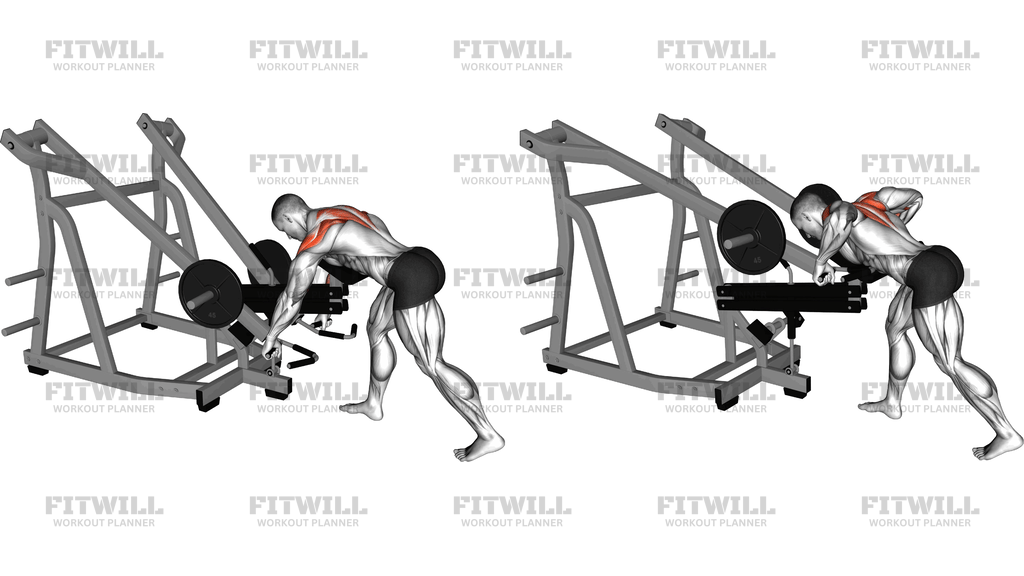
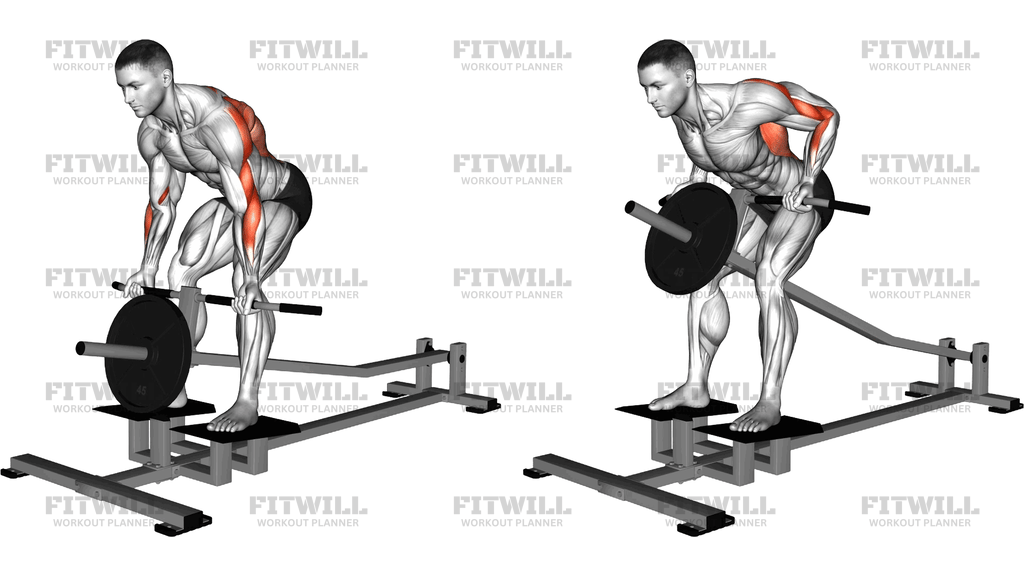
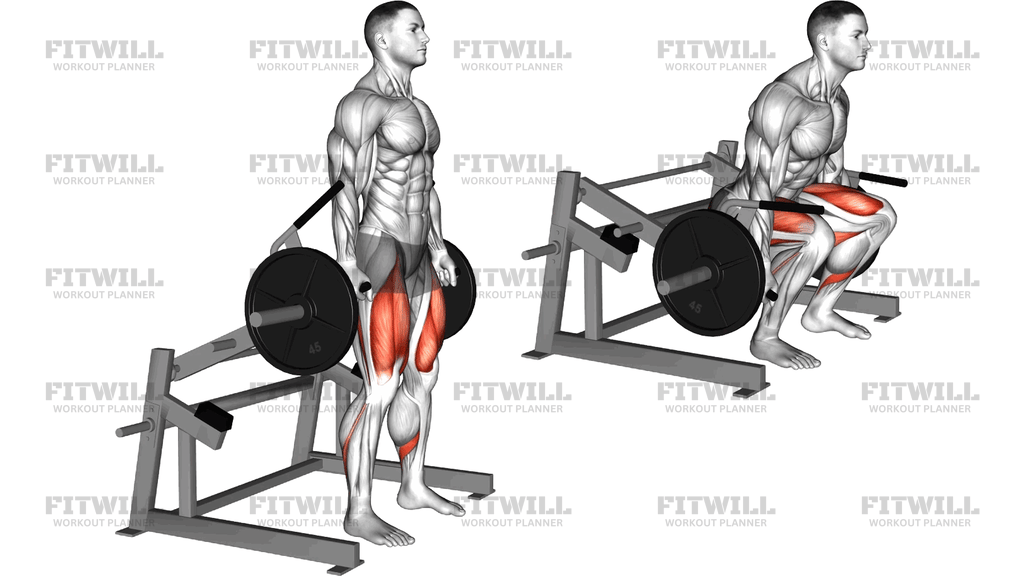
Lever T-Bar Row Plate Loaded is a plate-loaded leverage machine row performed from a bent-over stance on the built-in foot platform. The image shows the lifter hinged at the hips with soft knees, a neutral spine, and a shoulder-width grip on the handles, which is the position that lets the machine load the back instead of turning the rep into a jerk.
This movement is a strong choice for building thickness through the upper back and mid-back while still training the lats and arms through a natural pulling path. The primary target here is the trapezius, with the rhomboids, latissimus dorsi, and biceps assisting. Because the machine arm follows a fixed arc, your posture and bar path matter more than trying to muscle the weight up with momentum.
Good reps start before the handles move. Plant both feet firmly, hinge until your torso is angled forward, and keep your chest proud without cranking your lower back. The shoulders should stay long and set, not rounded forward at the bottom. If you rush the setup or stand too upright, the row becomes shorter and less useful for the upper back.
During each pull, drive the elbows back and slightly out while bringing the handles toward the lower ribs or upper abdomen. Squeeze the shoulder blades together at the top without shrugging hard into your ears. On the way down, let the arms reach fully while keeping tension in the back and resisting the urge to drop the weight.
Use this exercise when you want a controlled horizontal pull that is easier to load than free-weight rows and more stable than a loose hinge. It works well in back-focused strength blocks, bodybuilding sessions, or accessory work after heavy deadlifts or presses. Keep the load honest, keep the torso quiet, and let the machine do the path while your back does the work.
[ Workout Log & Planner ]
Put your next workout in Fitwill
Keep your plan and training log ready when you are.


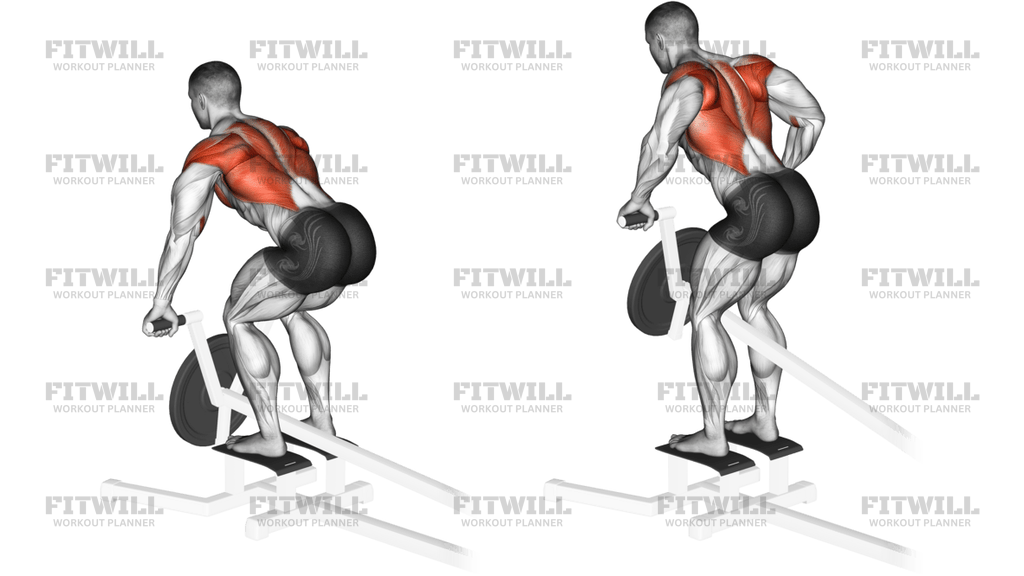
Instructions
- Stand on the platform with your feet about hip-width apart and take the handles with a neutral grip.
- Hinge at the hips until your torso is angled forward, then soften your knees and keep your spine long.
- Let your arms hang straight so the plates settle without losing your balance.
- Brace your midsection and set your shoulders down away from your ears before you pull.
- Drive your elbows back and slightly out, pulling the handles toward your lower ribs or upper abdomen.
- Squeeze the shoulder blades together at the top without leaning farther back.
- Lower the handles under control until your arms are nearly straight and the back stays loaded.
- Breathe out as you row and inhale as the weight returns to the start.
- Reset your brace each rep and stop if you have to jerk the machine to finish the pull.
Tips & Tricks
- Keep your hips back and your torso fixed so the machine arm, not your lower back, moves the load.
- Pull the elbows behind the body, but do not flare them so wide that the shoulders roll forward at the bottom.
- If the handles touch high on the chest, you are probably too upright; aim lower toward the ribs or upper stomach.
- Pause for a brief squeeze at the top to train the upper back instead of bouncing through the rep.
- Use a strap only if grip is limiting your back work; otherwise let your forearms and biceps assist naturally.
- Choose plates that let you lower the handles slowly without the stack or arm slamming down.
- Keep your neck neutral and look at the floor a few feet ahead so the spine stays long.
- If your lower back takes over, reduce the load and shorten the range slightly until the hinge stays solid.
- A steady 2-to-3 second lowering phase usually fits this machine better than fast, loose repetitions.
Frequently Asked Questions
What does the Lever T-Bar Row Plate Loaded work most?
It primarily targets the traps and upper back, with the rhomboids, lats, and biceps helping on each pull.
Can beginners perform this exercise?
Yes, beginners can use it if they keep the hinge shallow, the torso still, and the load light enough to row without jerking.
Where should the handles travel on each rep?
Pull them toward the lower ribs or upper abdomen. If the path drifts too high, the shoulders tend to shrug and the row turns into a partial.
What is the biggest form mistake on this machine?
The most common error is standing up through the rep and using body sway instead of keeping a locked hinge and a strong upper-back squeeze.
Should I shrug at the top to finish the pull?
No. The top position should come from squeezing the shoulder blades together, not from driving the shoulders up into the ears.
Does this exercise hit the lats or mostly the traps?
Both get trained, but the torso angle and elbow path make the upper back and traps the main emphasis here.
Is it better to use a slow lowering phase?
Yes. Lowering the handles slowly keeps tension on the back and prevents the machine arm from swinging or dropping between reps.
What should I do if my lower back feels this more than my upper back?
Reduce the load, hinge a little less deeply, and keep your ribs stacked over your hips so the torso stays supported instead of collapsing.