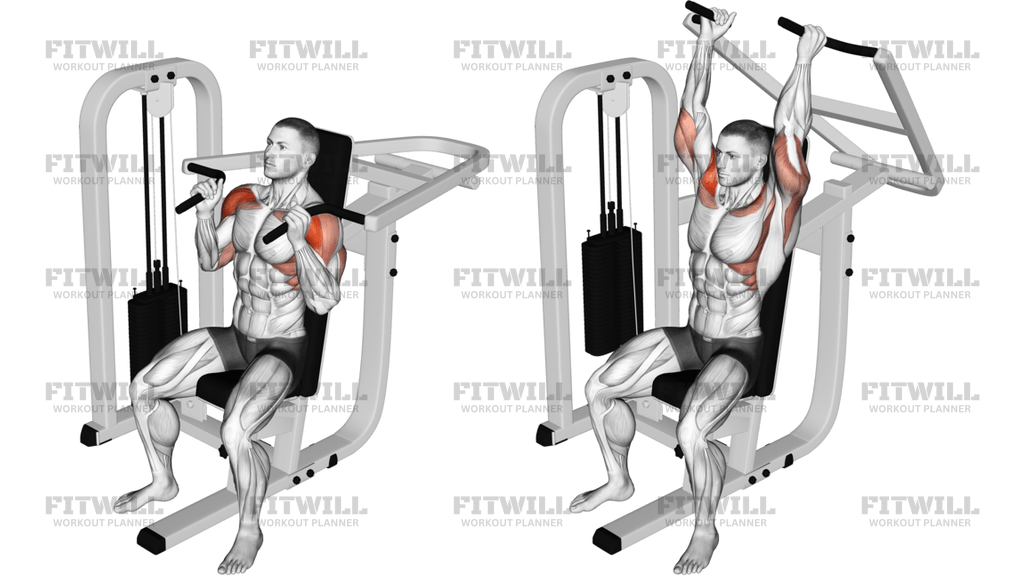
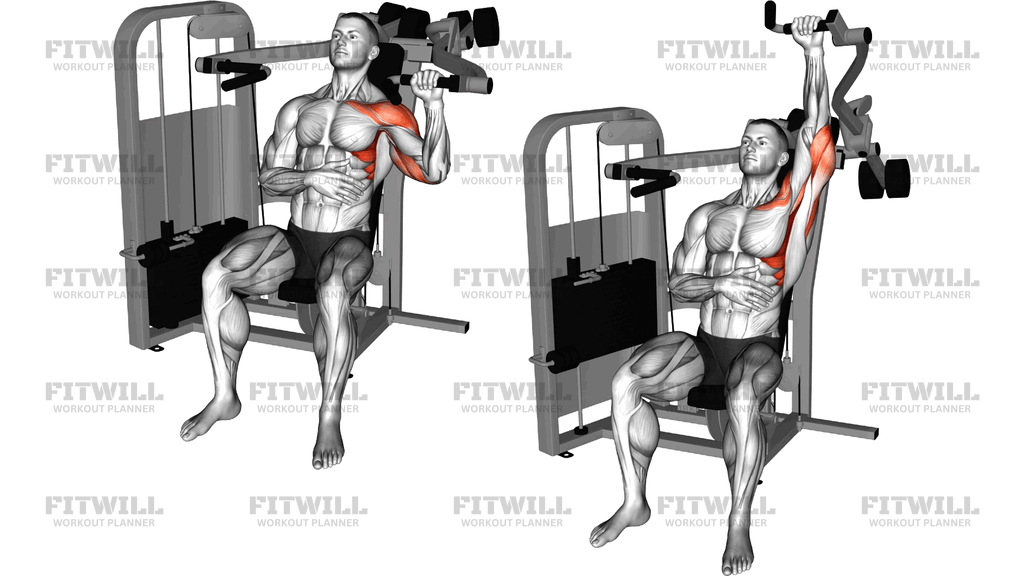
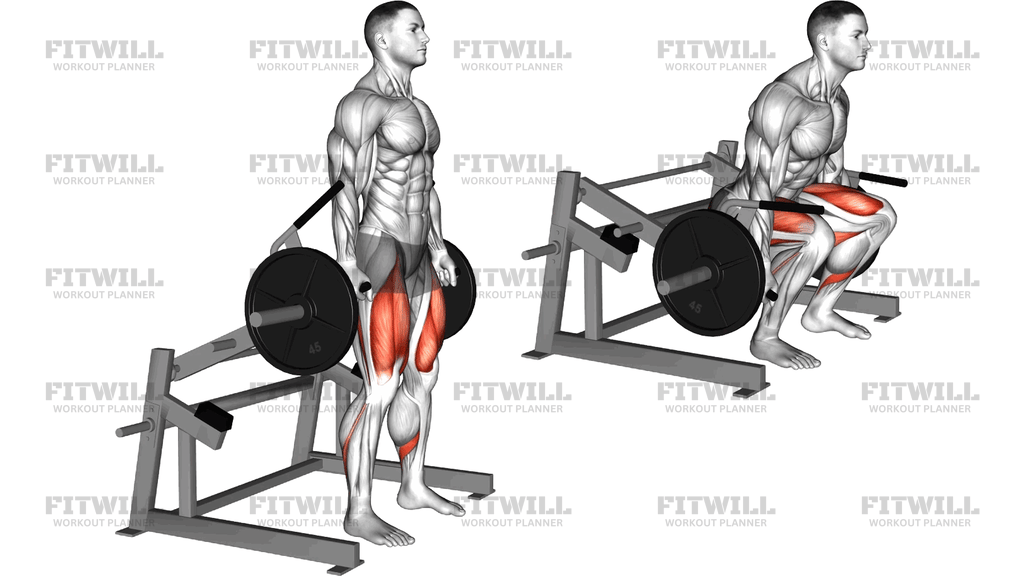
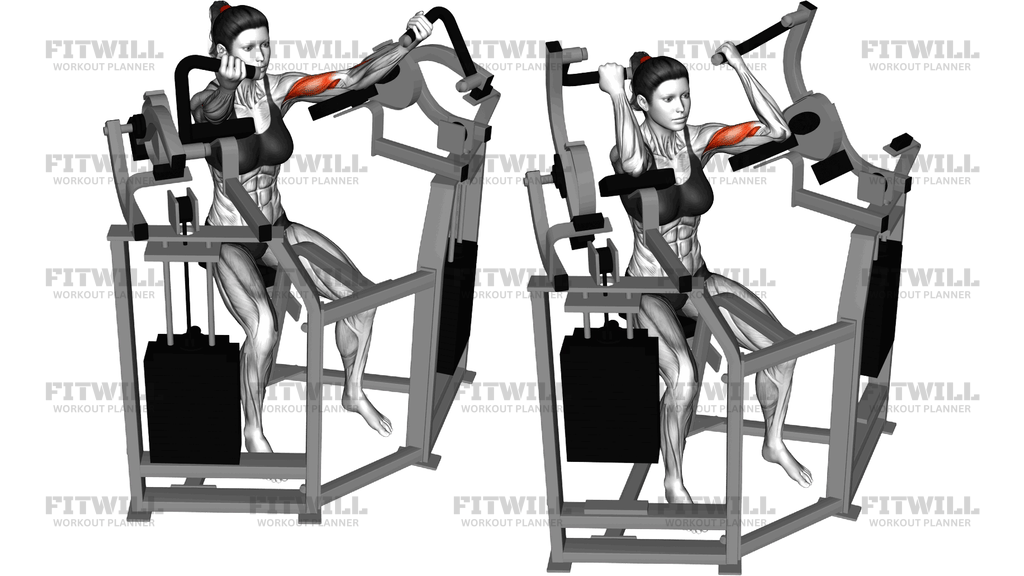
Lever Bent-Over Row With V-Bar Plate Loaded
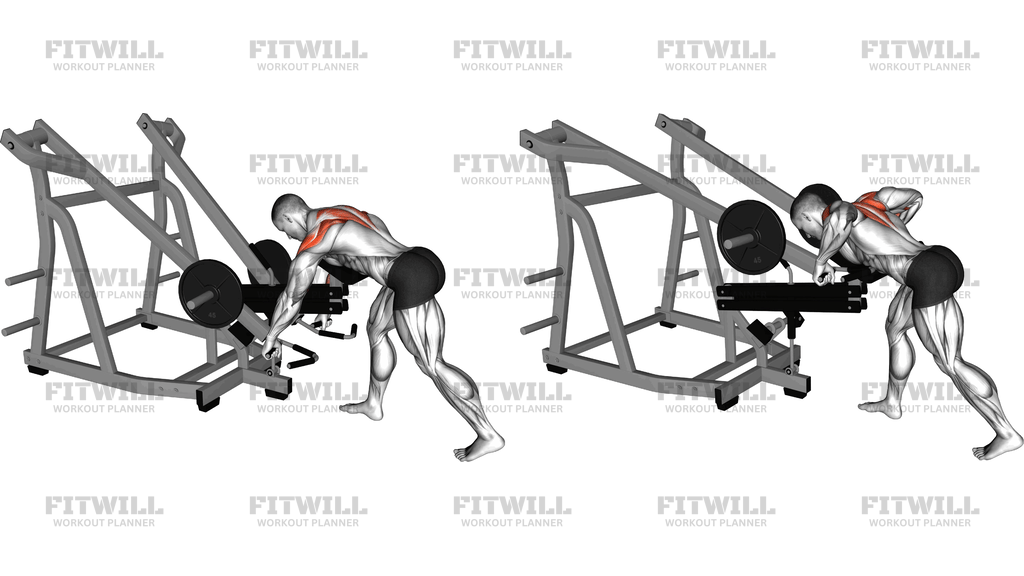
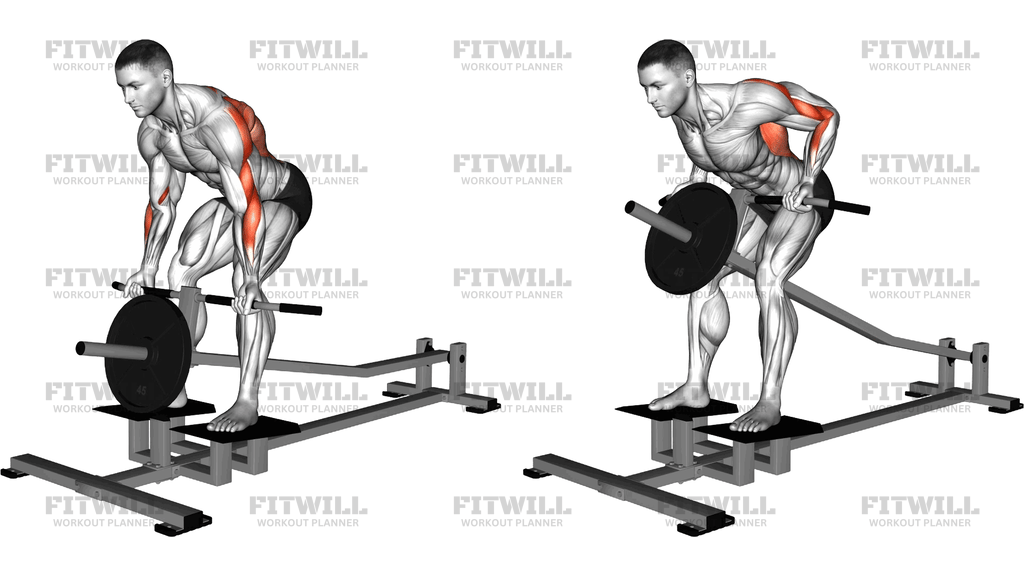
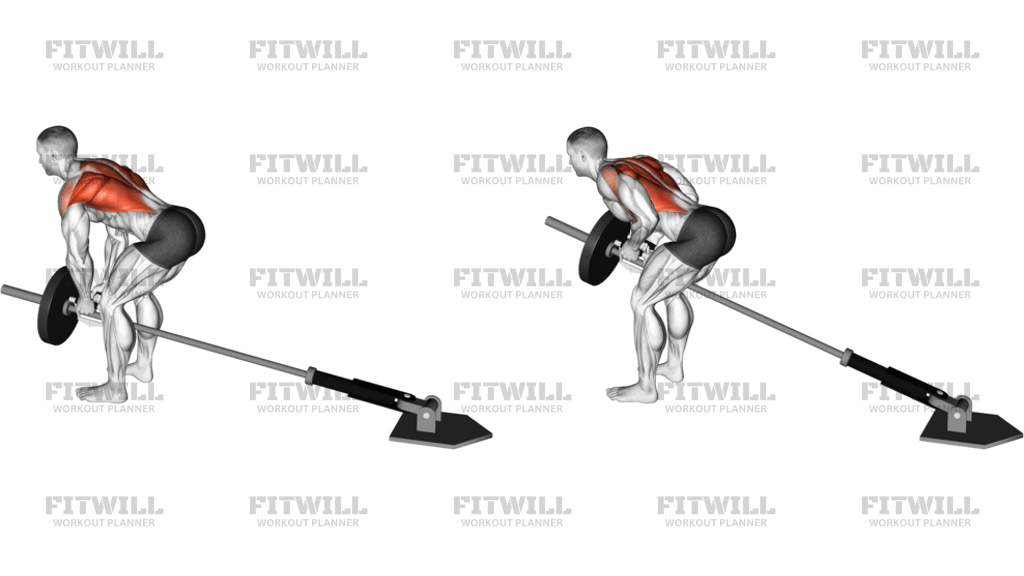
Lever Bent-Over Row With V-Bar Plate Loaded is a plate-loaded machine row performed from a hip hinge with both feet planted, a neutral V-bar in the hands, and the torso held in a strong bent-over position. The machine gives you a fixed arc, but your posture still matters: the more stable the hinge, the easier it is to row with the upper back instead of turning the movement into a body swing.
This variation puts the biggest emphasis on the traps and upper back, with the rhomboids, lats, and biceps helping to control the pull. In practice, that means the shoulders should stay organized, the elbows should drive back in a clean path, and the neck should remain long and neutral. The V-bar keeps the wrists in a comfortable grip and lets you pull the handle toward the lower ribs or upper abdomen without flaring the elbows excessively.
The exercise works best when the setup is deliberate. Hinge at the hips, bend the knees slightly, brace the trunk, and let the arms hang straight before you start the first rep. From there, row by pulling the elbows back and slightly out while keeping the chest steady and the spine from changing shape. At the top, squeeze the shoulder blades without leaning farther back. Lower the handle under control until the arms are long again and the shoulders can reach forward just enough to keep tension on the back.
Use this row when you want a strict back builder that teaches you to keep tension through the torso while moving a load through the upper-back range of motion. It fits well in strength blocks, hypertrophy work, or accessory training after bigger compounds. Beginners can use it as long as they keep the load honest and the hinge stable, while more experienced lifters can use it to add controlled volume without losing the mechanics of a bent-over row. It is also useful when you want to reinforce a clean pulling pattern without having to balance a free barbell, because the machine gives you a consistent arc while still demanding that you own the torso angle. If the torso rises, the lower back takes over, or the handle turns into a heave, the load is too heavy for the pattern.
[ Workout Log & Planner ]
Put your next workout in Fitwill
Keep your plan and training log ready when you are.


Instructions
- Load the plate-loaded leverage machine and attach or grasp the neutral V-bar so both hands can stay in line with the handle.
- Stand with your feet planted on the floor or platform, hinge at the hips, and bend your knees slightly until your torso is angled forward in a strong bent-over position.
- Keep your spine neutral, chest firm, and neck long while letting the arms hang straight down from the shoulders.
- Brace your trunk, then start the pull by driving your elbows back and slightly out toward your lower ribs or upper abdomen.
- Keep the handle close to your body and let the shoulder blades retract without leaning your torso farther back.
- Squeeze hard at the top for a brief moment while keeping the hips and lower back fixed in place.
- Lower the handle slowly until the elbows are extended and the shoulders can reach forward under control.
- Inhale on the way down, exhale as you row, and reset your hinge before the next rep if your posture changes.
Tips & Tricks
- Keep the hinge fixed; if your chest keeps rising during the set, the load is too heavy.
- Pull the V-bar toward the lower ribs or upper abdomen, not up toward the chest or neck.
- Let the elbows travel back in a natural arc instead of flaring so far out that the shoulders lose position.
- Reach slightly forward at the bottom without rounding the low back so the upper back gets a full stretch.
- Do not jerk the handle off the bottom; start each rep with a controlled brace and smooth pull.
- Keep your gaze a few feet in front of you so the neck stays aligned with the spine.
- Use a brief squeeze at the top if you tend to rush the rep and lose the upper-back contraction.
- Choose a load that lets you row cleanly for every rep rather than turning the movement into a hip extension.
- If grip limits the set before your back does, use straps or reduce the load instead of shrugging the shoulders.
Frequently Asked Questions
What muscles does Lever Bent-Over Row With V-Bar Plate Loaded work most?
It mainly targets the traps and upper back, with the rhomboids, lats, and biceps helping during the pull.
Where should I pull the V-bar on each rep?
Pull the handle toward your lower ribs or upper abdomen so the elbows drive back in a strong row path.
Should my torso stay in the same bent-over angle the whole set?
Yes. A small amount of movement is normal, but the torso should not keep rising as you row.
Is this the same as a seated cable row?
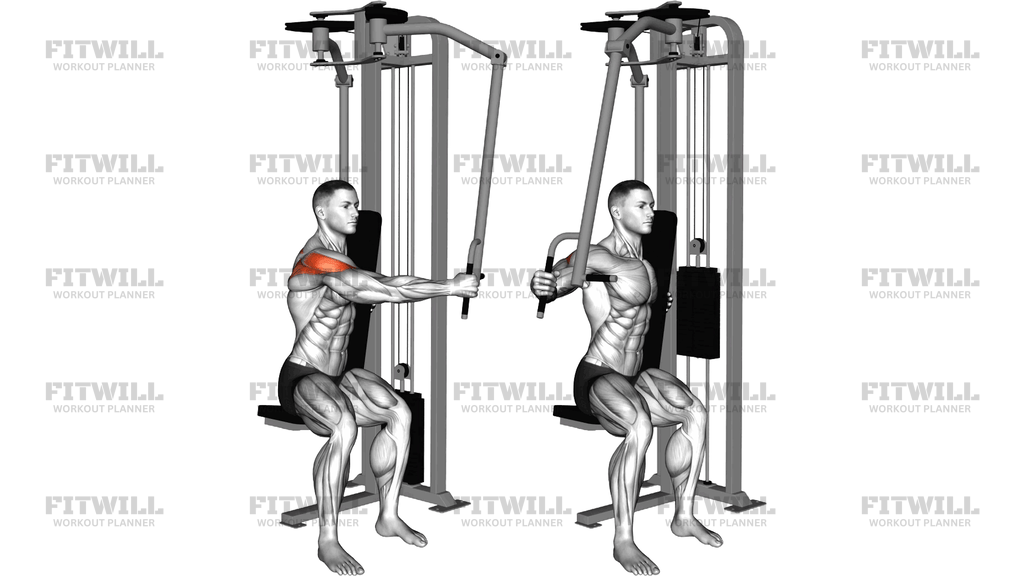
No. This version is done from a hip hinge on a plate-loaded leverage machine, which makes torso control a bigger part of the exercise.
Can beginners use this machine row?
Yes, as long as the load is light enough to keep the hinge, spine, and handle path strict.
Why do I feel the movement in my biceps too?
The biceps help bend the elbows, but the row should still be driven by the back and shoulder blades.
What is the most common form mistake?
Using momentum from the hips or lower back instead of holding the bent-over position and rowing with control.
How can I make this more back-focused?
Keep the neck neutral, use a controlled pause at the top, and stop the set when the torso starts to swing.