Lever Lying T-Bar Row
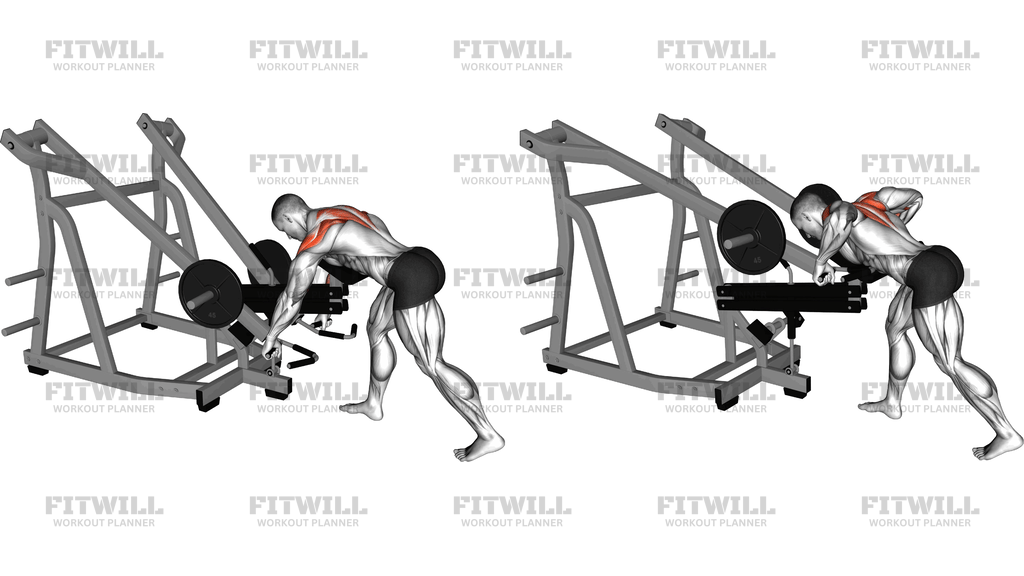
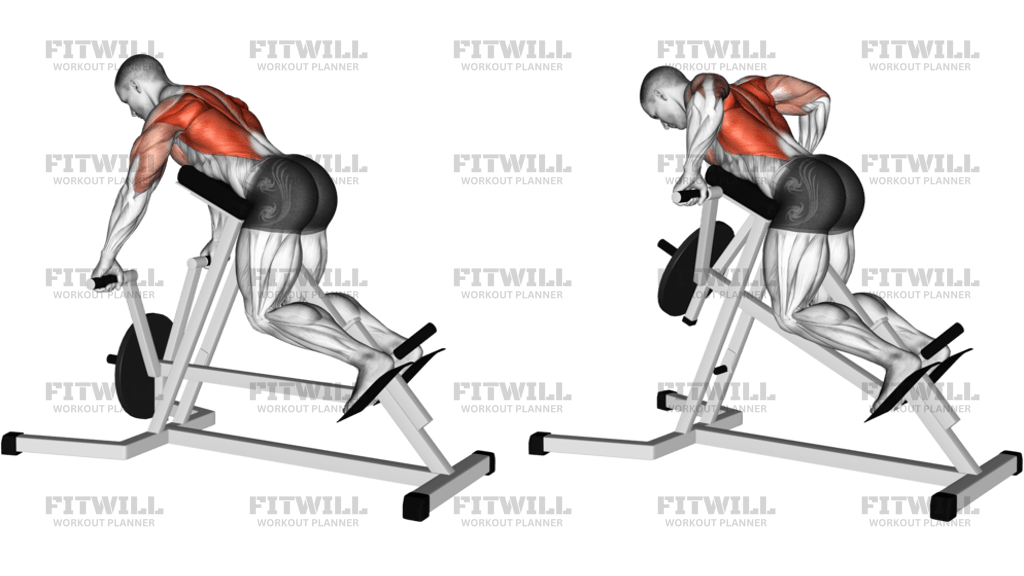
Lever Lying T-Bar Row is a chest-supported rowing exercise that trains the upper back, lats, traps, and arms while the machine handles most of the stability work. Because your chest and hips stay anchored to the pad, the row can be loaded hard without asking the lower back to hold the torso up. That makes it a useful choice when you want strict back training with a predictable path and very little body English.
The support from the angled pad changes the feel of the row in a good way: you can focus on pulling with the elbows, controlling the shoulder blades, and keeping the neck relaxed. Instead of fighting to balance, you can pay attention to where the handles finish and how the shoulder blades move through each rep. The result is usually cleaner back work and less cheating from hip drive or torso swing.
Set yourself on the machine so the chest is fully supported and the feet are braced on the rear platform. Take the handles with a neutral grip, let the arms hang long, and keep the ribs stacked over the pad rather than flaring up. That starting position matters because a stable bottom makes it easier to keep the pull smooth and to avoid turning the first inch of the rep into a jerk.
From there, drive the elbows back and slightly out until the handles reach the lower ribs or upper stomach. A short squeeze at the top should feel like the shoulder blades are coming together, not like the shoulders are climbing toward the ears. Lower the lever slowly until the arms are long again and the chest stays planted, then repeat with the same path and the same tempo.
Lever Lying T-Bar Row fits well in back-focused strength work, hypertrophy sessions, and accessory blocks after heavier lifts. It is also beginner-friendly because the machine supports the torso, but the exercise still rewards patience and precise loading. If the chest comes off the pad, the shoulders shrug, or the lever bounces at the bottom, reduce the load and shorten the rep until the movement stays crisp and honest with the machine's fixed path.
[ Workout Log & Planner ]
Put your next workout in Fitwill
Keep your plan and training log ready when you are.


Instructions
- Lie face down on the angled chest pad, brace your knees and feet against the rear support, and take the handles with a neutral grip.
- Slide until your chest is fully supported and your hips stay pressed into the pad, then let your arms hang long without losing contact with the machine.
- Set your ribcage down, keep your neck in line with your spine, and tighten your midsection before you start each rep.
- Begin the pull by driving your elbows back and slightly out, bringing the handles toward your lower ribs or upper stomach.
- Squeeze your shoulder blades together at the top without shrugging your shoulders toward your ears.
- Pause briefly when the handles are close to your torso and the upper arms are just past your body line.
- Lower the handles under control until your arms are straight again and your shoulders can reach forward slightly.
- Finish the set by keeping your chest on the pad as you let the handles return to the resting position.
Tips & Tricks
- Keep your chest planted on the pad; if it lifts, the load is too heavy.
- Think elbows back, not hands back, so the pull stays on the upper back and lats.
- Stop the row when the handles reach the lower ribs; pulling higher usually turns the top into a shrug.
- Let the shoulder blades reach forward a little at the bottom so each rep starts from a real stretch.
- Use a load you can lower slowly; bouncing the lever off the stop shortens the working range.
- Keep your chin slightly tucked so you do not crane your neck to chase the handles.
- If your biceps take over, use the neutral grips without squeezing them hard and focus on driving the elbows.
- Press your feet into the rear platform to keep your torso pinned when the set gets heavy.
Frequently Asked Questions
What muscles does Lever Lying T-Bar Row work?
It mainly trains the upper back and lats, with traps, rhomboids, rear shoulders, and biceps helping to finish the pull.
Is Lever Lying T-Bar Row good for beginners?
Yes. The chest support removes a lot of balance demand, so beginners can learn to row with less cheating as long as they keep the load light.
Where should the handles go on Lever Lying T-Bar Row?
Pull them toward the lower ribs or upper stomach, not up to the chest. That path keeps the shoulder blades working instead of turning the rep into a shrug.
Should my chest stay on the pad the whole time?
Yes. If your torso starts peeling off the pad, the lever is too heavy or you are rushing the pull.
What grip should I use on Lever Lying T-Bar Row?
Use the neutral handles if the machine provides them, with a grip that lets your elbows travel just outside your torso without jamming the shoulders.
Can I use Lever Lying T-Bar Row instead of a barbell row?
Yes, especially if you want less lower-back fatigue and a stricter path. It gives up some whole-body demand, but it is easier to repeat clean reps.
What is the most common mistake with Lever Lying T-Bar Row?
Shrugging at the top and bouncing the lever off the bottom are the big ones. Both reduce back tension and make the set much harder to control.
How heavy should I go on Lever Lying T-Bar Row?
Heavy enough to challenge the last reps, but light enough that you can pause at the top and lower the lever slowly without twisting your torso.