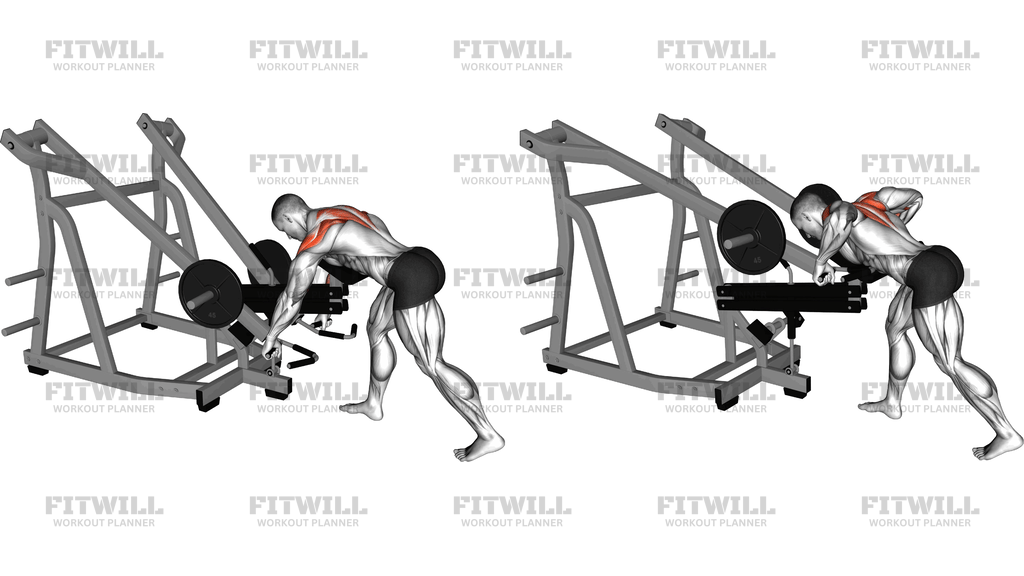
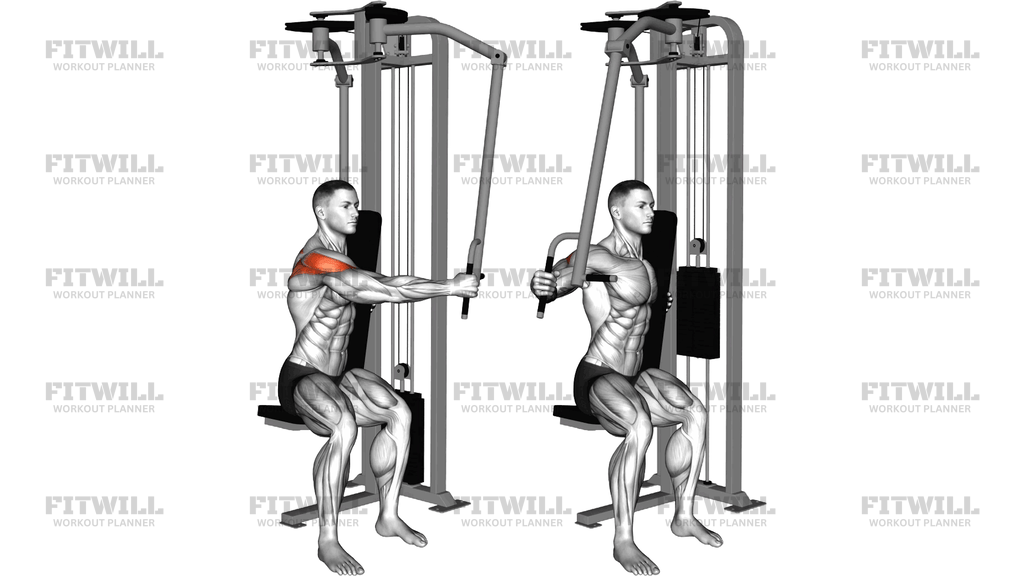
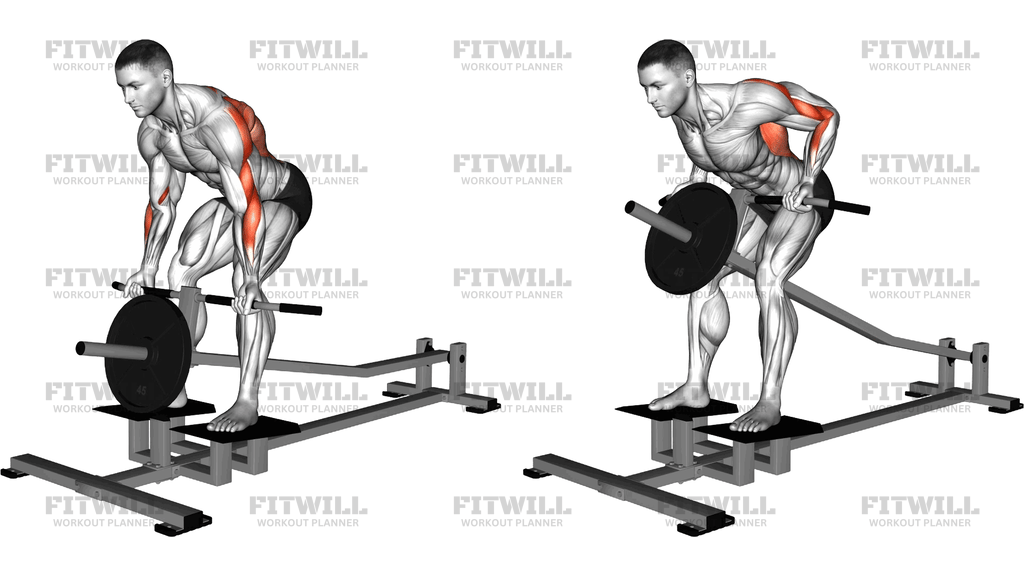
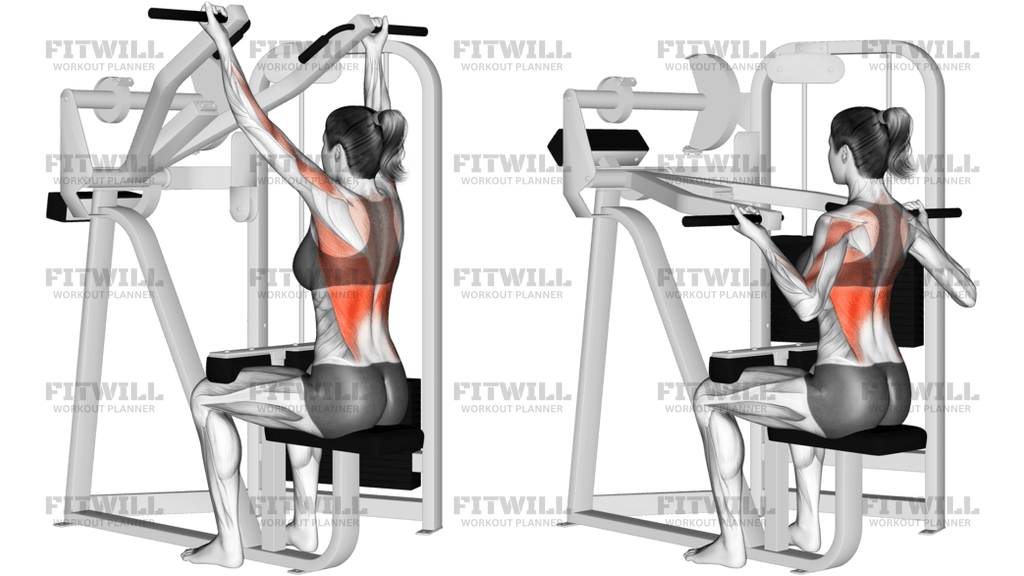
Lever Alternating Narrow-Grip Seated Row Plate Loaded
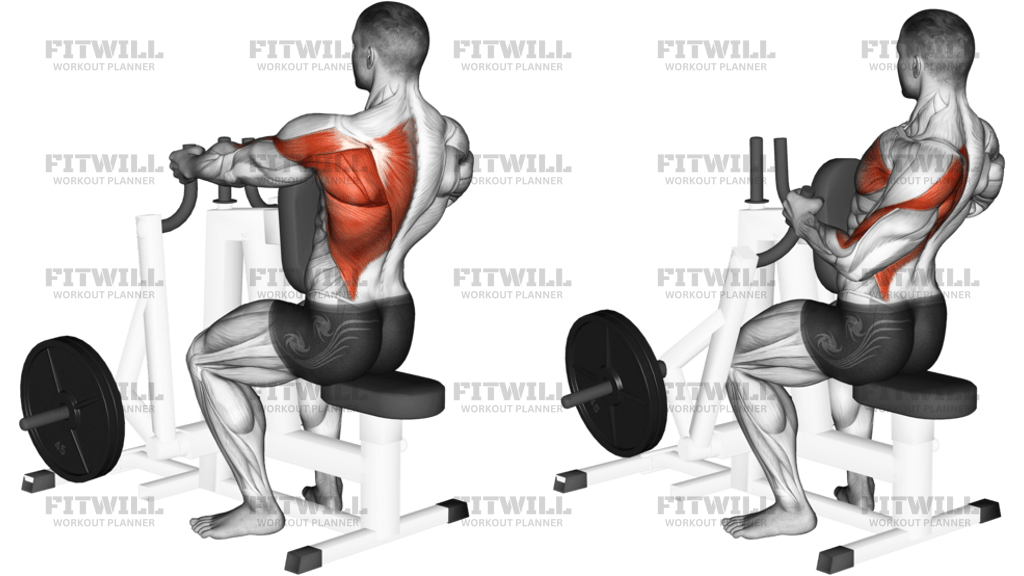
Lever Alternating Narrow-Grip Seated Row Plate Loaded is a chest-supported rowing exercise for building upper-back thickness, stronger pulling mechanics, and better left-right control. The independent arms let you train one side at a time, which makes it easier to notice strength differences and keep each rep honest. It is a useful machine variation when you want hard rowing work without relying on lower-back momentum.
Because the chest pad fixes the torso, the machine asks the shoulder blades and elbows to do the work instead of body sway. That makes the movement a strong match for the traps, rhomboids, lats, rear delts, and biceps, with the pad helping you keep the spine quiet. The narrow neutral grip keeps the elbows closer to the body, which usually gives a direct pull path and a clean squeeze through the upper back.
Set the seat so your chest stays firmly on the pad and the handles line up with your hands when your arms are almost straight. Plant both feet, keep your hips down on the seat, and take the slack out of the handle before the first pull. A good setup matters here because sitting too high, too low, or too far away turns the row into a shruggy reach instead of a controlled pull.
Each rep should start by letting the working shoulder blade reach forward under control, then finish with the elbow driving back toward the lower ribs or side seam. Keep the wrist neutral and let the forearm follow the handle instead of trying to curl the weight. On the return, lengthen the arm slowly until the shoulder blade can move forward again without the chest coming off the pad or the torso twisting.
Alternate sides with the same range and tempo so one arm does not race ahead while the other side stays passive. The rep should feel smooth, not jerky, and the top position should be a brief squeeze rather than a hard lean-back. If the handle starts swinging, the seat lifts, or the shoulders climb toward the ears, the load is too heavy for this movement to stay useful.
Use Lever Alternating Narrow-Grip Seated Row Plate Loaded as an accessory after heavier compound pulls, or on a back day when you want strict volume with less spinal loading. Beginners can use it well because the chest support removes a lot of balance demand, but they still need a light enough load to keep the alternation clean. Finish the set only when you can keep both sides smooth, the neck long, and the torso pinned to the pad.
[ Workout Log & Planner ]
Put your next workout in Fitwill
Keep your plan and training log ready when you are.


Instructions
- Adjust the seat so your chest presses firmly into the pad and the narrow handles line up with your hands when your arms are nearly straight.
- Plant both feet flat, sit tall against the support, and grip one handle with a neutral wrist and relaxed shoulders.
- Take a breath, brace your torso lightly against the pad, and let the working shoulder blade glide forward without losing contact with the chest pad.
- Drive the elbow back toward your lower ribs or side seam, keeping it close to your torso instead of flaring it wide.
- Pull until the handle reaches your side and the upper back is fully squeezed, then hold the top for a brief pause.
- Lower the handle slowly until the arm is almost straight and the shoulder can reach forward again under control.
- Keep the opposite arm steady on the pad while you alternate sides, or switch hands in a smooth rhythm if both levers move independently.
- Exhale through the pull, inhale on the return, and keep your neck long instead of shrugging toward the handles.
- Finish the set by returning both handles to the start position and standing up only after the machine is fully settled.
Tips & Tricks
- Set the seat height so the handles start in line with your shoulders, not up by your neck or low at your waist.
- Think about driving the elbow back, not pulling the handle with your hand; that keeps the upper back doing the work.
- Keep the chest glued to the pad on every rep so the machine does not turn into a torso swing.
- Let the shoulder blade reach forward at the bottom, but do not round hard enough to lose the ribcage position.
- Use a load that lets you pause at the torso without kicking your shoulder up or jerking the lever.
- If one side is stronger, slow the stronger arm down so the weaker side can match the same range and squeeze.
- A narrow grip should stay neutral and relaxed; if your forearm burns before your back, you are probably gripping too hard.
- Keep the elbow path close to your side to avoid turning the rep into a rear-delt fly.
- Stop the set when the handles start bouncing off the end range or your chest keeps lifting off the pad.
Frequently Asked Questions
What muscles does Lever Alternating Narrow-Grip Seated Row Plate Loaded work?
It mainly trains the traps and upper back, with strong help from the rhomboids, lats, rear delts, and biceps.
Is Lever Alternating Narrow-Grip Seated Row Plate Loaded good for beginners?
Yes. The chest pad removes a lot of balance demand, so beginners can focus on a clean elbow path and controlled alternation with light load.
Where should the handle travel on the Lever Alternating Narrow-Grip Seated Row Plate Loaded?
Pull it back toward your lower ribs or the side of your torso, not up toward your chest. That path keeps the row focused on the upper back instead of turning it into a shrug.
Should I keep my chest on the pad during every rep?
Yes. If your chest comes off the pad, you are probably using body English and losing the strict rowing pattern the machine is meant to give you.
Why does this row feel different from a regular seated cable row?
The chest support removes torso cheating, and the alternating lever design lets each side work on its own. That usually makes the upper back do more of the work and the lower back do less.
How heavy should I go on the Lever Alternating Narrow-Grip Seated Row Plate Loaded?
Heavy enough to challenge the upper back, but not so heavy that you bounce the handles or twist away from the pad. If the squeeze disappears, the load is too high.
What is the most common mistake with the narrow grip handles?
People often turn the pull into an arm curl or shrug the shoulders up. Keep the wrist neutral and lead with the elbow so the back finishes the rep.
Can I use Lever Alternating Narrow-Grip Seated Row Plate Loaded instead of barbell rows?
Yes, especially if you want less lower-back fatigue and more chest-supported control. It is a good swap on days when strict upper-back work matters more than free-bar loading.