Standing Lever Row
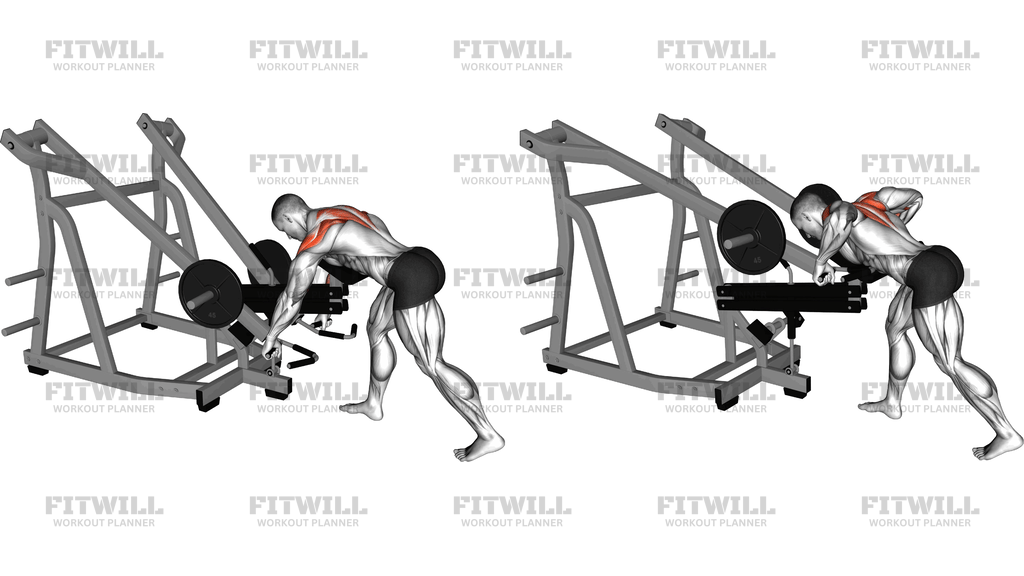
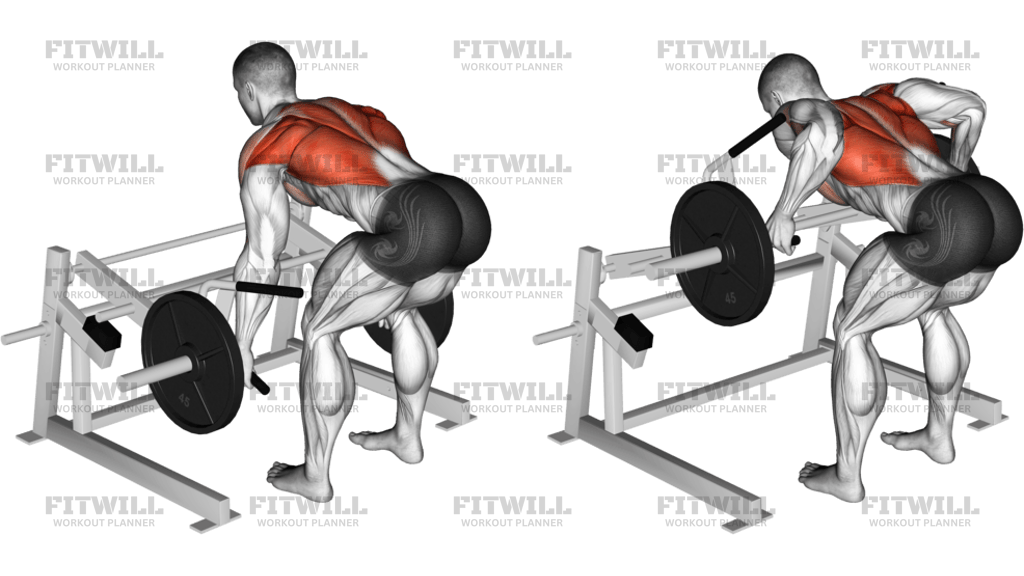
Standing Lever Row is a bent-over rowing exercise performed on a plate-loaded leverage machine. The fixed path of the machine lets you focus on pulling hard through the upper back while keeping your torso set, which makes it useful for building thickness, posture strength, and controlled pulling power. The main emphasis here is the traps, with the rhomboids, lats, rear shoulders, and biceps contributing to each rep.
The standing setup matters because it determines whether the movement stays in the upper back or turns into a sloppy hip and lower-back swing. Hinge at the hips, keep a soft bend in the knees, and hold the spine long and neutral while you reach for the handles. From that position, the row should feel like a deliberate pull from a stable torso, not a standing heave.
At the top of the rep, the handles should travel toward the lower ribs or upper abdomen while the elbows move back and slightly out in line with the machine’s path. Squeeze the shoulder blades together without cranking the neck or shrugging the shoulders toward the ears. The lever machine gives you resistance through the whole arc, so a clean rep is about guiding the path and keeping the torso from rising as the load gets heavier.
Lower the handles slowly until the arms are extended and the upper back is lengthened again, then repeat with the same body position. Breathing should stay calm and consistent: brace before the pull, exhale through the effort, and inhale on the controlled return. If the weight forces you to round your back, jerk the handles, or shorten the eccentric, the load is too high for the quality this exercise is meant to train.
This movement fits well in back-focused sessions, upper-body accessories, or any program that needs a controlled horizontal pull without a free barbell or dumbbell path. It is especially useful when you want to build the traps and mid-back while teaching the body to keep a fixed hinge under tension. Use a load that lets every rep look the same from the first to the last.
[ Workout Log & Planner ]
Put your next workout in Fitwill
Keep your plan and training log ready when you are.


Instructions
- Stand inside the leverage machine with your feet about hip-width apart, hinge forward at the hips, and keep a soft bend in your knees.
- Reach down and grip the machine handles with your arms hanging straight, keeping your spine long, chest proud, and neck neutral.
- Set your shoulders away from your ears and brace your midsection before the first pull so your torso stays fixed.
- Drive your elbows back along the machine path and pull the handles toward your lower ribs or upper abdomen.
- Keep your torso angle steady as you row; do not stand up or yank the weight to finish the rep.
- Squeeze your shoulder blades together briefly at the top without shrugging your shoulders.
- Lower the handles slowly until your arms are extended and your upper back feels lengthened again.
- Exhale as you pull, inhale on the way down, and reset your hinge before starting the next repetition.
Tips & Tricks
- Choose a load that lets you hold the same hip hinge from start to finish; if your torso rises, the set is too heavy.
- Think about driving the elbows back, not yanking with the hands, so the row stays centered in the upper back.
- Keep the chest long and the lower back neutral; rounding to reach more range usually steals tension from the target muscles.
- Let the shoulder blades move forward on the way down, but do not collapse the ribs or lose your braced torso position.
- If the top of the rep turns into a shrug, reduce the load and keep the shoulders down as you squeeze back.
- Use a smooth tempo on the lowering phase so the lever arm does not swing you forward at the bottom.
- Keep your feet planted and pressure even through the whole foot so the pull does not turn into a body-English rep.
- Stop the set when you can no longer pull the handles to the same point on your torso.
Frequently Asked Questions
What muscle does Standing Lever Row target most?
The traps are the main focus, with the rhomboids, lats, rear shoulders, and biceps helping through the pull.
How should I set up on the lever machine?
Stand with a hip-width stance, hinge forward, keep a soft knee bend, and reach the handles with a neutral spine before you start rowing.
Where should the handles move during each rep?
Pull the handles toward your lower ribs or upper abdomen while your elbows travel back and slightly out along the machine’s path.
Should my torso move as I row?
No. Your torso should stay in the same hinge angle; if you keep standing taller to finish the rep, the load is too heavy.
Is it okay to shrug at the top?
No. Finish with the shoulder blades squeezing together, but keep the shoulders away from your ears.
Can beginners do Standing Lever Row?
Yes. It is beginner-friendly when the load is light enough to keep the hinge, torso angle, and lowering phase under control.
What if I feel it mostly in my lower back?
Lighten the load, shorten the hinge slightly, and keep your ribs stacked over your pelvis so the upper back can do the work.
How do I progress this row over time?
Add weight only when every rep reaches the same lower-rib target with the same torso angle and a slow, controlled return.