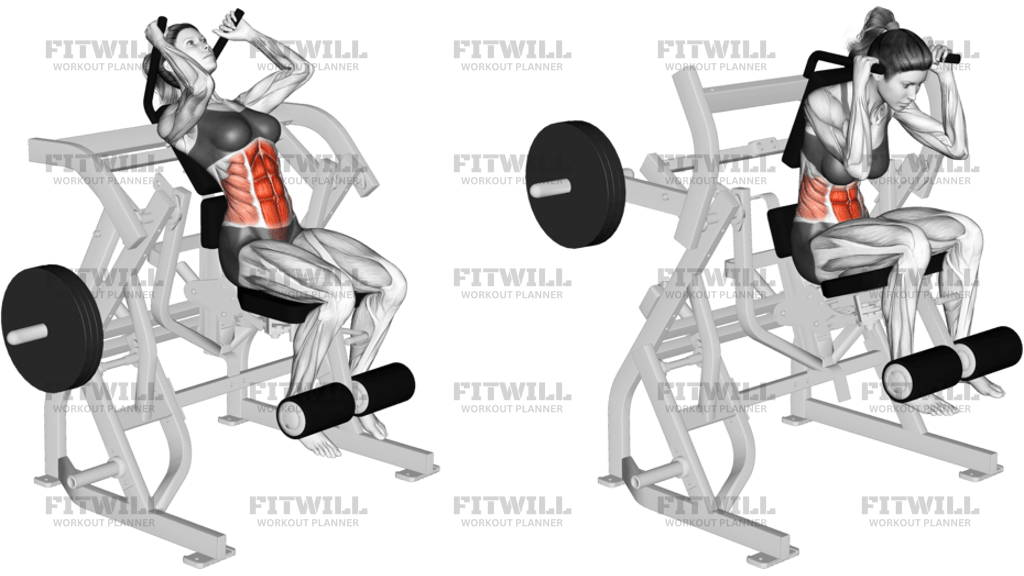
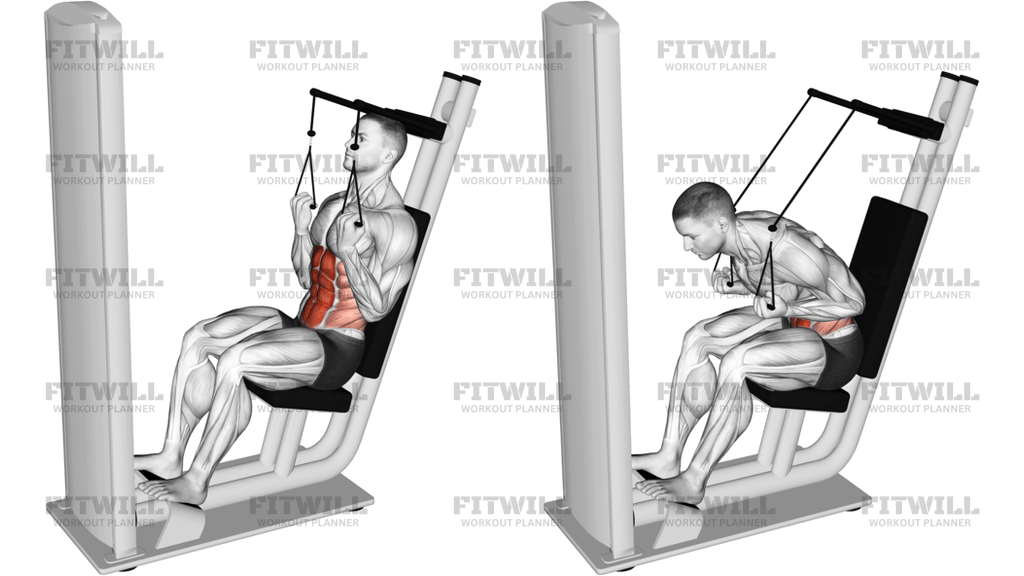
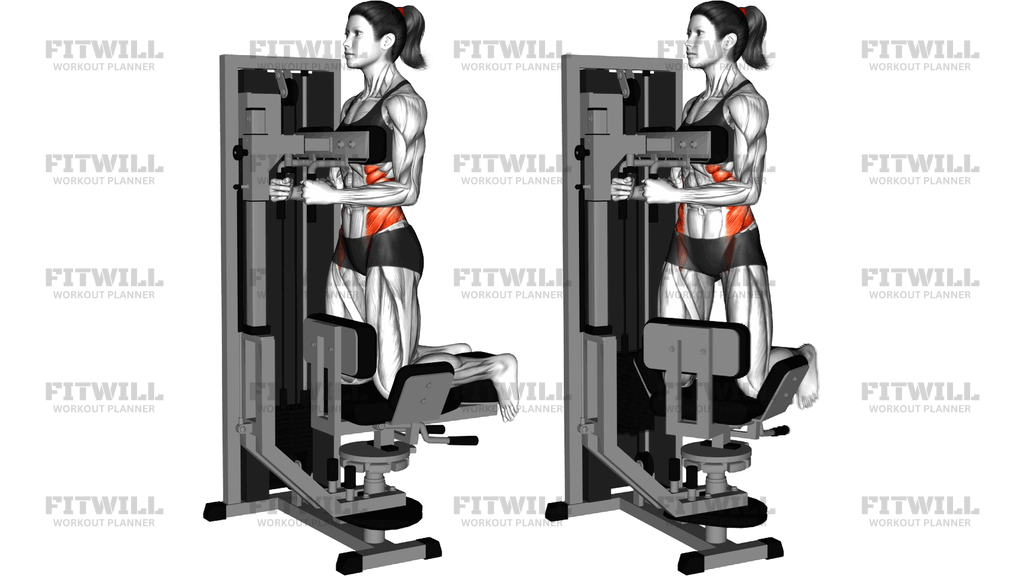
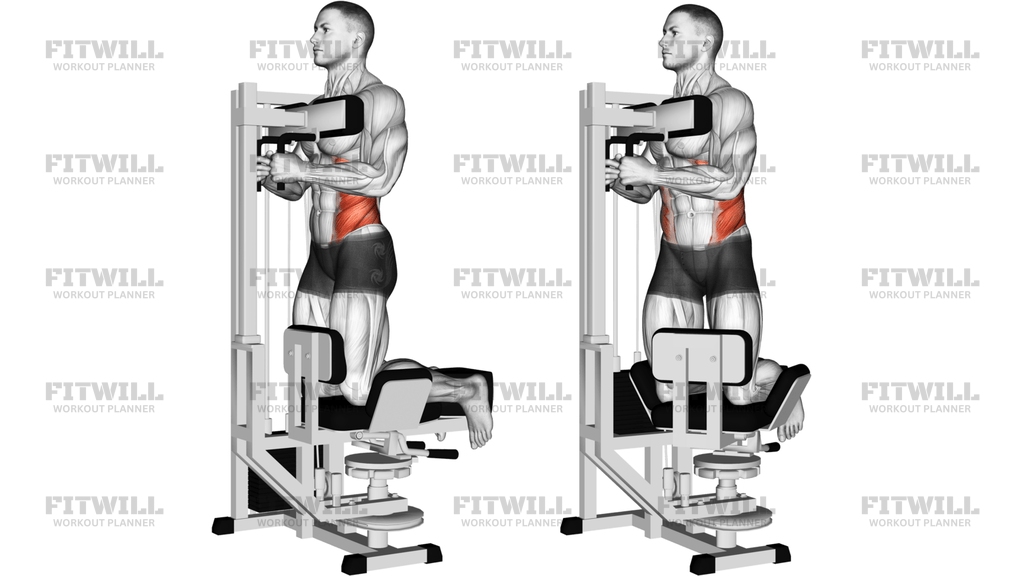
Lever Twist
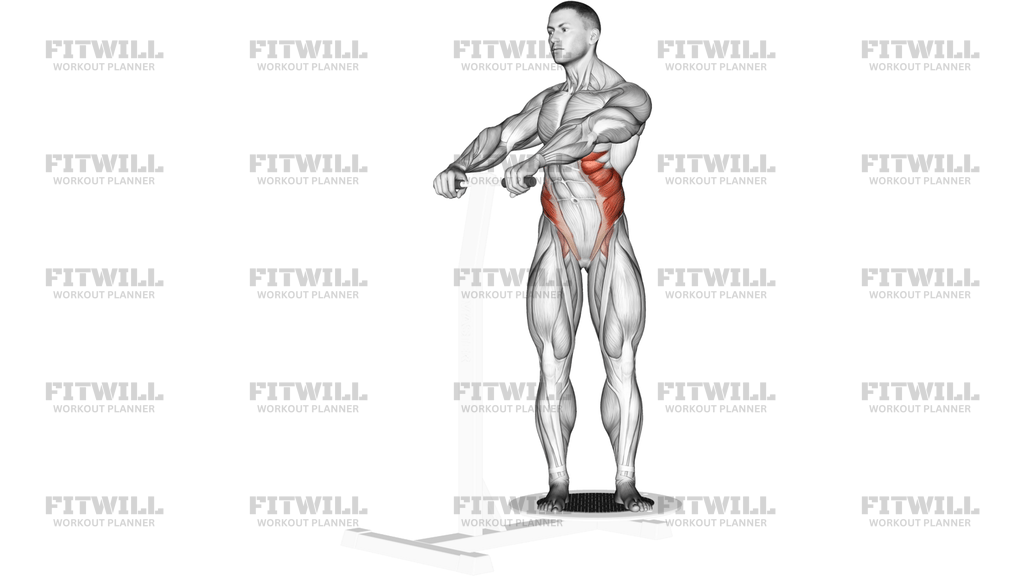
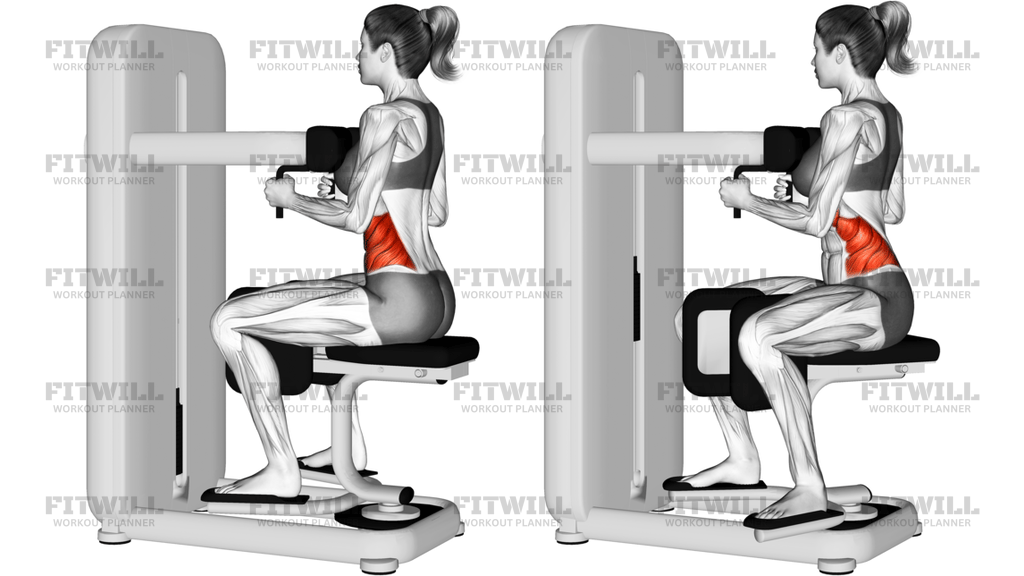
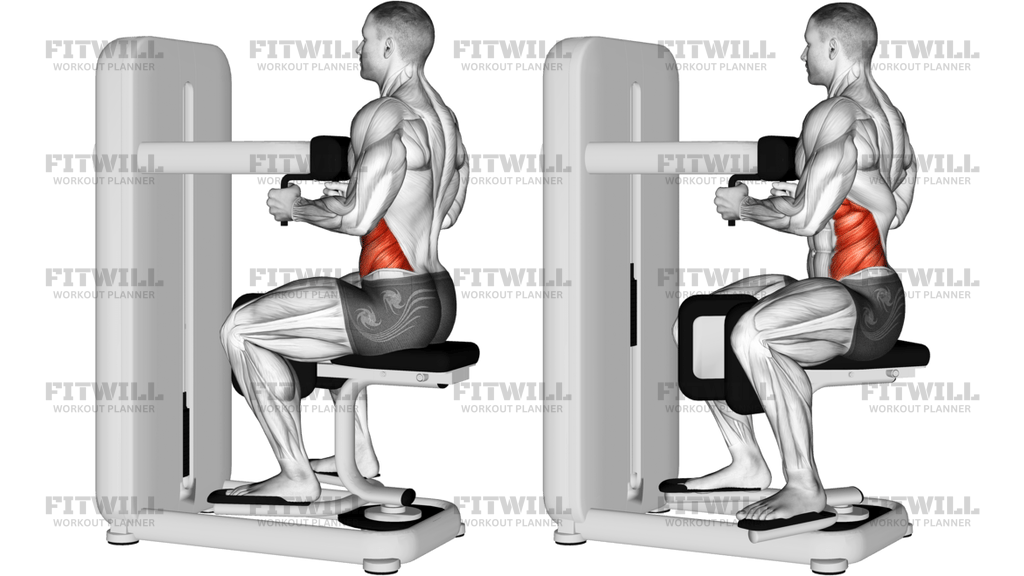
Lever Twist is a standing core exercise done on a leverage machine with your feet planted on the platform and your hands on the handles. The machine gives you a guided place to apply rotational force, but the real work still comes from the muscles around your waist controlling the turn.
This movement is aimed primarily at the obliques, with the rectus abdominis, deep abdominals, lower back, and hip stabilizers helping keep the torso organized while you rotate. In practice, it trains controlled trunk rotation rather than a big swinging turn. That makes it useful for building torso strength, anti-wobble control, and cleaner rotation mechanics for sport or general training.
The setup matters because a twist machine is easy to turn into a momentum exercise. Stand tall on the platform with your feet balanced, grip the handles evenly, and start with your ribs stacked over your pelvis. From there, the twist should happen smoothly through the torso while your feet stay grounded and your shoulders stay level. If the machine lets your hips wander or your heels pop up, the load is too heavy or the range is too aggressive.
A good repetition feels like a controlled sweep from center into one side, a brief pause at the end of the turn, and a smooth return without bouncing. Keep the neck relaxed, keep the elbows from yanking the handles, and breathe out as you rotate so the core can brace without stiffness. The goal is not the biggest possible range; it is the cleanest range you can repeat without losing posture.
Use Lever Twist as accessory core work, as part of a warm-up before heavier lifting, or in a trunk-focused session where controlled rotation is the goal. It is especially helpful for lifters and athletes who want stronger oblique involvement without free-swiveling through the spine. Keep the load modest, respect any low-back irritation, and stop the set when the movement starts coming from your shoulders, arms, or momentum instead of your waist.
[ Workout Log & Planner ]
Put your next workout in Fitwill
Keep your plan and training log ready when you are.


Instructions
- Stand on the machine platform with your feet about hip-width apart, toes forward, and knees softly bent.
- Grip the handles at chest height with straight arms and keep your shoulders level.
- Stack your ribs over your pelvis and set your neck in a neutral position before you start.
- Exhale and brace, then rotate your torso smoothly toward one side against the machine resistance.
- Keep both feet planted and let the turn come from your waist rather than from a hard arm pull.
- Pause briefly at the end of the twist without bouncing or leaning back.
- Return through center under control, keeping the handles quiet and the movement smooth.
- Alternate sides or complete the programmed side if the machine or plan uses one direction at a time.
Tips & Tricks
- Keep the resistance light enough that your heels stay down and your torso turns smoothly instead of jerking.
- Think about turning your ribcage, not pulling the handles with your arms.
- If your hips travel a lot on the platform, shorten the range and reduce the load.
- Do not let the shoulders lead the twist; keep them level while the waist rotates.
- A small pause at the end of the turn makes the obliques do the work instead of the rebound.
- Exhale as you twist and inhale as you return to center to keep the trunk stable.
- Stop before the lower back feels pinched or the motion turns into a hard lumbar crank.
- Use slower reps if the machine feels easy, because control matters more than speed here.
Frequently Asked Questions
What muscle does Lever Twist target most?
The obliques are the primary target, with the abs, deep core, and lower back helping stabilize the twist.
Can beginners perform this exercise?
Yes. Beginners usually do best with light resistance, a short range, and a strict torso-only twist.
Where should my feet and hands be on the machine?
Keep your feet flat and balanced on the platform, and hold the handles at chest height without shrugging your shoulders.
Should my hips rotate too?
A small amount of hip movement can happen, but the exercise should be driven mostly by the waist and ribcage, not by a big hip swing.
What is the biggest form mistake on Lever Twist?
Using momentum, yanking the handles, or letting the heels lift usually means the load is too heavy.
Does this exercise train the lower back too?
The lower back helps stabilize the torso, but it should not be the main driver of the twisting motion.
Is Lever Twist good for sports training?
It can be useful for sports that need controlled trunk rotation, especially when you want direct oblique work without free-swiveling.
How should I progress this movement?
Add load slowly, then progress by keeping the same range with less body sway and a cleaner pause at the end of each twist.