Lying Crossover Stretch
Lying Crossover Stretch is a supine mobility drill that opens the glutes, outer hip, and waist while the shoulders stay anchored to the mat. It is performed from the floor with body weight only, so the quality of the position matters more than effort or speed. The goal is not to force the knee farther across the body, but to create a smooth, repeatable stretch that settles the pelvis and gives you a clean line of tension through the side of the hip and trunk.
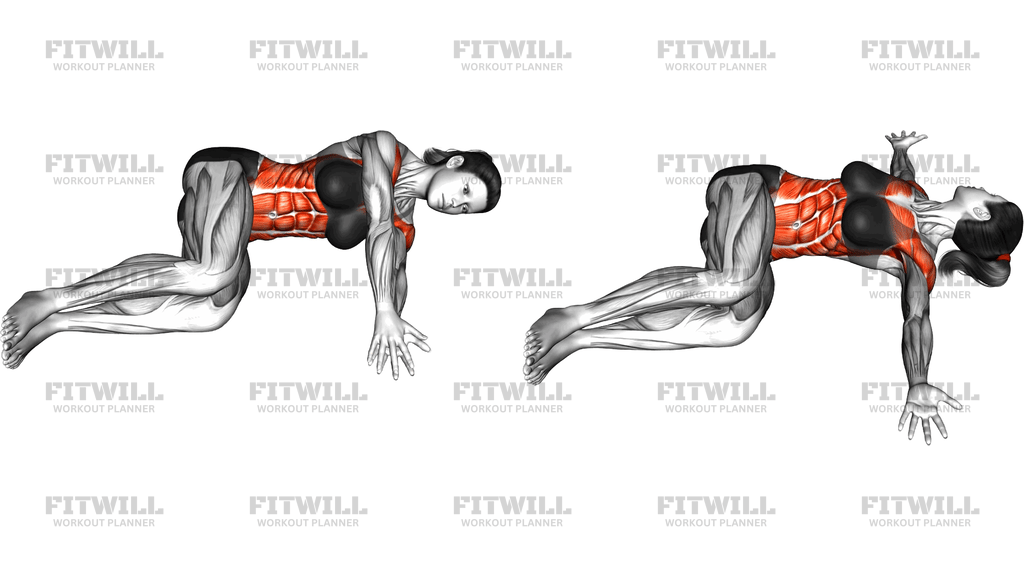
The image shows the classic crossover pattern: one leg is drawn across the midline while the torso stays mostly flat, creating rotation through the pelvis and a stretch through the glute and oblique chain. Keeping the opposite shoulder down is important because it prevents the stretch from turning into an uncontrolled twist. When the setup is right, you should feel the range in the outer hip, lower back, and side of the abdomen rather than a pinch in the knee or a cramp in the hip flexors.
This stretch works best when you move slowly into the end range, pause, and breathe long enough for the tissue to relax. A bent knee usually makes the position friendlier for the hip and back, while a straighter leg increases the lever and makes the stretch stronger. Small changes in arm position, knee angle, and how far the leg crosses will change the sensation a lot, so adjust the shape until the stretch is clear but still easy to control.
Use Lying Crossover Stretch in a warmup, cooldown, or recovery block when you want to restore hip rotation or ease stiffness after training. It is especially useful after sessions that load the glutes, squats, lunges, running, or rotational work. Keep the movement pain-free, avoid jerking the leg across the body, and back off if the sensation shifts from a broad stretch into sharp low-back or knee discomfort. Clean positioning and steady breathing make this a simple but effective floor stretch.
[ Workout Log & Planner ]
Put your next workout in Fitwill
Keep your plan and training log ready when you are.


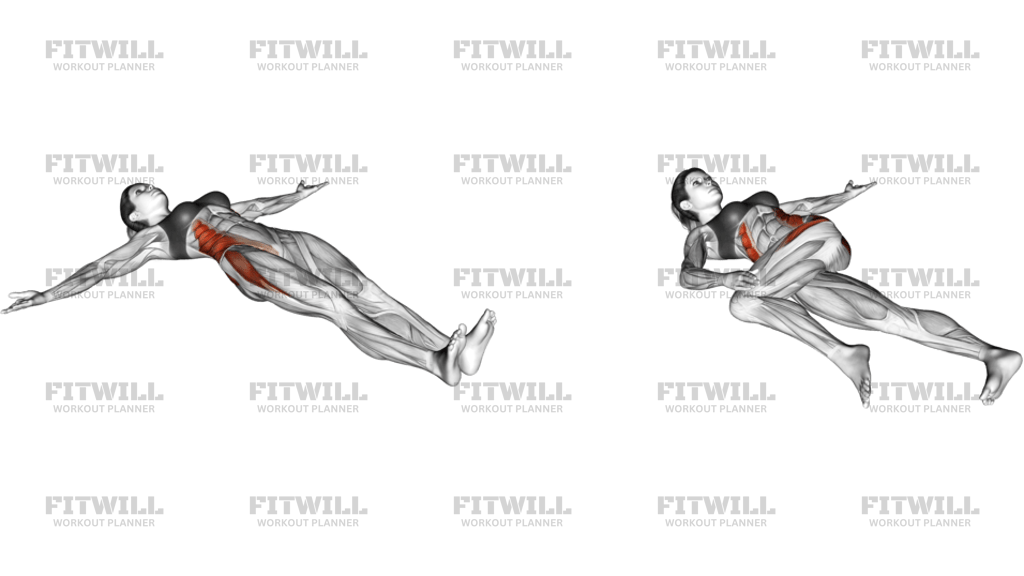
Instructions
- Lie on your back on an exercise mat and extend both arms out in a T so your shoulders have room to stay down.
- Bend one knee and draw that leg across your body toward the opposite side while the other leg stays long and relaxed.
- Keep the crossed-side shoulder heavy on the mat as the pelvis starts to rotate and the leg moves over the midline.
- Use the opposite hand on the thigh or knee for light guidance, but do not pull the leg forcefully into position.
- Exhale as you lower into the stretch until you feel the outer hip, glute, and side waist lengthen.
- Keep the neck relaxed and let your head rest where it feels neutral instead of craning toward the moving leg.
- Hold the end position with steady breathing and only as much tension as you can keep without shaking or pinching.
- Return the leg to center slowly, reset both shoulders, and repeat on the other side before switching sides again if needed.
Tips & Tricks
- Keep the opposite shoulder pinned to the mat; if it lifts, the stretch is probably turning into a twist instead of a true crossover.
- A bent knee usually feels better for the hip and lower back than forcing the leg straight across the body.
- Let the pelvis rotate only enough to feel the glute and outer hip lengthen; big, fast turns usually create a low-back pinch.
- If the stretch feels more like knee strain than hip tension, reduce how far the leg crosses and soften the bend.
- Long exhales help the ribcage settle and make the side of the waist easier to open.
- Keep the moving leg guided, not yanked; the hand should fine-tune the position rather than force it deeper.
- A neutral neck usually keeps the whole position calmer than turning the head aggressively away from the crossed leg.
- Use this as a controlled mobility hold, not as a bounce or rep-based abdominal drill.
Frequently Asked Questions
What does Lying Crossover Stretch target most?
It mainly stretches the glute, outer hip, and the side of the waist on the crossed-leg side.
Should my shoulders stay on the mat during the stretch?
Yes. Keeping both shoulders down is what keeps the movement honest and prevents the torso from collapsing into the twist.
Should the crossed knee be bent or straight?
A bent knee is usually the easiest place to start. Straightening the leg increases the lever and makes the stretch more intense.
Why does this sometimes feel in my lower back?
A little lower-back rotation can be normal, but if it feels sharp or pinchy, reduce the range and keep the pelvis from rolling too far.
Is this a good cooldown stretch after leg day or running?
Yes. It is a good floor stretch for the hips and trunk after squats, lunges, running, or other lower-body sessions.
How far should I let the leg cross over?
Only as far as you can keep the opposite shoulder down and still feel a broad stretch, not a joint pinch.
Can beginners use Lying Crossover Stretch safely?
Yes, as long as they keep the motion slow, avoid forcing range, and stop if the knee or low back complains.
How long should I hold each side?
Hold long enough to let the breath settle and the hip relax, usually around 20 to 40 seconds unless your program says otherwise.