Side Crunch Version 2
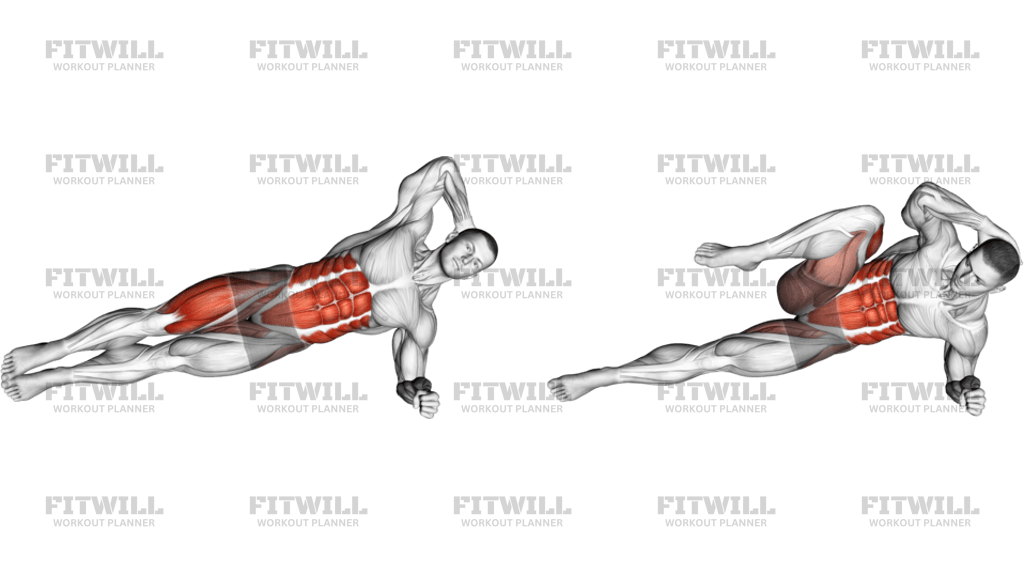
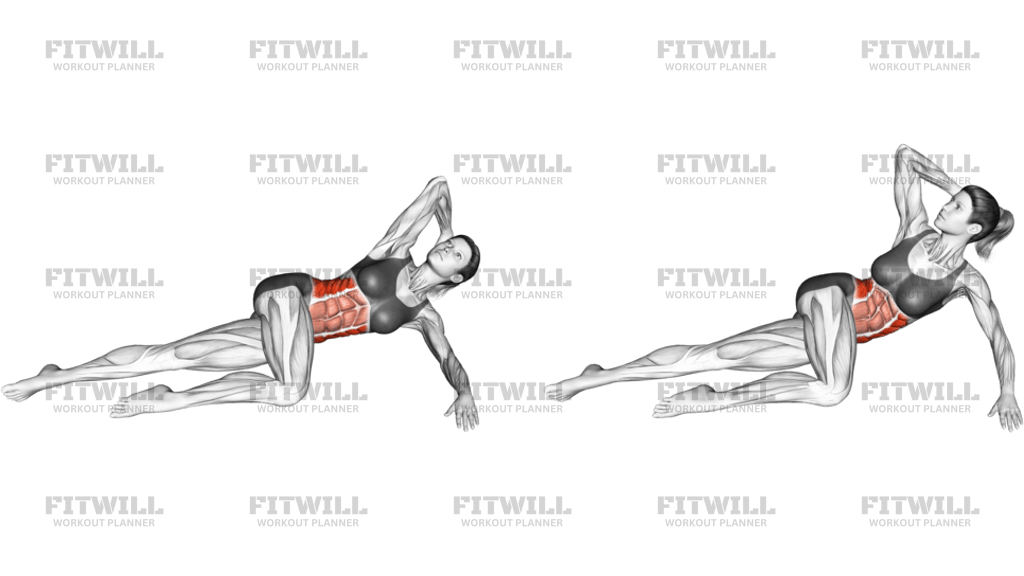
Side Crunch (Version 2) is a floor-based side-lying abdominal exercise that emphasizes the waistline and obliques while the rest of the body stays stacked and organized. In this variation, one hand supports the head, the opposite arm helps stabilize on the floor, and the torso curls laterally so the ribs move toward the hip instead of the body swinging forward and back.
The movement mainly trains the rectus abdominis and the external obliques, with the hip flexors and transversus abdominis helping keep the pelvis steady. Because the exercise is short and focused, the quality of the setup matters more than chasing a big range of motion. If the ribs, hips, and neck are not lined up before the first rep, the set quickly turns into a neck pull or a twist through the low back instead of a clean side crunch.
The best rep starts from a long side-lying position with the legs stacked, the top elbow open, and the chest slightly angled forward rather than collapsing backward. From there, exhale as you shorten the distance between the top ribs and the top hip, lifting the shoulder blade and upper torso just enough to feel the abs and obliques contract. Lower under control until the torso nearly returns to the floor, then reset the breath before the next rep.
This version fits well in core work, warmups, accessory circuits, or any session where you want direct trunk flexion and lateral trunk control without equipment. Use it for moderate to higher repetitions with deliberate tempo, especially when you want to reinforce spinal awareness, pelvic control, and clean breathing. The exercise should feel concentrated in the side of the trunk, not in the neck or front hip, and any sharp pull or low-back discomfort is a sign to reduce the range or simplify the setup.
Fitwill
Log Workouts, Track Progress & Build Strength.
Achieve more with Fitwill: explore over 9600 exercises with images and videos, access built-in and custom workouts, perfect for both gym and home sessions, and see real results.
Start your journey. Download today!




Instructions
- Lie on one side on the floor with your legs stacked and your body in a long line.
- Place your lower hand on the floor slightly in front of your shoulder so it can help stabilize your torso.
- Put your top hand lightly behind your head and keep the top elbow open, not flared all the way forward.
- Stack your hips and keep both legs quiet before the first rep.
- Brace your midsection and inhale to set your ribs without arching your lower back.
- Exhale as you curl your ribs toward your top hip, lifting your shoulder blade and upper torso off the floor.
- Keep the crunch small and controlled so the movement comes from your waist, not from swinging the elbow or pulling on the neck.
- Lower slowly until your torso nearly touches the floor again, then reset your breath before the next rep.
- Complete the set on one side, then switch sides and repeat with the same control.
Tips & Tricks
- Keep the top elbow open so the hand supports the head without yanking it forward.
- Think about bringing the top ribs toward the top hip instead of trying to sit up.
- Let the lower hand stay planted so the torso does not roll backward during the rep.
- Keep your hips stacked; if the top hip drifts back, the obliques lose tension.
- Use a short range of motion if the neck or low back starts taking over.
- Exhale on the crunch to help the ribs close and the waist shorten cleanly.
- Lowering should be slower than the lift so the side wall stays under tension.
- If the movement feels too easy, slow the tempo before adding load or momentum.
- A small pause at the top is better than forcing a higher crunch with poor alignment.
Frequently Asked Questions
What muscles do Side Crunch (Version 2) work most?
It mainly targets the rectus abdominis and obliques, with the deep core helping keep the pelvis stable.
Is this side crunch beginner friendly?
Yes. Beginners can use a short range of motion and focus on keeping the neck relaxed and the hips stacked.
How do I keep from pulling on my neck?
Keep the top hand light behind the head and lift the torso from the ribs instead of forcing the head forward.
Should my hips move during the rep?
No. The hips should stay stacked while the torso curls sideways over the floor.
How high should I crunch up?
Only high enough to feel the side of the waist contract cleanly; a small, controlled lift is usually better than a big swing.
What is the most common mistake with this exercise?
The usual mistake is twisting the torso or yanking the head instead of curling the ribs toward the hip.
Can I do this for both sides in the same workout?
Yes. Train one side for the planned reps, then switch and match the same tempo and range on the other side.
What should I do if I feel it in my lower back?
Reduce the range, keep the pelvis more stacked, and make sure the movement is coming from the side of the trunk rather than the low back.
How can I make the exercise harder without changing the setup?
Slow the lowering phase, add a brief pause at the top, or increase the number of controlled repetitions.