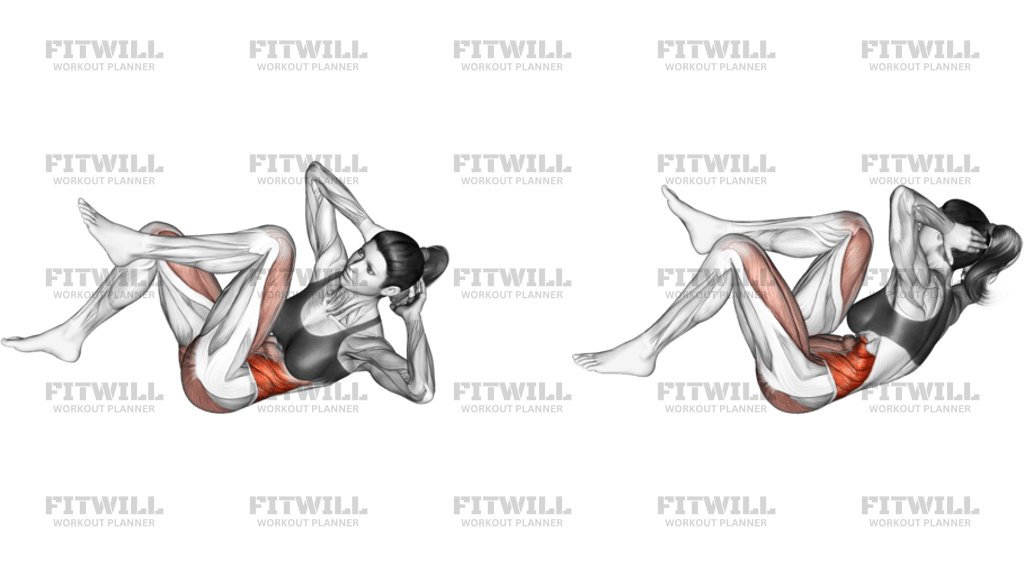
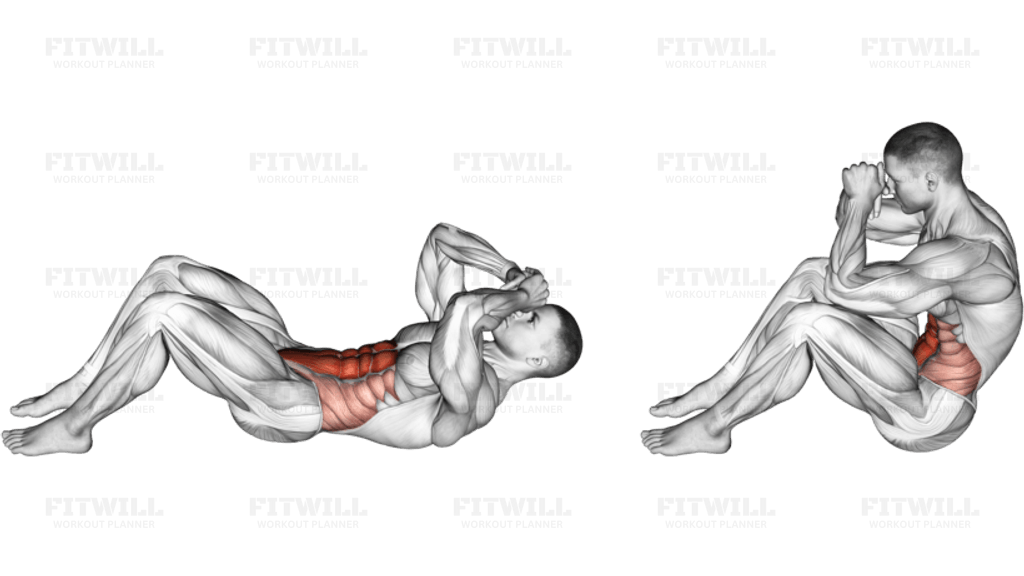
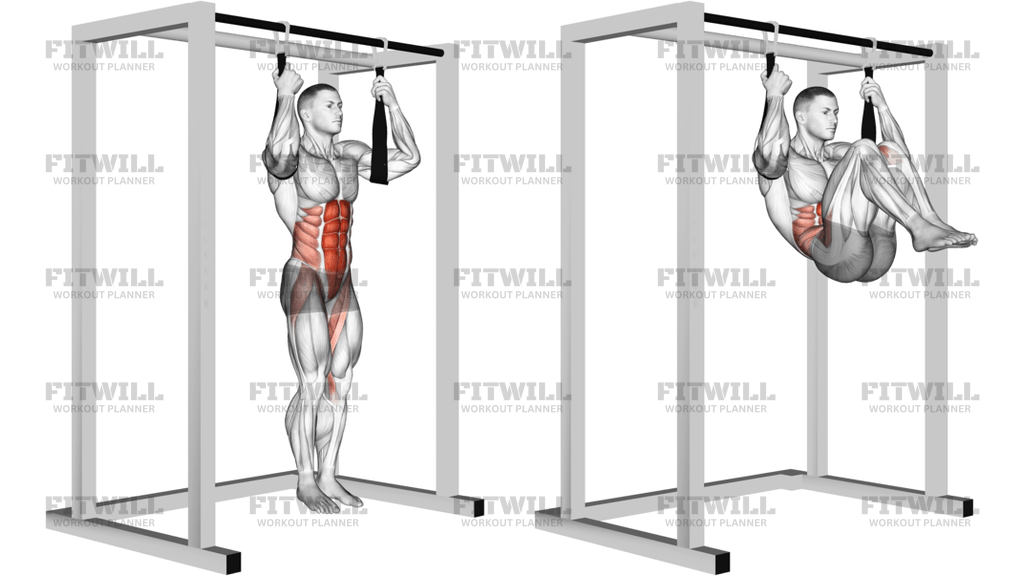
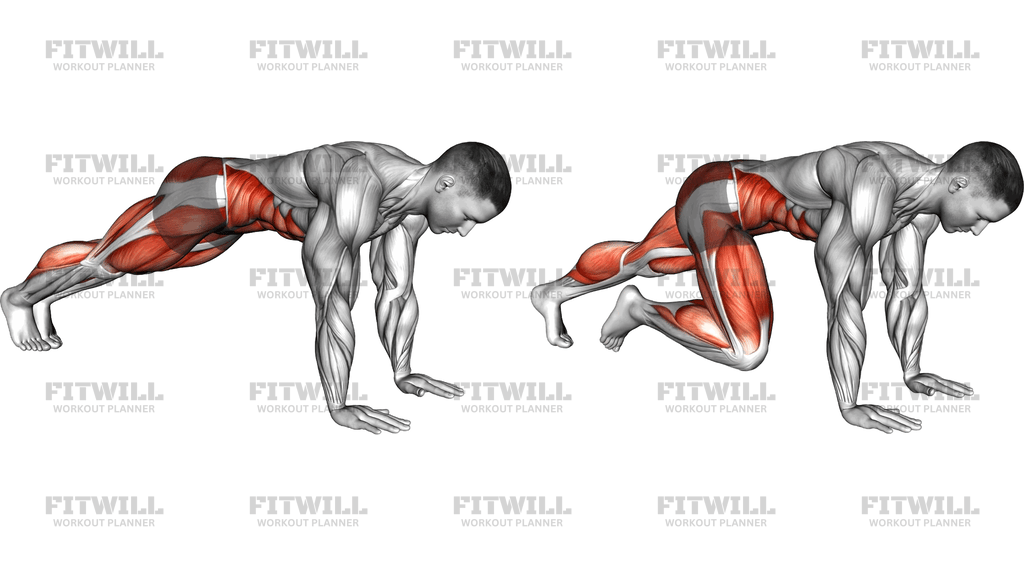
Elbow To Knee Side Plank Crunches
Elbow To Knee Side Plank Crunches is a body-weight core exercise built around a forearm side plank and a controlled knee-to-elbow crunch on the top side. It asks you to hold a strong lateral plank while actively closing the gap between the ribcage and the working hip, so the movement trains both stability and flexion rather than just one or the other. That combination makes it useful when you want the waist, abs, and hips working together instead of isolating a single joint action.
The exercise emphasizes the abs and obliques, with the hip flexors helping drive the knee upward and the shoulder on the support arm working to keep the torso stacked. In technical terms, the rectus abdominis and external obliques do most of the crunching, while the iliopsoas and transversus abdominis help stabilize the trunk and control the pull of the knee. Because the position is side-on, small changes in hip height and shoulder alignment have a big effect on whether the set feels smooth or sloppy.
Good reps start with a clean side plank. Your elbow should be under the shoulder, the forearm planted firmly, and the body lifted in one long line before any crunch begins. If the hips sag or the chest rolls forward, the movement turns into a partial side bend instead of a true elbow-to-knee crunch. Keeping the top hand behind the head is fine, but it should stay light so the neck does not take over the work.
At the top of each repetition, bring the working knee and elbow toward each other by tightening the waist, then extend back out to the long side plank with control. The goal is not to force a huge collision between elbow and knee; it is to keep the ribs, hips, and shoulder organized while the core shortens and lengthens under tension. A brief pause at the top can make the obliques work harder, but only if you can keep the body stacked and avoid twisting through the lower back.
Elbow To Knee Side Plank Crunches fits well in core sessions, conditioning circuits, or accessory work after the main lifts. It is also a practical choice for people who want anti-lateral-flexion strength with an active crunch component, especially if straight front-plank variations feel repetitive. Start conservatively, keep the range honest, and stop the set when the support shoulder collapses, the neck starts pulling, or the hips can no longer stay lifted.
[ Workout Log & Planner ]
Put your next workout in Fitwill
Keep your plan and training log ready when you are.


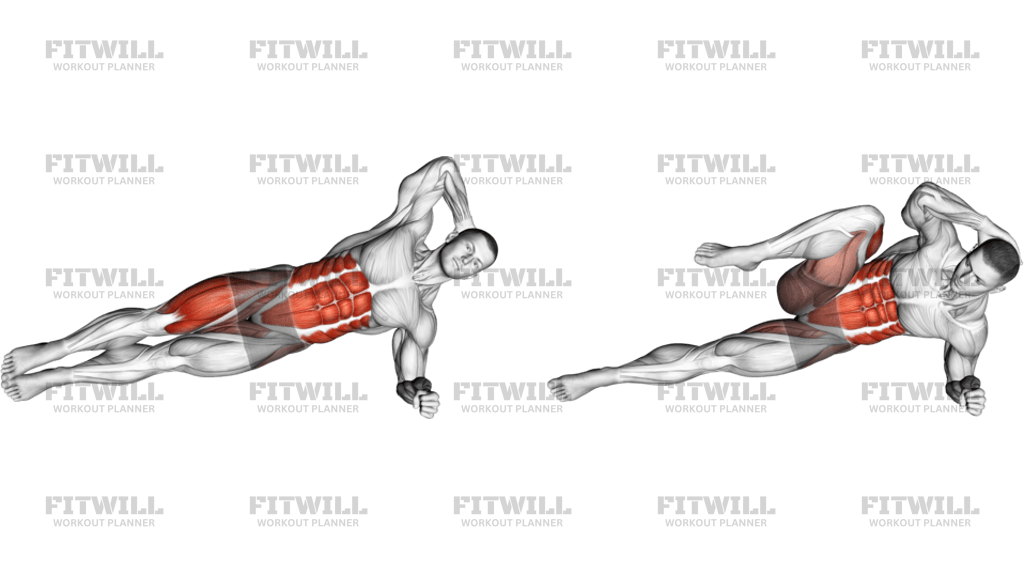
Instructions
- Lie on one side and place your lower forearm on the floor with the elbow directly under the shoulder.
- Stack your feet or place the top foot slightly in front for balance, then lift your hips into a straight side plank.
- Keep your chest open and place your top hand lightly behind your head without pulling on the neck.
- Brace your waist, squeeze your glutes, and hold the body in one long line from head to heels before the crunch begins.
- Drive the top knee up and forward while you bring the top elbow down toward it, folding through the side of the torso.
- Keep the lower hip lifted as you crunch so the movement comes from the waist instead of a hip drop.
- Pause briefly when the elbow and knee are closest, then exhale to finish the squeeze.
- Extend the working leg back out and return to the side plank under control without losing shoulder position.
- Complete all reps on one side, lower with control, then repeat on the other side.
Tips & Tricks
- Keep the supporting elbow directly under the shoulder so the side plank does not collapse into the joint.
- Think about pulling the ribcage toward the hip rather than just swinging the knee upward.
- If your top shoulder rolls forward, reduce the crunch range and keep the chest more open.
- Do not yank the head with the top hand; the hand is only a light guide.
- A small pause at the top usually works better than chasing a bigger elbow-to-knee touch.
- Exhale as the elbow and knee come together to help the waist shorten cleanly.
- If the lower hip drops, shorten the lever by bending the bottom knee or widening the foot stance.
- Stop the set when the support shoulder starts shaking or the torso can no longer stay stacked.
Frequently Asked Questions
What muscles do Elbow To Knee Side Plank Crunches work most?
The main work comes from the abs and obliques, with the hip flexors helping drive the knee up and the shoulder on the floor working to stabilize the side plank.
How do I set up Elbow To Knee Side Plank Crunches correctly?
Place your lower elbow under your shoulder, lift into a side plank, and keep your body in one long line before you begin the crunch. If the hips are already sagging, the rep will turn into a sloppy side bend.
Do my elbow and knee have to touch?
No. Close the gap as far as you can without twisting the torso or losing hip height. A shorter, cleaner crunch is better than forcing contact.
Why does my neck hurt during Elbow To Knee Side Plank Crunches?
The top hand is probably pulling too hard on the head. Keep it light, keep the chest open, and let the waist do the crunching instead of the neck.
Can beginners do this exercise?
Yes, but it is easier if you start with a shorter range or a bent lower-knee side plank. Build the hold first, then add the crunch once you can keep the hips lifted.
What is the biggest form mistake to avoid?
Letting the hips drop is the most common problem. Once that happens, the set stops training the side plank position and shifts more stress into the lower back and shoulder.
What is a good regression if the full version is too hard?
Keep the same elbow-and-knee crunch idea but drop the lower knee to the floor for support. That lets you learn the rib-to-hip motion before balancing the full side plank.
How many reps should I do on each side?
Controlled sets of about 8-15 reps per side work well for most people. Choose a rep count that lets you keep the torso stacked and the neck relaxed on every rep.