Lying Leg Raise Flat Bench
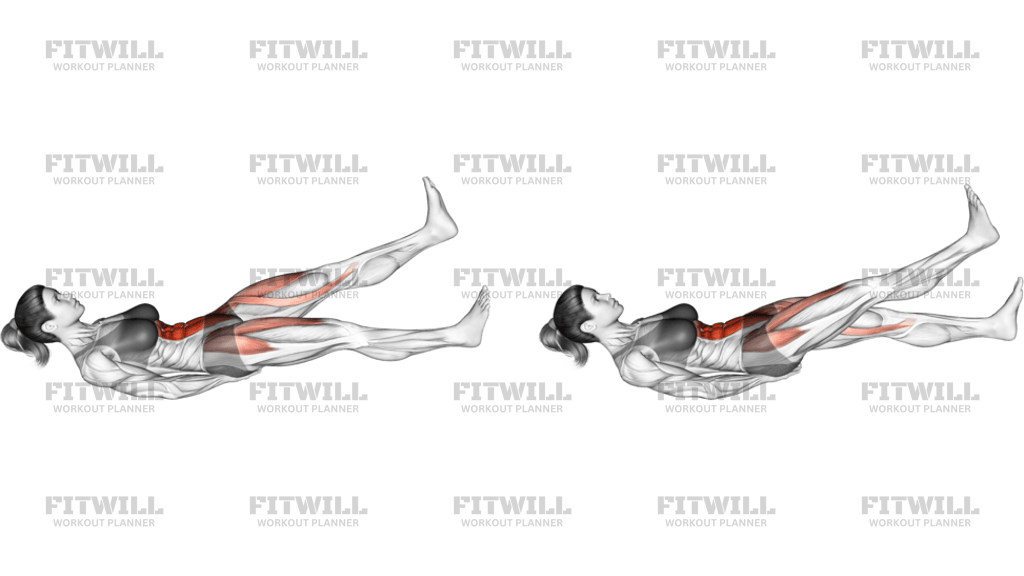
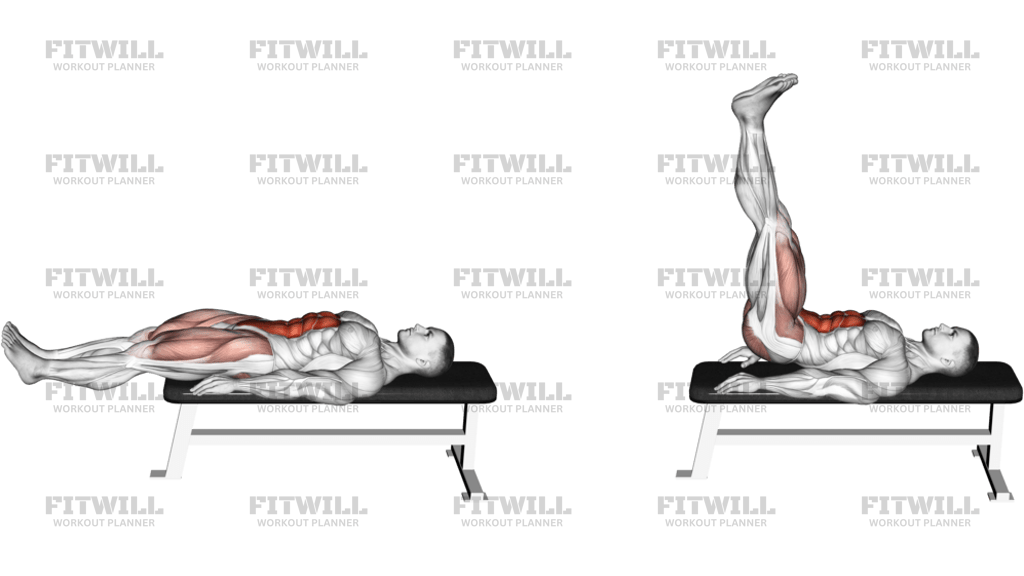
Lying Leg Raise Flat Bench is a bodyweight core exercise done with the upper body supported on a flat bench and the legs moving from a low hover to a vertical raise. The movement looks simple, but the training effect depends on how well you control the pelvis and lower back through each rep. It is most useful when you want direct ab work without loading the spine.
The main emphasis is on the rectus abdominis, with the obliques and deep core muscles helping prevent the torso from tipping into an arch. The hip flexors assist the lift, especially near the top, so good reps require the abs to keep the ribs down and the pelvis slightly tucked instead of letting the legs take over. When the setup is right, the bench gives you a stable base and lets you focus on clean spinal position rather than balance.
Start by lying long on the bench with your head, shoulders, and upper back supported. Hold the sides of the bench or place your hands under the hips for stability, then extend the legs together with only a small hover off the bench. From there, raise the legs under control until they are vertical or as close as you can get without losing the low-back position. The return should be slow enough that you can feel the abs staying engaged all the way down.
This exercise works well as accessory core training, a warm-up for trunk control, or a bodyweight finisher after lower-body and compound lifts. It is also easy to regress by bending the knees or shortening the range if the hips dominate the movement. The biggest technique errors are swinging the legs, arching the lumbar spine, and lifting so high that the pelvis tips off the bench. Keep the rep smooth, keep the lower back anchored, and stop the set when you can no longer control the descent.
[ Workout Log & Planner ]
Put your next workout in Fitwill
Keep your plan and training log ready when you are.


Instructions
- Lie lengthwise on a flat bench with your head, shoulders, and upper back supported and your hips centered on the pad.
- Grip the bench beside your hips or place your hands under your pelvis for stability.
- Extend your legs together and let them hover just above the bench with your toes pointed up or neutral.
- Flatten your lower back gently into the bench by bracing your abs and tucking your pelvis slightly.
- Exhale as you lift both legs together, keeping the knees mostly straight and the thighs moving as one unit.
- Bring the legs up until they are vertical or until you reach the highest position you can control without arching your back.
- Pause briefly at the top, then lower the legs slowly until they are just above the bench again.
- Keep the descent controlled and stop the set if your low back starts to lift or the legs begin to swing.
Tips & Tricks
- Think about curling the pelvis up, not just swinging the feet higher.
- If your low back arches off the bench, shorten the range before the legs hit the floor side of the rep.
- A slight knee bend can make the lift more manageable when the hip flexors start to dominate.
- Keep your hands anchored to the bench so your shoulders do not slide as the legs rise.
- Use a slower lowering phase than lifting phase to keep tension on the abs.
- Do not let the legs drift apart, because a narrow line is easier to control and less likely to twist the pelvis.
- The top position should feel like an abs contraction, not a hard kick upward.
- If you feel the neck or hip flexors more than the abs, reduce the range and reset your pelvic tilt.
Frequently Asked Questions
What does Lying Leg Raise Flat Bench train most?
It mainly trains the rectus abdominis, with the obliques and deep core muscles helping stabilize the torso.
Why is the flat bench setup important?
The bench gives you support for the upper body so you can focus on keeping the pelvis tucked and the lower back from arching.
Where should my hands go on this exercise?
Most people grip the bench beside the hips or place the hands under the pelvis to help keep the torso steady.
How do I keep my lower back from coming off the bench?
Brace before every rep, keep the ribs down, and stop the lowering phase before the spine starts to arch.
Should my knees stay straight the whole time?
Mostly straight is ideal, but a small bend is fine if it helps you keep control and stop the hip flexors from taking over.
What if I feel this mostly in my hip flexors?
Shorten the range, slow the descent, and focus on curling the pelvis upward instead of just lifting the feet.
Is this exercise suitable for beginners?
Yes, beginners can use it if they keep the range small at first or bend the knees to make the movement easier to control.
How can I make this exercise harder?
Slow the lowering phase, add a pause at the top, or progress to straighter legs with a fuller controlled range.