Lying Scissor Crunch
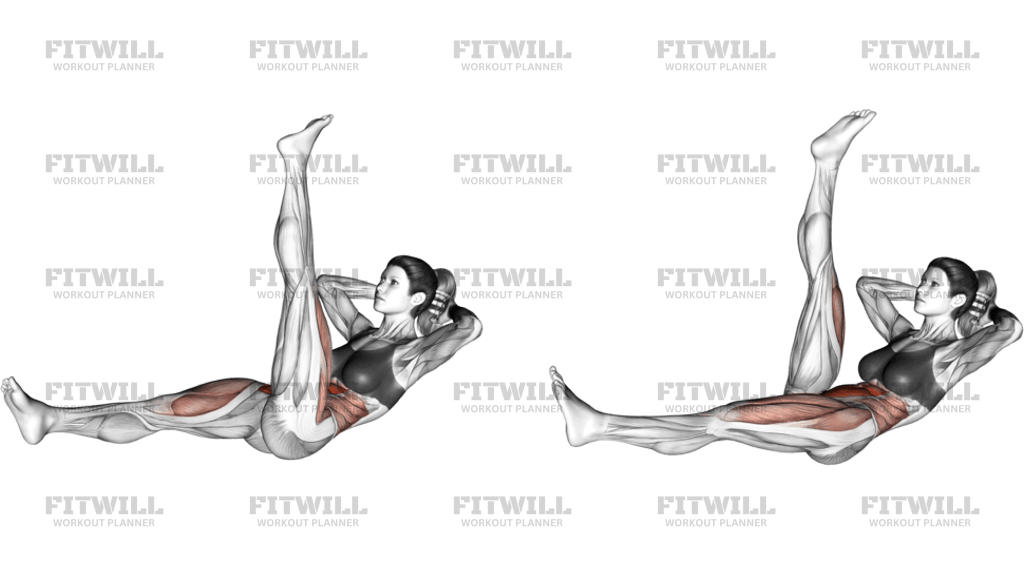
Lying Scissor Crunch is a bodyweight core exercise built around alternating leg movement and a small crunch from the floor. It asks the abs to stay tight while the legs switch positions, so the movement trains trunk control, coordination, and endurance instead of brute force. The exercise is simple to learn, but it becomes much more effective when the ribs stay down and the lower back stays anchored.
This movement primarily trains the abs, with the obliques and hip flexors helping to stabilize the torso and move the legs. In anatomy terms, the main work centers on the rectus abdominis, with support from the external obliques, iliopsoas, and transversus abdominis. Because the legs are extended and constantly changing position, the core has to resist arching and keep the pelvis from tipping forward.
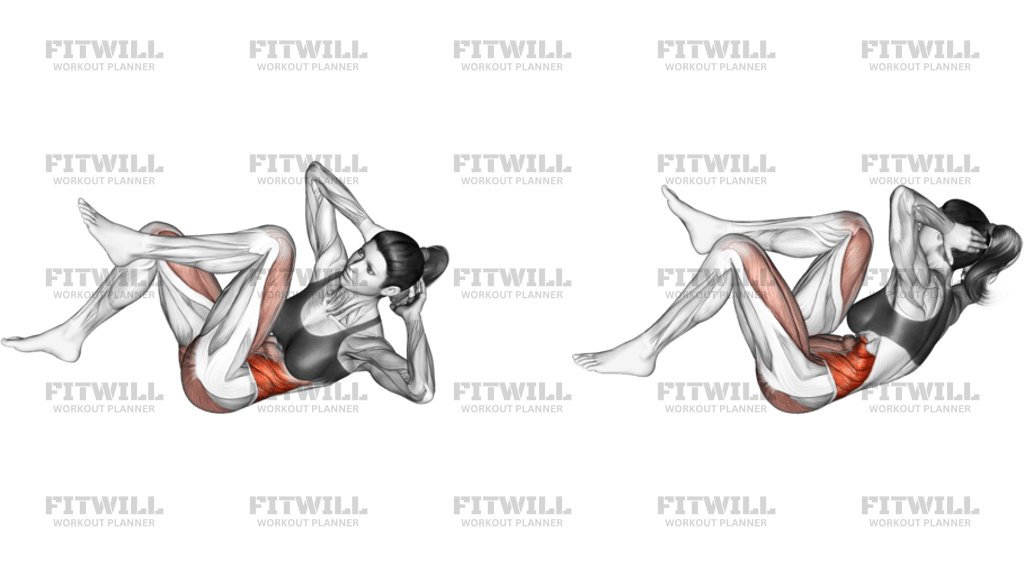
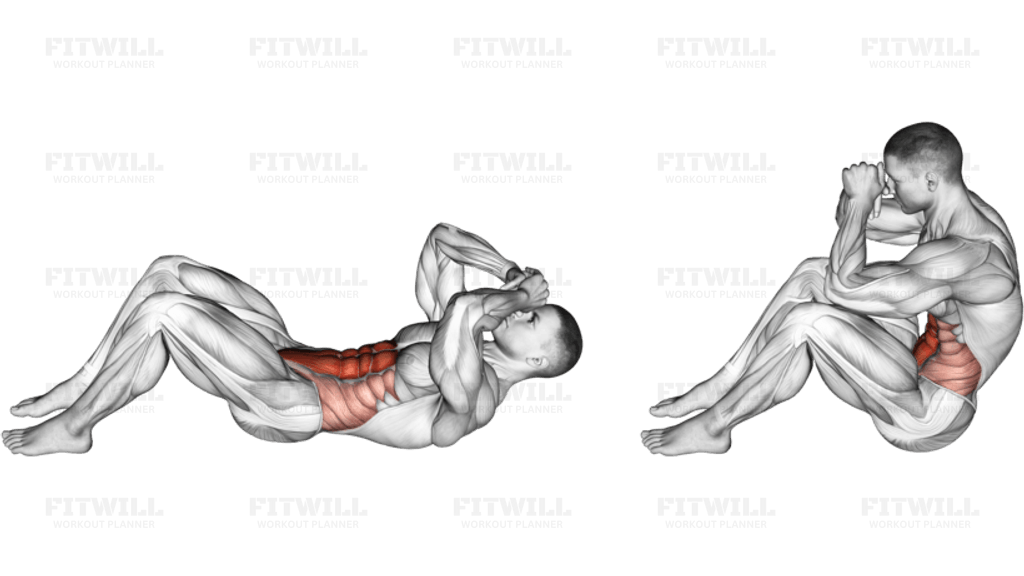
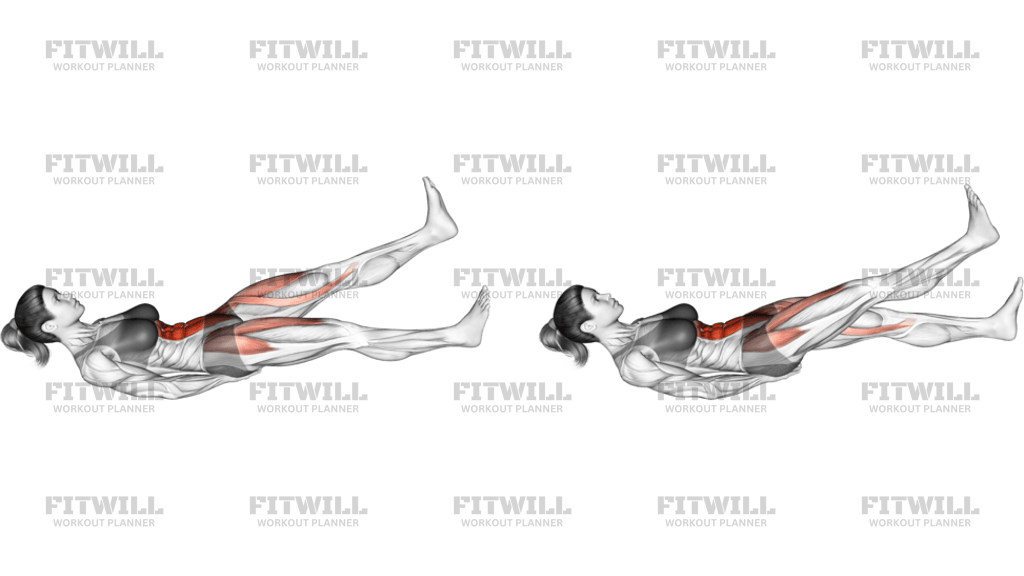
The setup matters more than most people expect. Lie on your back on a mat with your legs lifted and long, then adjust the leg height until your lower back can stay pressed into the floor. Keep your head and shoulders lightly curled off the ground, with the neck relaxed and the hands either supporting the head gently or resting by the sides if that feels better.
Each rep should look controlled rather than fast. One leg lowers while the other stays high, then they switch in a clean scissor pattern as the upper torso stays slightly curled. The best range is the one that lets you keep tension in the abs without letting the hips rock or the low back arch.
Lying Scissor Crunch is useful as part of a core block, warm-up, or finishing series when you want a bodyweight drill that challenges the front of the torso and the hip flexors together. It also works well as a regression or alternative to harder leg-lower and hollow-body variations. Stay strict, keep the movement smooth, and stop the set as soon as the lower back starts to lift or the neck starts taking over.
[ Workout Log & Planner ]
Put your next workout in Fitwill
Keep your plan and training log ready when you are.


Instructions
- Lie on your back on a mat or floor with your legs extended and lifted off the ground, then place your hands lightly behind your head or by your sides.
- Press your lower back into the floor and raise your shoulders a few inches off the mat so your ribs stay tucked down.
- Hold one leg high while lowering the other leg toward the floor in a straight, controlled line.
- Switch the legs in a scissor motion before the lowered heel touches down.
- Keep both knees mostly straight and avoid letting the hips rock from side to side.
- Exhale as you switch and crunch, then inhale as you control the next leg change.
- Keep the chin slightly tucked and the elbows open if your hands are behind your head.
- Use the smallest leg range that lets you keep your low back glued to the floor.
- Finish the set by lowering both legs and shoulders to the floor under control.
Tips & Tricks
- If your lower back arches, raise both legs a little higher and shorten the scissor range.
- Think about reaching long through the heels instead of kicking the legs downward.
- Keep the crunch small; the abs should work even if your shoulders only leave the floor slightly.
- A soft bend in the knees can help if straight legs pull too hard on the hip flexors.
- Stop each rep before the lowered heel taps the floor so the abs keep tension the whole time.
- If your neck feels crowded, support the head with one hand and keep the other arm relaxed by your side.
- Move at a steady pace, because jerking the legs makes the hips take over.
- Make the exhale happen during the leg switch to help keep the ribs down.
- Use the exercise as a finisher, not a max-effort strength move, unless the tempo stays strict.
Frequently Asked Questions
What muscle does Lying Scissor Crunch target most?
It mainly targets the rectus abdominis, with the obliques and hip flexors helping to stabilize and move the legs.
Can beginners perform this exercise?
Yes. Beginners usually do best with the legs held higher, a smaller crunch, and a slight knee bend if the low back starts to arch.
How should my legs move during Lying Scissor Crunch?
Keep one leg hovering while the other lowers, then switch before the lowered heel touches down. The motion should stay smooth and narrow, not wide and swinging.
Should my lower back stay on the floor?
Yes. If your low back lifts, raise the legs higher or shorten the range until you can keep the pelvis tucked and stable.
Do I need to lift my shoulders high?
No. A small curl is enough. The goal is to keep the abs working while the upper torso stays controlled, not to turn it into a big crunch.
Why do my hip flexors feel this more than my abs?
Your legs are probably too low or too straight for your current control level. Bring the legs up a little and slow the switching pattern down.
What can I use instead of Lying Scissor Crunch?
A bent-knee scissor crunch, reverse crunch, or dead bug is a good substitute if you need less hip-flexor demand or more lower-back support.
How can I make Lying Scissor Crunch harder?
Lower the legs a little, slow the switches down, or pause briefly each time the legs pass through center while keeping the low back flat.