Lying Scissor Kick
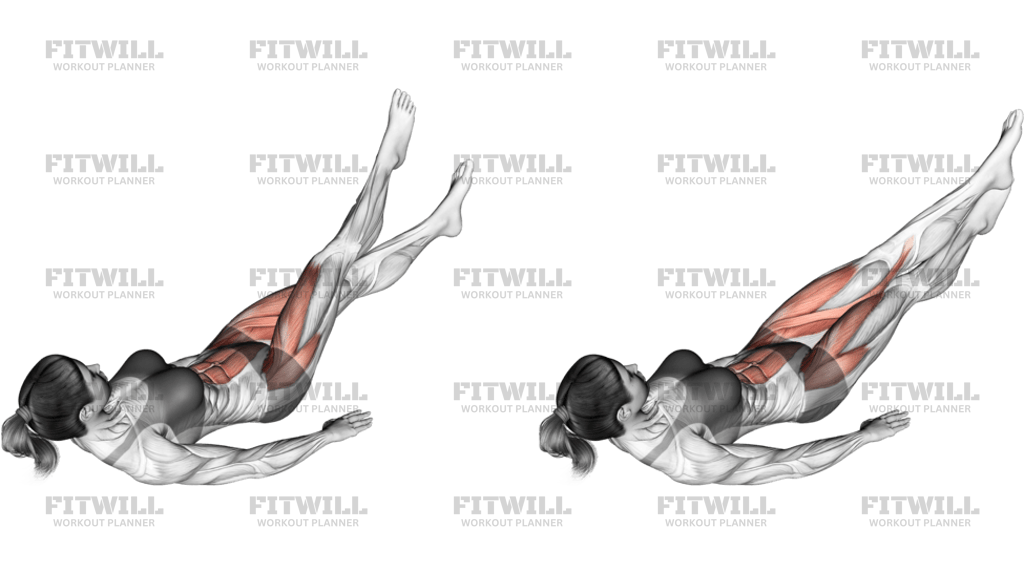
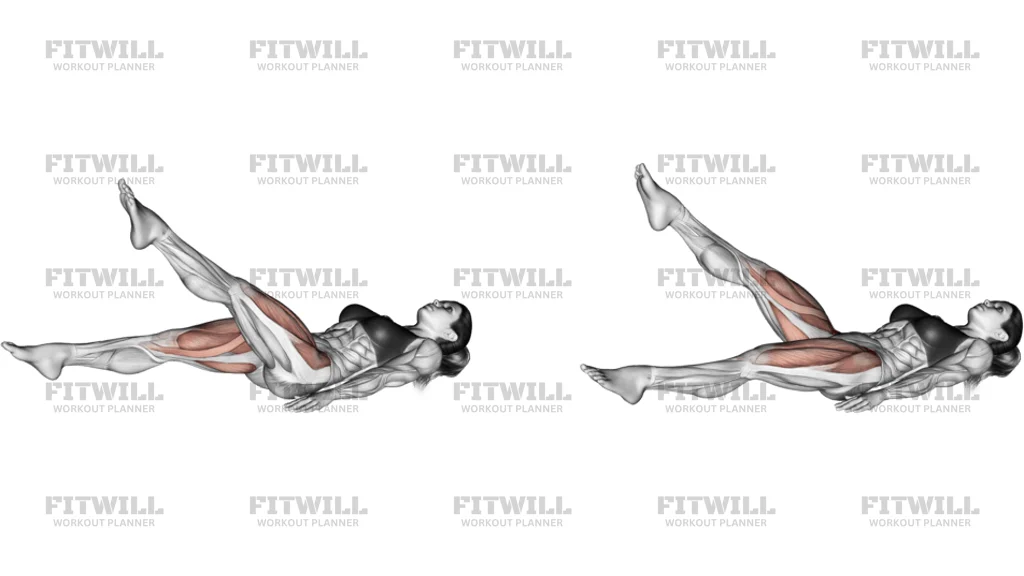
Lying Scissor Kick is a bodyweight floor exercise that trains the hips and core through alternating leg motion. It looks simple, but the value comes from keeping the pelvis quiet while the legs switch positions in a controlled, rhythmic pattern. When the movement stays low and deliberate, it becomes a useful drill for hip control, abdominal tension, and coordination rather than just a fast leg swing.
Lying Scissor Kick is especially useful when you want a no-equipment core and hip drill that still demands precision. The primary emphasis is on the hips, with the glutes, hamstrings, and abdominal wall helping to stabilize the trunk and control each leg as it moves. In practice, the exercise works best when the lower back stays close to the floor and the range stays small enough that you can keep tension instead of arching or rocking.
The setup matters more than it first appears. Lie flat on your back, place your hands under or beside your hips for support, and extend both legs before lifting one leg while the other stays low. That starting position creates the line of pull that makes the scissor action effective, and it also helps you feel whether the pelvis is tipping as soon as the legs start moving. If the low back lifts or the neck feels strained, the range is already too aggressive.
A well-executed Lying Scissor Kick should feel smooth, alternating, and controlled from the first switch to the last. Keep the toes pointed or softly flexed according to your coaching preference, switch the legs without kicking upward, and breathe steadily so the torso does not brace itself into a rigid hold. The goal is not height; it is keeping the legs active while the trunk stays organized and the movement path remains clean.
This exercise fits well in warm-ups, core circuits, bodyweight conditioning blocks, and accessory work for athletes who need better pelvic control. It is also a good regression option when more demanding floor core drills are too intense, because the load is just body weight and the tempo can be adjusted easily. Treat each set as a quality drill: stop when the low back starts arching, the hips start twisting, or the leg switches become too fast to control.
Fitwill
Log Workouts, Track Progress & Build Strength.
Achieve more with Fitwill: explore over 9600 exercises with images and videos, access built-in and custom workouts, perfect for both gym and home sessions, and see real results.
Start your journey. Download today!




Instructions
- Lie flat on your back on a mat and slide your hands under or beside your hips for support.
- Extend both legs long, then lift them a few inches off the floor so your lower back can stay pressed down.
- Set your head and shoulders down, keep your ribs knitted in, and look straight up.
- Tighten your abdomen before the first switch so the pelvis does not rock as the legs move.
- Lower one leg toward the floor while lifting the other to about a 30 to 45 degree angle.
- Switch the legs in a smooth scissor pattern without letting either foot slam down or sweep too high.
- Keep the movement continuous and small enough that your low back stays in contact with the mat.
- Breathe out during each switch and inhale as the legs pass through center.
- Stop the set if your hips start to twist, your neck tenses, or the lower back begins to arch.
- Lower both legs to the mat and reset before starting the next set.
Tips & Tricks
- Keep the legs lower only if the lower back stays pinned to the floor; height is less important than control.
- If the hip flexors take over, shorten the range and make the scissor smaller instead of kicking the top leg higher.
- Place the hands slightly under the pelvis, not under the low back, so the support helps without forcing the spine into extension.
- A slow, even cadence makes the alternating pattern cleaner and reduces momentum from the legs.
- Pointing the toes makes the line look longer, but soft ankles are fine if you need more control at the hip.
- Do not let the floating leg hover so low that the heel brushes the floor unless you can keep the torso still.
- If the neck starts to strain, tuck the chin slightly and keep the head heavy on the mat instead of curling up.
- When the set gets hard, reduce the switch speed before you reduce the body line.
- Use this as a technical core drill, not a max-effort fatigue set; form quality drops quickly when the swings get sloppy.
Frequently Asked Questions
What does Lying Scissor Kick work?
It primarily challenges the hips and core, with the glutes, hamstrings, and abdominal wall helping keep the pelvis steady while the legs alternate.
Why are my lower abs and hip flexors burning so fast?
That is common because one leg is always lowering while the other is lifting. If the burn comes with back arching, reduce the leg height and slow the switches down.
How high should my legs be during Lying Scissor Kick?
Only high enough to keep the lower back flat and the torso quiet. Bigger kicks usually turn the drill into momentum instead of control.
Should my hands stay under my hips the whole time?
Yes, that support can help keep the pelvis stable and reduce strain on the low back. If your hips still lift, use a mat and shorten the range.
Is Lying Scissor Kick good for beginners?
Yes, as long as the range is small and the movement stays slow. Beginners usually do best with short sets focused on keeping the back down rather than chasing leg height.
What is the most common mistake with this exercise?
People usually kick the legs too high and lose pelvic control. The fix is to keep the switches low, smooth, and symmetrical.
Can I feel this in my glutes too?
You can, but the glutes are more of a stabilizer here than the main mover. The exercise should still feel like a controlled hip and core drill, not a glute isolation move.
How can I make Lying Scissor Kick harder without adding weight?
Slow the switching tempo, extend the legs a little straighter, or pause briefly as the legs pass through center. Keep the low back flat before you make the range bigger.