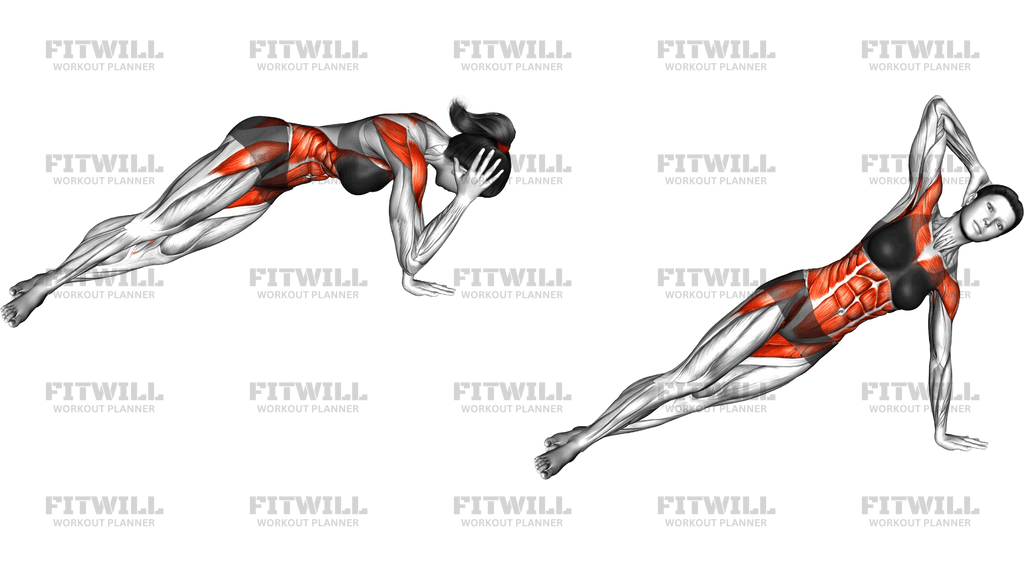
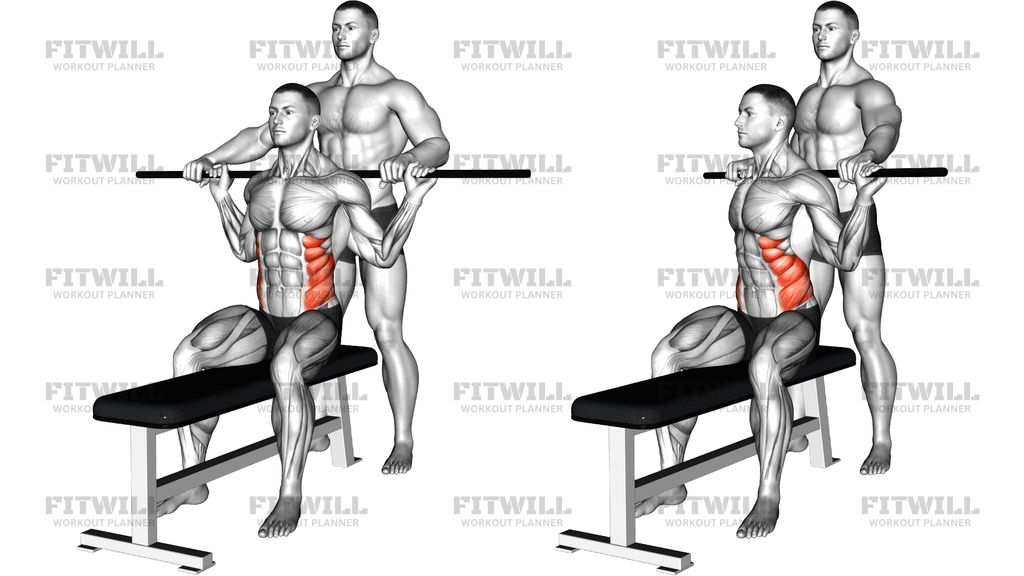
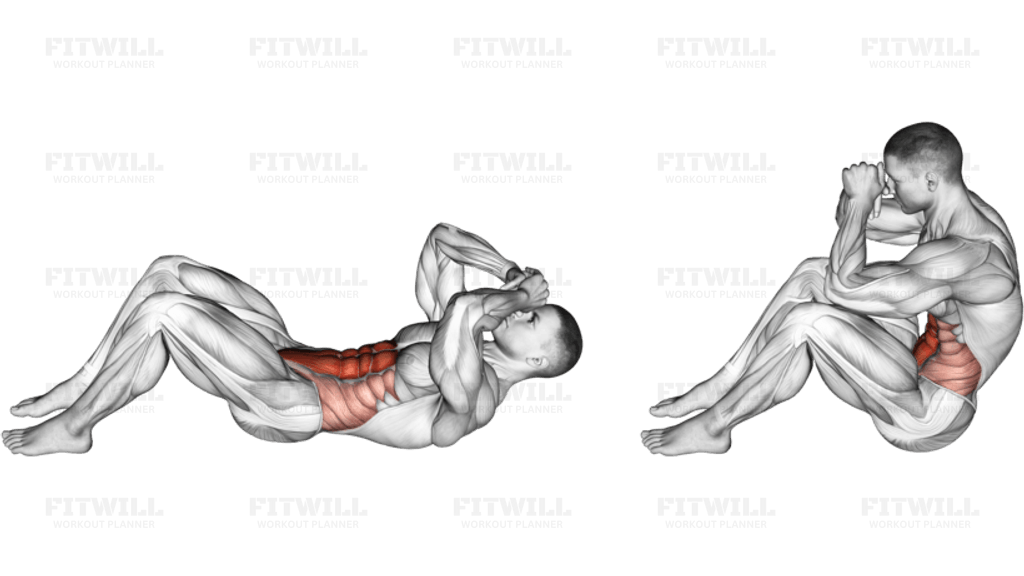
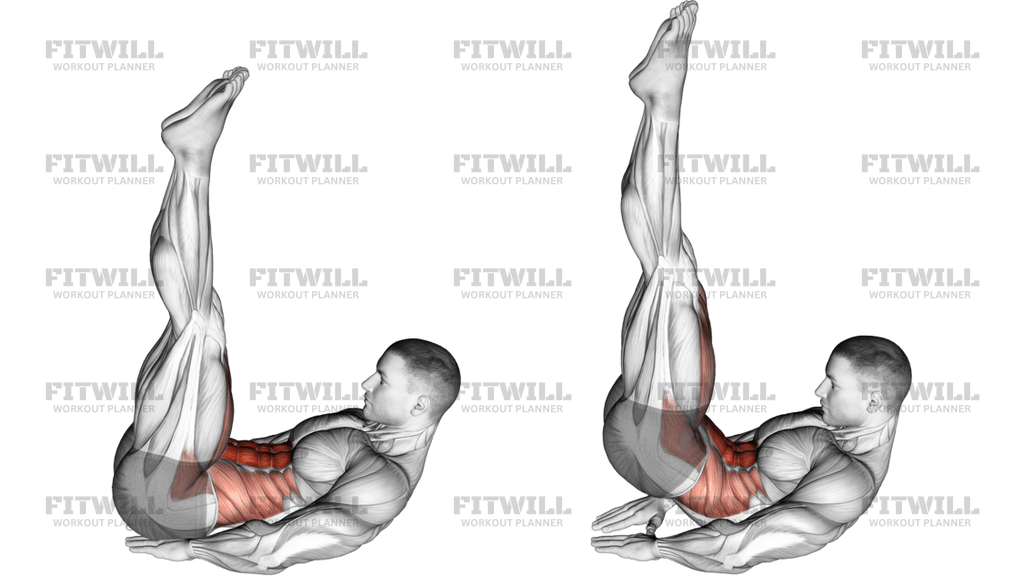
Middle Back Stretch
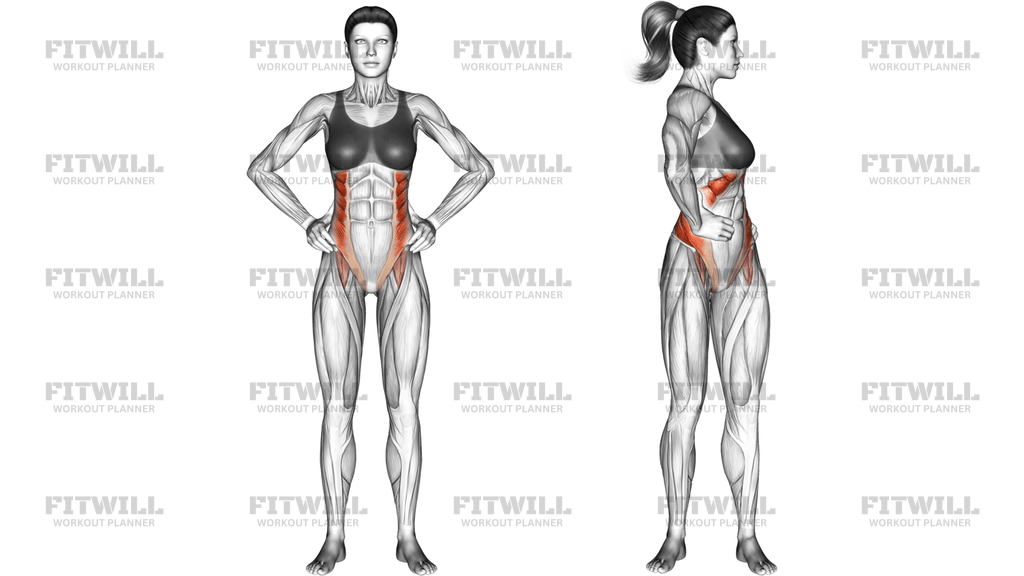
Middle Back Stretch in this library is performed as a standing side-bend stretch. It is a bodyweight mobility drill that opens the side waist and trunk while teaching you to keep the pelvis steady and the ribs controlled. The picture shows a hands-on-hips setup with a tall spine and a clear lateral bend, so the exercise is better treated as a side-body stretch than a loaded strength movement.
The main sensation should come from the obliques and the muscles along the side of the torso, with support from the lower back, lats, and intercostals. In anatomy terms, that means the external obliques do most of the stretching work while the rectus abdominis, erector spinae, and transversus abdominis help stabilize the trunk. Keeping the head, ribs, and hips organized matters here because a sloppy twist or forward fold will change the stretch completely.
A good repetition starts from a narrow, upright stance with the feet grounded and the hands set on the hips for feedback. From that position, you stay tall, brace lightly, and lean the rib cage to one side without collapsing forward or turning the chest. The hips should stay mostly stacked over the feet so the side body lengthens instead of the lower back taking over the movement.
At the end range, breathe into the open side of the torso and hold the stretch without forcing it. The goal is a clear line from the shoulder down to the hip, not a dramatic fold. Coming back to center should be slow and deliberate, with the trunk doing the work rather than momentum. If one side feels tighter, spend a little more time there instead of bouncing through the stretch.
This exercise works well in warm-ups, cool-downs, recovery sessions, and between harder sets when the trunk feels stiff. It can also be useful after long sitting, heavy carrying, or any session that leaves the waist and lower ribs feeling compressed. Keep the stretch pain-free, and stop if you feel pinching in the spine or a sharp pull that does not ease when you reduce range.
[ Workout Log & Planner ]
Put your next workout in Fitwill
Keep your plan and training log ready when you are.


Instructions
- Stand tall on the mat with your feet about hip-width apart and place both hands on your hips.
- Keep your head stacked over your ribs and your ribs stacked over your pelvis before you start the stretch.
- Brace lightly through your midsection and keep both knees softly unlocked.
- Bend your torso to one side by sliding the rib cage toward that hip, not by folding forward.
- Keep the opposite shoulder reaching long so the side of the waist opens instead of the upper body collapsing.
- Pause in the stretched position and breathe into the open side of your ribs and waist.
- Return slowly to the center using the side of your trunk, then repeat on the other side.
- Move through both sides with smooth, even holds and stop before the stretch becomes painful.
Tips & Tricks
- Keep the movement in the frontal plane; rotating the chest turns this into a different drill.
- Think about making the working side of your waist shorter while the opposite side stays long.
- If you feel the stretch mostly in the low back, reduce the bend and keep the pelvis more level.
- Soft knees help you stay tall and prevent the stretch from drifting into a hamstring reach.
- Hands on the hips are useful feedback here because they make it easier to feel whether the pelvis is tipping.
- A slow exhale often lets the ribs sink a little farther without forcing the bend.
- Hold each side long enough to feel the side body open, but do not sink so far that the shoulder rounds forward.
- If one side is tighter, spend a little extra time there instead of bouncing through both sides equally.
Frequently Asked Questions
What muscles does Middle Back Stretch target most?
It mainly stretches the obliques and other side-body muscles, including the quadratus lumborum, intercostals, and parts of the lats.
Is this a strength exercise or a mobility stretch?
It is a mobility and flexibility drill. The goal is a controlled side bend, not a loaded strength effort.
Should my chest turn while I stretch?
No. Keep your chest and hips facing forward so the bend stays in the side body instead of becoming a twist.
Where should I feel the stretch?
You should feel it along the side of the waist and lower rib cage, not as a sharp pinch in the spine.
Can beginners do this safely?
Yes. Beginners usually do best with a small range, soft knees, and short holds on each side.
Why are my hands on my hips in this version?
The hands-on-hips position helps you keep the pelvis steady and makes it easier to avoid turning the movement into a forward fold.
When is this stretch most useful?
It works well before training, after long periods of sitting, or after workouts that leave the trunk and waist feeling tight.
What if I feel it in my lower back instead of my side waist?
Shorten the range, keep the ribs stacked over the pelvis, and avoid leaning backward or rotating through the spine.