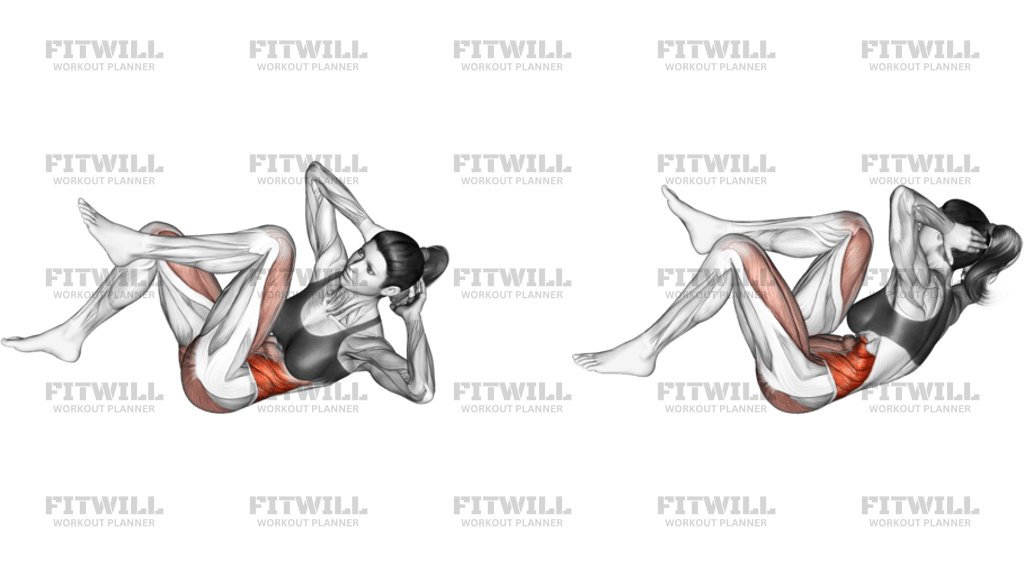
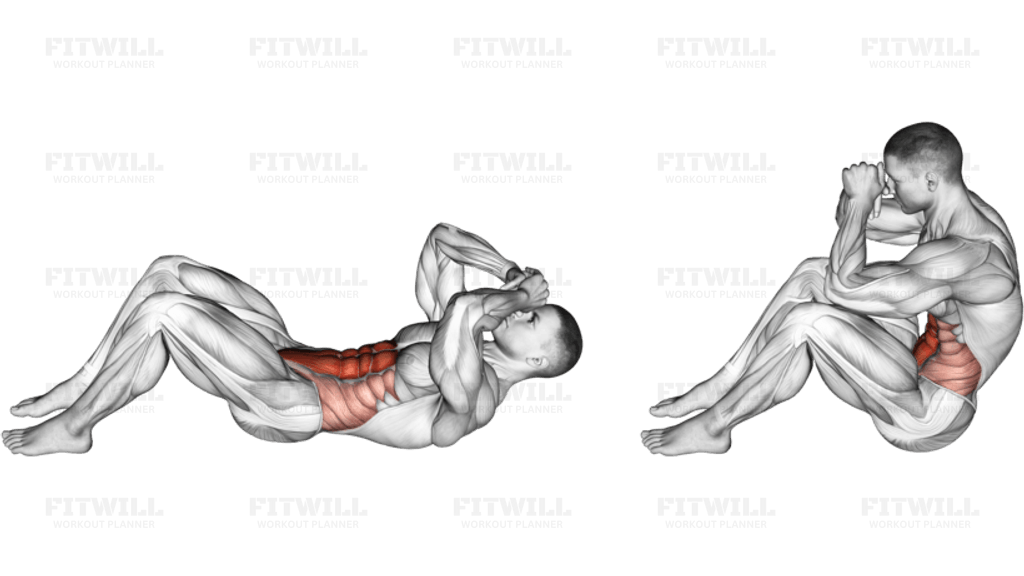
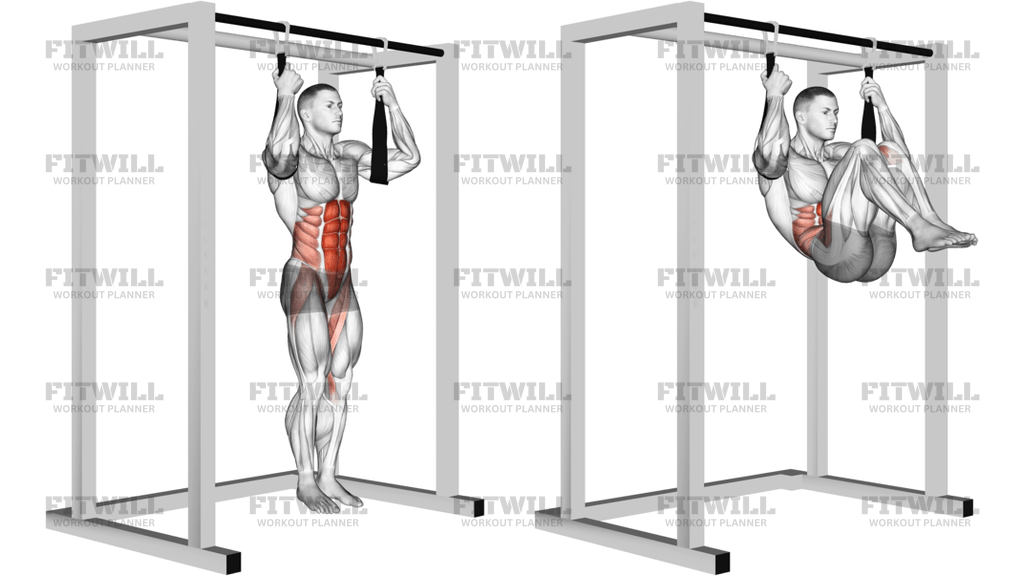
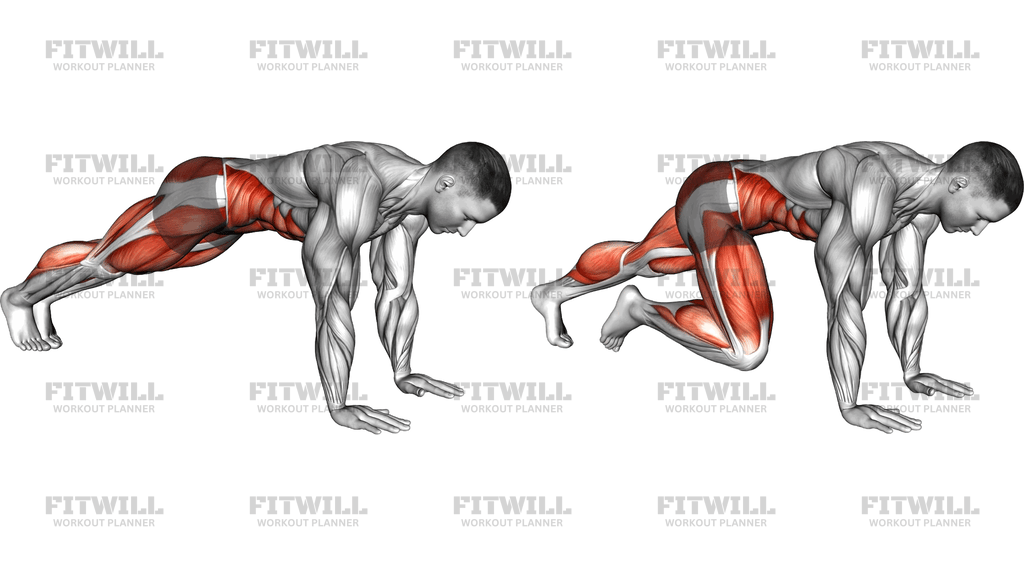
Narrow Leg Bench Bridge
Narrow Leg Bench Bridge is a bodyweight core hold that places the forearms on the floor and the feet on a bench so the trunk has to resist sagging, twisting, and rib flare at the same time. In the image, the body stays in a long, straight line from shoulders to ankles, with the feet set narrowly together on the bench to make the plank less forgiving. That setup shifts the work toward the rectus abdominis, obliques, deep core, and hip flexors while the shoulders, glutes, and upper back keep the body stacked.
The setup matters more here than the range of motion because the whole exercise is about position. Narrow Leg Bench Bridge works best when the elbows sit under the shoulders, the forearms are firm on the floor, the hands stay quiet, and the feet stay anchored on the bench without sliding. The narrower stance reduces side-to-side cheating, so even small changes in pelvic position show up quickly. If the bench is too high or the feet drift apart, the load shifts away from the core and the hold becomes harder to control.
Perform each repetition as a timed brace rather than a rushed movement. Lift into a rigid plank, tuck the pelvis slightly, squeeze the glutes, and draw the front ribs down so the lower back does not arch. Keep the neck long and look at the floor a few inches ahead of your hands. Breathe behind the brace with short controlled exhales, then reset cleanly between holds or lower under control if you are cycling repeated efforts.
Narrow Leg Bench Bridge is useful when you want a simple bodyweight drill that teaches anti-extension strength, midline control, and better trunk stiffness for other lifts. It fits well in a warmup, core block, or accessory circuit, especially for athletes and lifters who need better pelvic control under load. Because the feet are elevated and narrow, the exercise becomes more demanding without needing speed or equipment changes, which makes it easy to scale with hold time, bench height, or foot position.
Use the movement as a quality check, not an ego exercise. If the hips drop, the low back pinches, or the shoulders creep toward the ears, the hold is too hard or too long. Shorter holds with cleaner position beat long holds with a broken line every time. Keep the bench stable, the feet together, and the torso stacked so Narrow Leg Bench Bridge trains the core instead of just surviving the position.
Fitwill
Log Workouts, Track Progress & Build Strength.
Achieve more with Fitwill: explore over 9600 exercises with images and videos, access built-in and custom workouts, perfect for both gym and home sessions, and see real results.
Start your journey. Download today!




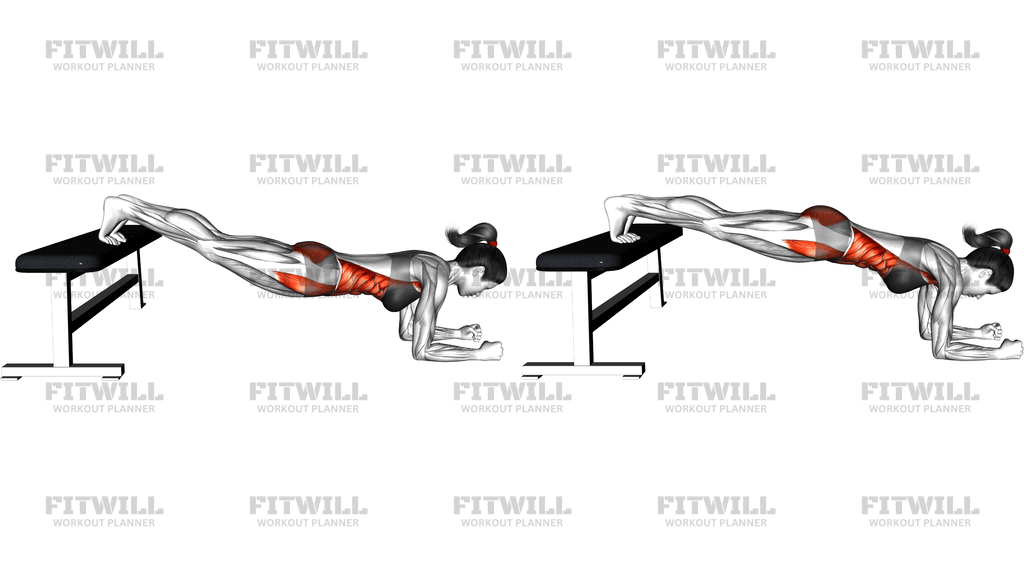
Instructions
- Place your forearms on the floor with your elbows under your shoulders and set both feet together on the bench behind you.
- Press through your forearms and toes, then lift your body into a straight line from shoulders to ankles.
- Squeeze your glutes and pull your front ribs down so your lower back does not sag.
- Keep your feet narrow and still on the bench instead of letting them drift apart.
- Hold the position for the planned time while breathing in short, controlled exhales.
- Keep your neck neutral and look slightly ahead of your hands rather than cranking your chin up.
- Lower your knees or hips to the floor under control if you need to reset between holds.
- Repeat for the planned number of holds with the same body position each rep.
Tips & Tricks
- Start with a low bench if a higher foot position makes your low back arch.
- Keep the feet touching or nearly touching on the bench so the narrow stance actually challenges your midline.
- If your shoulders burn before your abs do, shorten the hold and re-stack the elbows under the shoulders.
- Use a strong exhale to keep the ribs from flaring while the hold is on.
- Stop the set as soon as the hips start to drop below the shoulder line.
- A slight posterior pelvic tilt should feel like your waistband is turning up toward your ribs.
- If the bench shifts or your shoes slide, switch to a more stable surface before loading the hold longer.
- Treat the set like anti-extension work, not a plank race.
Frequently Asked Questions
What does Narrow Leg Bench Bridge train most?
Narrow Leg Bench Bridge mainly trains the rectus abdominis and the deeper core muscles that keep the torso from sagging or rotating.
Is Narrow Leg Bench Bridge more of a plank or a bridge?
The image shows a feet-elevated forearm plank position, so the exercise behaves more like a hard anti-extension plank than a glute bridge.
Where should my elbows and feet go in Narrow Leg Bench Bridge?
Set your elbows under your shoulders on the floor and place both feet together on the bench so your body stays long and narrow.
Why keep the feet so close together?
The narrow foot position reduces easy balance cheats and makes the trunk work harder to stay level through the hold.
Can beginners do Narrow Leg Bench Bridge?
Yes, but beginners should start with short holds, a lower bench, and a clean straight line before increasing time.
What if my lower back feels it more than my abs?
Shorten the hold, tuck the pelvis slightly, and lower the bench height if needed; a strong core hold should not feel like a low-back pinch.
How long should I hold Narrow Leg Bench Bridge?
Use a hold length that lets you keep a rigid line the whole time, often 10 to 30 seconds for quality-focused sets.
Can I substitute a regular forearm plank?
Yes. A floor forearm plank is a good regression if the elevated feet position makes Narrow Leg Bench Bridge too difficult.