Floor Oblique Crunches
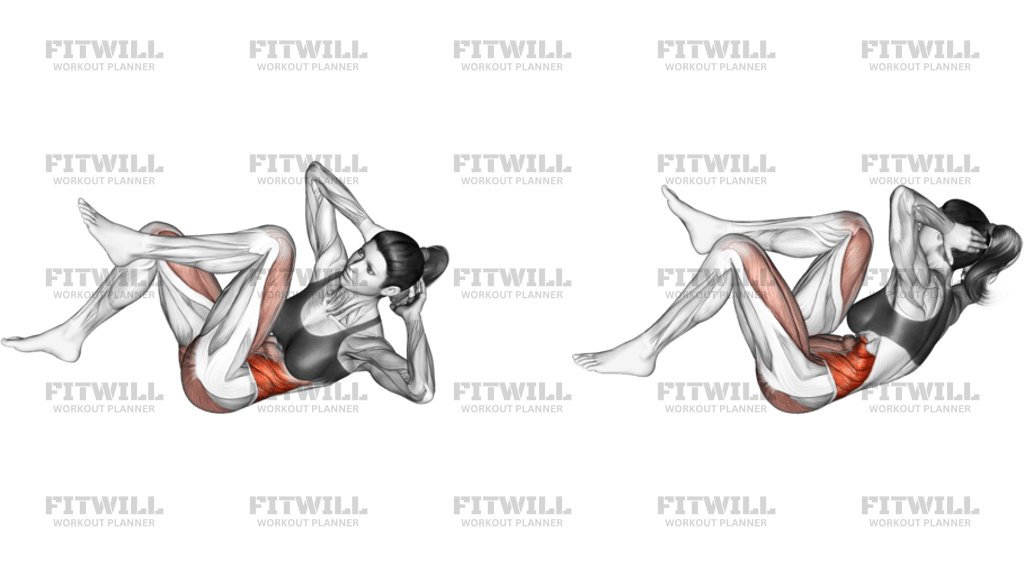
Floor Oblique Crunches is a side-lying floor core exercise that emphasizes the external obliques by shortening the distance between the lower ribs and the top hip. The movement is built around a small, controlled lateral crunch rather than a big sit-up, so the torso does the work while the pelvis and legs stay stacked and quiet. It is a bodyweight exercise, but the training effect still depends on precise positioning, clean breathing, and a smooth tempo. Done well, it teaches the trunk to bend and brace without letting the lower body wander, which is useful any time you want better control through rotation, side bending, or unilateral core work.
The setup matters because the exercise only stays on the obliques when the rib cage and pelvis stay lined up. Lie on one side with your legs stacked, your top hand lightly behind your head, and your bottom shoulder resting on the floor. Keep your chin slightly tucked, your elbow open, and your torso long before you start the rep. If you roll backward or forward, the movement shifts away from the side waist and becomes a less useful crunch. A solid setup also makes it easier to feel the working side of the torso rather than just gripping with the neck or bracing hard through the hip flexors.
On each repetition, exhale and curl the upper ribs toward the top hip without yanking the head or collapsing the shoulder forward. The top shoulder blade should lift just enough to create a clear side crunch, then lower back down under control. The range is usually small, and that is the point: the obliques should stay loaded through the whole arc instead of relying on momentum or a forced twist. Think of the movement as a clean side compression around the waist, not a fast repetition or a reach for the elbow.
Floor Oblique Crunches works well as accessory core training, a warm-up drill before heavier lifting, or a finisher when you want focused trunk control without equipment. Beginners can learn it quickly because the floor limits cheating, but the same simplicity also makes it easy to do poorly if the neck takes over or the hips start rocking. Use the rep quality, not the number of reps, as the main indicator of success, and switch sides evenly so the torso stays balanced. If you want a harder version, increase the lever by keeping the legs long, slow the lowering phase, or hold the top position for a short pause before resetting.
[ Workout Log & Planner ]
Put your next workout in Fitwill
Keep your plan and training log ready when you are.


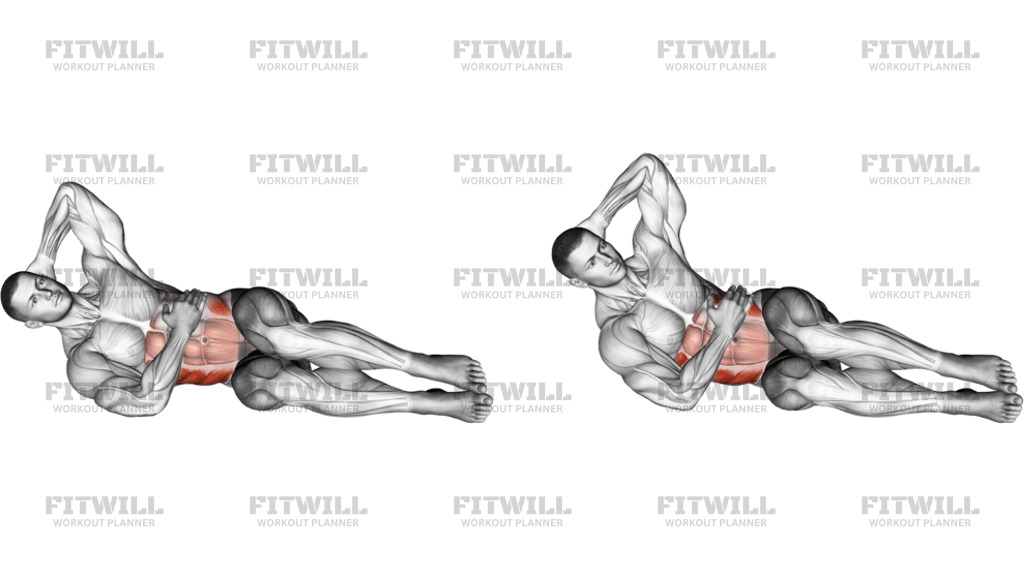
Instructions
- Lie on your side on the floor with your legs stacked and extended, your top hand lightly behind your head, and your bottom shoulder resting on the floor.
- Keep your hips stacked, your chest open, and your elbow pointed out rather than tucked across your face.
- Tuck your chin slightly and brace your midsection before the first rep so the neck stays out of the movement.
- Exhale and crunch your upper ribs toward the top hip, lifting your shoulder blade a few inches off the floor.
- Keep your hips and legs still while the side of your waist does the work.
- Pause briefly at the top without pulling harder with the neck or elbow.
- Lower slowly until the shoulder blade returns to the floor and the torso stays under control.
- Finish the set on one side, then repeat the same number of reps on the other side.
Tips & Tricks
- Think "ribs to hip" instead of trying to touch elbow to knee; the crunch should come from the torso, not a big reach.
- Keep the bottom shoulder heavy on the floor so you do not rotate into a full side roll.
- If your neck feels strained, support the head more lightly and leave a little more space between chin and chest.
- A smaller range with clean tension is better than a big, sloppy crunch that rocks the pelvis.
- Slow the lowering phase so the obliques stay under load instead of dropping back to the floor.
- If your hips keep shifting, bend the knees slightly and restack the legs before continuing.
- Keep the top elbow wide to avoid pulling the head forward with the arm.
- Stop the set when the movement turns into hip sway or shoulder shrugging.
Frequently Asked Questions
What muscle does Floor Oblique Crunches target most?
The main target is the external obliques on the side of the waist.
Can beginners perform this exercise?
Yes. It is beginner-friendly because the floor limits cheating, as long as you keep the range small and the neck relaxed.
Should my legs stay straight or bent?
Either can work, but straight legs match the pictured version and slightly bent knees can help if you struggle to keep your hips stacked.
Why is my neck getting tired first?
Usually the hand is pulling the head forward or the chin is tucked too hard. Keep the support light and let the ribs move toward the hip instead.
Do I need to touch my elbow to my hip?
No. Lift the upper rib cage toward the top hip and keep the shoulder blade moving, but do not force a hard elbow-to-hip contact.
How many reps should I do on each side?
A moderate set of controlled reps per side usually works best because the exercise is about quality and symmetry more than load.
What should I do if my hips keep rolling backward?
Stack the legs more carefully, shorten the range, and keep the bottom shoulder anchored so the torso stays in a true side-lying position.
How can I make the exercise harder without weights?
Slow the descent, add a brief pause at the top, or keep the legs fully extended to increase the leverage on the obliques.