One-Arm Chin-Up
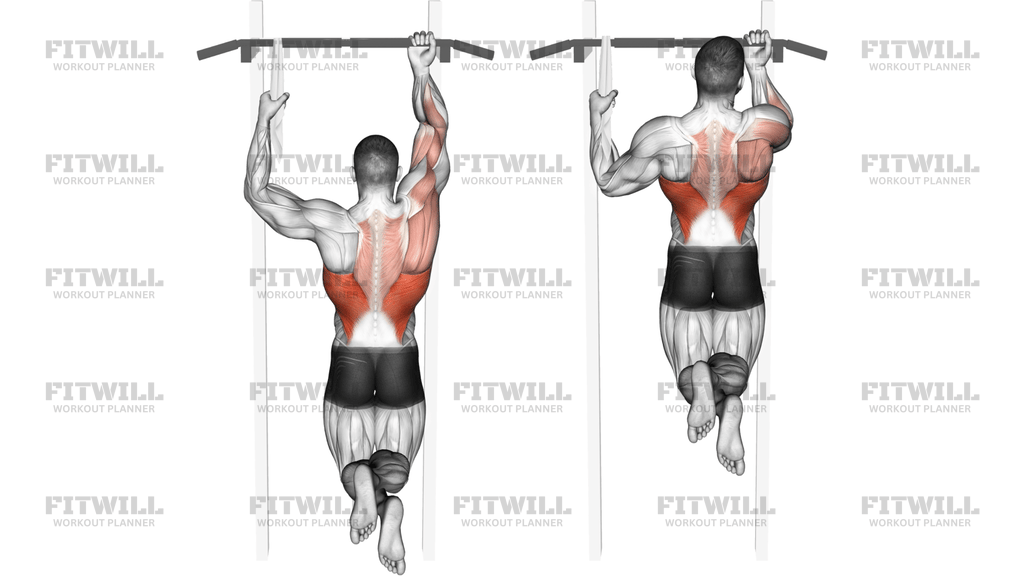
One-Arm Chin-Up is a high-skill bodyweight pulling exercise where one arm performs the entire climb from a dead hang to chin-over-bar height. It is a true strength move for the lats, upper back, biceps, forearms, and shoulder stabilizers, and it exposes any leak in scapular control, trunk tension, or grip strength immediately. The goal is not simply to reach the top; it is to do it without twisting, kicking, or letting the shoulder ride up toward the ear.
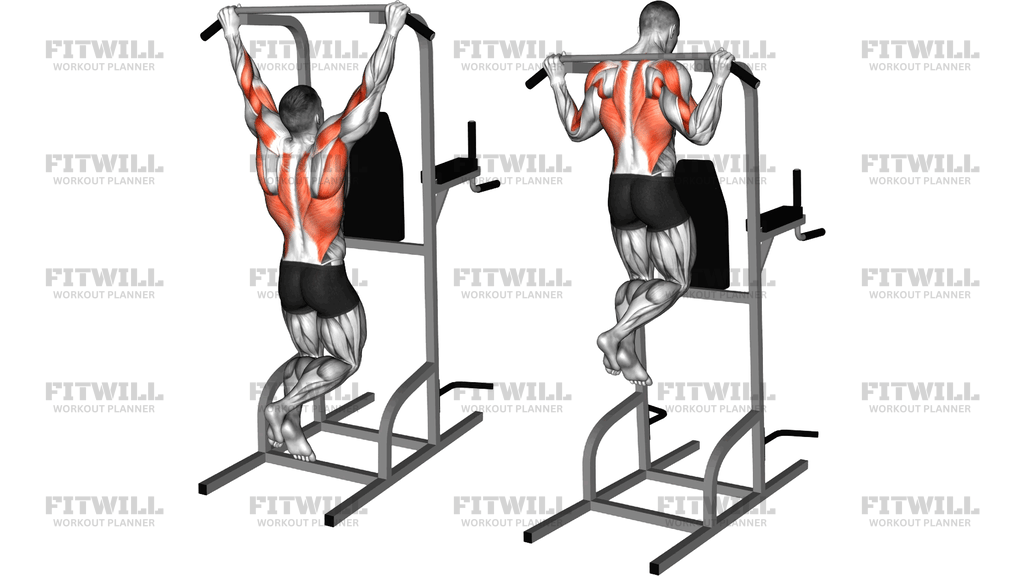
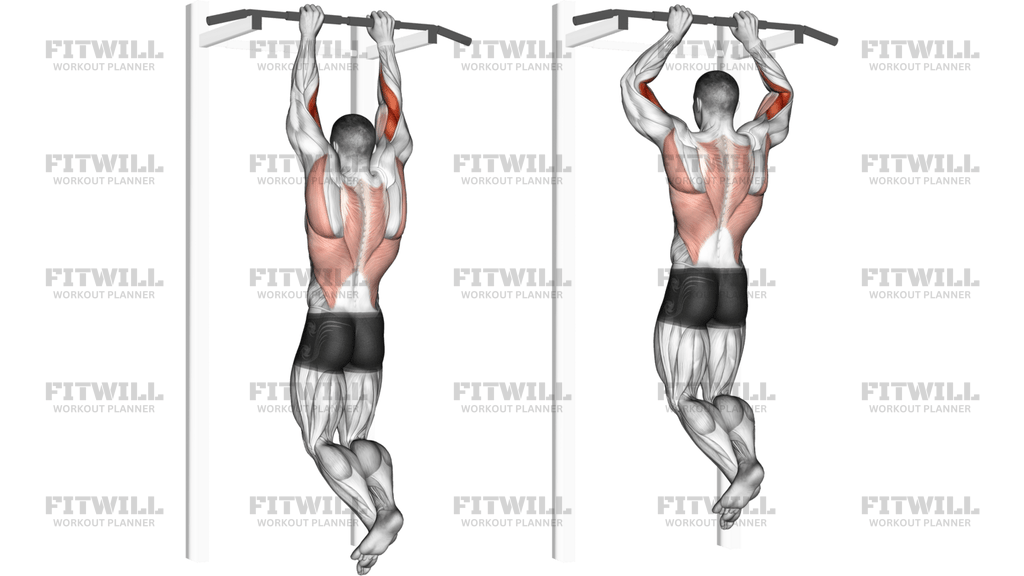
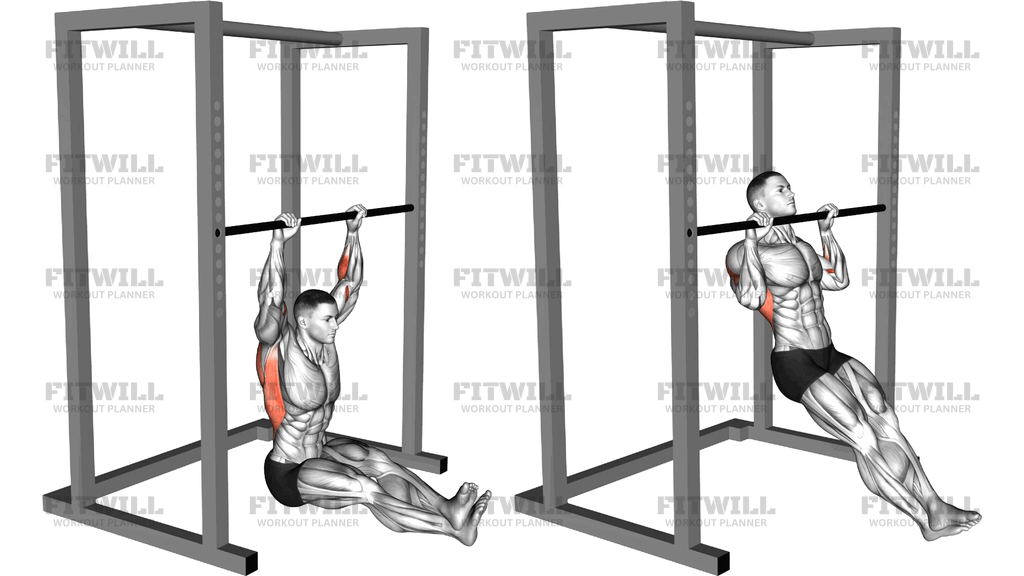
The image shows a strict vertical pulling pattern on a pull-up bar with the working arm carrying almost all of the load. In practice, the non-working hand may stay off the bar, hover for balance, or touch a support only if your setup uses a light assist, but the rep should still be driven by one arm. Keep the chest stacked under the bar, ribs down, and legs quiet so the pull comes from the back and elbow rather than from body swing.
A clean rep starts from a controlled hang with the shoulder packed and the grip fully set. Before you pull, depress the shoulder, brace the trunk, and lock the body into a stable line. Then drive the elbow down and back toward the rib cage, bring the chin above the bar, and lower with the same level of control. The eccentric matters as much as the pull-up portion because it builds the forearm, biceps, and lat strength that makes this pattern possible.
This exercise belongs near the start of a session when you are fresh, or as a focused strength skill after assisted chin-ups, weighted chin-ups, and eccentric work. It is not a beginner movement in full form, so most lifters should earn it with progressions such as archer chin-ups, band-assisted singles, towel-assisted holds, or slow one-arm negatives. Because the stress is concentrated through one shoulder and elbow, conservative volume, crisp warm-ups, and clean stop points matter more here than in two-arm pulling.
[ Workout Log & Planner ]
Put your next workout in Fitwill
Keep your plan and training log ready when you are.


Instructions
- Grip a pull-up bar with one hand using a full, closed grip; keep the other hand off the bar or on a very light balance support if your setup uses one.
- Hang from a dead stop with the working shoulder set down away from the ear, ribs stacked, and legs still or lightly crossed behind you.
- Before you pull, brace your trunk and squeeze the shoulder blade down so the working side feels packed and stable.
- Drive the elbow down and back toward the rib cage while you pull the chest upward toward the bar.
- Keep the torso as square as possible and avoid kicking, twisting, or reaching with the chin.
- Finish with the chin clearly above the bar and the shoulder still controlled, not shrugged.
- Lower slowly until the arm is fully extended and the shoulder remains active at the bottom.
- Reset the hang, re-brace, and repeat for the planned reps before stepping down carefully.
Tips & Tricks
- Let the bar sit deep in the palm so the grip can stay locked without slipping into the fingers.
- If the shoulder shrugs before the pull starts, reduce difficulty and rebuild the packed-hang position.
- Keep the free side quiet; any leg swing or torso twist usually means the rep is too hard for strict work.
- Use a slower lowering phase than the pulling phase to build the elbow and lat strength this movement demands.
- Pull the elbow toward the ribs instead of trying to yank the chin straight up with the neck.
- A brief pause at the top helps prevent a half-rep that turns into a head-bob over the bar.
- Chalk can help when forearm fatigue becomes the limiting factor before the back does.
- Stop the set as soon as the working shoulder collapses or the body starts rotating hard.
Frequently Asked Questions
What muscles does One-Arm Chin-Up train most?
The lats do most of the work, with the upper back, biceps, forearms, and shoulder stabilizers contributing strongly.
Is a one-arm chin-up the same as a one-arm pull-up?
No. A chin-up uses a supinated or underhand grip, while a pull-up uses a pronated or overhand grip.
Can beginners do the full version right away?
Usually not. Most lifters need assisted singles, archer chin-ups, and slow negatives before they can control a full rep.
What should my free hand do during the rep?
It should stay out of the way or touch only a light balance support if your setup uses one. It should not help pull the body up.
Why does my torso twist so much on this exercise?
A lot of twist means the load is too high or the trunk is not braced enough. Keep the ribs stacked and the legs quiet.
What is the best way to progress toward this movement?
Build weighted chin-ups, archer chin-ups, assisted one-arm holds, and slow eccentric lowers before attempting strict singles.
Where should I place one-arm chin-ups in a workout?
Put them near the start of the session or after a thorough warm-up, when your grip and pulling strength are still fresh.
What is the biggest form mistake to avoid?
The most common error is shrugging the shoulder and using momentum instead of a packed hang and a controlled pull.