Pull-In On Stability Ball
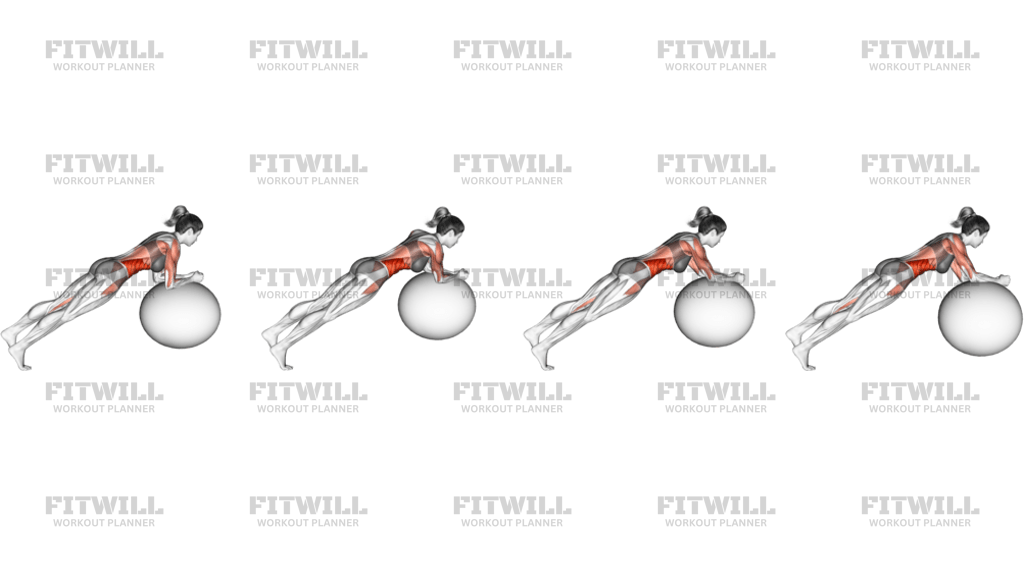
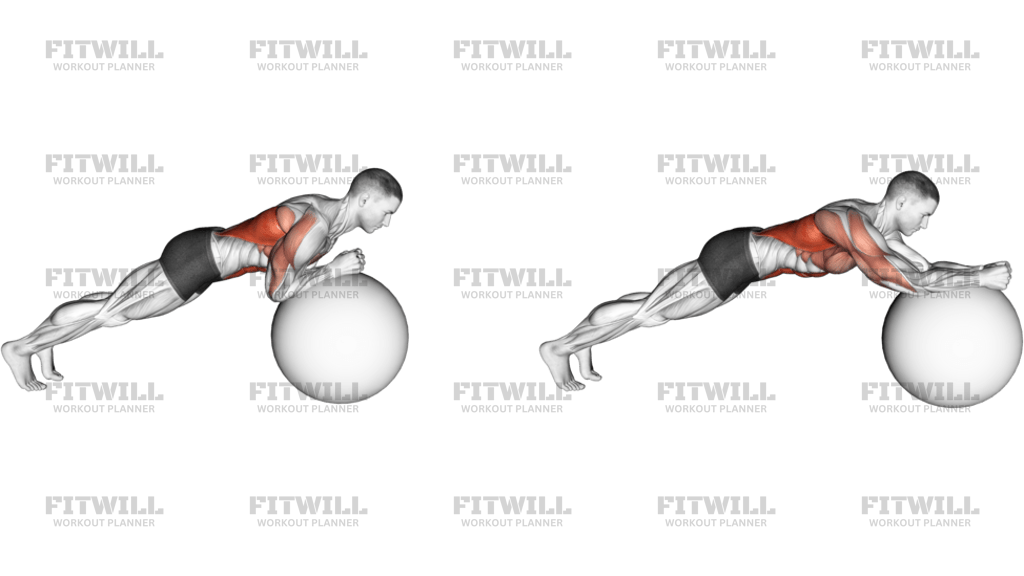
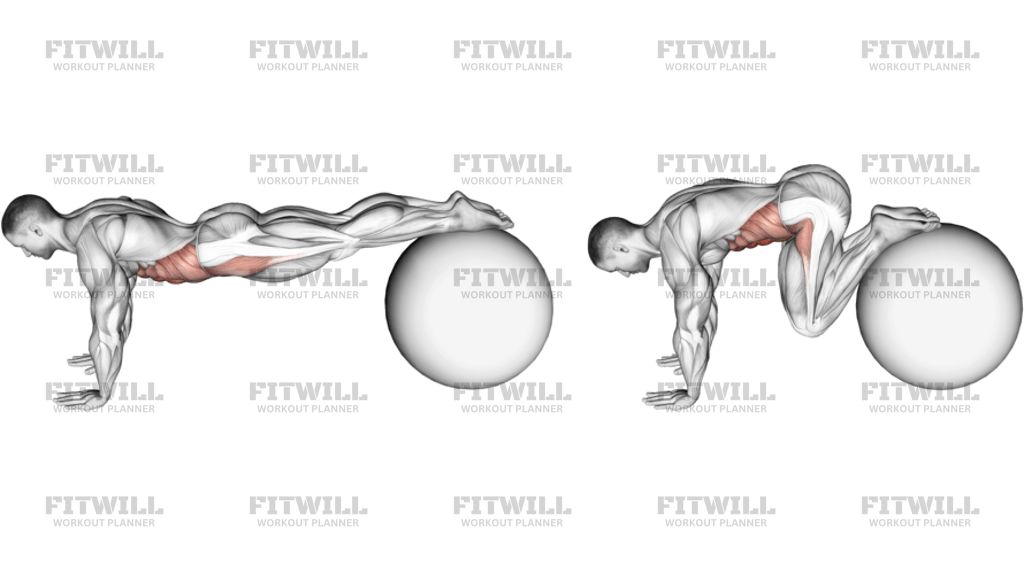
Pull-In On Stability Ball is a bodyweight core exercise that starts in a high plank with your feet or lower shins supported on a stability ball, then finishes with the ball pulled toward your hands as you bend your knees and lift your hips slightly. The movement builds strong abs, hip flexors, and obliques while asking your shoulders and serratus to keep the plank steady. Because the ball keeps moving under you, every rep depends on control rather than brute force.
The setup matters because the exercise only works well when your wrists, shoulders, and ball are lined up before the first pull. Hands should be planted under the shoulders, arms straight, and the body long from head to heel before you start moving. If the ball sits too far away, the lower back usually takes over; if it sits too close, the knees will not have enough room to travel smoothly.
As you pull in, think about curling the ball toward your hips instead of simply snapping your knees forward. The torso should stay quiet while the lower body does the work, with a small lift through the hips but no hard pike or arch. Keep your rib cage down, press the floor away through your palms, and let the exhale happen as the ball rolls inward.
On the way back out, extend the legs slowly until the body returns to a long plank and the ball settles under the lower legs again. The return is part of the exercise, so do not let the feet shoot back or the hips sag. Clean reps make this a strong accessory for core training, warm-ups, or conditioning blocks where you want abdominal tension without loading the spine.
This exercise is especially useful when you want anti-extension strength with a little instability challenge. Beginners can shorten the range and keep the ball closer, while more advanced lifters can slow the return or add a brief pause in the tucked position. If the ball slides, the hips drop, or the shoulders drift behind the wrists, the set is too hard and the movement should be scaled back.
[ Workout Log & Planner ]
Put your next workout in Fitwill
Keep your plan and training log ready when you are.


Instructions
- Place the stability ball on a clear floor and set your hands on the ground under your shoulders.
- Rest your lower shins or insteps on top of the ball and straighten your legs into a long high plank.
- Press the floor away, stack your shoulders over your wrists, and keep your head in line with your spine.
- Brace your abs, tuck your pelvis slightly, and squeeze your glutes so your body stays long before each rep.
- Inhale to prepare, then begin the pull by bending your knees and rolling the ball toward your hands.
- Keep your upper body still while your hips lift just enough for the knees to travel under you.
- Exhale as the ball comes in and finish with your knees tucked closer to your chest than your start position.
- Pause briefly in the tucked position without collapsing through the shoulders or rounding your lower back.
- Extend your legs slowly to roll the ball back out until you return to a straight plank.
- Reset the plank shape before the next rep, or lower your knees to the floor if you need to end the set safely.
Tips & Tricks
- If the ball feels unstable, shorten the pull-in and keep the knees only slightly bent instead of chasing a huge tuck.
- Keep your wrists directly under your shoulders so the plank does not drift forward and turn into a shoulder shrug.
- A small posterior pelvic tilt helps stop the lower back from sagging when the ball starts rolling in.
- Do not let the hips shoot high like a pike; the goal is a controlled knee tuck, not a standing hamstring curl in the air.
- Move the ball with a smooth exhale so the abs stay active instead of letting the legs yank the body forward.
- If your hamstrings cramp, slow the return and reduce the range before adding more reps.
- Keep your feet and lower legs light on the ball; pressing hard into it usually makes the ball wobble and the set harder to control.
- Stop the set when the shoulders slip behind the wrists or the low back starts arching on the return.
- A slow two- to three-second roll-out is usually more useful than trying to race through reps.
- Use a stable, slightly softer ball if the floor is slippery, but make sure it still supports your shins without sinking too much.
Frequently Asked Questions
What muscles does Pull-In On Stability Ball work most?
It mainly trains the abs, especially the rectus abdominis, while the obliques and hip flexors help control the tuck. Your shoulders and serratus also work hard to keep the plank steady.
Is Pull-In On Stability Ball the same as a stability ball knee tuck?
In most gyms and programs, yes. Both usually mean starting in a plank with your feet on the ball and pulling the ball toward your hands by bending the knees.
Where should my feet or shins sit on the ball?
Start with your lower shins or insteps supported on top of the ball so you can hold a straight plank before the pull-in begins. If the ball is too far away, it becomes harder to keep the ribs and hips in line.
Can beginners do Pull-In On Stability Ball?
Yes, but they should use a short range and treat the first goal as holding a solid plank while the ball moves. If the hips sag or the ball slides around, a floor plank or a smaller tuck is a better starting point.
Why do my hips rise too high during the pull-in?
That usually means you are turning the movement into a pike instead of a controlled tuck. Keep the shoulders stacked over the hands and only lift the hips enough for the knees to travel under the torso.
Why does Pull-In On Stability Ball bother my lower back?
The most common cause is losing the plank and letting the ribs flare as the ball rolls out. Shorten the range, brace before each rep, and stop when you can no longer keep the torso long.
What is the best breathing pattern for this exercise?
Inhale as you set the plank, then exhale as you pull the ball inward. That exhale helps keep the ribs down and makes it easier to keep tension through the abs.
How can I make Pull-In On Stability Ball harder?
Slow the roll-out, pause in the tucked position, or add more total reps without losing plank alignment. You can also make the setup harder by starting with the ball a little farther from your hands.