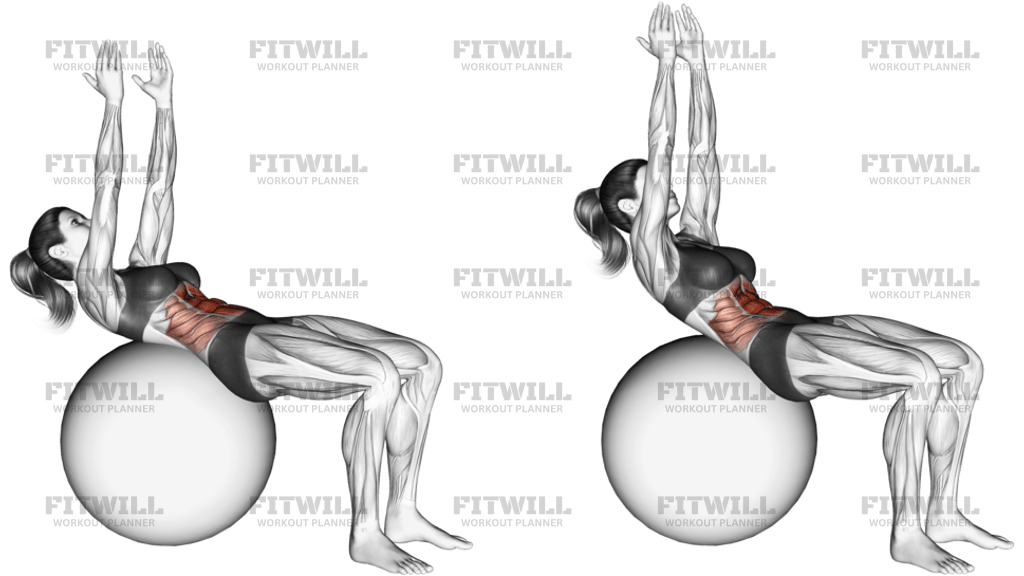
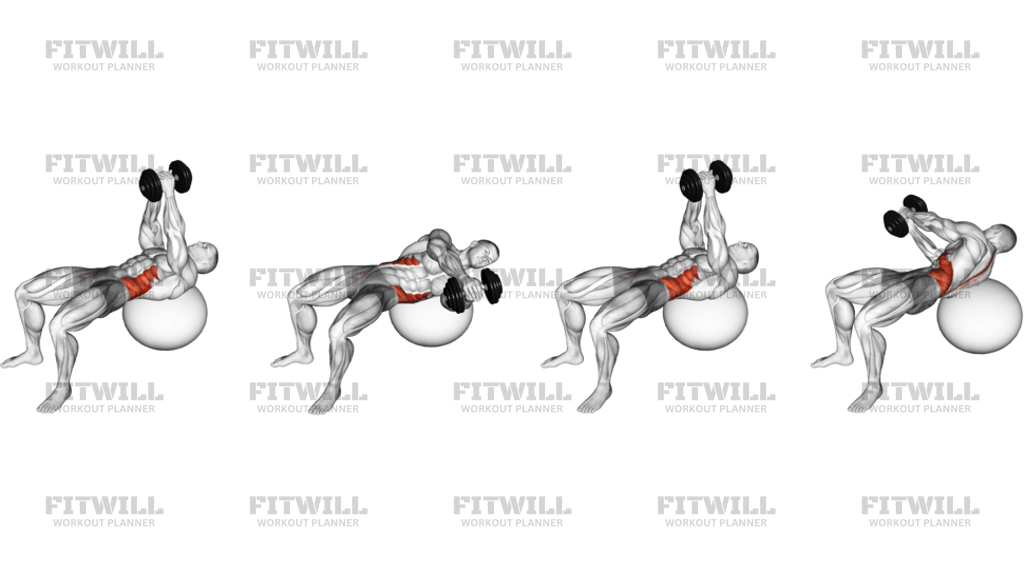
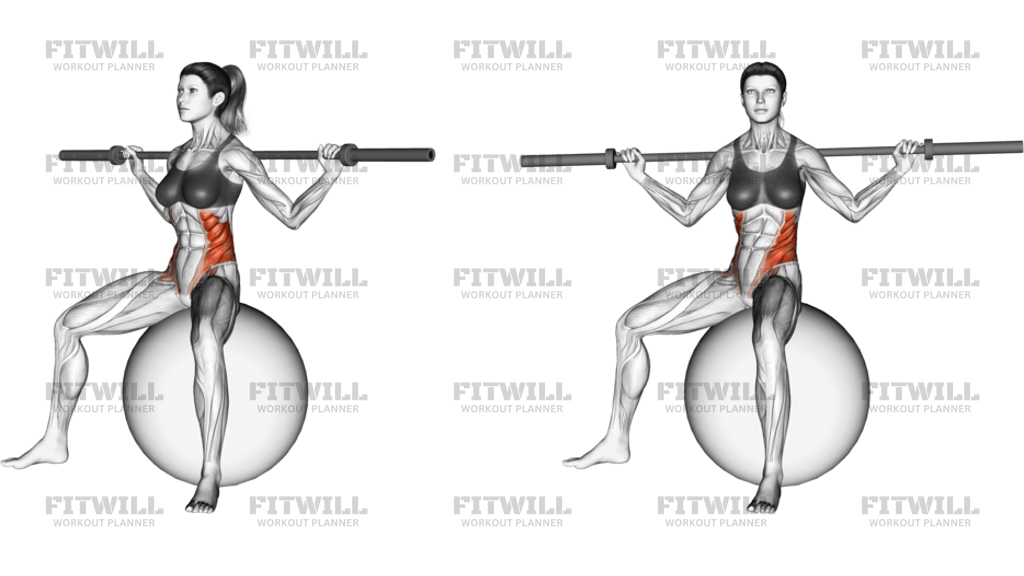
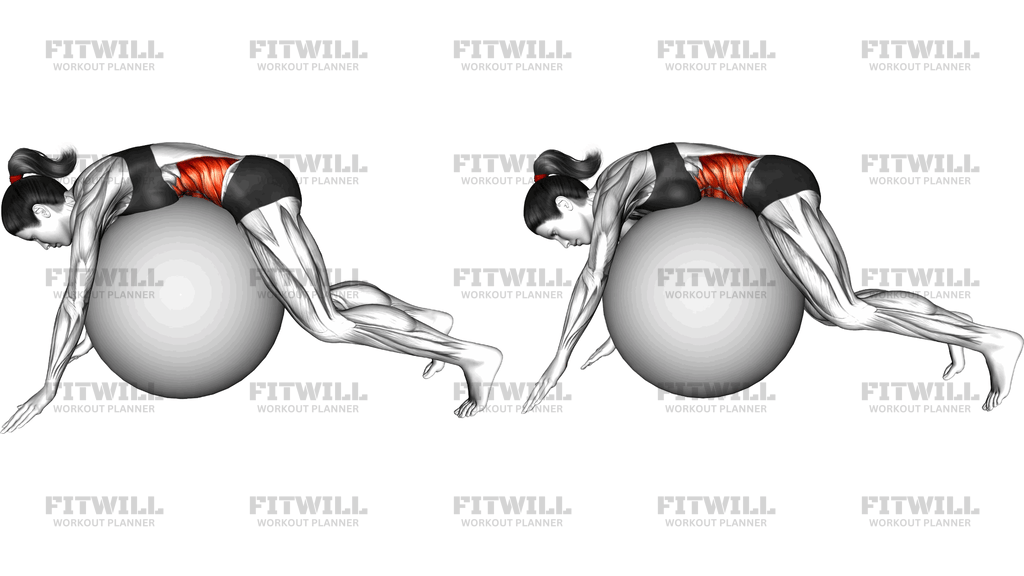
Side Bend On Stability Ball
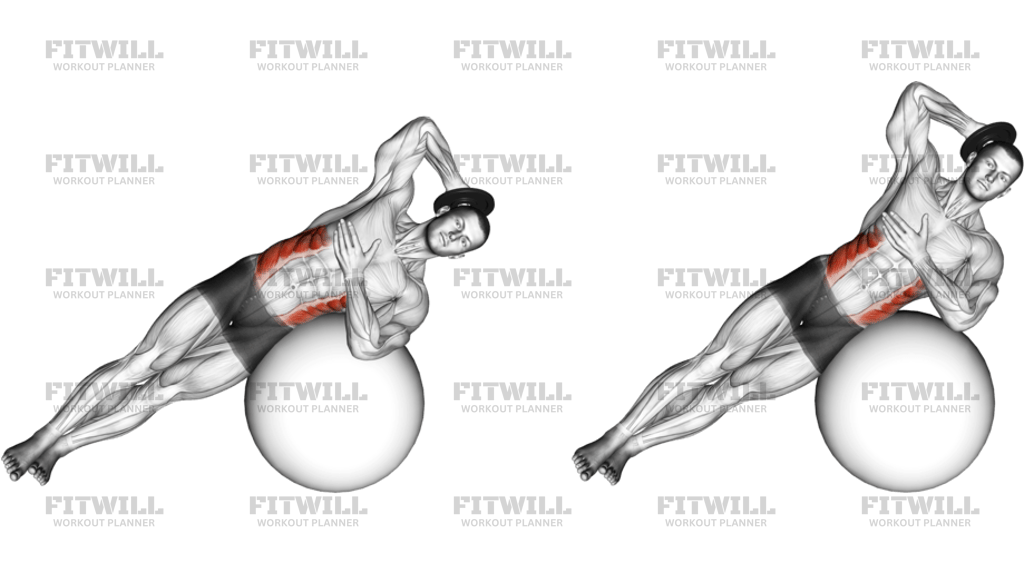
Side Bend on Stability Ball is a lateral-flexion core exercise that trains the obliques while the ball supports the side of the torso and keeps the movement honest. In the pictured setup, the lower ribs and waist rest across the stability ball, the feet stay planted or lightly staggered for balance, and the hands go behind the head so the rib cage can move without pulling on the neck.
The main action is to bend the rib cage toward the hip on the floor side, then return to a long, stacked torso without twisting forward or back. That makes the exercise useful for direct oblique work, trunk control, and the kind of side-to-side strength that carries over to lifting, carrying, throwing, and general core stability. The ball creates a supported arc, but the waist still has to do the work.
Setup matters more here than on many ab drills. Place the ball under the lower ribs and side waist rather than under the shoulder blade or the pelvis, and keep the shoulders and hips stacked so the first rep starts from a clean line. Keep the elbows open, the chin slightly tucked, and the neck relaxed. If the head drives the motion or the elbows collapse inward, the set usually turns into a neck crunch instead of a torso bend.
Use a short, controlled range and let the obliques close the side of the trunk on the way down. Pause briefly in the shortened position, then exhale and lift the ribs back to neutral with the same control. Stop the set if the pelvis rolls, the body starts rotating over the ball, or the lower back takes over. This movement fits well in accessory core work, trunk-strength circuits, or warmups where you want focused oblique tension without heavy spinal loading.
[ Workout Log & Planner ]
Put your next workout in Fitwill
Keep your plan and training log ready when you are.


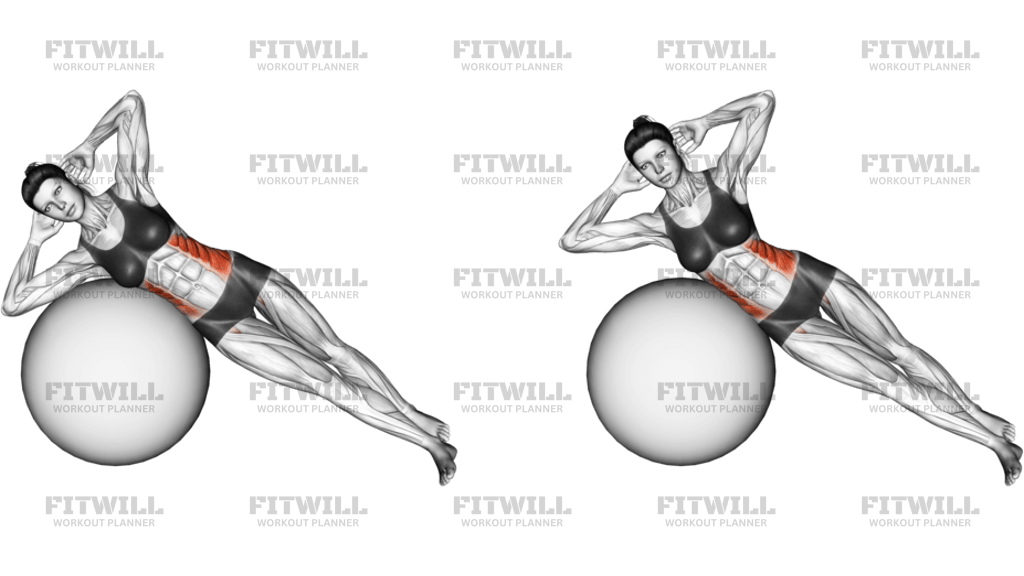
Instructions
- Lie your side across the stability ball with the lower ribs and waist supported, the feet planted or lightly staggered for balance, and both hands behind your head.
- Stack the shoulders and hips, keep the torso in a long line, and let the ball sit under the side of the trunk rather than the shoulder blade or pelvis.
- Keep the elbows wide, the chin slightly tucked, and the neck relaxed before you start the rep.
- Brace lightly through the waist and bend the rib cage toward the floor side in a short, controlled side bend.
- Keep the hips still and avoid rotating the chest forward or backward as you lower.
- Pause for a moment in the strongest comfortable side-bend position.
- Exhale and lift the rib cage back to a stacked, neutral torso without jerking off the ball.
- Reset the shoulders, ribs, and hips on the ball before the next repetition.
Tips & Tricks
- Place the ball under the lower ribs and waist; if it sits too high, the shoulder takes over, and if it sits too low, the pelvis blocks the bend.
- Keep the top elbow open so the head stays light and the neck does not lead the movement.
- Think about bringing the ribs toward the hip, not the elbow toward the knee.
- Use a small, clean range instead of chasing a huge side crunch.
- Lower slowly so the obliques control the descent instead of dropping onto the ball.
- Keep both hips stacked; rolling forward turns the drill into a rotation exercise.
- Widen the feet or stagger them slightly if you need more balance on the ball.
- Choose bodyweight first, then add a small plate or light dumbbell only if you can keep the torso quiet.
Frequently Asked Questions
What muscles does Side Bend on Stability Ball work most?
It mainly trains the obliques, with rectus abdominis, transverse abdominis, and spinal stabilizers helping keep the torso stacked on the ball.
Where should the stability ball sit during the rep?
The ball should support the lower ribs and side waist, not the shoulder blade or the pelvis.
Should my elbows stay tucked or open?
Keep the elbows open and the hands lightly behind the head so the neck stays relaxed and the torso drives the movement.
How is this different from a side plank?
This is a dynamic side-bending crunch over the ball, while a side plank is an isometric hold against side collapse.
Can beginners do this exercise safely?
Yes, as long as they use a small range, keep the ball placement correct, and avoid pulling on the neck.
What is the most common form mistake?
Most people either roll the body over the ball or turn the rep into a neck crunch instead of a clean side bend.
Can I hold weight while doing it?
Yes, but only after you can keep the torso quiet with bodyweight; a light plate or dumbbell is usually enough.
Where does this fit in a workout?
It works well as accessory core work, in a trunk circuit, or as a controlled warmup before heavier training.