Reverse-Grip Pull-Up
Reverse-Grip Pull-Up is a bodyweight vertical pulling exercise performed from a fixed overhead bar with an underhand grip, palms facing you. The reverse grip changes the feel of the pull-up by letting the elbows travel closer to the torso and by asking the biceps to assist strongly while the lats still do most of the work. It is a classic strength movement for building upper-back and arm pulling power, and it also teaches you how to control your shoulder blades through a full hanging range.
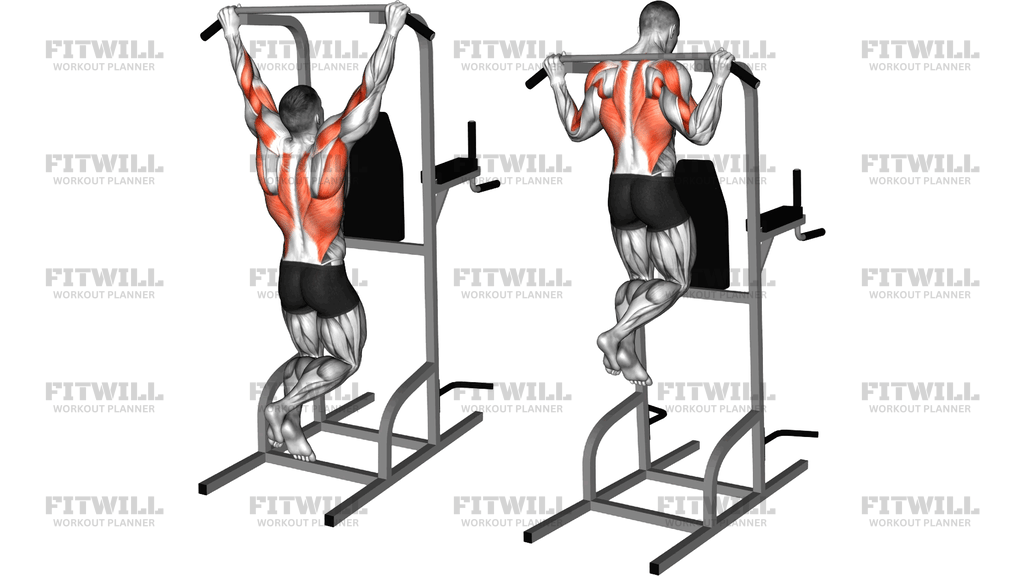
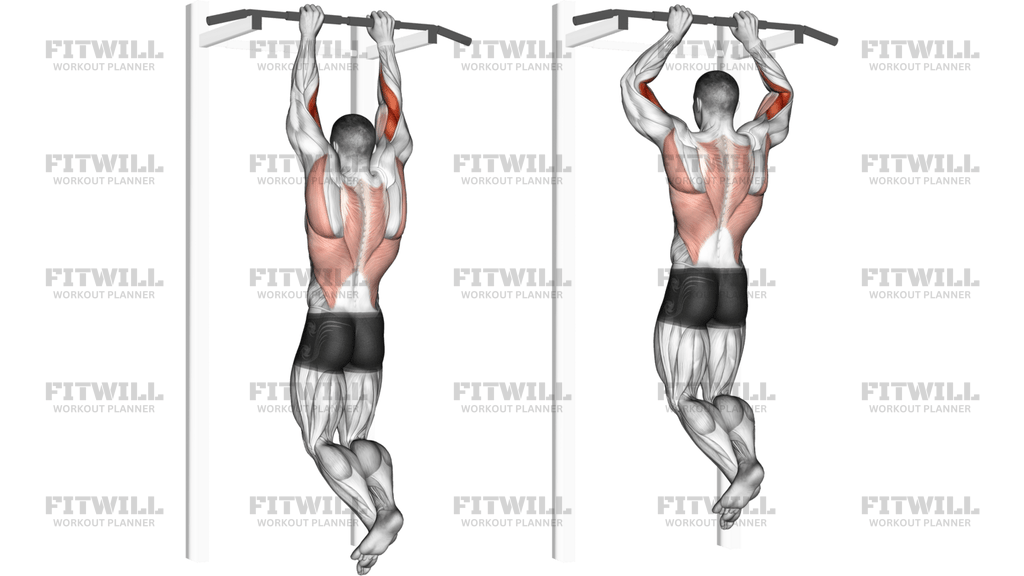
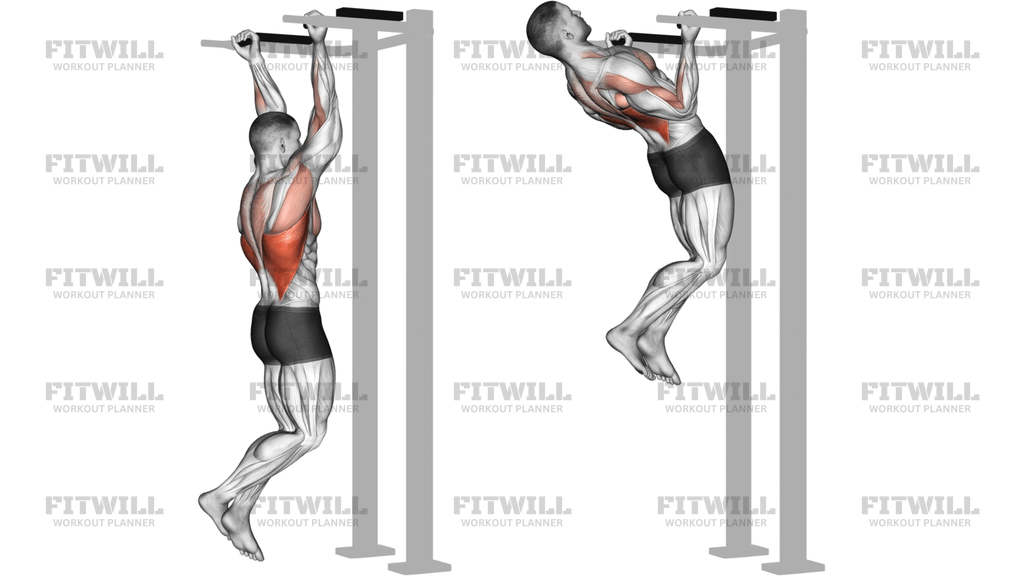
The image shows a strict chin-up style setup rather than a swinging gymnastic rep. Start from a dead hang with the shoulders organized, then pull the body up without kicking the legs or craning the neck. That strict start and finish matter because this movement is easy to turn into momentum if the grip is too wide, the ribcage flares, or the torso drifts back and forth. The best reps feel smooth, vertical, and deliberate.
Most of the load goes through the latissimus dorsi, with the biceps brachii, forearms, lower traps, rhomboids, and rear shoulder muscles helping to stabilize and finish the pull. Because the underhand grip usually allows a stronger elbow drive, many lifters use this variation to reinforce lat and arm strength together. It is useful for back-focused sessions, upper-body pulling days, and progression work when someone is building toward stricter pull-ups.
Quality matters more than height. Pull the chest toward the bar by driving the elbows down and back, then lower under control until the arms are fully extended again. Keep the neck long, the core braced, and the legs quiet so the shoulders and elbows do the work. If the shoulders feel pinched or the lower back starts to swing, the set is too aggressive, the grip is too wide, or the rep speed is too fast.
Use this exercise when you want a demanding vertical pull that balances back and arm work. A clean reverse-grip pull-up rewards strict body position, controlled tempo, and a full hang-to-top range. If you cannot hold the bottom position without losing shape, use assistance and earn the stricter version before loading volume or chasing higher rep counts.
[ Workout Log & Planner ]
Put your next workout in Fitwill
Keep your plan and training log ready when you are.


Instructions
- Grip the overhead bar with an underhand grip about shoulder width apart, then hang with straight arms and crossed or quiet legs.
- Set the shoulders down away from the ears and lightly brace the ribs and abdomen before the first pull.
- Start from a dead hang or a controlled near-dead hang without swinging the body.
- Pull by driving the elbows down and back while keeping the chest lifted toward the bar.
- Keep the torso steady and avoid kicking the legs or leaning back to create momentum.
- Bring the chin over the bar, or the upper chest toward the bar if your strength and mobility allow it.
- Pause briefly at the top while keeping the neck relaxed and the shoulders packed.
- Lower yourself slowly until the elbows are fully extended and the shoulders are back under control.
- Inhale on the way down and exhale as you pull yourself upward.
- Reset completely at the bottom before starting the next repetition.
Tips & Tricks
- Keep the hands close to shoulder width; a very wide reverse grip usually shortens the range and makes the shoulders work harder than the lats.
- Think about pulling the elbows toward your front pockets rather than just lifting the chin.
- If your wrists feel stressed, let the bar sit deeper in the palm and keep the forearms stacked under the grip instead of bending the wrists back.
- Avoid flaring the ribs at the top; a hard arch turns the rep into a lower-back compensation pattern.
- A one-second pause at the top usually exposes weak control better than adding more speed or more reps.
- Lowering slowly will build more usable strength than dropping out of the top position.
- If you cannot keep the body still, use a band or assisted machine before adding volume.
- Stop the set when the elbows stop driving down and the shoulders start shrugging toward the ears.
Frequently Asked Questions
What muscle does Reverse Grip Pull-Up target most?
The lats are the main target, with a strong assist from the biceps and upper back.
Can beginners perform this exercise?
Yes, but most beginners should start with band assistance, an assisted pull-up machine, or slow negatives until they can control the full hang.
Is a reverse-grip pull-up the same as a chin-up?
In most gyms, yes. Both use a supinated, palms-facing-you grip on an overhead bar.
How high should I pull myself?
Aim for the chin over the bar or the upper chest close to the bar, but only if you can keep the rep strict.
Why do my biceps feel this exercise so much?
The underhand grip places the biceps in a stronger pulling position, so they contribute more than they do in an overhand pull-up.
What is the biggest form mistake with this movement?
The biggest mistake is swinging the legs or arching the lower back to fake the rep.
Should the grip be very narrow?
No. A shoulder-width grip usually gives a stronger pull path and a cleaner elbow track than an extreme close grip.
What can I use instead if I cannot do a full rep yet?
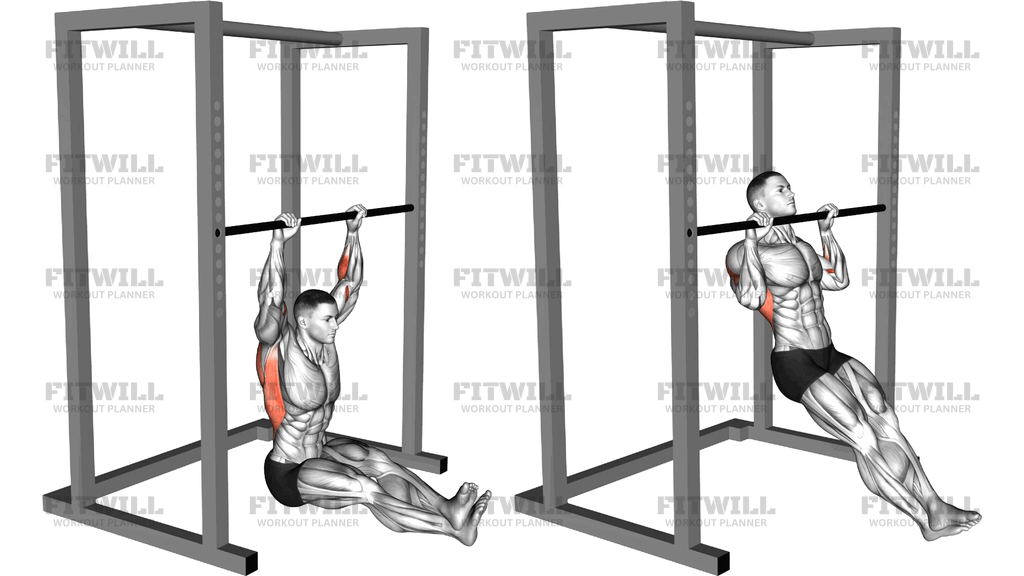
Use band-assisted chin-ups, an assisted pull-up machine, top-position holds, or slow negatives.