Rotate Push-Up
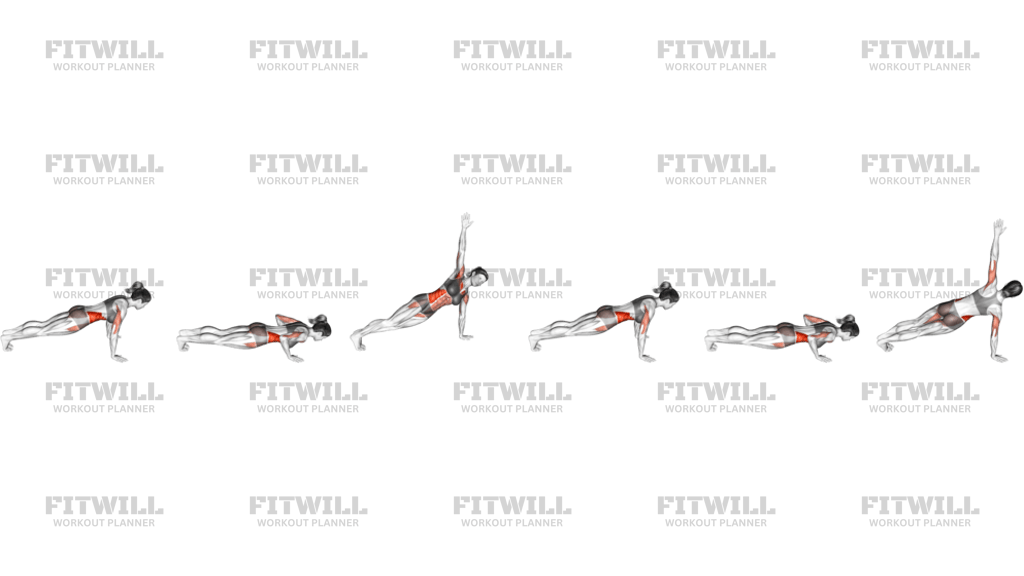
Rotate Push-Up combines a standard push-up with a controlled torso rotation into a side plank. It is a body-weight strength exercise that trains the chest, shoulders, triceps, and the core hard enough that the trunk has to resist twisting while the body moves. The visible goal is not just to finish a push-up, but to keep the plank line clean as you press, rotate, and stabilize on one arm.
The exercise is especially useful when you want pressing strength with a strong anti-rotation challenge. The rectus abdominis and obliques keep the ribs and pelvis organized, while the serratus, shoulder stabilizers, and glutes help the body stay rigid through the transition. In practice, that means the quality of the rep depends on how well you control the plank, not on how fast you can spin into the side plank.
Set the hands under the shoulders, brace the abdomen, and lock the body into a long line from head to heels before the first rep starts. From there, lower like a push-up, press back up, then rotate through the upper torso and hips until you are stacked into a side plank with one arm reaching toward the ceiling. The feet need enough width and pivot room to let the hips turn without forcing the lower back to twist.
Because this movement has two demands at once, the setup matters more than on a plain push-up. Too narrow a stance, a sagging midsection, or rushed hand placement will make the rotation sloppy and shift the stress away from the intended muscles. A well-done rep feels strong through the chest and shoulders, but it should also feel controlled through the waist as the body opens and returns to plank.
Use Rotate Push-Up in core-strength circuits, pressing accessories, athletic conditioning, or any workout where you want a body-weight press with extra trunk control. It fits best when you can keep the push-up depth consistent, the rotation deliberate, and the landing in side plank stable. Beginners can scale it by elevating the hands, widening the feet, or shortening the push-up range until the transition stays smooth.
Fitwill
Log Workouts, Track Progress & Build Strength.
Achieve more with Fitwill: explore over 9600 exercises with images and videos, access built-in and custom workouts, perfect for both gym and home sessions, and see real results.
Start your journey. Download today!




Instructions
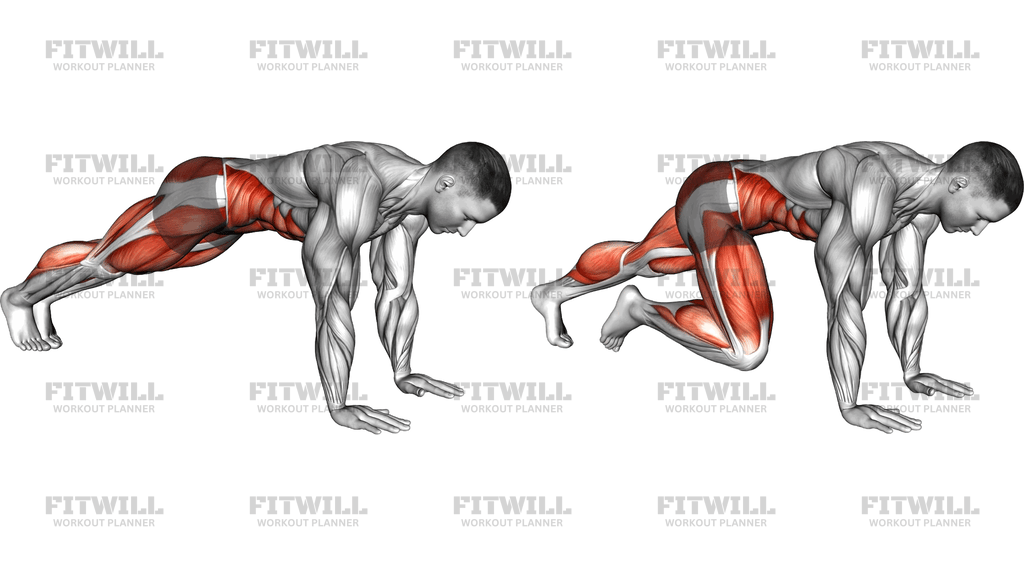
- Start in a high plank with your hands under your shoulders, fingers spread, feet together or slightly wider, and your body in one straight line from head to heels.
- Brace your abs and squeeze your glutes so the lower back stays flat before the first rep begins.
- Lower your chest toward the floor like a push-up, keeping your elbows angled slightly back instead of flaring wide.
- Press the floor away until your arms are straight and your shoulders are stacked over your wrists again.
- Shift your weight into one hand and rotate your chest and hips open into a side plank.
- Pivot onto the outside of your feet as you turn, and reach the free arm straight toward the ceiling.
- Hold the side plank briefly with your ribs down and your body still before you return.
- Rotate back to the high plank under control, then repeat and alternate the side you open to on each rep.
- Inhale on the way down, exhale as you press and rotate, and reset your plank before starting the next repetition.
Tips & Tricks
- Keep your feet a little wider if the rotation makes your hips wobble or your balance feels too narrow.
- Think about turning the ribcage and hips together; if only the arm moves, the rotation becomes sloppy.
- Stop the push-up depth before your chest collapses between the shoulders or your lower back starts to arch.
- Keep the supporting shoulder packed and active during the side plank instead of sinking into the joint.
- Use a smooth pivot through the feet so the knees and ankles are not forced to twist against the floor.
- If the wrists feel crowded, do the movement on push-up handles, dumbbells, or fists to change the hand angle.
- Elevate the hands on a bench or box if you cannot keep the push-up and rotation crisp through the full range.
- Keep the top arm vertical in the side plank instead of letting it drift forward and pull the torso out of line.
- Reduce speed before reducing form; this exercise is meant to look controlled, not explosive.
Frequently Asked Questions
What muscles does Rotate Push-Up work most?
It mainly trains the chest, shoulders, triceps, and the core, with the obliques doing a lot of work during the rotation.
Is the side plank rotation supposed to happen after the push-up?
Yes. Lower first, press back up, then open into the side plank so the push-up stays clean before the rotation starts.
How wide should my feet be for the rotation?
A slightly wider stance usually helps. It gives the hips room to pivot and makes the side plank more stable.
What is the most common form mistake?
Letting the hips sag or twist too early. The body should stay in a straight plank until you deliberately rotate open.
Can I do Rotate Push-Up with my knees down?
Yes. A knee-supported version can help you learn the push-up and rotation pattern before you progress to full plank reps.
What should I do if my wrists hurt during this movement?
Use push-up handles, dumbbells, or fists, and keep the hands under the shoulders so the wrist angle stays more comfortable.
Do I need to rotate to the same side every rep?
No. Alternating sides usually makes the exercise more balanced and keeps both obliques and shoulders working evenly.
Is this more of a core exercise or a push-up exercise?
It is both. The push-up drives the pressing demand, and the rotation makes the core fight to stop the torso from collapsing or twisting out of line.