Russian Twists
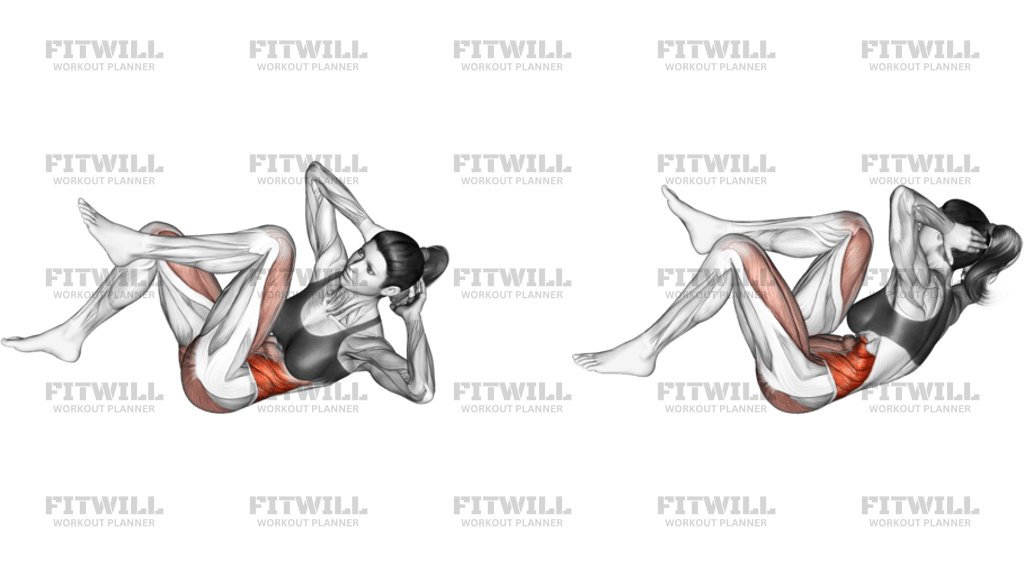
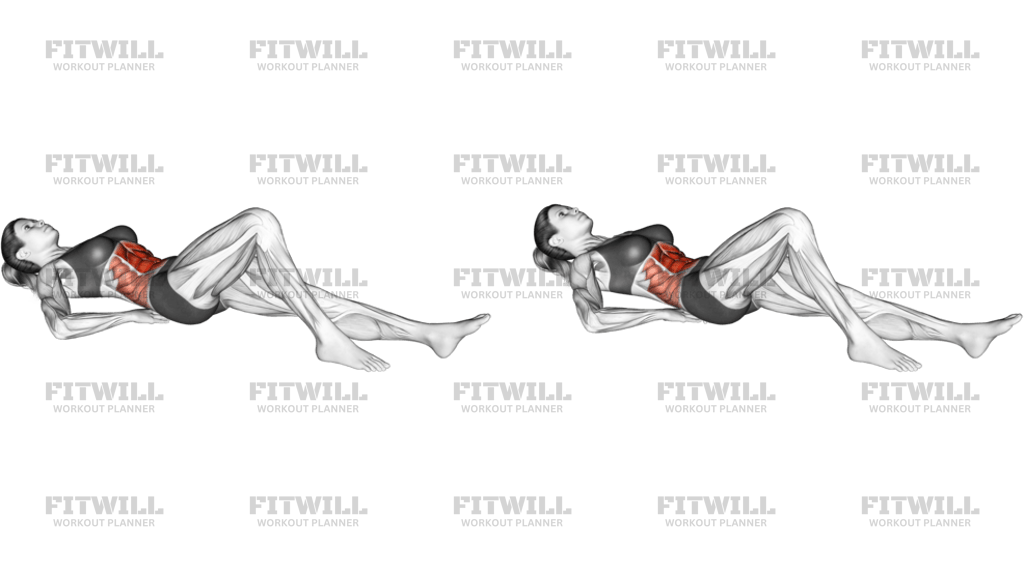
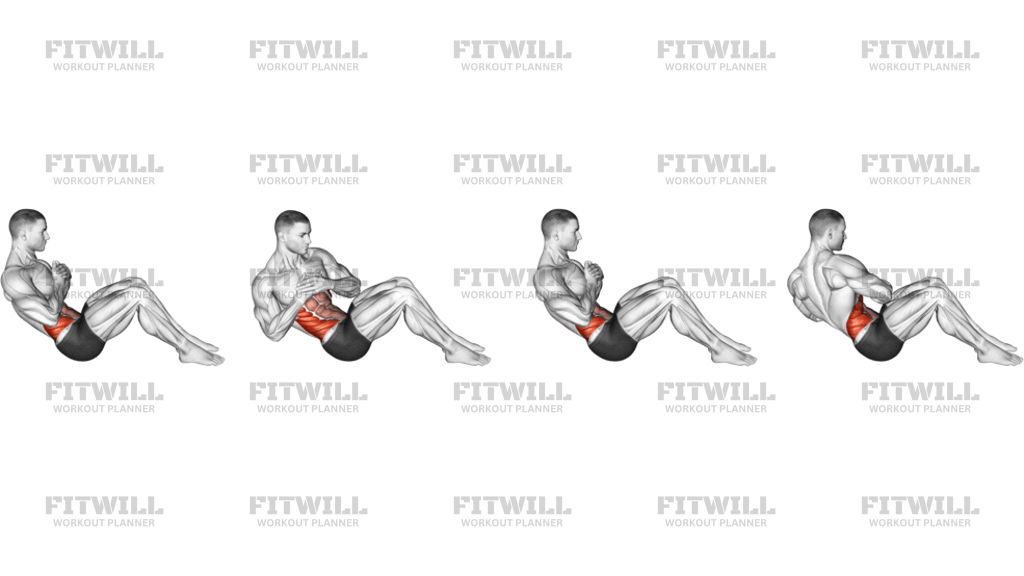
Russian Twists are a floor-based trunk rotation exercise that trains the obliques to control side-to-side movement while the torso stays leaned back. In this bodyweight version, the legs are bent, the feet hover off the floor, and the hands stay clasped at the chest so the rotation comes from the ribcage and shoulders instead of from swinging the arms.
The exercise is useful when you want anti-rotation control, rotational endurance, and better awareness of how the torso moves under tension. In anatomy terms, the main work centers on the External obliques, with the Rectus abdominis, Transversus abdominis, and Erector spinae helping the trunk stay braced while the body turns. The image shows a pure bodyweight variation, so the challenge comes from leverage, balance, and clean rotation rather than from external load.
The setup matters more than most people think. Sit tall first, then lean back until the abdomen is working and the low back is not collapsing. Keep the chest lifted, ribs down, and knees bent so the torso can rotate without the hips dragging the movement around. If lifting both feet makes the lower back arch or the torso wobble, shorten the lever by keeping the heels lightly down until you can hold a steadier position.
Each repetition should feel like a controlled turn from one side to the other, not a fast sweep. Rotate the shoulders and sternum as a unit, tap or aim the hands toward each side, then reverse the twist without losing the leaned-back position. Exhale through the turn, inhale as you pass through center, and keep the neck relaxed so the head does not lead the motion.
Use Russian Twists as a core accessory, a warmup drill for trunk control, or a higher-rep conditioning piece when you want the obliques to work without machines or weights. The best version is the one you can repeat cleanly: small to moderate rotation, steady balance, and no jerking through the lumbar spine. If the motion shifts into the hips or lower back, reduce the range or keep the feet on the floor until the trunk can do the work on its own.
[ Workout Log & Planner ]
Put your next workout in Fitwill
Keep your plan and training log ready when you are.


Instructions
- Sit on the floor with your knees bent, torso leaned back, and hands clasped at your chest.
- Lift your feet a few inches off the floor, or keep the heels lightly down if you cannot hold the low back steady.
- Set your ribs down and brace your midsection before the first twist.
- Turn your shoulders and sternum toward one side without collapsing the leaned-back position.
- Keep your hands close to the chest as you rotate instead of reaching and swinging the arms.
- Pass through center under control and twist to the other side with the same range.
- Let the obliques slow the return rather than dropping back into the middle.
- Breathe out on each twist and keep the neck relaxed throughout the set.
Tips & Tricks
- If your low back rounds hard or the torso shakes, lower your feet to the floor and shorten the lever.
- Think about moving the ribcage, not the elbows; the arms should stay quiet while the torso rotates.
- Keep the chest lifted as you lean back so the twist comes from the trunk instead of a slumped spine.
- A smaller, cleaner rotation is better than chasing the floor with your hands and losing tension.
- Do not let the knees flop side to side; the lower body should stay mostly fixed while the upper body turns.
- Exhale as you hit each side to help the obliques finish the rotation with control.
- If the hip flexors take over, bring the torso a little more upright and reduce the leg lift.
- Stop the set once the movement turns into momentum, especially in high-rep circuits.
Frequently Asked Questions
What muscles do Russian Twists target most?
They mainly train the obliques, with the rectus abdominis and deep core muscles helping stabilize the trunk.
Can beginners perform this exercise?
Yes. Beginners should keep the torso more upright, move slower, and place the heels on the floor until balance improves.
Do my feet have to stay off the floor?
No. Lifting the feet makes the lever longer, but keeping the heels down is a good regression if the low back starts to arch.
Should I swing my arms side to side?
No. The hands stay close to the chest so the twist comes from the torso instead of from arm momentum.
How far should I rotate on each rep?
Rotate as far as you can while keeping the lean-back position, ribs controlled, and lower back quiet.
What is the biggest mistake with Russian Twists?
The biggest mistake is turning it into a fast swing that pulls on the hips and lower back instead of the obliques.
Where does this exercise fit in a workout?
It works well in core circuits, accessory blocks, or as a light trunk-control drill before heavier lifting.
How can I make Russian Twists harder without weights?
Extend the feet a little farther from the body, slow the tempo, or pause briefly at each side while keeping the torso steady.