Self Assisted Inverse Leg Curl On Floor
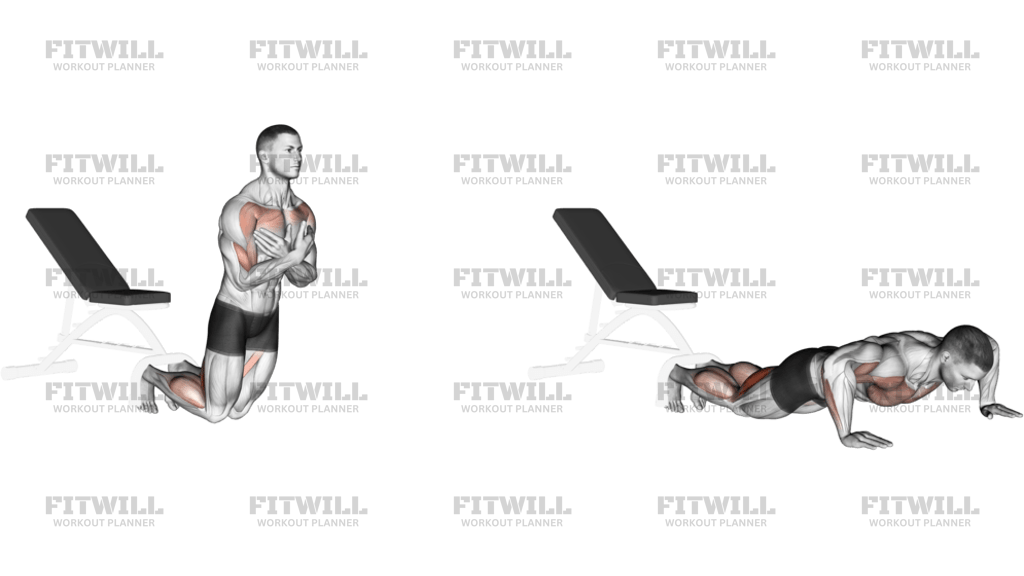
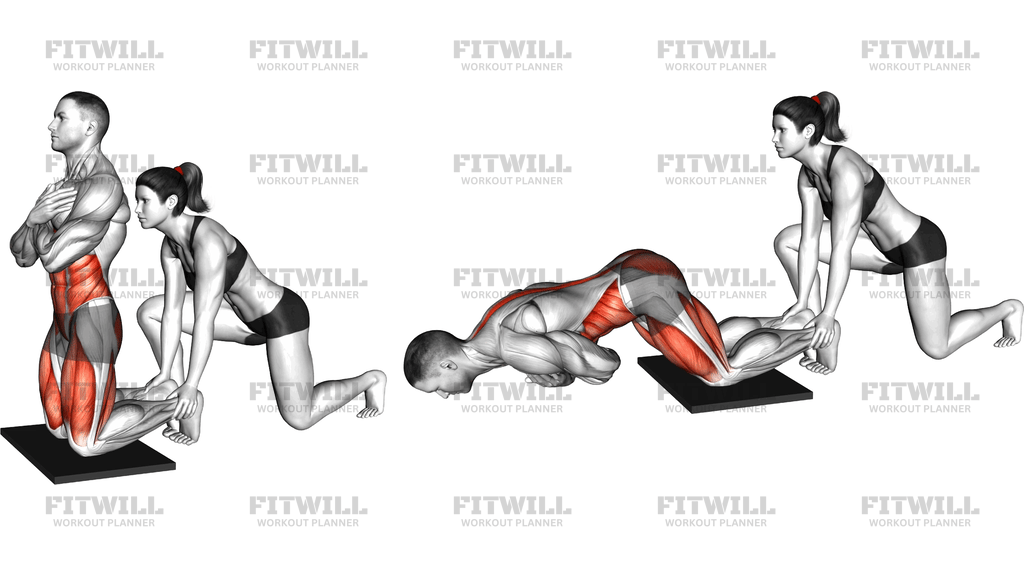
Self Assisted Inverse Leg Curl On Floor is a floor-based hamstring exercise that uses a bench to anchor the ankles while the hands help catch and return the body. It gives you a way to train the hamstrings through a long, demanding range without forcing every rep to be fully unassisted, which makes it a useful bridge between basic leg curls and harder Nordic-style progressions.
The main load stays on the hamstrings, with the glutes and deep core helping keep the body aligned from the knees up. The setup matters because the whole drill depends on a secure ankle anchor and a straight body line; if the bench is too far away or the hips fold early, the movement quickly turns into a hip hinge instead of a controlled hamstring curl. When it is set up well, the body lowers as one rigid piece and the hands simply take over at the end of the descent.
A clean rep starts tall on the knees with the torso stacked over the hips, then the body leans forward under control as the knees extend. The chest travels toward the floor while the pelvis stays extended, and the hands reach down only when the hamstrings can no longer hold the line. From there, the arms assist just enough to bring you back upright without yanking the body or dumping tension out of the hamstrings.
Self Assisted Inverse Leg Curl On Floor is especially useful for athletes and lifters who want stronger hamstrings for sprinting, jumping, knee stability, or posterior-chain accessory work. Because the hamstrings are loaded near full length, the exercise rewards slow lowering, a secure anchor, and a conservative range more than an aggressive target depth. It is also a practical option when you want the benefits of an inverse curl but need the hands to manage the hardest part of the return.
The most common mistakes are losing the ankle anchor, breaking at the hips, arching the low back, or pushing so hard with the hands that the rep becomes a floor press. Keep the floor under your knees, keep the body line long, and stop each rep before the anchor slips or the torso collapses. A padded floor helps, but the real priority is a stable setup that lets the hamstrings do the work cleanly and repeatedly.
[ Workout Log & Planner ]
Put your next workout in Fitwill
Keep your plan and training log ready when you are.


Instructions
- Kneel on a mat in front of a sturdy bench, hook your ankles under the pad or lower edge, set your knees about hip-width apart, and keep your torso tall with your hands crossed over your chest or ready near the floor.
- Tuck the pelvis slightly, squeeze the glutes, and stack the ribs over the hips so your body from knees to head starts as one long line.
- Keep the shins and knees planted, then slowly lean forward by extending the knees instead of folding at the hips.
- Lower under control until the hamstrings start to lose the line and your chest is moving toward the floor as one piece with the pelvis.
- Bring the palms to the floor in front of the chest to catch your bodyweight before the torso drops too far.
- Use the hands only as much as needed to guide yourself back toward upright while keeping tension on the hamstrings.
- Finish each rep tall over the knees with the glutes tight, then reset the brace before the next descent.
- After the last rep, ease the ankles out from under the bench and come off the knees slowly.
Tips & Tricks
- Set the bench close enough that the ankles stay pinned under the pad; if the feet slip, the anchor is too far away.
- Keep the hips extended on the way down. If you sit back toward the heels, the hamstrings unload and the rep turns into a hip hinge.
- Let the hands act like a brake, not a rescue. If you are pressing hard into the floor, shorten the range.
- Keep the chest and pelvis moving together so the low back does not arch to fake the lowering phase.
- A thin mat under the knees helps you stay relaxed enough to control the slow descent.
- Stop the rep before the ankles start to pull free from the bench; once the anchor shifts, the set is over.
- Use a slower lowering phase than return phase. The eccentric is the main challenge in this exercise.
- If the bench edge digs into the lower calves or Achilles, adjust the anchor so it sits securely without pain.
Frequently Asked Questions
What muscles does Self Assisted Inverse Leg Curl On Floor train most?
The hamstrings do most of the work, with the glutes and core helping keep the body in a straight line.
How is Self Assisted Inverse Leg Curl On Floor different from a Nordic curl?
This version uses the hands on the floor to catch and assist the return, so the hardest part is easier to control.
Should my hands stay on the floor the whole time?
No. Let them hover until you need a catch, then use them only enough to bring yourself back up under control.
Where should the bench sit against my legs?
The pad or lower edge should lock the ankles or lower calves in place without sliding or pressing painfully on the Achilles.
Why do my hips bend first during Self Assisted Inverse Leg Curl On Floor?
That usually means you are reaching too deep or losing tension through the ribs and glutes. Shorten the range and keep the torso and pelvis moving together.
Is Self Assisted Inverse Leg Curl On Floor beginner-friendly?
Yes, if you use a short range and enough hand support to keep the descent and return smooth.
How low should I lower on each rep?
Lower only as far as you can keep the body line from knees to shoulders and keep the ankles anchored under the bench.
What can I do if the bench setup feels too hard?
Add a thicker knee pad, use more hand support, or reduce the range until the anchor and return feel stable.