Side Bridge Knee Tuck
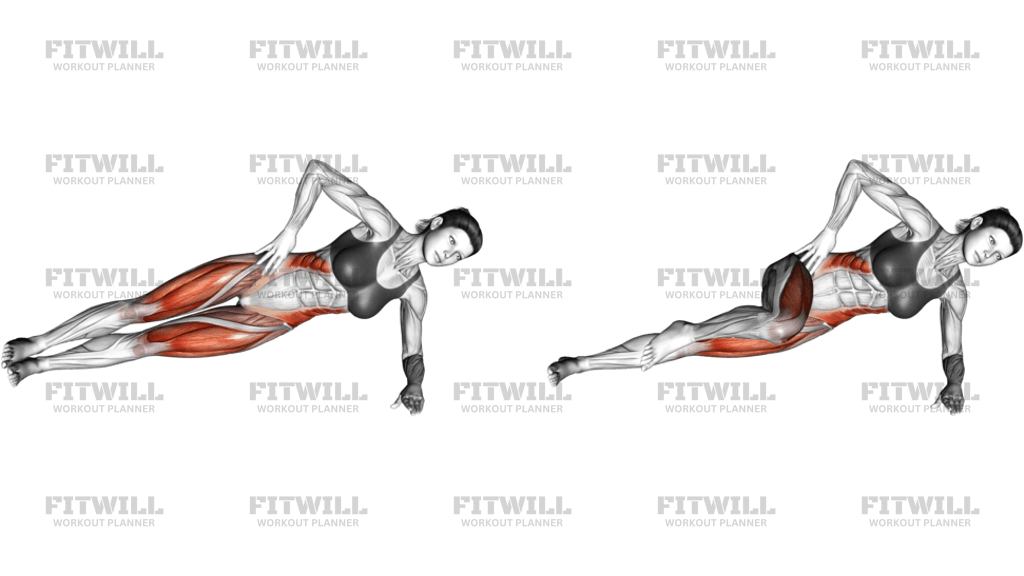
Side Bridge Knee Tuck is a side-plank variation that trains the obliques through anti-lateral-flexion strength and a controlled knee tuck. From a forearm-supported side bridge, you hold the torso in a long, straight line while one knee folds forward and back without letting the hips collapse or rotate. The exercise is bodyweight-only and works best when the shoulder, trunk, and outer hip stay stacked and organized throughout the rep.
The movement places the biggest demand on the external obliques, with the rectus abdominis, transversus abdominis, and spinal stabilizers helping keep the rib cage and pelvis aligned. The lower shoulder also has to stay active to keep the body lifted off the floor. That makes the exercise useful for building trunk stiffness, lateral core control, and the ability to resist unwanted motion while one leg moves independently.
Setup matters because the side bridge position can drift quickly if the elbow is too far in front of the shoulder or the hips are too low. A clean start begins with the forearm planted under the shoulder, the feet stacked or slightly staggered for balance, and the top hand ready to guide balance at the hip or ribs. Once you lift into the side bridge, set the pelvis before you initiate the tuck so the rep comes from the core and hip, not from swinging the leg.
On each repetition, tuck the top knee forward under the torso with control, then extend it back to the long side-plank line without losing height through the hips. The goal is a small-to-moderate range that keeps tension on the obliques instead of turning the movement into a crunch or a hip drop. Exhale as the knee tucks, inhale as you return, and keep the neck relaxed so the side body stays the working line from ribs to outer hip.
This exercise fits well in core sessions, accessory circuits, warmups for unilateral lower-body work, and any program that needs better side-to-side trunk control. It is especially useful for athletes and lifters who need to resist rotation while moving a leg or changing direction. Keep the rep quality strict, stop before the shoulder or oblique position breaks down, and treat every return to the long side plank as part of the exercise rather than a reset between reps.
[ Workout Log & Planner ]
Put your next workout in Fitwill
Keep your plan and training log ready when you are.


Instructions
- Lie on one side and place your bottom forearm on the floor with the elbow directly under the shoulder.
- Stack your feet or place the top foot slightly in front for balance, then keep the legs long before you lift.
- Press the forearm down, lift the hips into a straight side bridge, and keep the ribs from flaring open.
- Set the top hand on the hip or ribs so you can feel whether the torso stays stacked.
- Tighten the midsection, then tuck the top knee forward under the torso without dropping the hips.
- Pause briefly when the knee comes in and the obliques are fully engaged.
- Extend the leg back out to the side-plank line under control, keeping the body tall and aligned.
- Repeat for the planned reps, then lower the hips and switch sides.
Tips & Tricks
- Keep the elbow directly under the shoulder; a hand-positioned setup usually makes the shoulder work harder and the side plank less stable.
- Think about lifting the bottom waist away from the floor before every tuck so the hips do not sag as the knee comes forward.
- Move the knee toward the chest or elbow, not toward the floor, so the rep stays in the obliques instead of becoming a hip-drop.
- If the top shoulder shrugs, shorten the set and reset the rib cage before continuing.
- Use a smaller tuck range if your torso starts to twist; the best reps keep the pelvis stacked rather than chasing a big knee drive.
- Keep the top foot light and controlled when it returns to the line so you do not slam back into the floor.
- Exhale during the tuck to help tighten the side waist and keep the rib cage from opening.
- Stop the set when you can no longer hold a straight line from head to heel between tucks.
Frequently Asked Questions
What does Side Bridge Knee Tuck train most?
It mainly trains the obliques, especially the external obliques, with help from the abs, deep core, and shoulder stabilizers.
Do I need equipment for this movement?
No. It is a bodyweight side-plank variation, so you only need floor space and enough room to extend the top leg.
Where should my elbow be in the setup?
Place the bottom elbow directly under the shoulder so the forearm can support your weight without straining the front of the shoulder.
How high should my hips stay during the knee tuck?
Keep the hips lifted in the side-plank line as much as possible; a small drop is common, but a collapse turns the exercise into an easier hinge instead of a core drill.
Should the knee come all the way in?
Only as far as you can tuck without twisting the torso or losing shoulder support. A shorter, cleaner tuck is better than forcing a bigger range.
Is this harder than a regular side plank?
Usually yes. The moving knee adds a stability challenge that makes the obliques and hip control work harder than a static hold.
What should I feel besides the obliques?
You may also feel the upper glute, shoulder, and deep abdominal brace working to keep the body stacked and elevated.
How can I make Side Bridge Knee Tuck more challenging?
Slow the tuck and return, add a pause at the top of each tuck, or progress to a less stable foot position while keeping the torso square.