Side Bridge Hip Abduction
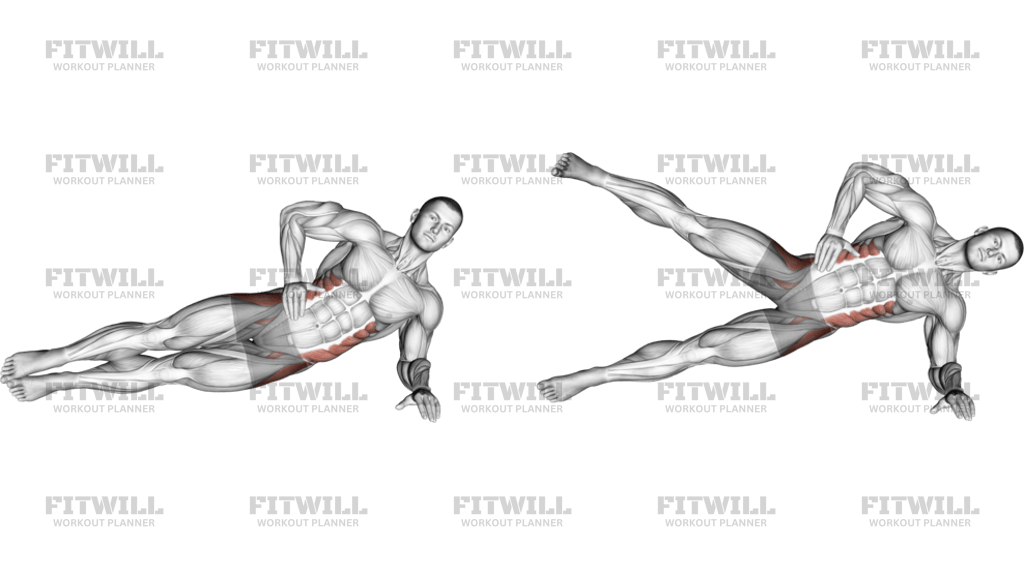
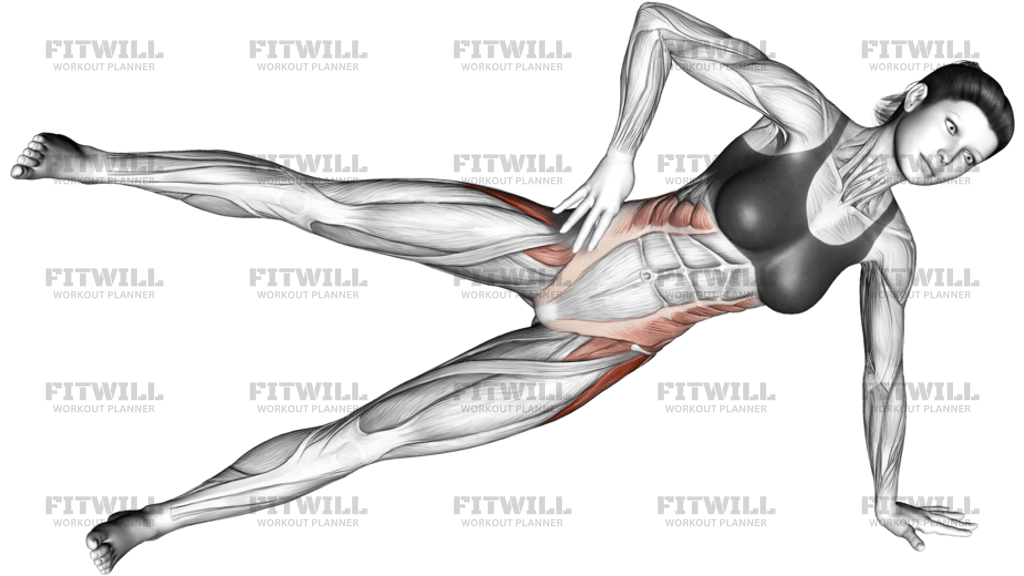
Side Bridge Hip Abduction is a body-weight side plank variation where you hold a side bridge and lift the top leg away from the bottom leg. The exercise is built to train lateral hip strength, glute control, trunk stiffness, and shoulder stability at the same time. It is not a fast kick or a high-rep cardio drill; the value comes from holding a clean bridge while the top leg moves without twisting the torso.
The setup matters because the line of force runs through the supporting hand, shoulder, ribs, pelvis, and planted foot. A solid position keeps the lower shoulder stacked under the hand, the rib cage aligned over the pelvis, and the hips high enough that the body looks like one long plank instead of a collapsed side bend. If the base is unstable, the leg lift turns into a wobble and the outer hip never gets the work.
During the repetition, the top leg should travel only as far as you can control without rolling the hips open or letting the waist sag. Think of lifting the leg from the outer hip while the side of the trunk stays braced. A short pause at the top is useful because it removes momentum and makes the glute work harder. Lower the leg slowly, keep the bridge tall, and breathe steadily instead of holding your breath through the whole set.
This movement is useful for warmups, accessory work, hip-stability blocks, and core sessions, especially for athletes or lifters who need better single-leg control. It also works well as a regression from more advanced side-plank variations because the load is body weight and the range is small. Beginners can use a knee-down side bridge or a shorter hold if the full version feels too demanding. Stop the set if the shoulder pinches, the low back starts taking over, or the pelvis can no longer stay stacked over the support arm.
Fitwill
Log Workouts, Track Progress & Build Strength.
Achieve more with Fitwill: explore over 9600 exercises with images and videos, access built-in and custom workouts, perfect for both gym and home sessions, and see real results.
Start your journey. Download today!




Instructions
- Lie on one side and place the lower hand on the floor directly under the shoulder, with the feet stacked or lightly staggered for balance.
- Press through the support hand and lift the hips until the body forms a straight line from head to heels.
- Stack the ribs over the pelvis and keep the lower shoulder away from the ear.
- Set the top hand on the hip or ribs so you can feel whether the torso stays quiet.
- From the side-bridge position, lift the top leg a few inches without letting the pelvis roll backward or forward.
- Lead the lift from the outer hip and keep the knee and toes pointed mostly forward.
- Pause briefly at the top, then lower the leg slowly under control while keeping the bridge high.
- Breathe out on the lift and in on the lower; after the set, return the hips to the floor and switch sides.
Tips & Tricks
- Keep the support hand under or slightly in front of the shoulder so the wrist, elbow, and shoulder stay stacked.
- Think about pushing the floor away with the bottom arm; that helps keep the shoulder packed and the torso lifted.
- Lift the top leg only as high as you can without rotating the pelvis. A small clean range is better than a big sloppy one.
- Point the top toes mostly forward or slightly down if the hip keeps opening when you lift.
- If the waist sags, shorten the hold and reset the bridge before the next rep instead of chasing extra height.
- A two-count pause at the top makes the glute work harder than swinging the leg through fast reps.
- If balance is hard, stagger the feet a little instead of forcing a stacked-feet position too early.
- Use the shoulder and obliques to hold the line; if the low back is cramping, the pelvis is probably drifting and the set should stop.
Frequently Asked Questions
What does Side Bridge Hip Abduction work most?
It emphasizes the glutes on the moving side, especially the outer hip, while the obliques and shoulder stabilizers keep the bridge from collapsing.
Is this just a side plank with a leg lift?
Yes, but the order matters: hold the side bridge first, then abduct the top leg without letting the torso twist or the hips drop.
Where should my lower hand be in this exercise?
Place it directly under the shoulder or just slightly in front of it so the wrist, elbow, and shoulder stay stacked while you hold the bridge.
How high should the top leg lift?
Only high enough to feel the outer hip work while the pelvis stays level. If the torso rolls open, the leg is going too high.
Why do I feel this in my shoulder and side waist?
That is normal. The shoulder and obliques are supporting the side bridge while the top leg adds extra load to the hips.
Can I bend the bottom knee to make it easier?
Yes. A knee-supported side bridge is a good regression if the full straight-leg version causes the hips to sag or the shoulder to fatigue too quickly.
What is the most common form mistake?
Letting the pelvis rotate backward as the top leg lifts. That turns the exercise into a twist instead of a true hip-abduction drill.
How do I know if I am doing it right?
You should feel the top-side glute and outer hip working hard while the trunk stays steady and the support shoulder feels strong, not pinchy.