Side Bridge
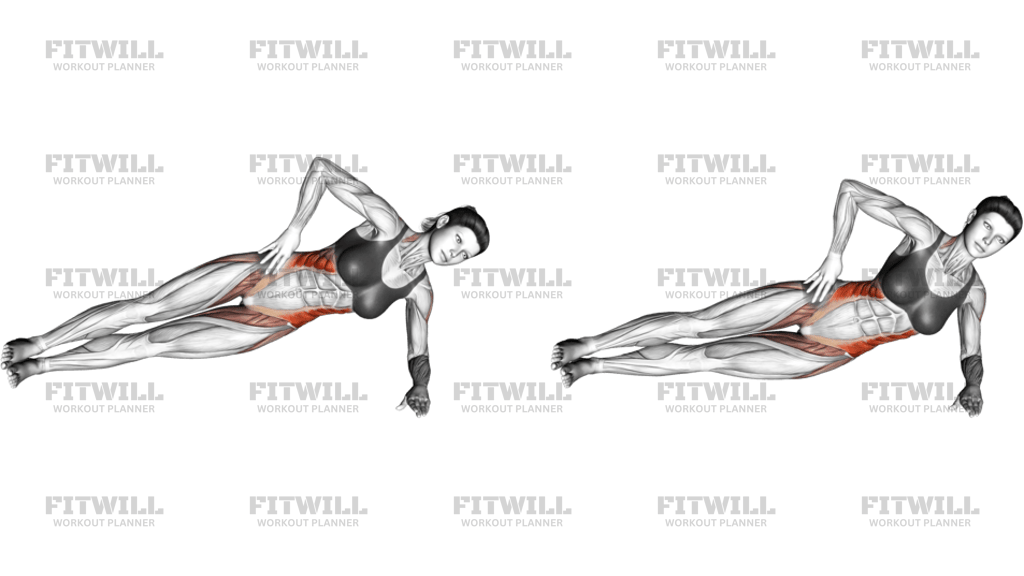
Side Bridge is a bodyweight side plank hold that trains the waist, core, and hips to resist side-bending under load. In the image, the body is supported on one forearm and the outer edge of the bottom foot while the top hand rests on the hip. The goal is not to move through a large range of motion, but to keep the trunk, pelvis, and legs locked into one clean line while the side of the body works to keep everything from collapsing.
The main emphasis is on the obliques, especially the external obliques, with the rectus abdominis, transverse abdominis, glute medius, and shoulder stabilizers helping keep the position solid. That combination makes Side Bridge useful for building anti-lateral-flexion strength, pelvic control, and shoulder endurance. It is a straightforward exercise, but the setup matters because a slightly poor elbow position or a sagging hip can shift the work away from the waist and into the low back or shoulder.
Start by stacking the elbow under the shoulder, pressing the forearm firmly into the floor, and extending the legs so the body is long from head to heel. Once the ribs are braced toward the pelvis, lift the hips until the torso is level and the waist stays active. The top shoulder should stay stacked rather than rolling forward, and the hips should stay open instead of rotating toward the floor. Slow, controlled breathing is part of the exercise, not a break from it.
Side Bridge works well in core sessions, warm-ups, sports-prep blocks, and accessory work where you want clean trunk control rather than heavy loading. It can be held for time or used in short repeated sets, and beginners can regress it by bending the bottom knee to the floor. If the hold turns into a sagging side bend or the neck starts to shrug, the set is too long or the setup is off. The best reps are the ones where the line stays straight, the pelvis stays level, and the side of the waist does the work from start to finish.
[ Workout Log & Planner ]
Put your next workout in Fitwill
Keep your plan and training log ready when you are.


Instructions
- Lie on one side with your lower forearm on the floor and your elbow stacked directly under your shoulder.
- Extend both legs straight and stack the feet, or stagger them slightly for a wider base if needed.
- Place your top hand on your hip, keep your chest open, and look slightly ahead rather than down at the floor.
- Press the forearm and the outer edge of the bottom foot into the floor to create a solid base.
- Brace your ribs toward your pelvis and squeeze your glutes so your body stays in one long line.
- Exhale and lift your hips until your shoulder, hip, knee, and ankle form a straight diagonal.
- Hold the top position without twisting open or letting the bottom hip sink.
- Breathe slowly while keeping tension in the side waist, then lower with control or switch sides when the hold is complete.
Tips & Tricks
- Stack the elbow under the shoulder so the shoulder joint is not loaded in front of the base.
- If a full-foot stack feels unstable, stagger the feet a few inches apart and keep the hips level.
- Press through the forearm and the outer edge of the bottom foot, not just the lower leg.
- Keep the top hip from rolling backward; the pelvis should stay square to the side wall.
- If your neck tightens, lengthen the back of the neck and stop shrugging into the support shoulder.
- A short, perfect hold is better than a long hold that turns into a sag or twist.
- Lower the bottom knee to the floor to make the position easier without losing the side-plank line through the torso.
- Add a top-leg lift or top-arm reach only after you can hold the base position without the hips drifting.
Frequently Asked Questions
What muscle does Side Bridge target most?
The main target is the obliques, especially the external obliques on the side of the torso.
Where should my elbow be in the Side Bridge setup?
Set the elbow directly under the shoulder so the forearm can support the body without extra strain on the joint.
Should my feet be stacked or staggered?
Stacked feet make the exercise harder and stricter, while a small stagger gives you a wider base if balance is limiting the hold.
Why do my hips drop during the hold?
Usually the side waist or glutes are fatiguing, or the setup is too long for your current strength. Shorten the hold and keep the ribs and pelvis braced.
Can I do Side Bridge with my bottom knee on the floor?
Yes. That is the most useful regression when you want to learn the shoulder stack and trunk position before moving to the full version.
What should I feel working during the hold?
You should feel the side waist, upper outer hip, and supporting shoulder working together, not a pinch in the low back or neck.
Should my top hand stay on my hip?
Yes for the standard version. It helps you keep the torso square, and you can reach the top arm upward later as a progression.
How do I breathe during Side Bridge?
Take slow, controlled breaths without losing hip height. Exhale gently to reinforce the brace, then inhale without letting the ribs flare.