Side Crunch
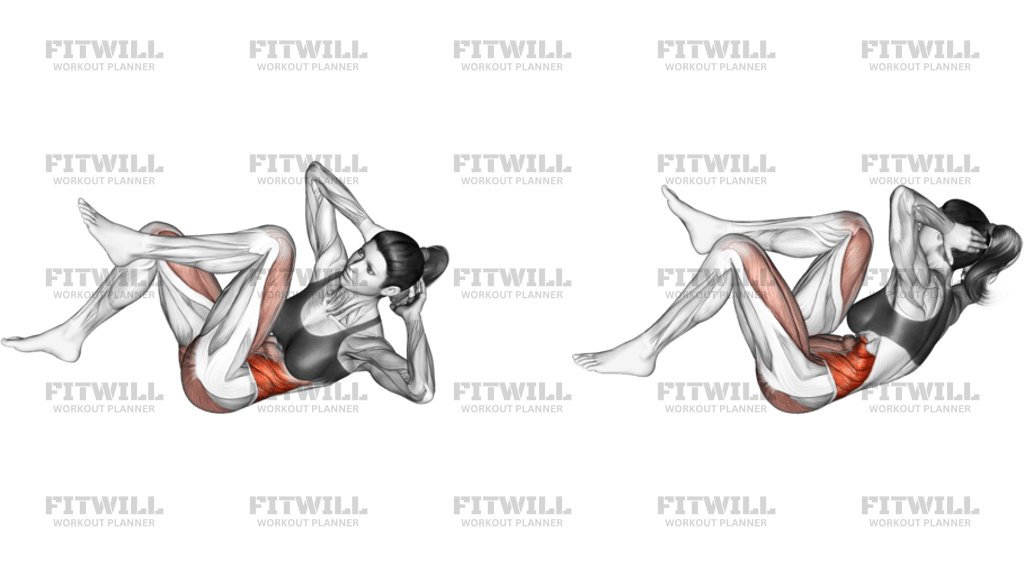
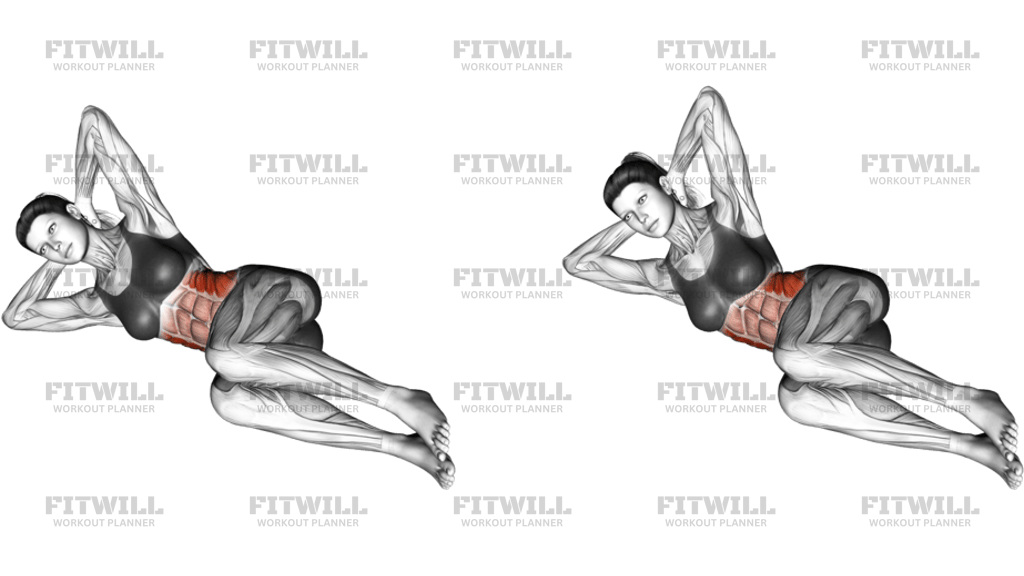
Side Crunch is a floor-based bodyweight oblique exercise that trains the waist to flex and shorten on one side while the opposite side stays long and controlled. The image shows a side-lying setup with the torso curled toward the hip, so the movement should feel like a tight rib-to-pelvis crunch rather than a big sit-up or a twist. That makes it useful for building focused tension in the obliques without needing equipment.
The main muscles are the external obliques, with the rectus abdominis, transverse abdominis, and nearby hip stabilizers helping you keep the torso organized. Because the exercise is performed on one side at a time, setup matters more than load: if the head, ribs, and pelvis are stacked poorly, the neck and lower back can take over before the obliques do. A clean Side Crunch keeps the working side of the waist active while the shoulders stay relaxed and the neck stays long.
Start by lying on your side on a mat with the knees bent and stacked, then place the lower arm to support the head and keep the top elbow open. From that position, brace lightly, exhale, and draw the upper ribs toward the upper hip. The range is usually short and deliberate. At the top, the torso should look compressed on the working side, with the pelvis mostly still and the movement finishing through the waist instead of a yank from the elbow. If the rep becomes a neck exercise, reset the setup and make the motion smaller.
On the way down, lower slowly until the side body is long again and the shoulder blade returns with control. That slow return is part of the exercise, not just a reset between reps. Side Crunch fits well in core-focused sessions, warmups, or accessory work when you want a low-load movement that teaches cleaner side-bending control, better trunk awareness, and a stronger connection to the obliques. It also works well as a regression for people who are not ready for more advanced side-plank or cable-based oblique work, because the floor support reduces balance demands and lets you focus on the quality of the crunch itself.
[ Workout Log & Planner ]
Put your next workout in Fitwill
Keep your plan and training log ready when you are.


Instructions
- Lie on one side on a mat with your knees bent and stacked, and keep your feet together or lightly staggered so the pelvis stays stable.
- Support your head with the lower hand or forearm and place the upper hand lightly behind your ear with the elbow open, not pulled forward.
- Keep your shoulders and hips stacked, then brace your midsection so the side of your waist is ready to shorten.
- Exhale and curl your upper ribs toward your top hip, lifting the shoulder blade and upper torso off the floor.
- Keep the movement small and deliberate so the obliques create the lift instead of the neck or hips.
- Pause briefly at the top when the side waist is fully contracted and the rib cage is closest to the hip.
- Inhale and lower under control until the shoulder blade returns to the floor and the side body lengthens again.
- Complete all reps on one side before switching to the other side and repeating the same range of motion.
Tips & Tricks
- Think about closing the space between your lower ribs and top hip instead of trying to pull your elbow toward your knee.
- Keep the top elbow wide so your head is supported lightly and your neck does not become the limiter.
- If your pelvis rocks backward, reduce the range and keep the hips stacked over each other.
- A short, clean crunch is better than a big swing that comes from momentum.
- Exhale during the lift to help the obliques finish the curl and keep the rib cage down.
- Lower slowly enough that you can feel the working side of the waist lengthen back out.
- If the lower back pinches, flatten your setup a little more and make the top of the rep smaller.
- Use a mat or folded towel under the hip and rib cage if the floor position feels too hard on the body.
- Stop the set when the neck starts leading the motion or the elbow starts drifting forward.
Frequently Asked Questions
What does Side Crunch train most?
It primarily trains the obliques by shortening one side of the waist against a stable side-lying position.
Should my elbow move a lot during the rep?
No. The elbow should stay open and mostly quiet while the ribs and torso curl toward the hip.
How high should I lift my torso?
Lift only until the upper ribs and shoulder blade come off the mat cleanly; the rep is usually a small, precise curl.
Why do I feel this in my neck?
That usually means the head is being pulled forward or the elbow is collapsing. Lighten the hand support and keep the neck long.
Can beginners do this exercise?
Yes. It is a good beginner-friendly oblique drill as long as the range stays small and controlled.
What should my legs do during Side Crunch?
Keep the knees bent and stacked so the lower body stays quiet and the torso does the work.
How many reps should I use?
Higher-quality repetitions usually work best, since the exercise depends more on control than on load.
Can I make Side Crunch harder?
Yes. Slow the lowering phase, hold the top for a second, or add a light external load only if the torso stays clean.