Side Hip Abduction
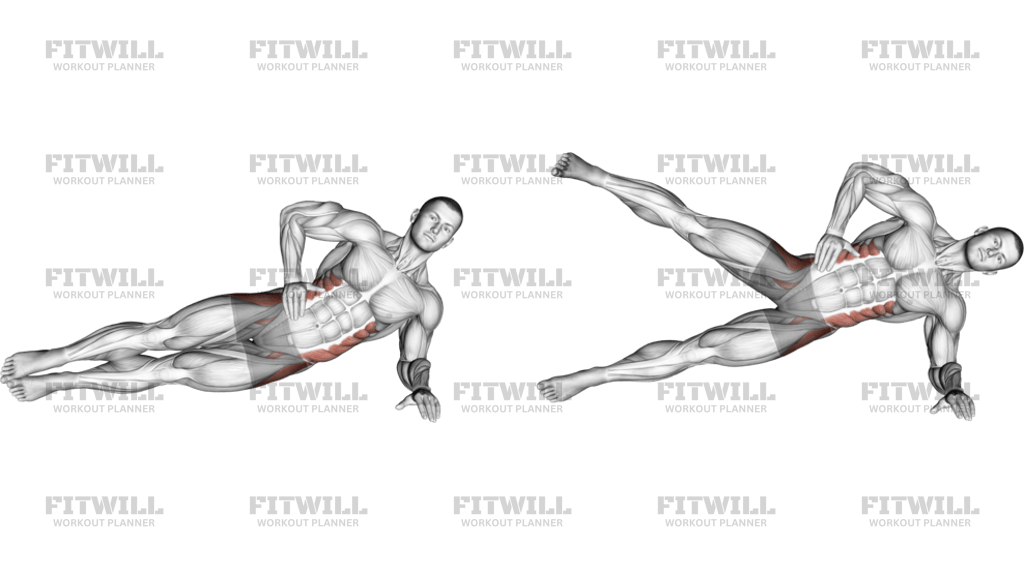
Side Hip Abduction is a side-lying bodyweight exercise that trains the outer hip by moving the top leg away from the midline while the torso stays quiet. It is useful when you want to build control around the hip, improve the ability to keep the pelvis stacked, and strengthen the muscles that help stabilize the leg during walking, running, squatting, and single-leg work.
The exercise looks simple, but the setup determines whether you feel the side hip or just roll backward and use momentum. Lie on your side with the bottom arm under your head or stretched out for support, the top hand resting in front of your torso, and both hips stacked. Keep the bottom leg relaxed and slightly bent if that helps balance, then lift the top leg with the foot long and the toes mostly forward or slightly down.
The best repetitions are small, precise, and controlled. The leg should rise from the hip without the pelvis tipping open, the low back arching, or the torso swinging. Think about reaching the heel away from the body, pausing briefly at the top, and lowering under control until the inner thighs nearly touch. That slow return keeps tension on the working side of the hip instead of letting the set turn into a quick flurry of partial reps.
This movement is a good accessory for lower-body sessions, warmups, activation work, and rehabilitation-style training where clean mechanics matter more than load. It is also a useful way to balance a program that includes lots of squats, lunges, or running by giving attention to the muscles that keep the femur and pelvis organized in single-leg positions.
If the repetition turns into a twist through the waist or a roll onto the back, the range is too large or the tempo is too fast. Keep the neck relaxed, breathe steadily, and stop the set when the pelvis no longer stays stacked. The goal is not to swing the leg higher than everyone else; it is to create a repeatable hip-abduction pattern that the outer hip can own with good alignment.
Fitwill
Log Workouts, Track Progress & Build Strength.
Achieve more with Fitwill: explore over 9600 exercises with images and videos, access built-in and custom workouts, perfect for both gym and home sessions, and see real results.
Start your journey. Download today!




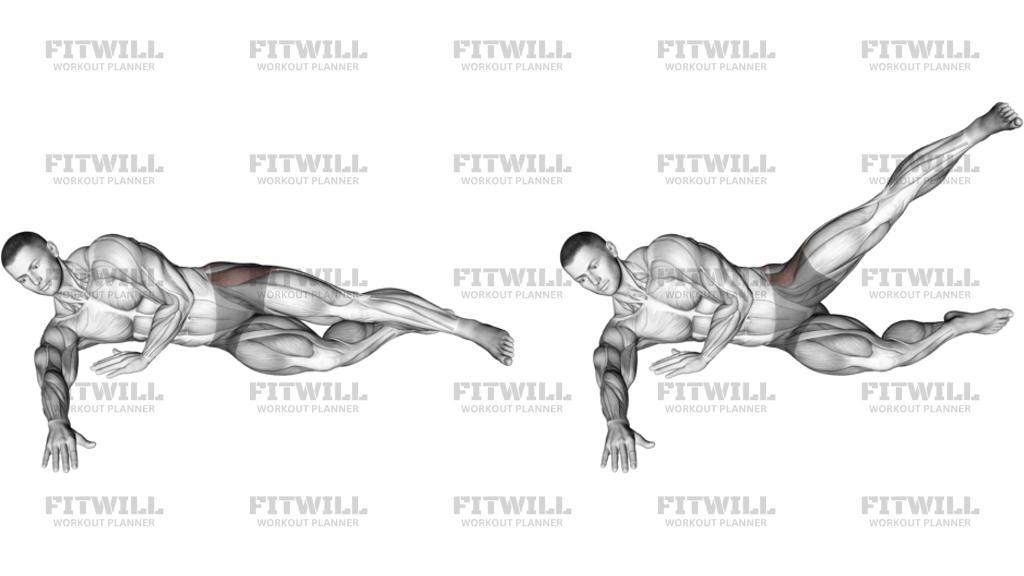
Instructions
- Lie on your side with your body in a straight line, your bottom arm under your head or extended on the floor, and your top hand placed lightly in front of your torso for balance.
- Stack your hips and shoulders, then bend the bottom leg slightly if needed so you can stay stable without rolling backward.
- Keep the working leg straight, the foot long, and the toes pointing forward or slightly down to keep the outer hip engaged.
- Brace your midsection so your waist stays quiet and your pelvis does not tilt as the leg moves.
- Lift the top leg upward from the hip in a smooth arc, reaching the heel away from your body instead of kicking the leg forward.
- Raise the leg only as high as you can without twisting your trunk or opening the top hip toward the ceiling.
- Pause briefly at the top when the glute is fully contracted and the pelvis is still stacked.
- Lower the leg slowly until it is nearly back to the start, keeping tension instead of letting it drop.
- Repeat for the planned reps, then reset your side-lying position before starting the next set.
Tips & Tricks
- If you feel the movement in your lower back, make the range smaller and focus on keeping the rib cage and pelvis stacked.
- Point the toes mostly forward or slightly downward; turning the toes up too much often shifts tension away from the side hip.
- Think about lifting with the heel, not the knee, so the leg stays long and the hip does the work.
- Do not swing the leg higher just to chase range; the top half of the rep is only useful if the torso stays still.
- A short pause at the top is more valuable than a big fast kick because it keeps the outer hip under tension.
- Exhale as the leg lifts and inhale on the way down to help keep the trunk calm.
- If the bottom leg cramps or the body rocks, reposition your support arm and bend the lower knee a little more.
- Use a slower lowering phase than lifting phase so the side hip has to control the leg back to the floor.
- Stop the set when the pelvis starts rotating open, because that usually means the target muscle is losing control.
Frequently Asked Questions
What muscles does Side Hip Abduction work?
It mainly targets the outer hip and glute muscles that move the leg away from the body and help keep the pelvis stable.
Can beginners perform this exercise?
Yes. It is beginner-friendly because the bodyweight setup is simple, but the leg should still move slowly and without trunk rotation.
How high should I lift the top leg?
Only lift as high as you can while keeping both hips stacked. If the pelvis rolls open, the rep is too high.
Why do my hip flexors or lower back take over?
That usually happens when the leg drifts forward, the core relaxes, or the range gets too large. Keep the foot long and the torso still.
Should my toes point up or down?
A slightly down or neutral foot position usually keeps the outer hip working better than aggressively turning the toes upward.
Can I add a band to this exercise?
Yes. A mini band above the knees can increase the challenge, but the side-lying body position and stacked hips should stay the same.
What is the most common mistake?
Rolling the torso backward and turning the movement into a hip twist instead of a clean side-leg raise.
When is this exercise most useful?
It fits well in warmups, activation blocks, accessory sessions, and programs that need more hip stability work.