Side Plank
Side Plank is a body-weight anti-lateral-flexion exercise that teaches you to hold the torso rigid while the side of the trunk and hip work hard to keep the body from collapsing. In this forearm version, the shoulder, rib cage, pelvis, and feet all have to stay stacked, so the movement is less about motion and more about resisting unwanted motion. That makes it useful for building the kind of trunk control that carries over to lifting, running, and any task where one side has to stabilize while the other side moves.
The main emphasis is on the obliques, with the abs, lower back, and hip stabilizers helping to keep the body in a straight line. In anatomy terms, the External obliques are the primary movers, while the Rectus abdominis, Erector spinae, and Transversus abdominis help maintain bracing and spinal position. Because this is an isometric hold, the setup matters as much as the effort: if the elbow, shoulder, or feet are out of line, the set quickly turns into a shoulder shrug or a sagging hip hold instead of a clean side plank.
Start by placing one forearm on the floor with the elbow directly under the shoulder, then extend the legs and stack the feet so the body can rise in one straight line from head to heels. Press the forearm into the floor, lift the hips, and keep the top hand resting on the hip so you can feel whether the torso starts to rotate. The goal is to stay tall through the side body without twisting the chest toward the floor or letting the pelvis drift back. If the neck gets crowded, the shoulder is usually creeping upward or the head is reaching forward.
During the hold, breathe slowly and deliberately instead of locking your breath for the entire set. Think about keeping the ribs pulled down, the glutes lightly squeezed, and the hips level enough that the lower side waist stays engaged rather than hanging on the joints. The top shoulder should stay stacked over the bottom shoulder, and the supporting elbow should stay planted under the shoulder instead of sliding forward as fatigue builds. When the hold is over, lower the hips with control, set the knees down if needed, and reset before switching sides.
Side Plank is especially useful as accessory work, warm-up prep, or core-focused training when you want quality tension rather than load. It also works well as a regression or progression point: beginners can bend the bottom knee or stagger the feet, while stronger lifters can extend the hold, clean up the line of the body, or progress to a harder variation. The biggest mistakes are letting the hips drop, letting the chest roll open, and turning the shoulder into a shrug, so every rep should finish with the same stacked position you started with.
[ Workout Log & Planner ]
Put your next workout in Fitwill
Keep your plan and training log ready when you are.


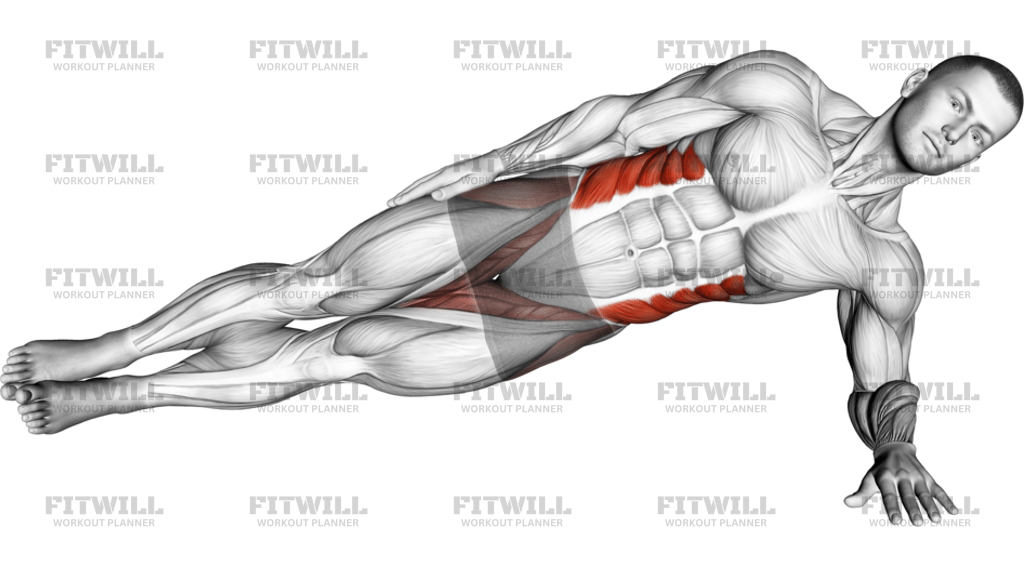
Instructions
- Lie on one side and place your lower forearm on the floor with the elbow directly under the shoulder.
- Extend both legs straight, stack the feet, and keep the legs in line with your torso.
- Set the top hand on your hip so you can feel whether your ribs and pelvis stay stacked.
- Press the forearm down and lift your hips until your body forms a straight line from head to heels.
- Keep the chest turned slightly forward, not rolled open toward the ceiling, as you hold the position.
- Squeeze your glutes and keep the lower waist lifted so the hips do not sag toward the floor.
- Breathe in short, controlled breaths while you maintain the hold for the planned time.
- Lower your hips with control, rest briefly, and switch sides before the next set.
Tips & Tricks
- Stack the elbow directly under the shoulder; if it sits too far forward, the shoulder takes over and the side body unloads.
- Keep the top hand on the hip for the whole hold so you can catch unwanted rotation before the chest starts to open.
- Press the bottom forearm into the floor and think about pushing the floor away rather than collapsing into the shoulder.
- If your hips drop first, shorten the hold and stop the set as soon as the straight line from head to heels breaks.
- A slight tuck of the pelvis helps keep the lower ribs down and prevents the low back from arching.
- For an easier version, bend the bottom knee and keep the top leg straight while you hold the same shoulder-and-hip stack.
- For a harder version, keep the feet stacked and lengthen the hold before adding any extra load or movement.
- If your neck tightens, keep the head in line with the spine instead of letting the chin reach toward the ceiling.
Frequently Asked Questions
What muscle does Side Plank target most?
The main target is the obliques, especially the external obliques on the side of the torso. The hips, abs, and shoulder stabilizers help keep the hold stacked.
Can beginners perform this exercise?
Yes. Beginners usually do better with a bent-bottom-knee side plank or a shorter hold until they can keep the hip from dropping and the shoulder from shrugging.
Should my feet be stacked in Side Plank?
Stacked feet match the standard version shown here and make the side body work harder. If balance is the limiting factor, stagger the feet or drop the bottom knee to reduce the demand.
Why does my shoulder hurt during Side Plank?
The most common reason is the elbow not being lined up under the shoulder or the shoulder collapsing toward the ear. Reposition the forearm, press the floor away, and stop if the joint pain keeps showing up.
How long should I hold Side Plank?
Hold it long enough to keep a straight line and controlled breathing, usually somewhere between 15 and 45 seconds per side. End the set when the hips start to sag or the chest starts to rotate open.
What is the most common Side Plank mistake?
Letting the hips drop is the biggest one, followed by rolling the chest open and turning the top shoulder into a shrug. Keep the body stacked and stop the hold before the position breaks.
How can I make Side Plank easier?
Bend the bottom knee, keep the top leg straight, and shorten the hold. You can also keep the top foot slightly in front of the bottom foot for extra balance.
How do I make Side Plank harder?
Keep the feet stacked, hold longer, or add a clean top-leg lift once the base hold is solid. The body should stay long and quiet before you make the variation more advanced.