Side-to-Side Chin
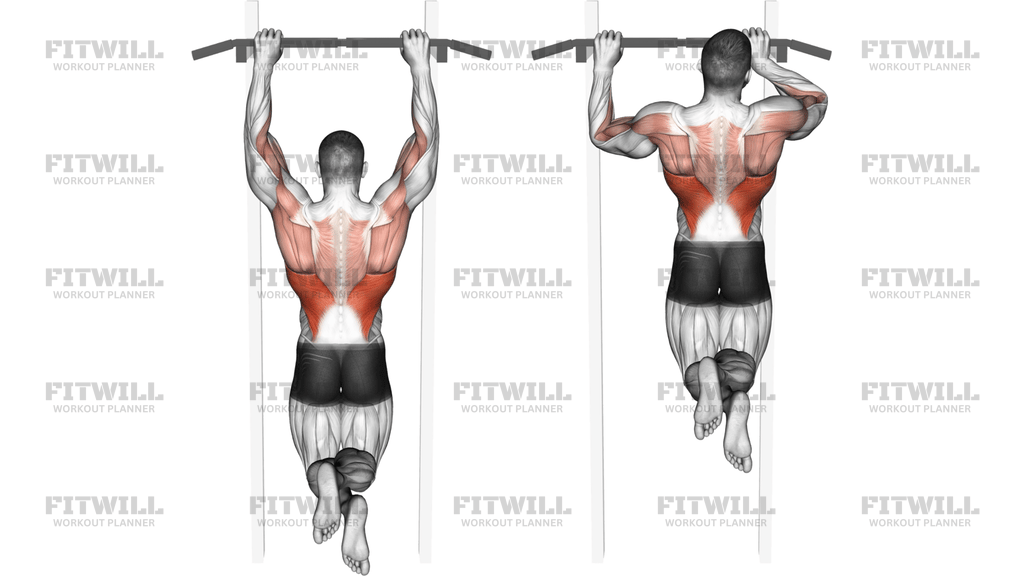
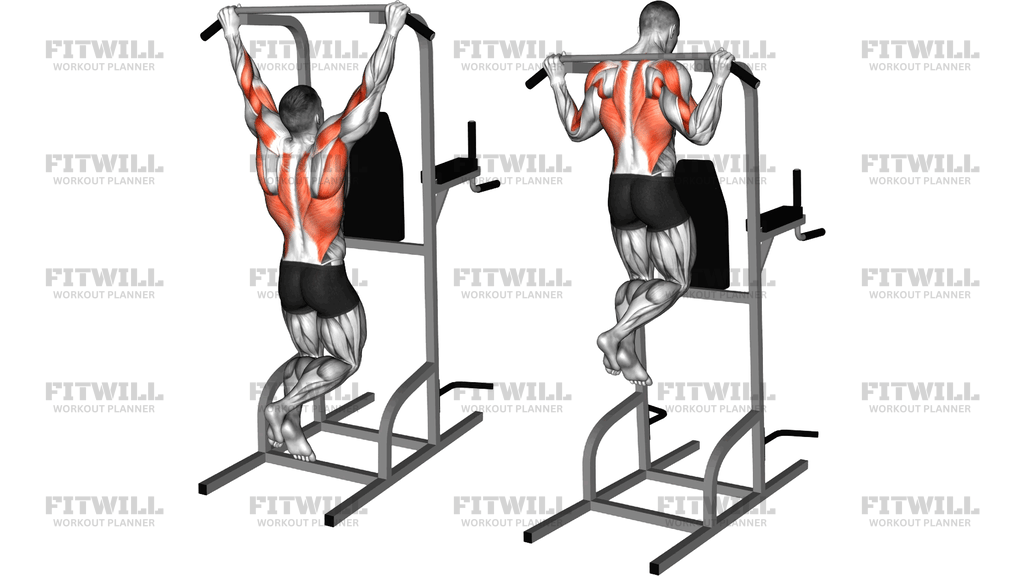
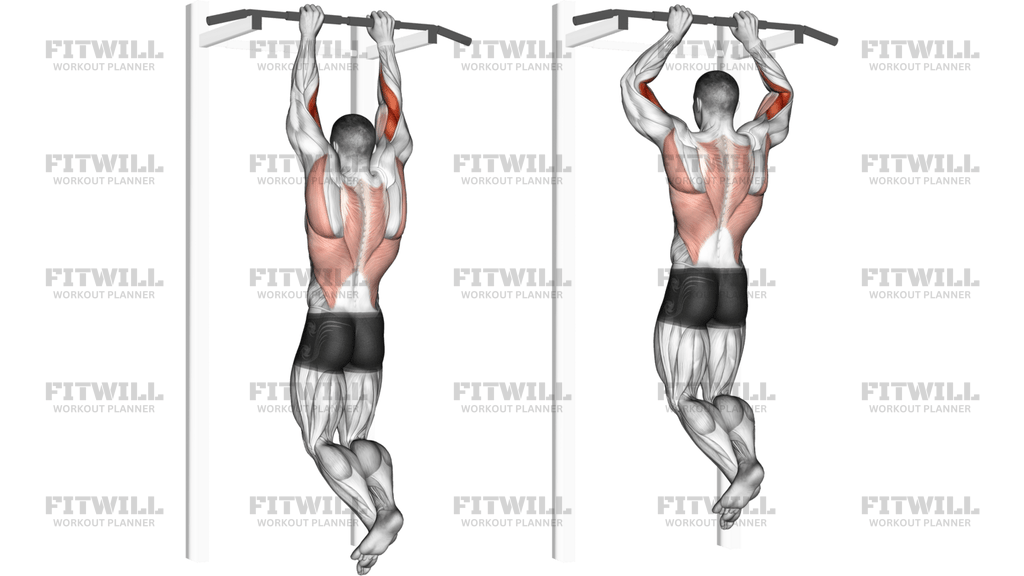
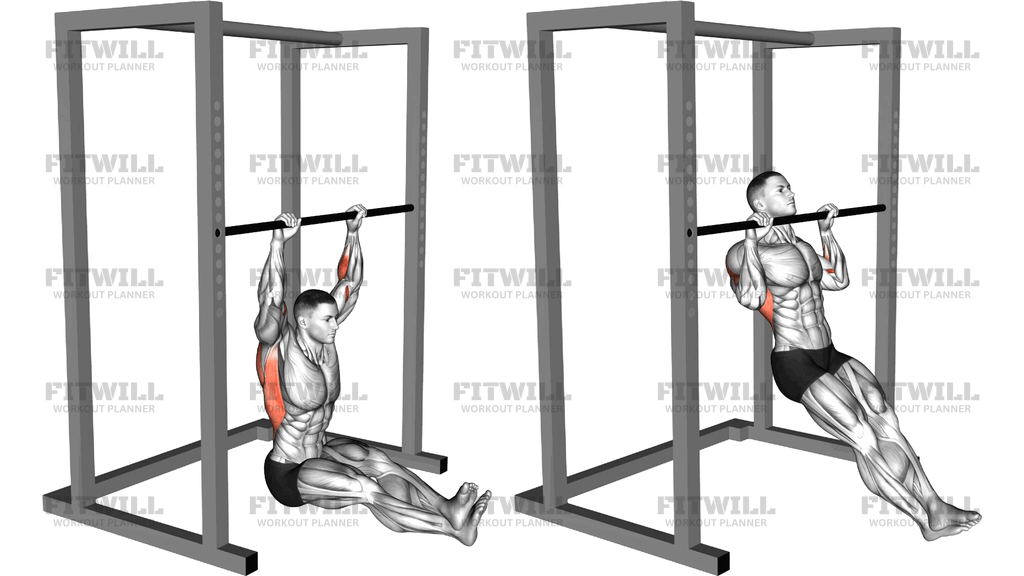
Side-to-Side Chin is a hanging bodyweight pull-up variation that shifts your torso from one side of the bar to the other instead of moving straight up and down. That side-to-side path puts a strong demand on the lats, upper back, arms, grip, and trunk, because one side has to keep working while the body stays organized and does not simply swing through the rep.
The setup matters more here than in a standard vertical chin-up. Hang from the bar with your feet clear, arms fully extended, and your torso long. Cross the ankles or lightly bend the knees to calm the swing, then set the shoulders down away from the ears before the first pull. If the body starts twisting hard at the bottom, the exercise turns into momentum work instead of a controlled strength drill.
Each repetition should trace a smooth side shift. Pull your chest and chin toward one hand, letting the opposite side lengthen without losing shoulder control, then lower under control back to a full hang before repeating to the other side. The motion should feel deliberate through the shoulder blades and elbows, with the ribs stacked over the pelvis so the midsection helps steady the path instead of flaring or arching.
This is a useful accessory exercise when you want unilateral back work, better pull-up control, or a tougher bodyweight challenge than a straight rep. It can help expose left-right differences in strength and shoulder mechanics, but only if the reps stay clean. Stop the set when you have to kick, shrug, or rush the descent to reach the next side. Use the variation as a controlled strength builder, not as a way to force extra repetitions past your technical limit.
[ Workout Log & Planner ]
Put your next workout in Fitwill
Keep your plan and training log ready when you are.


Instructions
- Grip the pull-up bar slightly wider than shoulder width, using the hand position shown by your setup, and hang with your arms fully straight.
- Cross your ankles behind you or let your knees stay softly bent so the body can hang without swinging.
- Pull your shoulders down away from your ears and brace your ribs before the first rep.
- Pull your chest and chin toward one hand, letting your torso shift slightly toward that side of the bar.
- Keep the opposite arm controlled and avoid kicking the legs or twisting the hips to fake the range.
- Lower yourself slowly until the elbows straighten and you return to a full hang.
- On the next rep, shift toward the other hand so both sides are trained evenly.
- Exhale as you pull up, inhale as you lower, and reset the hang before the following rep.
Tips & Tricks
- If your feet tap the floor, use a higher bar or bend the knees more so the hang stays clean.
- Keep the shoulders depressed; if they creep toward the ears, shorten the range until control improves.
- Crossing the ankles usually reduces swing better than keeping the legs straight and loose.
- Think about pulling toward one hand, not just straight up, so the side-to-side path stays obvious.
- A slower lowering phase makes the asymmetry harder and keeps momentum from taking over.
- Do not chase a chest-to-bar finish if your torso has to rotate aggressively to get there.
- If one side feels much weaker, start that side first and match the same clean range on the other side.
- Use assistance or a band before adding reps if your grip or shoulder position breaks down early.
Frequently Asked Questions
What muscle does Side-To-Side Chin target most?
The lats do most of the work, with the upper back, biceps, forearms, and shoulder stabilizers helping control the side shift.
How is this different from a regular chin-up?
Instead of pulling straight up, you shift your body toward one hand and then alternate sides, which adds more unilateral control and anti-rotation work.
Can beginners do Side-to-Side Chin?
Usually only after you can hold a dead hang and do controlled assisted chin-ups. Beginners should start with assistance if they cannot keep the swing out.
How wide should my grip be?
A slightly wider-than-shoulder-width grip is usually enough. Too wide makes the side shift awkward and can irritate the shoulders.
Should my chest touch the bar?
No. Aim to bring your chin and upper chest toward one hand while keeping the shoulders controlled and the torso from swinging.
Why am I swinging during the set?
Swing usually comes from kicking the legs, losing core tension, or starting each rep before the hang has settled. Cross the ankles and reset between reps.
What if one side is much harder than the other?
That is common. Keep the weaker side honest by matching the same clean range, or start sets on the weaker side when fatigue is lowest.
What can I use instead if I cannot do bodyweight reps yet?
Use an assisted pull-up machine, a band-assisted version, or a lat pulldown to build the same pulling pattern before returning to the hanging variation.