Sideways Lifts Vertical Turn Straight Legs
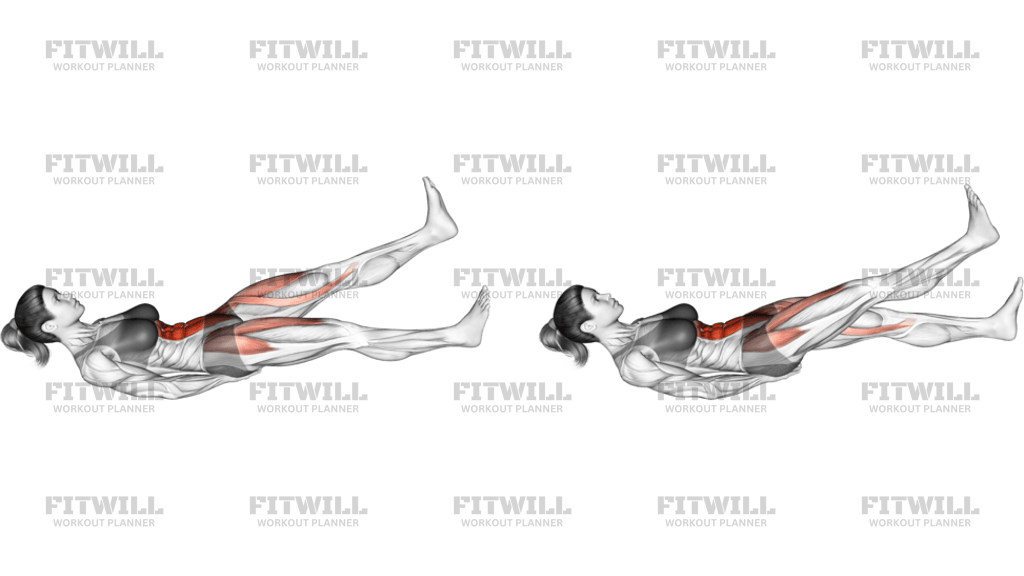
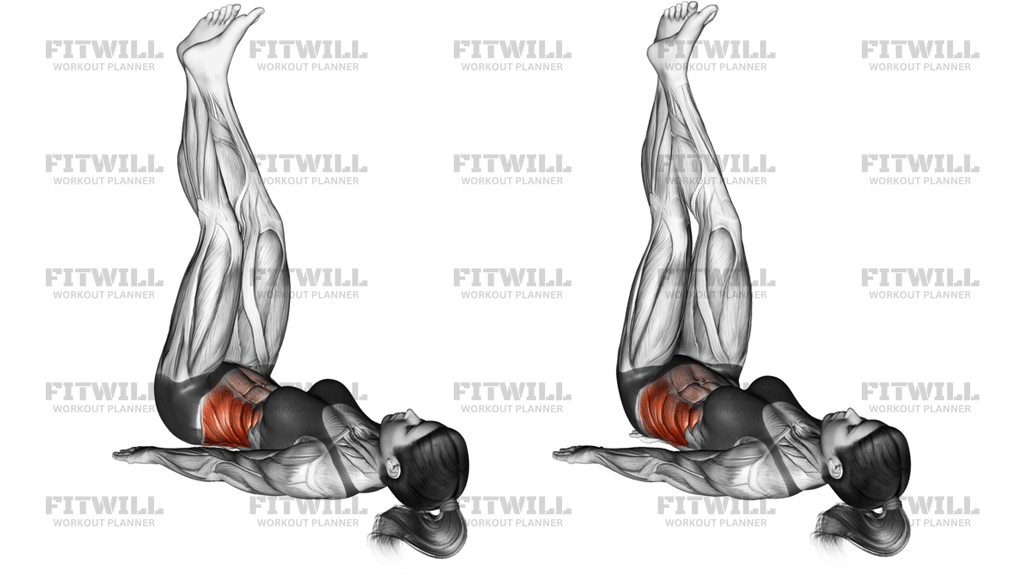
Sideways Lifts Vertical Turn (straight Legs) is a bodyweight floor exercise for the obliques and deep core. The image shows a person lying on the back with the arms spread for balance and both legs held straight up, which makes this a low-load but surprisingly demanding trunk-control drill. The challenge is not speed or height; it is keeping the pelvis organized while the legs stay long, vertical, and controlled.
This movement primarily trains the external obliques, with the rectus abdominis, transverse abdominis, and lower back helping to keep the spine and pelvis steady. Because the legs act as a long lever, even a small sideways turn or lift creates a noticeable demand on the waist. That makes the exercise useful for building anti-rotation control, pelvic awareness, and clean core tension without needing equipment.
The setup matters more than the range. Lie flat, press the shoulders and upper back into the floor, extend the arms out to the sides, and bring the legs together with the knees straight. Start with the legs stacked over the hips and keep the ribs down so the low back does not arch. From there, the torso should stay quiet while the legs and pelvis make a small, deliberate sideways lift or turn.
Use a controlled path on every repetition. Lift or rotate only as far as you can keep the lower back anchored and the movement smooth, then return slowly to the vertical start. If the legs swing, the shoulders pop up, or the low back takes over, the range is too large. Breathing should stay steady, with the exhale helping the obliques finish the lift or turn and the inhale supporting the return.
This is a good accessory exercise for core sessions, Pilates-style work, warmups, or finisher blocks when you want precise tension rather than heavy loading. It is also useful as a regression-friendly way to train trunk control before harder hanging or weighted oblique work. Keep the effort clean, small, and repeatable, and stop the set when the pelvis starts to roll or the legs lose their line.
[ Workout Log & Planner ]
Put your next workout in Fitwill
Keep your plan and training log ready when you are.


Instructions
- Lie on your back on a mat with your arms out wide, palms down, so you can brace against the floor.
- Bring both legs together and extend them straight up until they are stacked over your hips.
- Keep your knees locked, ankles together, and toes relaxed or lightly pointed.
- Press your shoulders and upper back into the floor and keep your ribs from flaring.
- Brace your abs, then make a small sideways lift or turn of the legs and pelvis using the obliques.
- Keep the movement slow and controlled so the lower back stays anchored and the legs do not swing.
- Pause briefly in the hardest part of the rep, then return to the vertical start under control.
- Reset your pelvis before the next rep and alternate sides if the program calls for it.
Tips & Tricks
- Keep the legs straight, but do not lock the knees so hard that the hips start shaking.
- If your low back lifts off the floor, shorten the sideways turn immediately.
- Let the arms act as outriggers; they should stabilize you, not help swing the legs.
- A small range done cleanly is better than a big sweep that twists the torso.
- Exhale as the legs move into the turn or lift so the obliques can finish the rep.
- Keep the shoulders heavy on the mat instead of letting the chest twist with the legs.
- Stop the set when the feet drift apart or the pelvis starts rolling uncontrolled.
- Use a slow return to the center to keep tension on the waist instead of dropping the legs back.
Frequently Asked Questions
What does Sideways Lifts Vertical Turn (straight legs) work most?
It primarily targets the obliques, with the abs and deep core helping to steady the pelvis and spine.
Can beginners perform this exercise?
Yes. Beginners should keep the range very small and focus on holding the legs vertical without arching the low back.
Should my knees stay straight the whole time?
Yes, the exercise is shown with straight legs. If the hips or low back lose position, reduce the range before bending the knees.
Do my shoulders need to come off the floor?
No. Keep the shoulders and upper back down so the obliques do the work instead of turning it into a sit-up.
How far should the legs move during each rep?
Only far enough to feel the waist working while the lower back stays anchored. If the movement gets big or jerky, the range is too much.
Where should I feel the exercise?
You should feel the obliques and deep core on the side of the waist, with only light support from the abs and hip stabilizers.
Is this better as a warmup or a finisher?
It works well in either place, but it is especially useful as controlled accessory work or a core finisher.
What is the most common mistake?
The biggest mistake is letting the legs swing while the torso twists. Keep the motion small and deliberate.