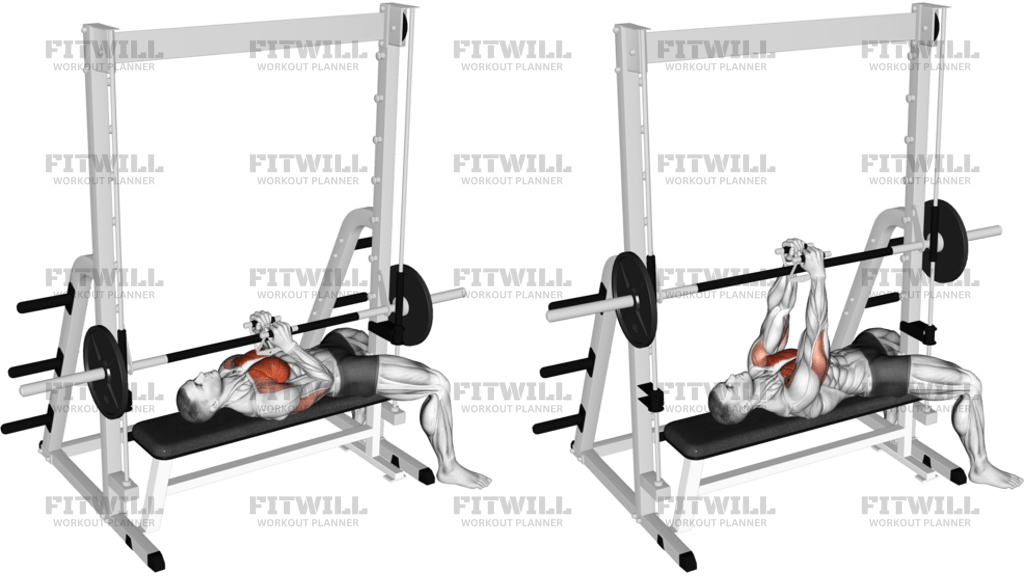
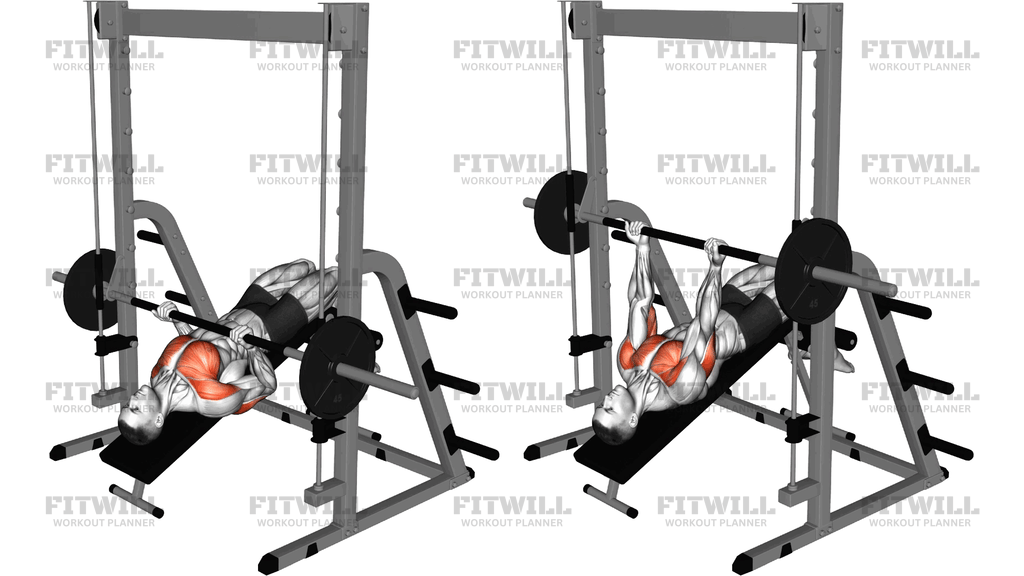
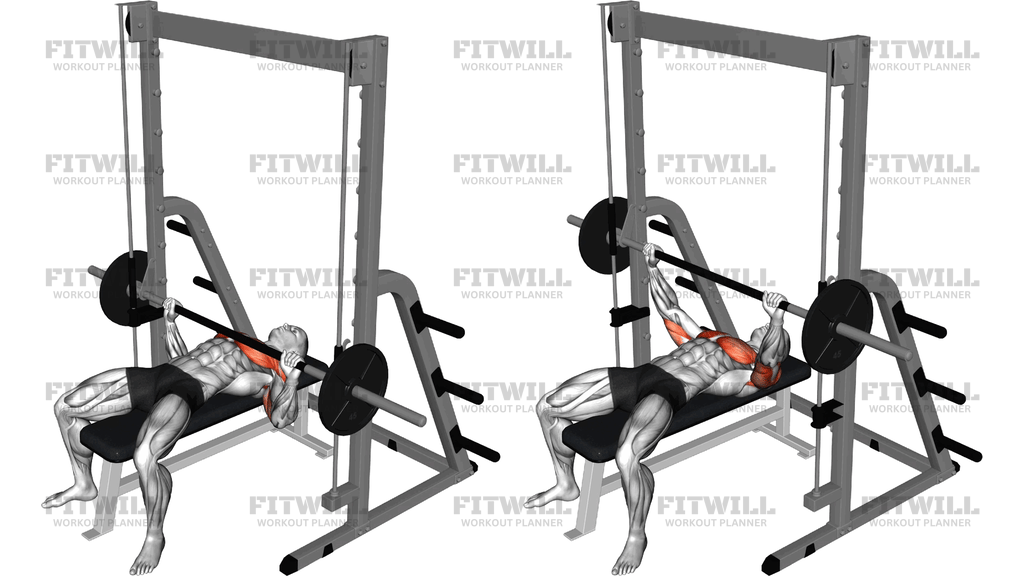
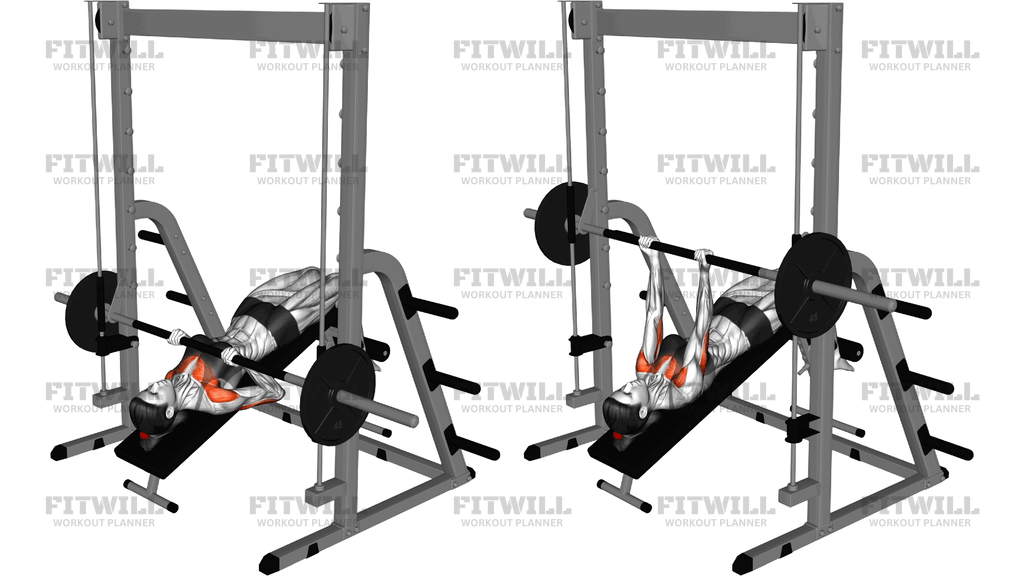
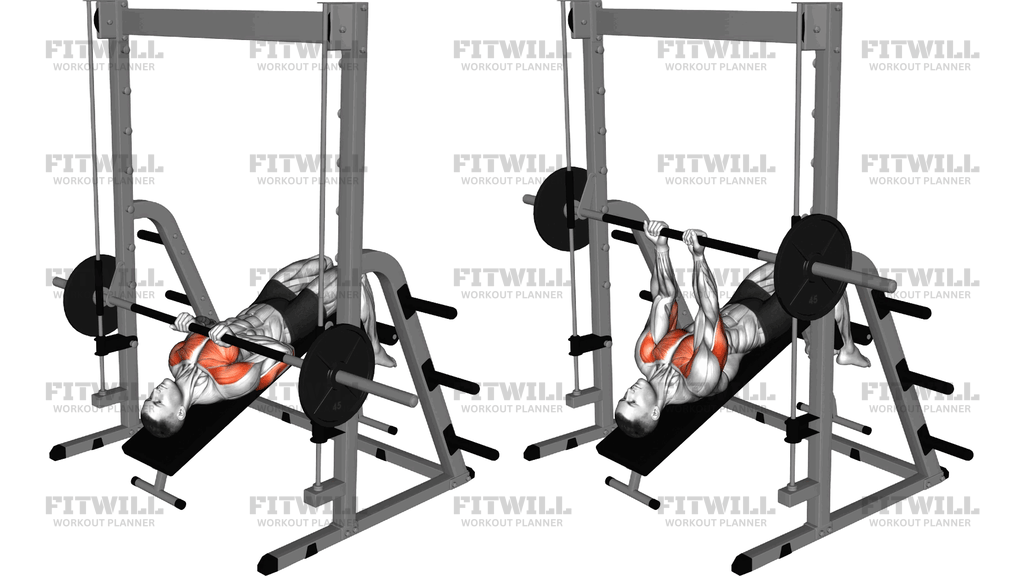
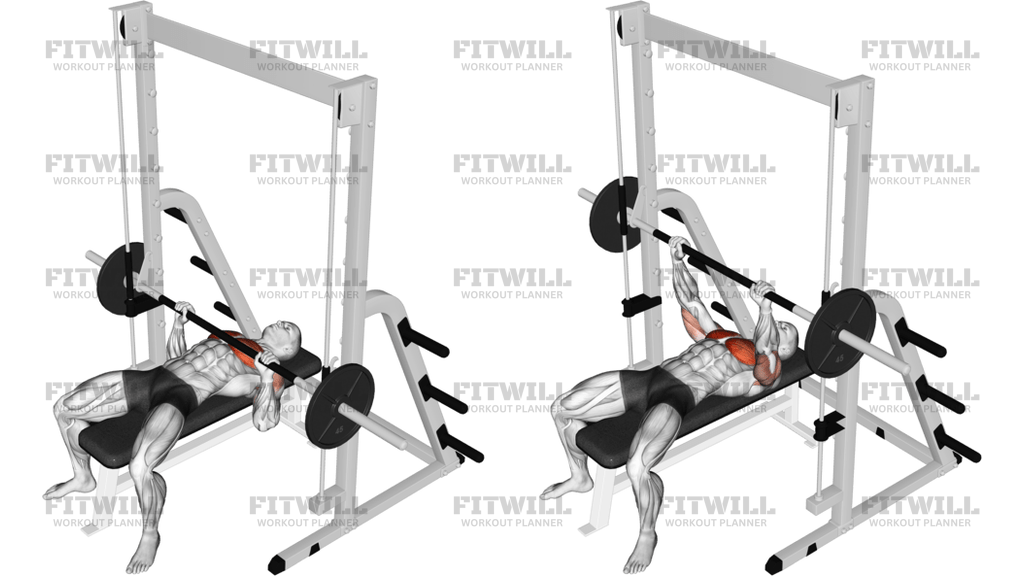
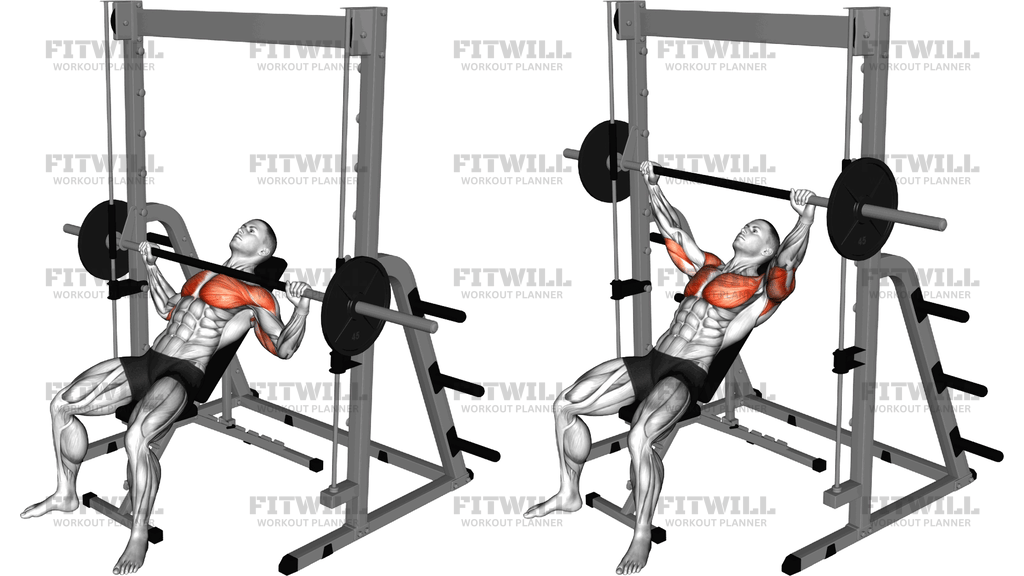
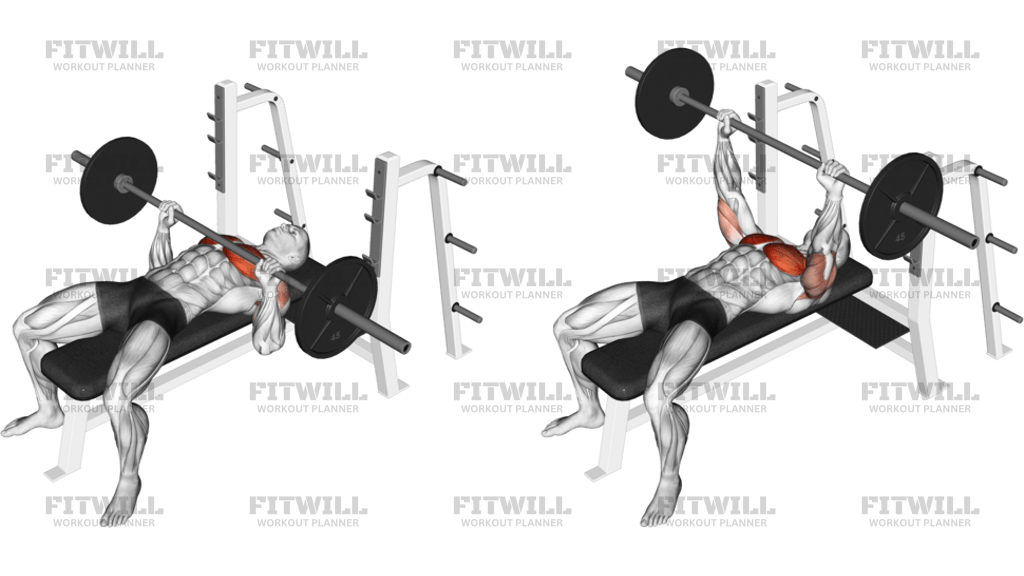
Smith Decline Bench Press
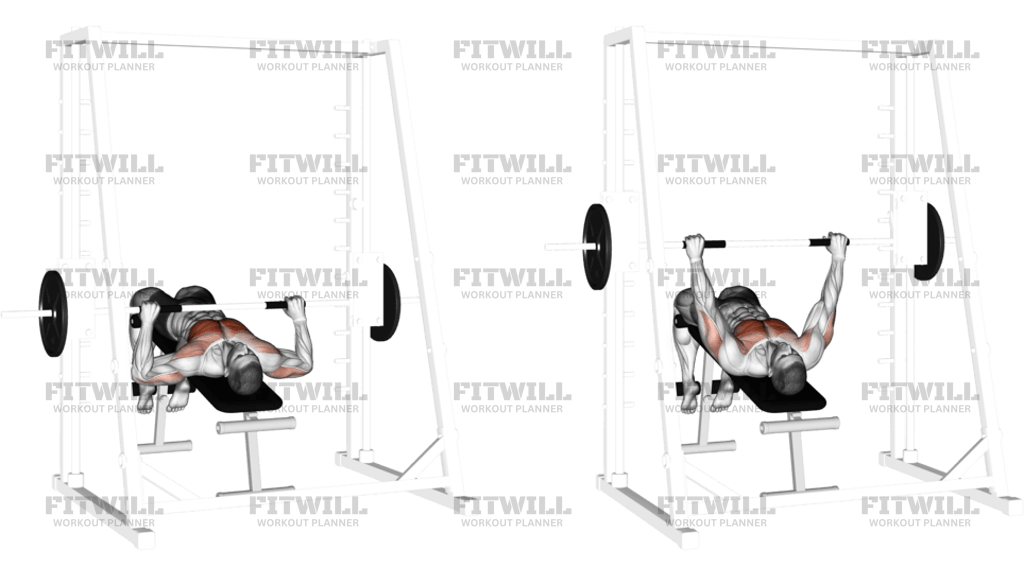
Smith Decline Bench Press is a guided pressing exercise for the lower chest, with the Smith machine keeping the bar path fixed while the decline bench changes the pressing angle. That combination makes it easier to load the chest hard without having to balance the bar, but the fixed track also means your bench position and grip width matter more than they would on a free barbell press.
The movement mainly targets the pectoralis major, especially the lower and sternal fibers, while the anterior deltoids, triceps, and upper back help stabilize the shoulders and finish the press. Because the bar cannot drift forward or backward, a good setup helps you keep the shoulders packed, keep the wrists stacked over the elbows, and avoid forcing the bar into an awkward line.
The best reps start with your upper back anchored to the pad, your chest lifted, and your feet or leg supports locked in so your body does not slide as the bar gets heavy. Lower the bar with control toward the lower chest or upper sternum, then press it back up along the same track until the elbows are straight without banging into the stops. The descent should feel deliberate, not dropped, and the press should stay smooth all the way through the sticking point.
This exercise is useful for chest-focused strength work, hypertrophy sessions, or accessory volume when you want a stable pressing pattern and less balance demand than a free-weight decline press. It can be beginner-friendly if the load is kept modest and the bench is set correctly, but it still deserves careful shoulder positioning because the decline angle and fixed bar path can irritate the front of the shoulder if you flare the elbows, overarch, or set the bench too far forward under the bar.
[ Workout Log & Planner ]
Put your next workout in Fitwill
Keep your plan and training log ready when you are.


Instructions
- Set the decline bench under the Smith bar so the unrack position sits above your lower chest.
- Lie back with your upper back and head supported, then hook or brace your legs as the bench requires so you do not slide.
- Grip the bar slightly wider than shoulder width and stack your wrists over your forearms.
- Unrack the bar with straight arms and bring it to a still starting position above the chest.
- Lower the bar in a controlled line toward the lower chest or upper sternum.
- Keep your elbows angled down and slightly out instead of flaring them hard to the sides.
- Press the bar upward along the same fixed track until the arms are straight without locking into the stops aggressively.
- Exhale as you press, inhale as you lower, and reset your shoulders before the next rep.
- Re-rack the bar only when it is fully controlled and centered on the hooks.
Tips & Tricks
- Set the bench so the bar touches the lower chest line, not the upper abdomen or the collarbones.
- Keep your shoulder blades pulled back and down; if they slide forward, the press turns into a shoulder-dominant rep.
- Choose a grip that lets your forearms stay close to vertical at the bottom of the rep.
- Do not let the Smith rails force your elbows too wide; a modest tuck usually feels better on the shoulders.
- Lower the bar under control for about two seconds so the chest stays loaded instead of bouncing.
- Stop just short of bouncing off the safety stops or the chest, especially on heavier sets.
- Keep your ribcage lifted, but do not overarch so much that your hips pop off the bench.
- Use a spotter or safety stops if you are testing a new load or a new bench position.
- If your shoulders feel pinched, move the bench slightly forward or backward and reduce the grip width before adding weight.
Frequently Asked Questions
What does the Smith Decline Bench Press train most?
It primarily trains the lower chest, with the triceps and front shoulders helping finish the press.
Why use a Smith machine for decline pressing?
The fixed bar path removes a lot of balance demand, so it is easier to focus on chest tension and repeatable reps.
Where should the bar touch on this movement?
Aim for the lower chest or upper sternum, depending on your bench angle and arm length.
How wide should my grip be?
A slightly wider-than-shoulder-width grip usually works best because it keeps the wrists stacked and the elbows from flaring too much.
Do I need to hook my legs under the bench?
Yes, if the decline bench uses leg supports, lock in your legs so your body stays anchored when you press.
What is the most common mistake here?
Letting the elbows flare hard or setting the bench too far under the bar, which can push the press into the shoulders instead of the chest.
Is this a good beginner chest exercise?
Yes, if the load is light and the bench is set correctly, because the guided bar makes the movement easier to learn.
Can I use a full lockout at the top?
Yes, but finish the rep smoothly rather than crashing the bar into the top stops or losing shoulder tension.