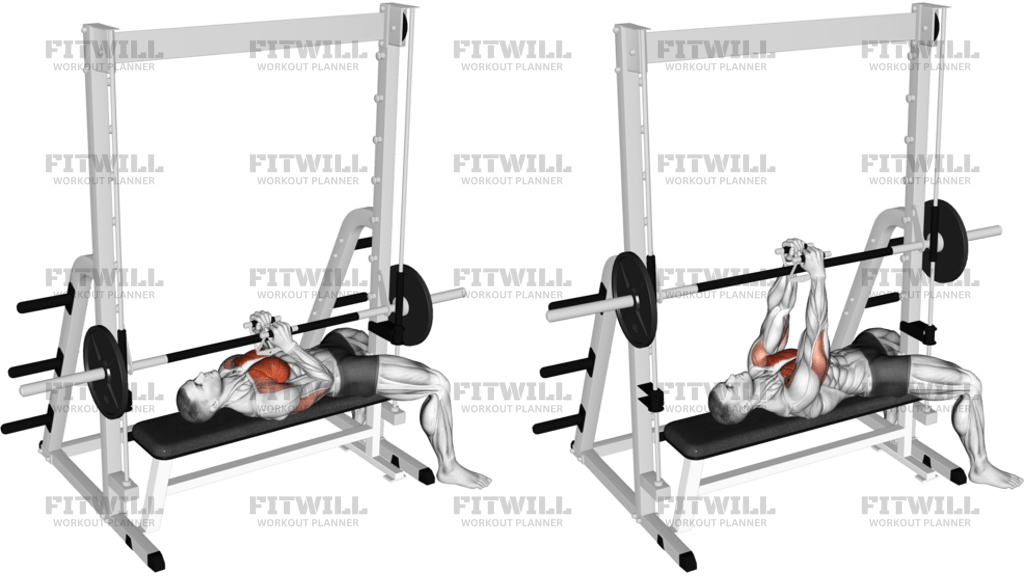
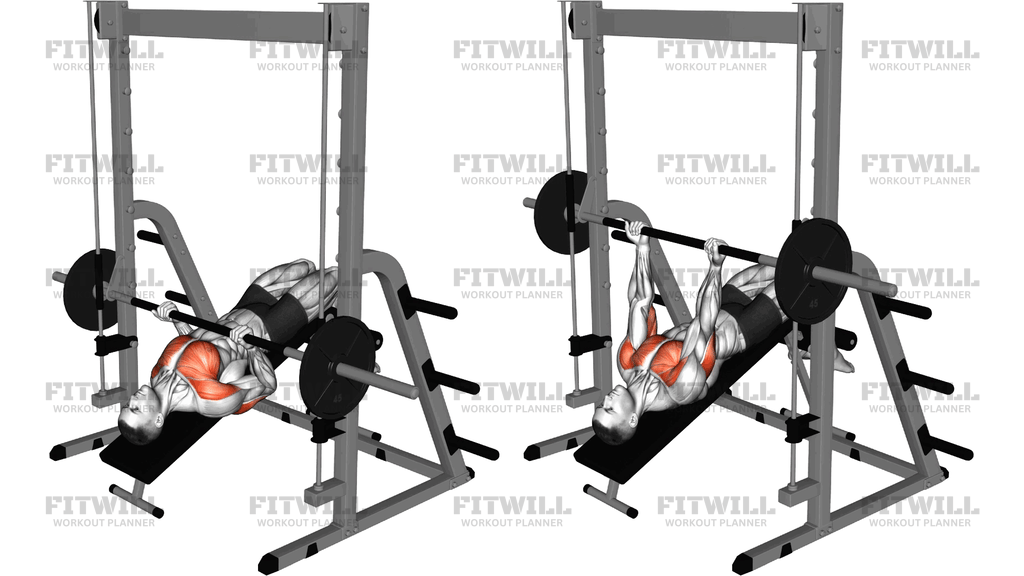
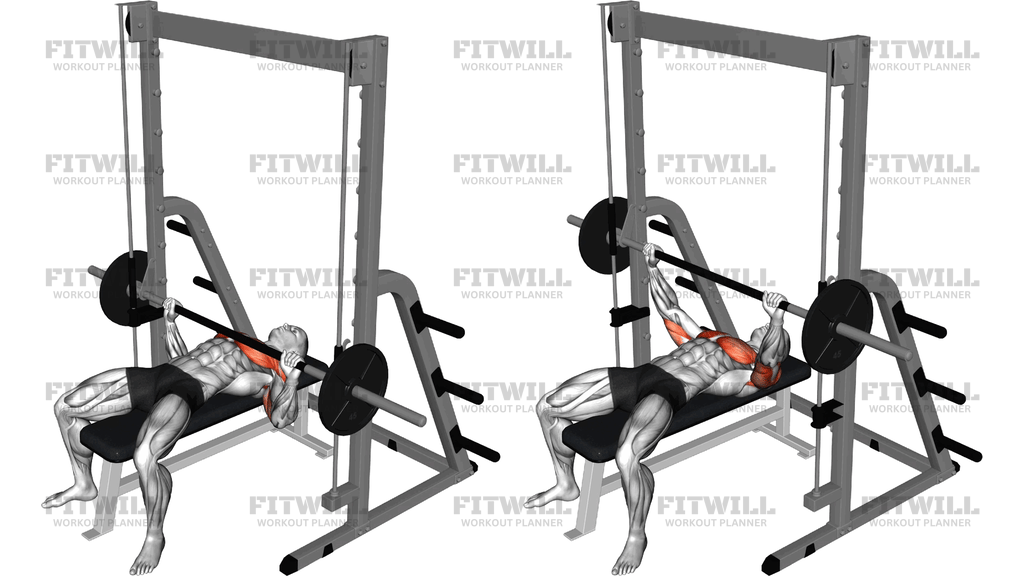
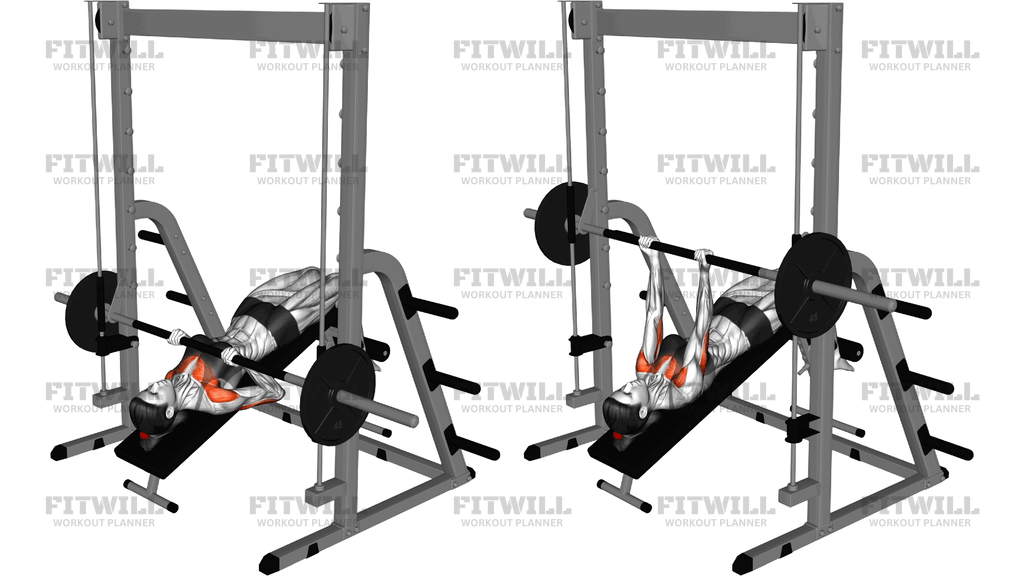
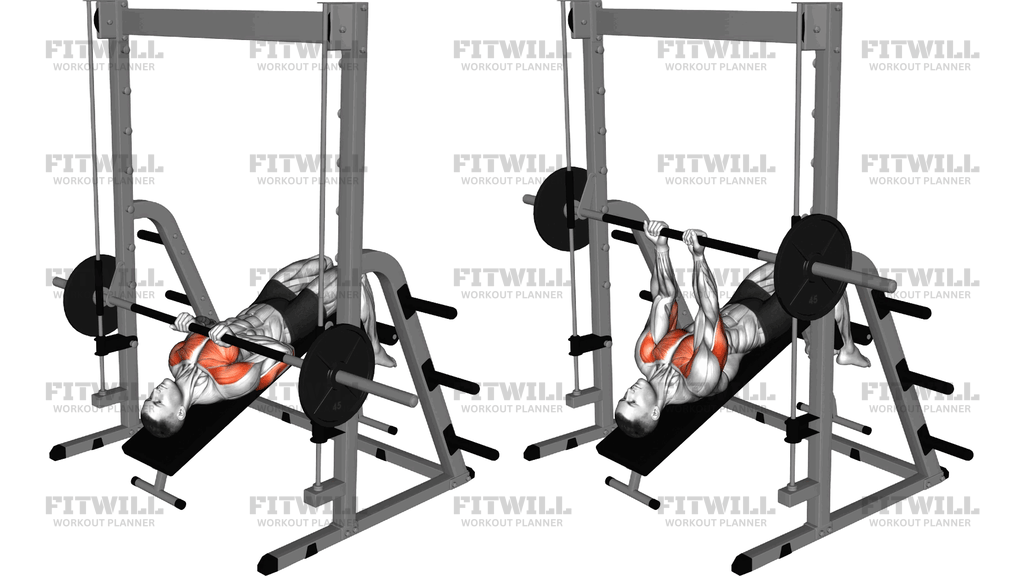
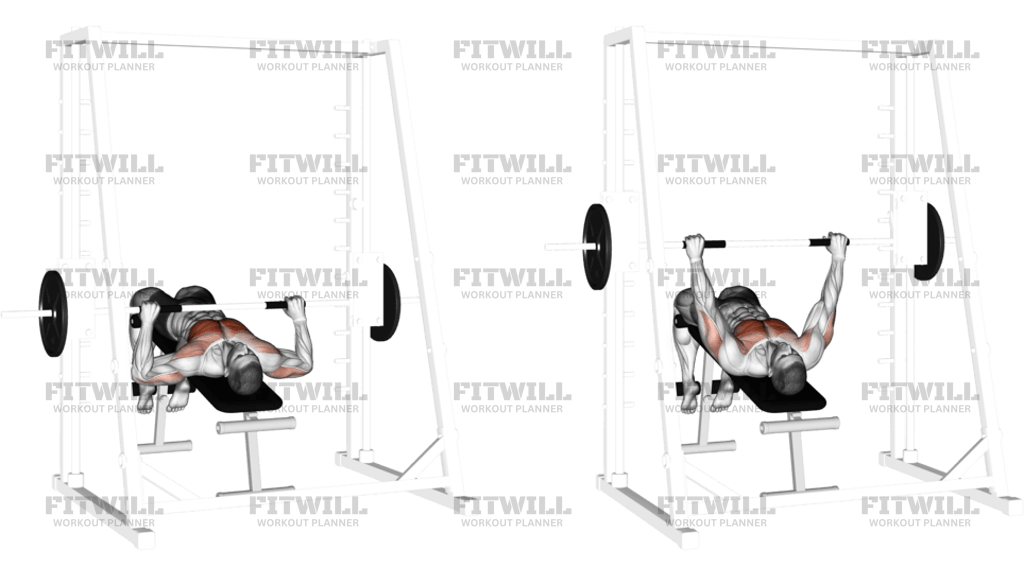
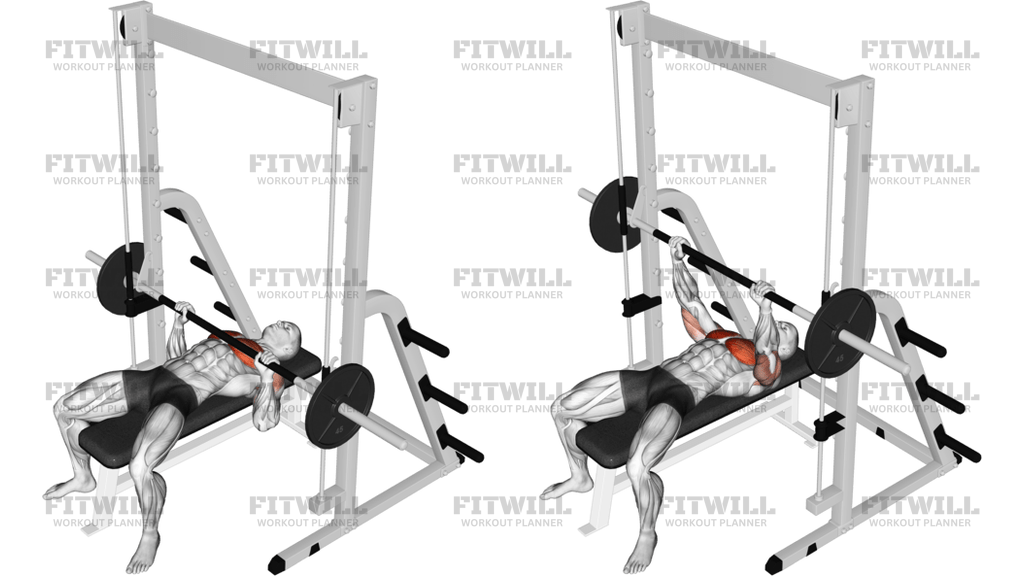
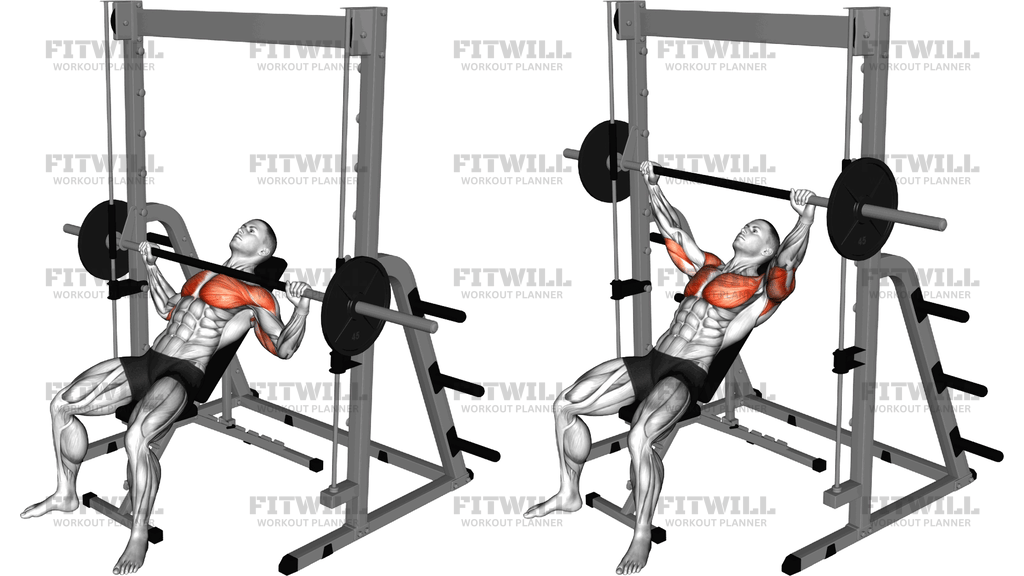
Smith Incline Reverse-Grip Press
Smith Incline Reverse-Grip Press is a chest-focused pressing exercise performed on a Smith machine with an incline bench and an underhand grip. The reverse grip changes the line of pull compared with a standard incline press, helping many lifters feel the upper chest work more directly while the guided bar path keeps the repetition consistent. Because the bar travels on a fixed track, setup matters more than usual: the bench angle, your shoulder position, and where the bar meets the upper chest all determine whether the press feels smooth or awkward.
The main training goal is to load the pectorals through a controlled pressing pattern while the front deltoids, triceps, and upper back help stabilize the shoulders and finish the lockout. In anatomy terms, the primary mover is the Pectoralis major, with assistance from the Anterior deltoid, Triceps brachii, and Rectus abdominis. The exercise is useful when you want a pressing variation that emphasizes tension over instability, especially in accessory work, hypertrophy blocks, or technique-focused upper-body sessions.
Set the incline bench so the bar lands over the upper chest or clavicle area without forcing the shoulders too far forward. A moderate incline usually works best; if the bench is too steep, the movement starts to feel like a shoulder press. The reverse-grip hand position should feel secure in the palms, with wrists stacked and elbows tucked enough to keep the shoulders comfortable. Because the Smith machine fixes the path, you should move your body to the bar rather than trying to chase the bar with your shoulders.
A good rep begins with the shoulder blades set, the ribcage braced, and the bar unracked under control. Lower the bar toward the upper chest in a steady line, then press it back up without bouncing or shrugging. The return should be deliberate enough that you can keep tension in the chest and stay inside a pain-free range. This is not a movement to force with momentum; clean repetitions, stable wrists, and a consistent touch point matter more than load.
Use Smith Incline Reverse-Grip Press when you want a press that combines predictable mechanics with a strong upper-chest emphasis. It can be a practical option for lifters who want to isolate pressing strength without balancing a free barbell, but the reverse grip can feel unfamiliar at first, so start light and build gradually. If the wrists, elbows, or shoulders feel pinched, adjust the bench angle, grip width, or range of motion before adding weight.
[ Workout Log & Planner ]
Put your next workout in Fitwill
Keep your plan and training log ready when you are.


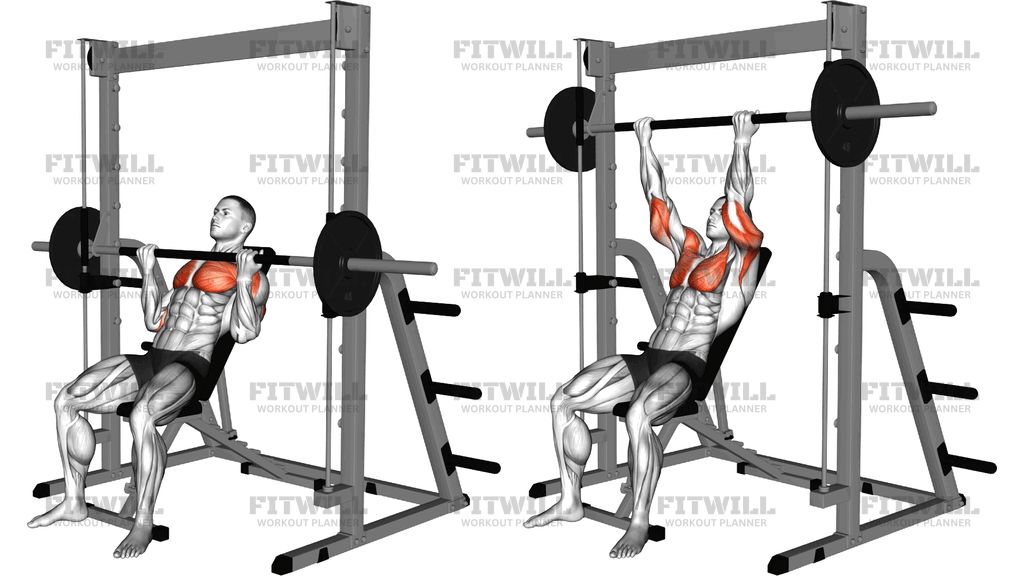
Instructions
- Set an incline bench under the Smith bar so the bar tracks to your upper chest or collarbone area at the bottom of the press.
- Lie back with your head, upper back, and hips supported on the bench, and place your feet flat on the floor for a stable base.
- Take an underhand grip on the bar with your hands slightly wider than shoulder width, wrists stacked over the forearms.
- Unrack the bar and hold it above the upper chest with your shoulder blades set and chest lifted without over-arching the lower back.
- Lower the bar slowly toward the upper chest, keeping the elbows tucked enough to stay comfortable and the forearms nearly vertical.
- Touch or hover just above the upper chest in a controlled position without bouncing off the body.
- Press the bar back up along the Smith machine path until the elbows are extended and the chest stays engaged.
- Exhale as you press, then inhale and re-brace as you lower into the next repetition.
- Rack the bar only when the final repetition is finished and you can guide it back into the hooks without losing control.
Tips & Tricks
- A moderate incline usually feels better than a steep one; if the bench is too upright, the press shifts toward the front delts.
- Keep the wrists straight and the bar deep in the palm so the underhand grip does not fold the wrists back.
- Use a grip that lets the forearms stay close to vertical at the bottom; a grip that is too narrow often stresses the elbows and wrists.
- Let the bar touch the upper chest lightly or stop just short if your shoulders feel better without a full touch.
- Keep the shoulder blades pulled back and down on the bench so the chest, not the shoulders, takes most of the load.
- Do not flare the elbows wide; a tucked path is usually friendlier on the shoulders in this reverse-grip position.
- Use a controlled lowering phase to keep tension on the chest and to avoid dropping into the bottom of the Smith track.
- Choose a load you can unrack and re-rack smoothly, because the fixed bar path makes bad setup more noticeable.
- Stop the set if the grip starts to slip or the wrists begin to ache; the reverse grip should feel secure, not forced.
Frequently Asked Questions
What muscles does Smith Incline Reverse-Grip Press train most?
It primarily targets the upper chest, with the front shoulders and triceps assisting during the press.
Why use a reverse grip instead of a normal incline press grip?
The underhand grip shifts the pressing line and often increases the feel in the upper chest while keeping the Smith path stable.
How should I set the bench for this press?
Use a moderate incline so the bar lands on the upper chest or collarbone area without turning the movement into a shoulder press.
Where should the bar touch on each rep?
The bar should come down to the upper chest area with control, not drift low toward the sternum.
Can beginners do this exercise?
Yes, but they should start light and learn the wrist, elbow, and bench position before adding load.
What if the reverse grip feels awkward on my wrists?
Reduce the load, widen the grip slightly, and make sure the bar sits deep in the palm with the wrists stacked.
Is this movement better for strength or hypertrophy?
It works well for either, but it is especially useful for controlled hypertrophy sets and accessory pressing work.
What is the most common mistake with this press?
Most issues come from setting the bench too steep, flaring the elbows, or letting the wrists bend back.