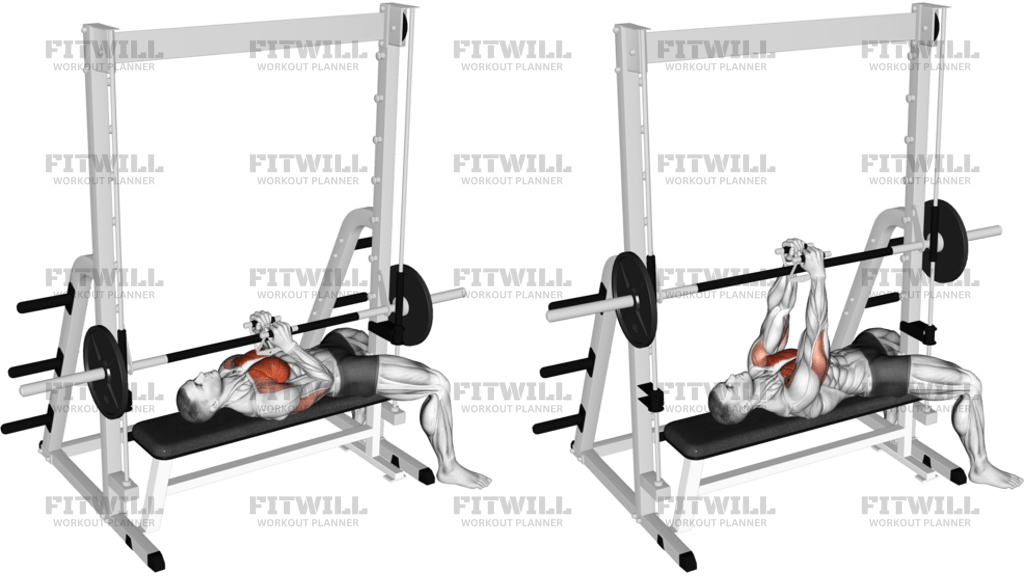
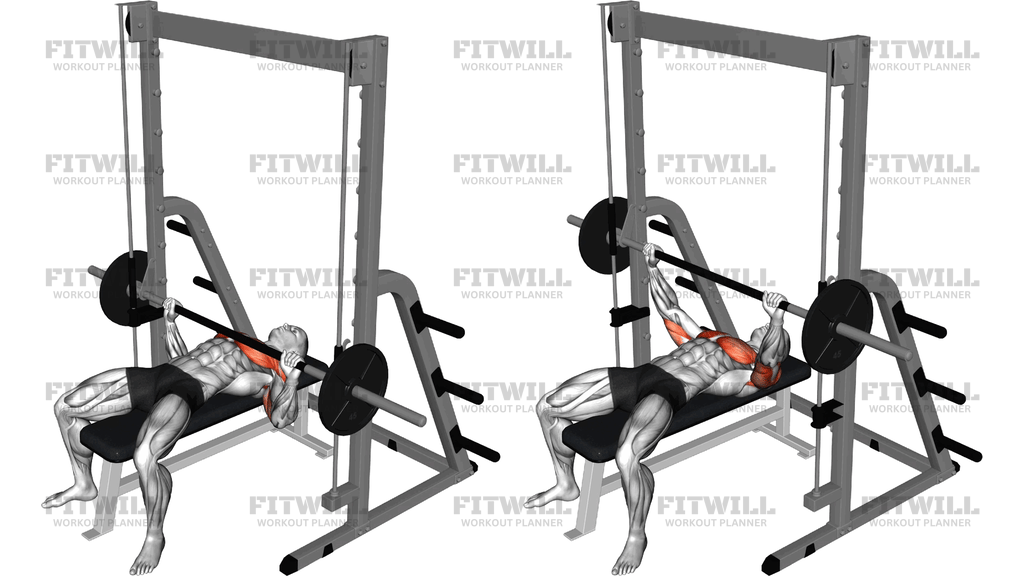
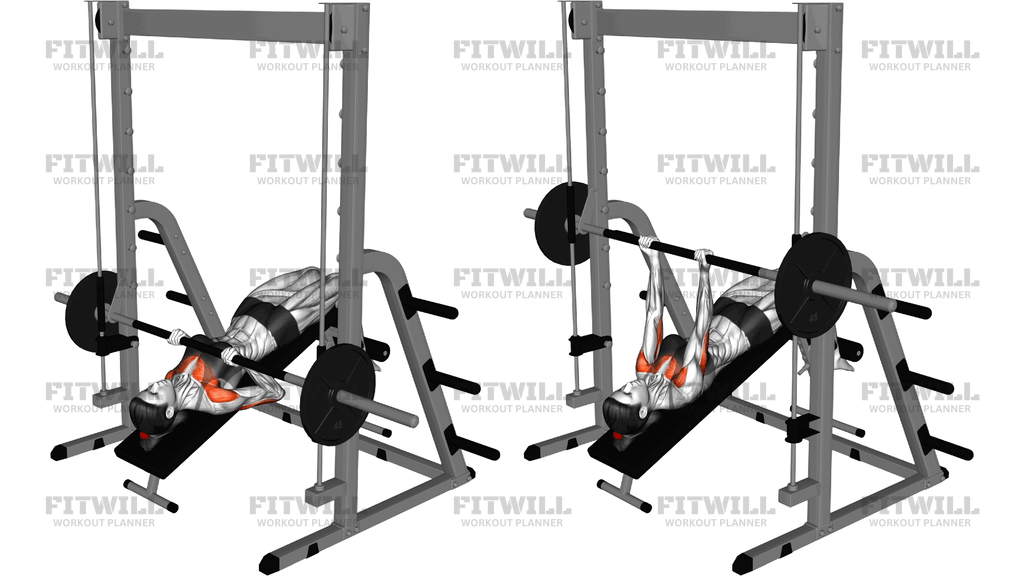
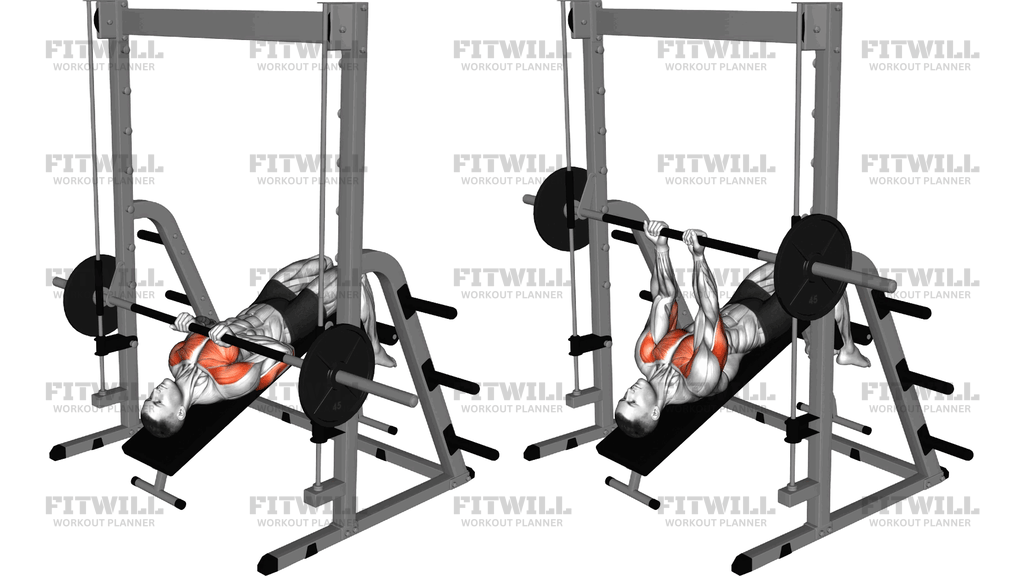
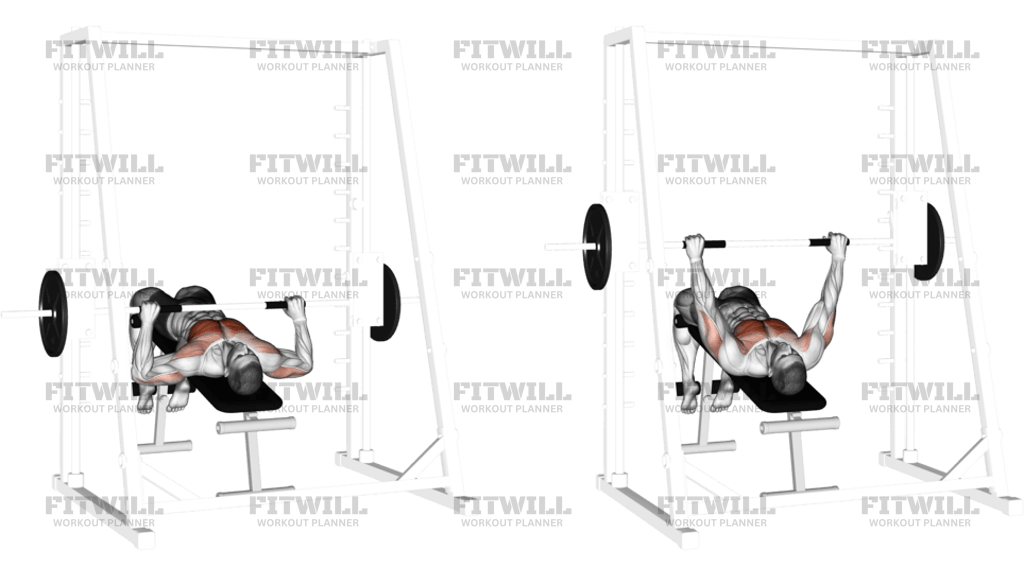
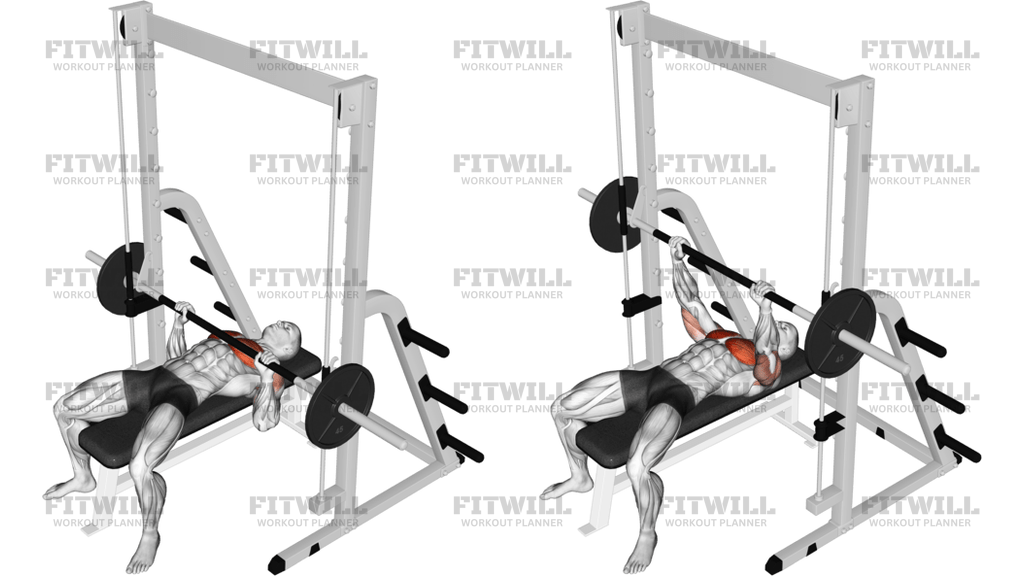
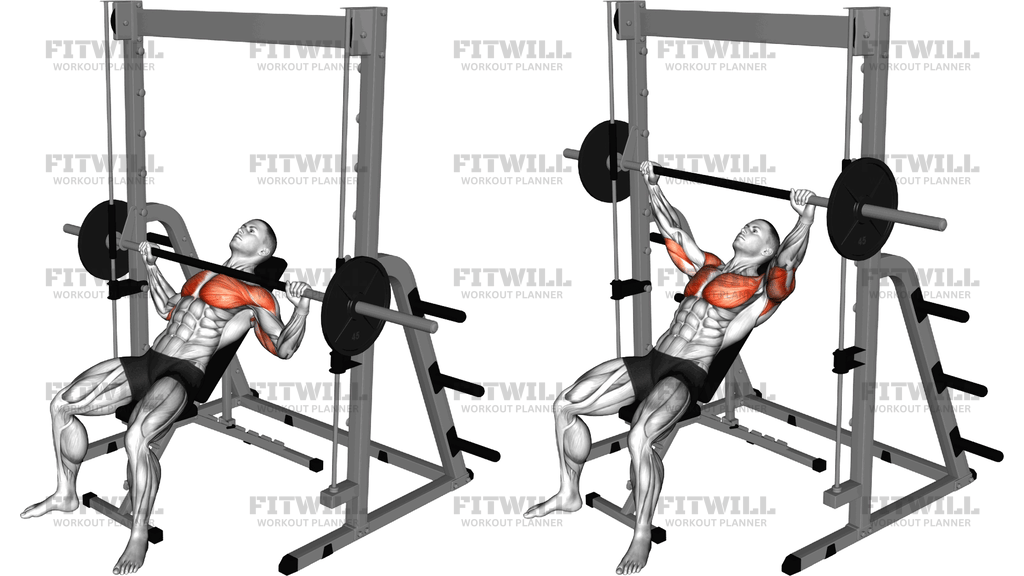
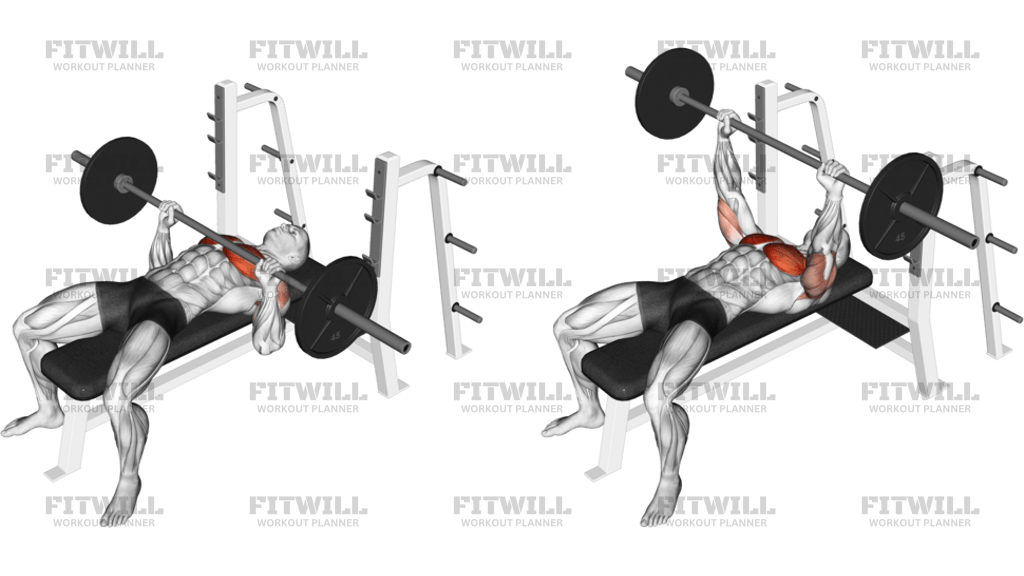
Smith Decline Reverse-Grip Press
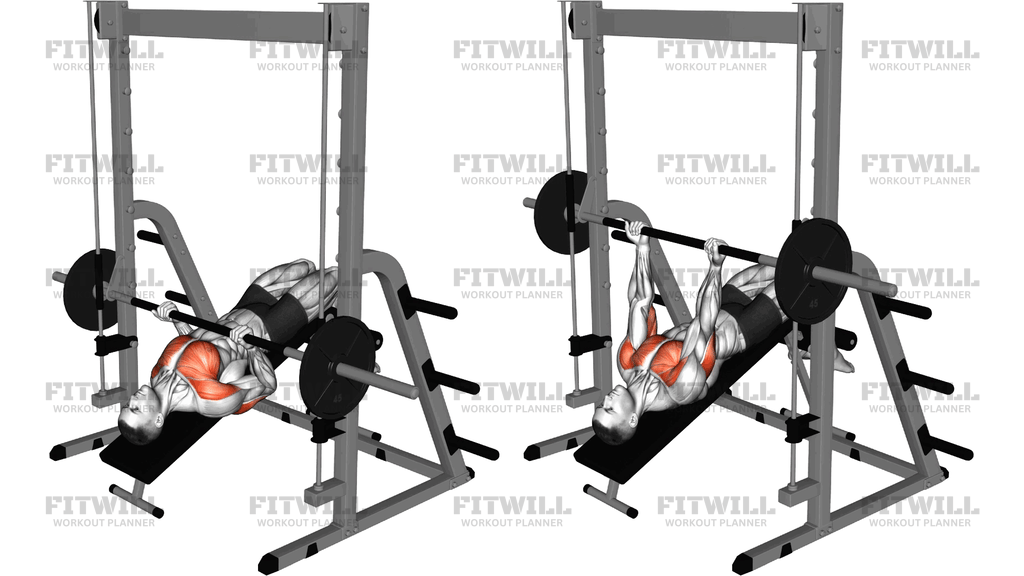
Smith Decline Reverse-Grip Press is a decline pressing variation that uses a Smith machine and an underhand grip to load the chest from a slightly different angle than a standard bench press. The decline bench puts you on a downward slope, while the guided bar path helps you keep the press consistent from rep to rep. That combination makes this a useful option when you want a chest-focused press with more stability than a free barbell setup.
The reverse grip shifts the elbow and wrist position so the bar can travel with a more tucked pressing path toward the lower chest and upper sternum line. In practical terms, the main work goes to the pecs, with help from the front shoulders and triceps, while the core and upper back keep you organized on the bench. The movement can feel natural for some lifters and awkward for others, so the setup matters more than usual.
A good set starts before the bar ever moves. Lie back on the decline bench, lock your legs under the pads if the bench has them, and place your hands on the bar with palms facing you and thumbs wrapped. Set your shoulders back and down against the bench, then unrack the bar so it sits over the lower chest area with the wrists stacked under it. If the grip is too wide, too narrow, or too deep in the fingers, the press usually feels unstable very quickly.
On each rep, lower the bar under control toward the lower chest or upper ribcage, keeping the elbows tucked rather than flared hard out to the sides. Press the bar back up along the Smith machine track until the arms are extended without locking out aggressively or losing shoulder position. The goal is a smooth press with steady tension, not a bounce off the chest or a rushed rebound from the bottom.
This exercise fits well in chest-focused strength work, accessory pressing blocks, or sessions where you want to limit balance demands and keep the bar path repeatable. It can be especially useful when a lifter wants a pressing variation that feels more stable than free-weight decline benching. Because the reverse grip changes the wrist angle, start lighter than you think, keep the wrists straight, and stop the set if the shoulders, wrists, or elbows lose their groove.
[ Workout Log & Planner ]
Put your next workout in Fitwill
Keep your plan and training log ready when you are.


Instructions
- Set the decline bench under the Smith machine so the bar starts over your lower chest when you lie back.
- Lie on the bench, hook your feet under the ankle pads or leg rollers, and keep your upper back and glutes anchored to the pad.
- Grip the bar with an underhand, shoulder-width to slightly narrower grip and wrap your thumbs around the bar.
- Retract and depress your shoulder blades, then unrack the bar so it sits above the lower chest line with straight wrists.
- Lower the bar under control until it touches or nearly touches the lower chest or upper ribcage.
- Press the bar up and slightly back along the Smith path until your elbows are extended without shrugging your shoulders forward.
- Keep your elbows tucked at roughly 30 to 45 degrees and avoid letting them flare wide on the way down or up.
- Breathe in on the descent, brace near the bottom, and exhale as you drive the bar back to the top.
- Re-rack the bar carefully at the end of the set, making sure both hooks catch cleanly before you release tension.
Tips & Tricks
- Keep the grip underhand but not extreme; if the bar sits deep in your fingers, the wrists usually fold back and the press feels unstable.
- A slightly narrower grip often feels better than a wide reverse grip because it keeps the elbows closer and the shoulders in a friendlier line.
- Let the bar touch the lower chest lightly, but do not bounce it off the chest or lose tension at the bottom.
- If your shoulders roll forward at lockout, stop just short of a hard shrug and finish the rep with the chest still lifted.
- Use a load that lets you control the descent; the reverse grip becomes sloppy fast when the lowering phase is rushed.
- Keep your feet secured under the decline bench pads so your torso does not slide as you press.
- If your wrists ache, reduce the load and stack the knuckles over the forearms instead of letting the bar drift back into the palm.
- The Smith bar fixes the path, so if your elbows or shoulders feel pinched, move the bench position slightly until the bar tracks naturally to the lower chest.
- Stop the set before you have to regrip or lose thumb contact, because that usually means the reverse grip has become too demanding.
Frequently Asked Questions
What muscles does Smith Decline Reverse-Grip Press target most?
It primarily targets the chest, with the front shoulders and triceps assisting. The reverse grip and decline angle tend to make the lower-chest line feel especially prominent.
Is Smith Decline Reverse-Grip Press beginner-friendly?
It can be, but only if you start very light and get comfortable with the reverse grip first. The fixed Smith path helps, but the underhand wrist position can feel awkward until you own the setup.
How should I position the bench for Smith Decline Reverse-Grip Press?
Set the decline bench so the bar lowers to your lower chest or upper ribcage when you are flat on the pad. If the bar meets your face or upper chest instead, the bench is too far forward or too far back.
What is the biggest mistake with the reverse grip?
Letting the bar sit too deep in the hand and bending the wrists back. Keep the bar stacked over the forearms so the wrists stay straight through the press.
Why use a reverse grip on a decline press?
The underhand grip changes the elbow path and often lets the chest work with a more tucked pressing angle. Many lifters also find it easier on the shoulders than a very wide overhand press.
Should my elbows flare out on Smith Decline Reverse-Grip Press?
No. Keep them tucked roughly 30 to 45 degrees from your torso so the press stays chest-focused and the shoulders do not take over the bottom of the rep.
What if the decline bench feels unstable?
Secure your feet under the pads, keep your upper back pinned to the bench, and reduce the load. If you still slide, adjust the bench position before adding weight.
Can I substitute this for a regular bench press?
Yes, as a chest pressing variation, but it is not a one-for-one replacement. The decline angle and reverse grip change the feel, so it works best as an accessory or alternate press, not your only horizontal press.