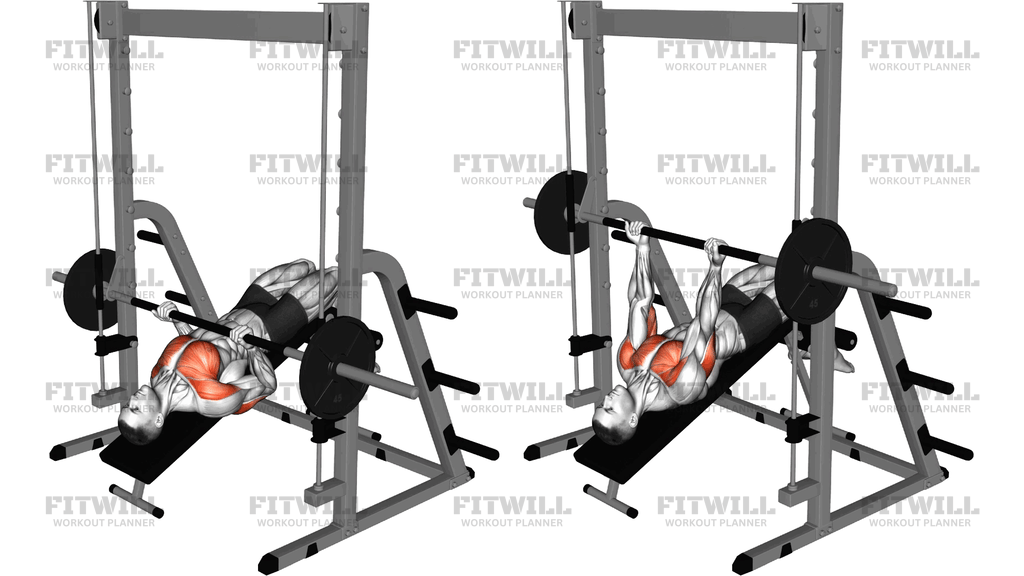
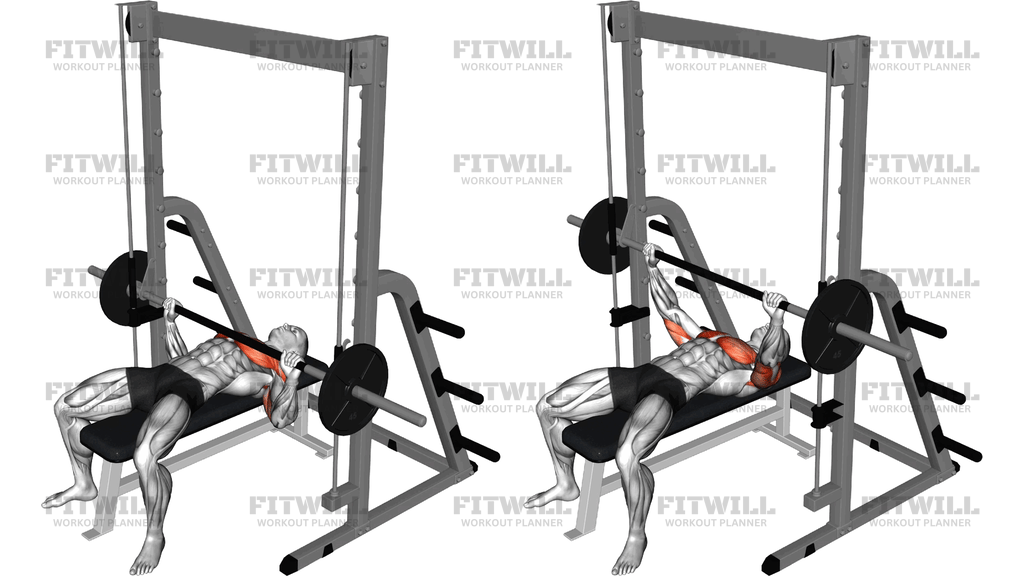
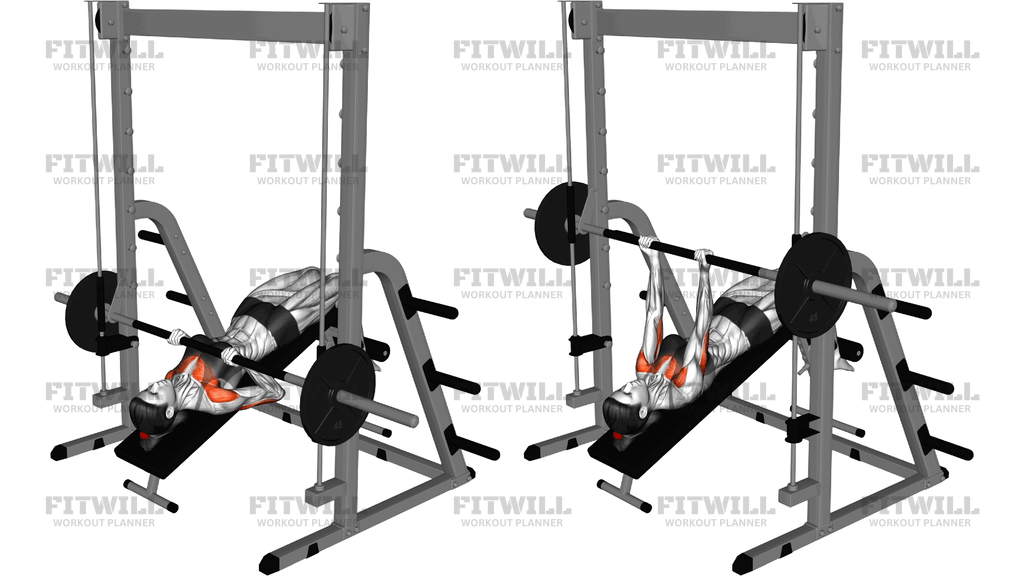
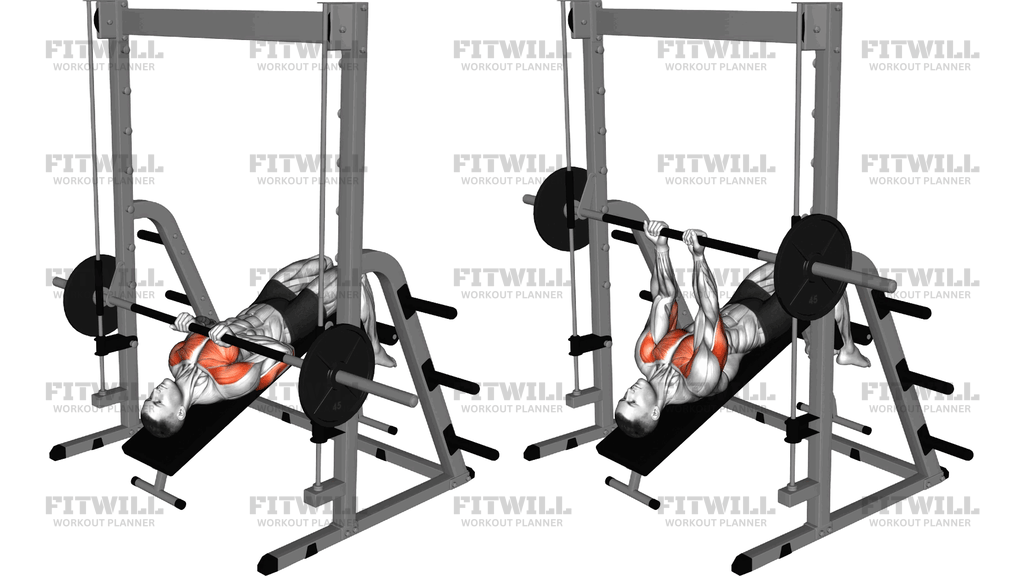
Smith Hex Press
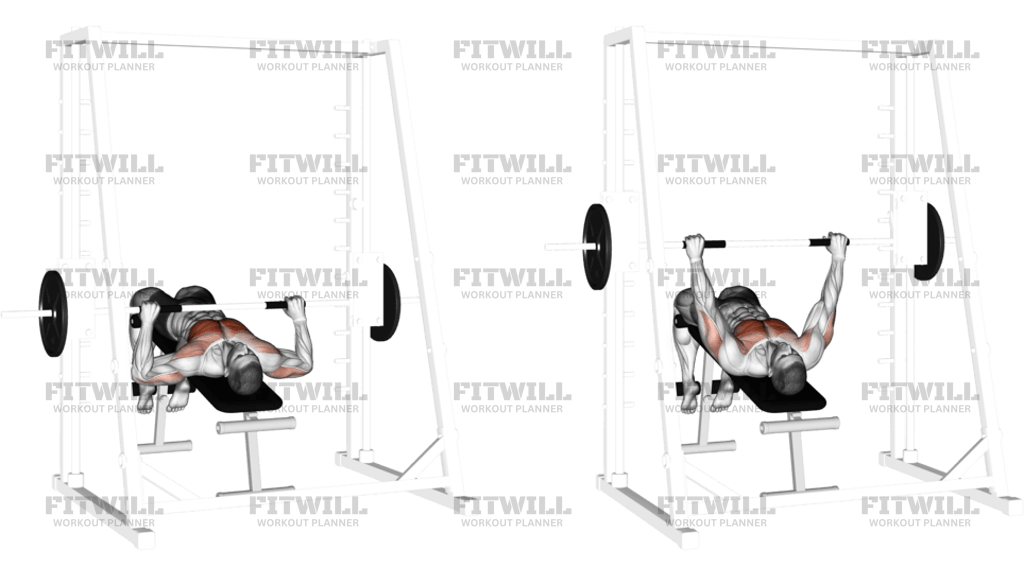
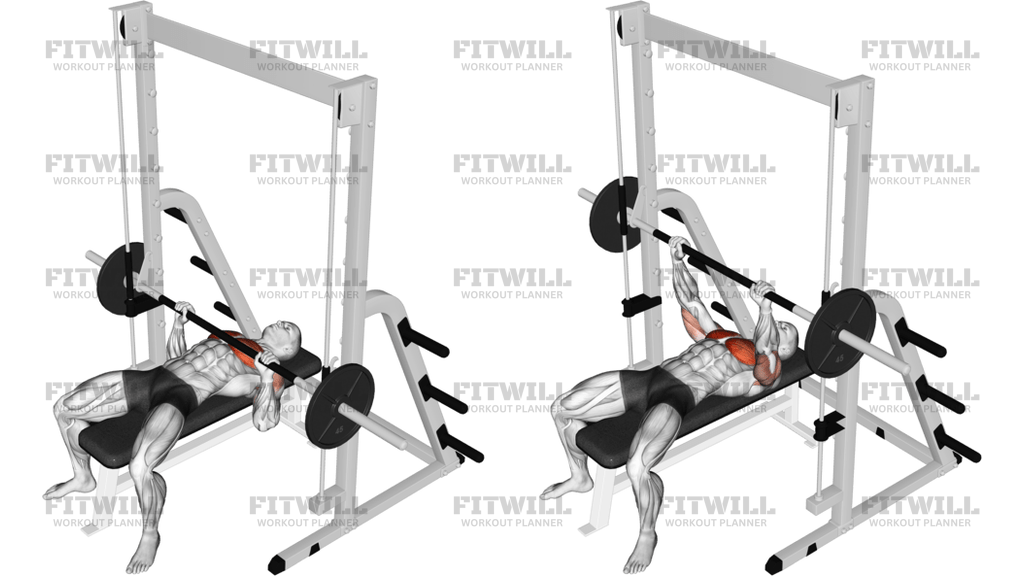
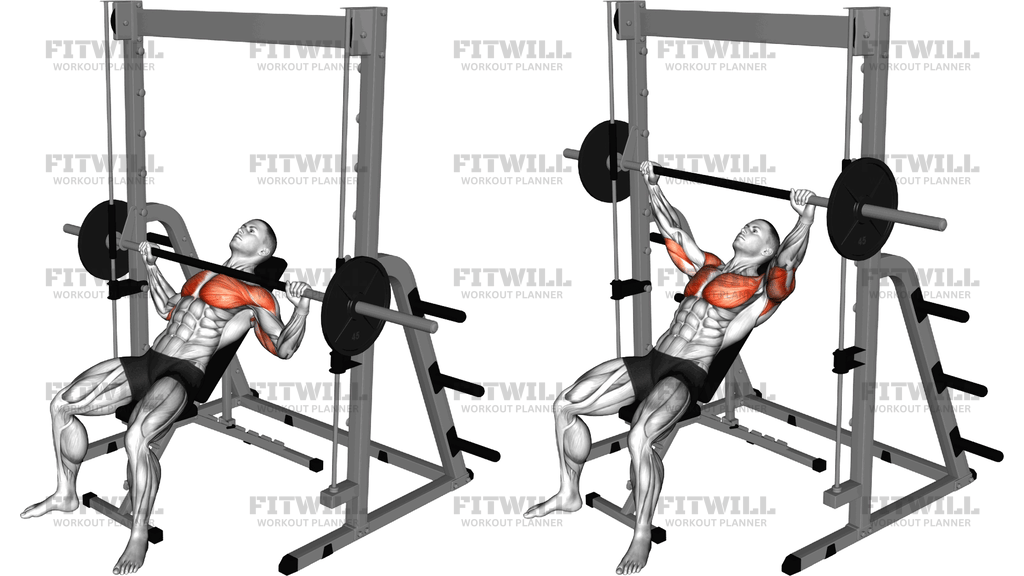
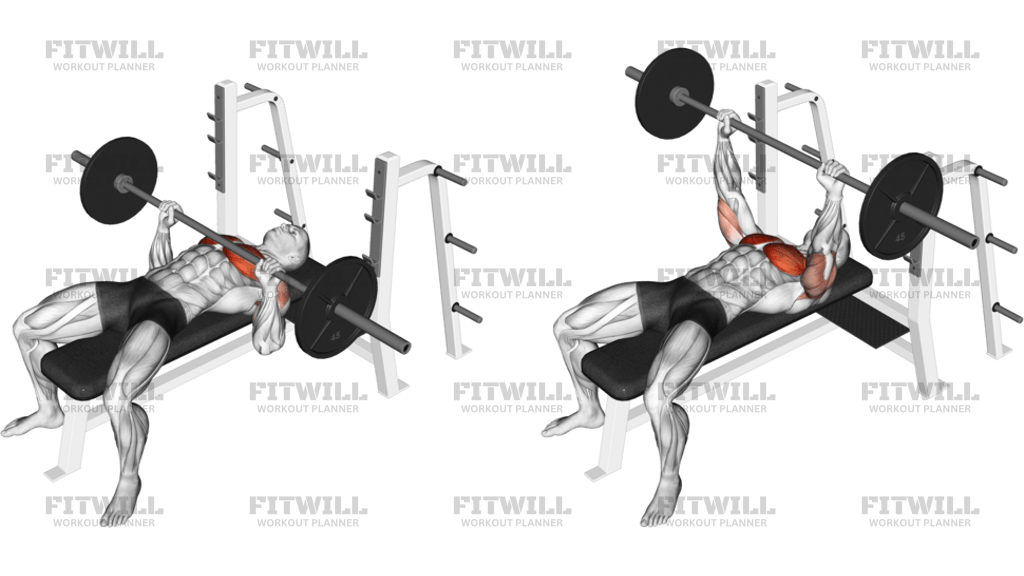
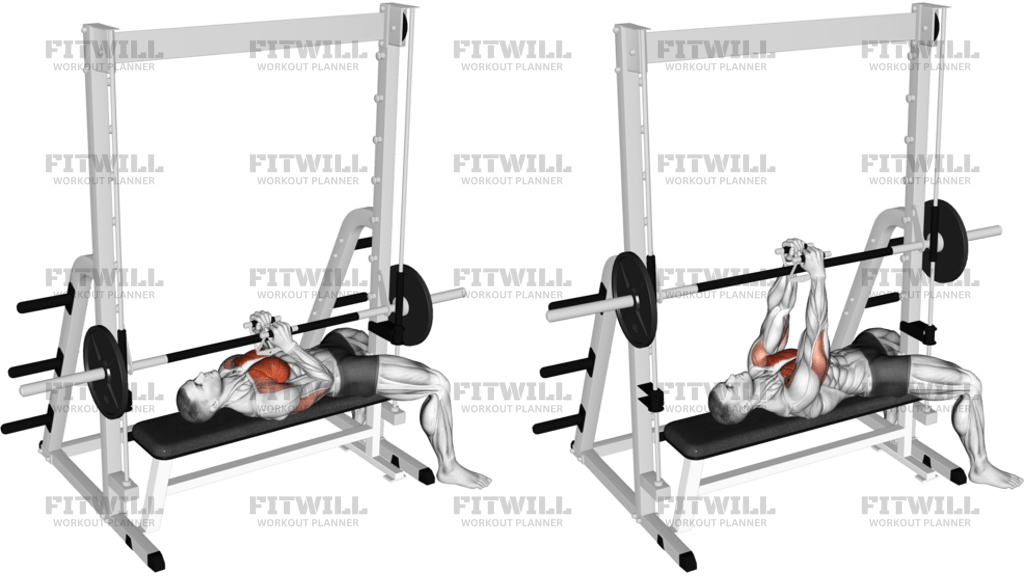
Smith Hex Press is a close-grip chest press performed on a Smith machine with the elbows tucked and the hands held tightly together through the press. The fixed bar path removes a lot of balance demand, so you can focus on squeezing the chest, keeping the shoulders organized on the bench, and moving the load through the same line every rep.
The main emphasis is the pecs, with the front shoulders, triceps, and upper back helping to stabilize and finish the press. Because the path is guided, the details of setup matter: bench placement, eye line under the bar, scapular position, foot pressure, and where the bar touches the chest all change how much work stays on the chest versus leaking into the shoulders.
The press should feel narrow and controlled. Lower the bar toward the lower chest or upper sternum with the forearms close to vertical and the elbows angled in rather than flared out. Keep the wrists stacked over the forearms and maintain a steady squeeze through the hands so the chest stays active on the way down and on the way up.
This variation is useful as a chest accessory, a controlled hypertrophy press, or a machine-based option when you want a stable pressing pattern. It is especially helpful for lifters who want a repeatable range of motion and a strong chest contraction without having to balance a free bar. Use a pain-free depth, control the lowering phase, and stop the set if the shoulders start to pinch or the bar path turns into a shrug.
In practice, the best reps are smooth, repeatable, and strict. Keep the torso tight against the bench, press along the same track every time, and let the triceps finish only after the chest has done its work. Choose a load that lets you own the descent and keep the squeeze without bouncing off the chest or drifting into a wider pressing pattern.
[ Workout Log & Planner ]
Put your next workout in Fitwill
Keep your plan and training log ready when you are.


Instructions
- Set a flat bench under the Smith bar and lie back with your eyes under the bar, feet planted, shoulder blades pulled back and down, and your hands pressed together on the bar with stacked wrists.
- Unrack the bar and position it over the lower chest or upper sternum with the elbows tucked in about 30 to 45 degrees from the torso.
- Take a breath, brace the torso against the bench, and keep the neck long and relaxed before each rep.
- Lower the bar slowly until it reaches the same chest touch point every time, keeping the forearms close to vertical.
- Keep the hands squeezing together and the upper arms close to the body as the bar travels down.
- Press the bar back up along the Smith track until the arms are nearly straight without letting the shoulders shrug forward.
- Exhale near the top of the press and keep the rib cage from flaring as the bar rises.
- Re-rack the bar with control after the last rep and keep the shoulders set until the hooks are secure.
Tips & Tricks
- Position the bench so the bar touches the lower chest or upper sternum, not the upper chest.
- Keep the shoulder blades pinned to the bench; losing that set-up usually shifts the work into the front delts.
- Hold the wrists straight over the forearms so the bar does not fold the hands back.
- Squeeze the hands together through the whole rep to keep the chest engaged and the movement narrow.
- If the elbows flare wide, lighten the load and bring them back under the bar path.
- Use a slower lowering phase than the pressing phase so you can control the fixed track.
- Do not bounce the bar off the chest; touch lightly and reverse under tension.
- Stop the set if your shoulders start to pinch or the bar path turns into an awkward shrug.
Frequently Asked Questions
What muscles does Smith Hex Press work most?
The chest is the main target, with the front shoulders and triceps helping finish each press.
Is this more of a chest exercise or a triceps exercise?
It is mainly a chest press, but the triceps contribute strongly near lockout because of the narrow grip.
Where should the bar touch on my body?
Aim for the lower chest or upper sternum so the press stays tight and the shoulders do not take over.
How close should my hands be on the bar?
Keep the hands close enough that the wrists stay stacked and the elbows remain tucked, but not so close that the wrists collapse.
Can beginners use the Smith machine for this press?
Yes. The guided bar path makes it easier to learn, as long as the load is light enough to keep the shoulders and wrists in good positions.
What is the most common mistake with this exercise?
Letting the elbows flare or bouncing the bar off the chest usually turns the movement into a sloppy shoulder-dominant press.
Why use a Smith machine instead of a free barbell?
The fixed path reduces balance demands and makes it easier to focus on chest tension and repeatable technique.
Should I keep my shoulder blades tight the whole time?
Yes. Keeping them set helps protect the shoulders and gives the chest a more stable base to press from.