Smith Machine Reverse Decline Close-Grip Bench Press
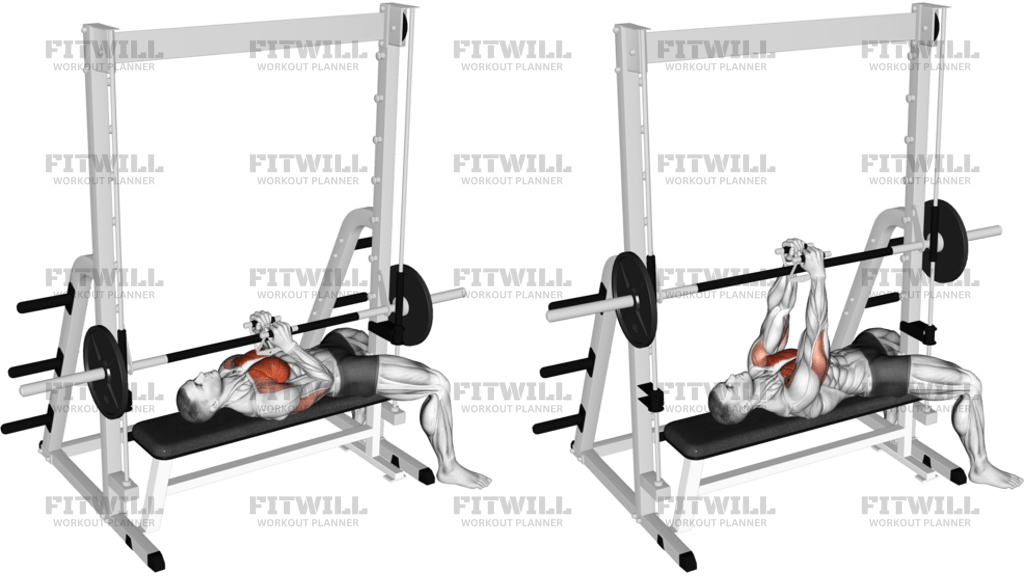
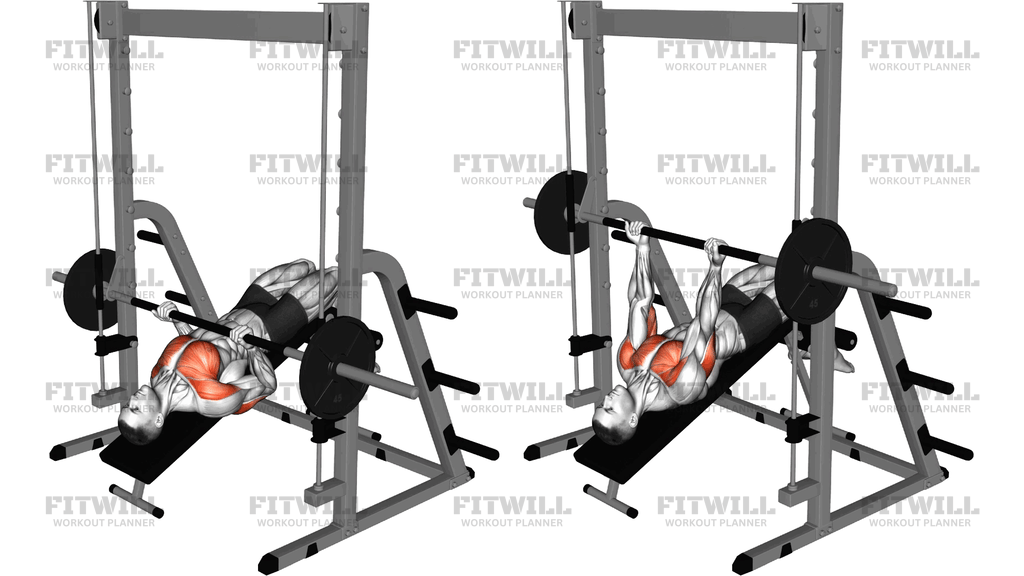
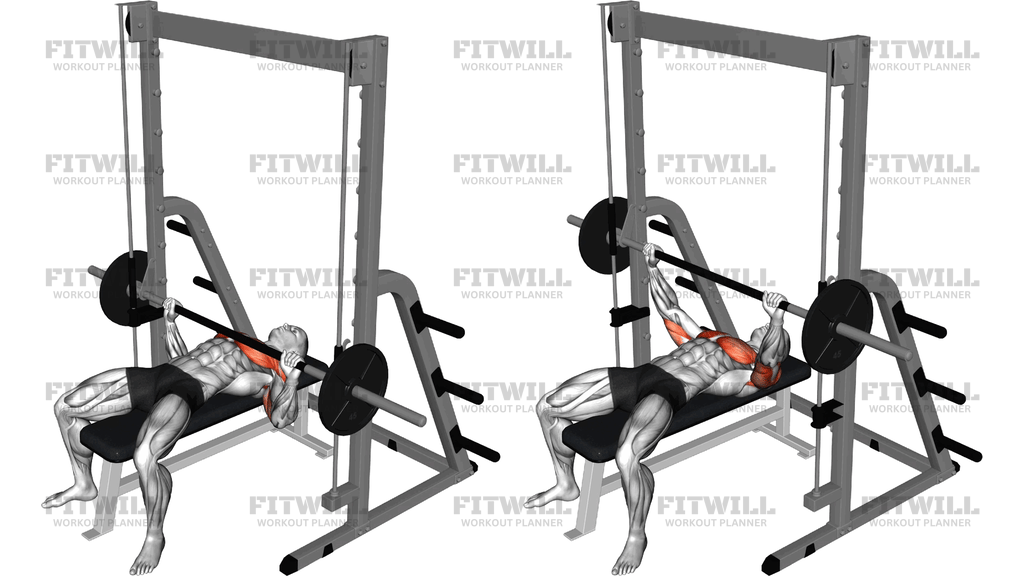
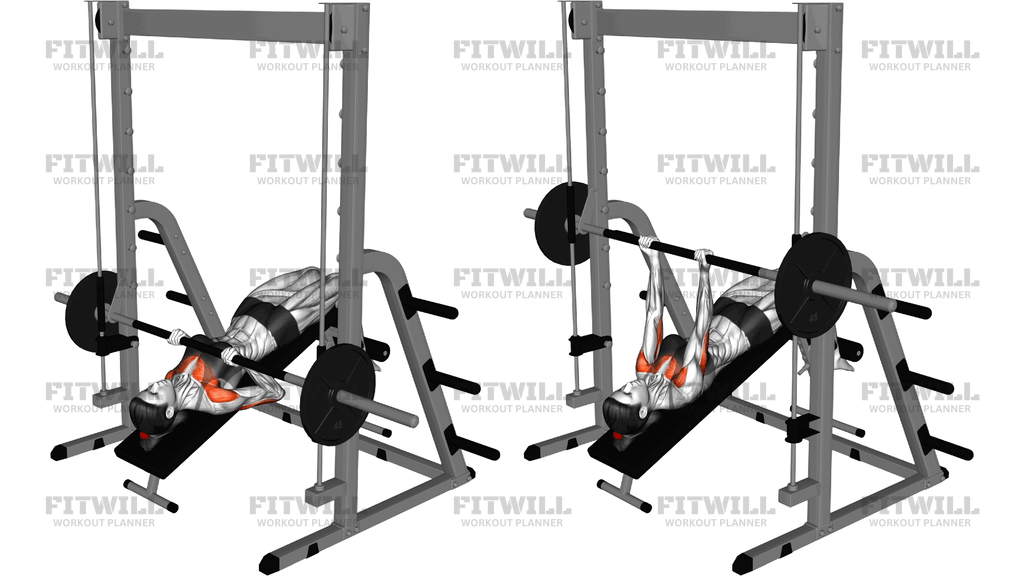
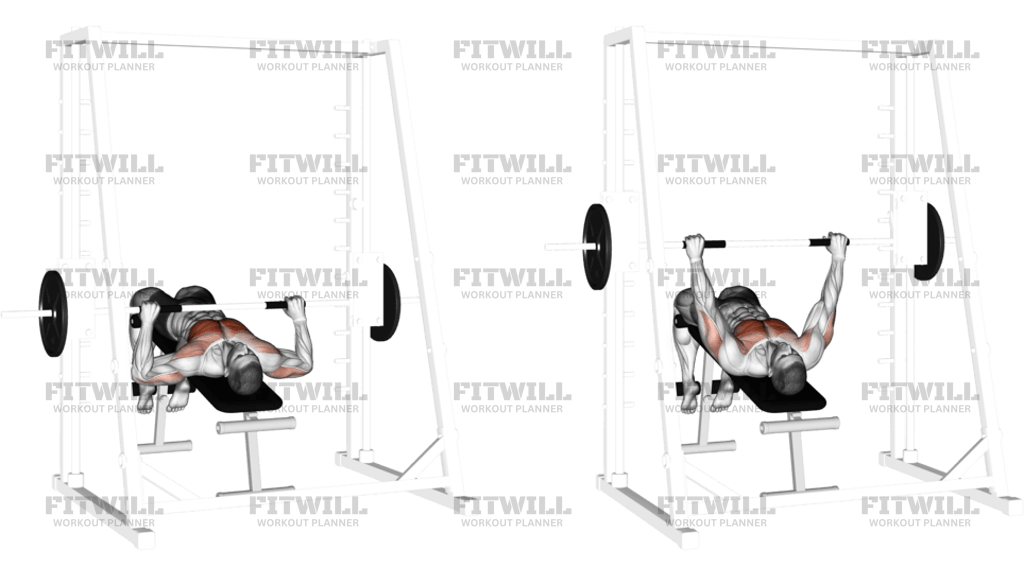
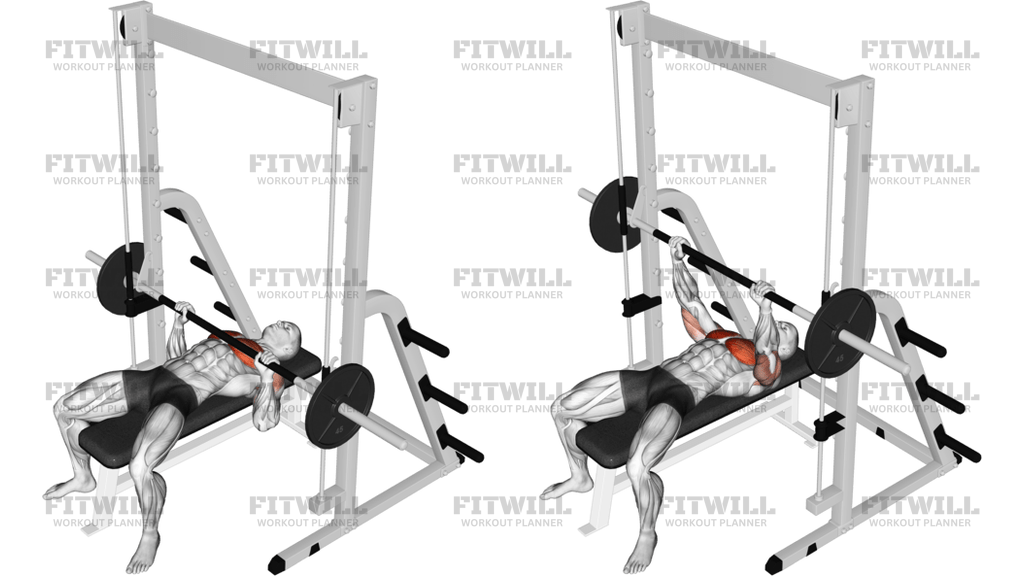
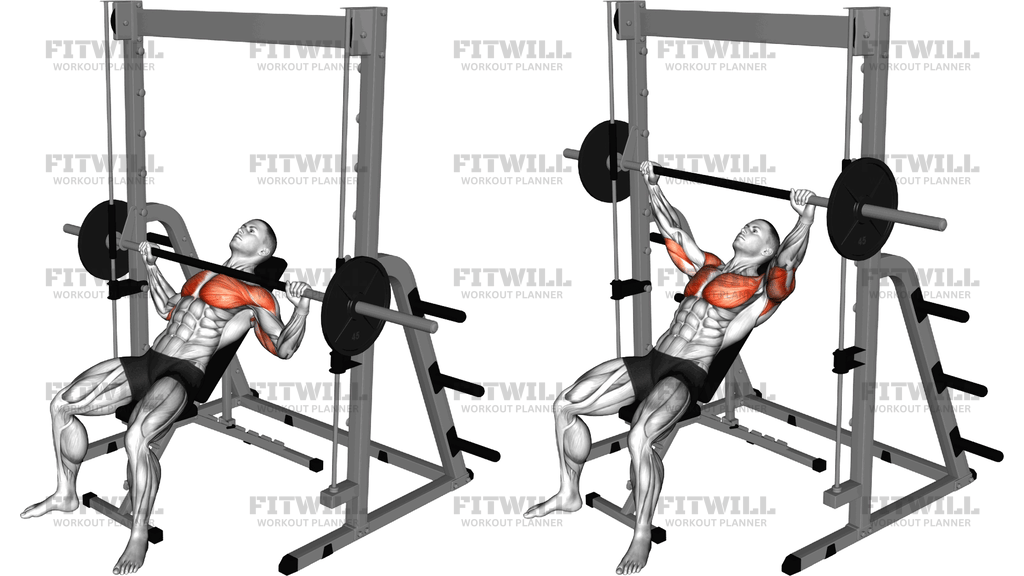
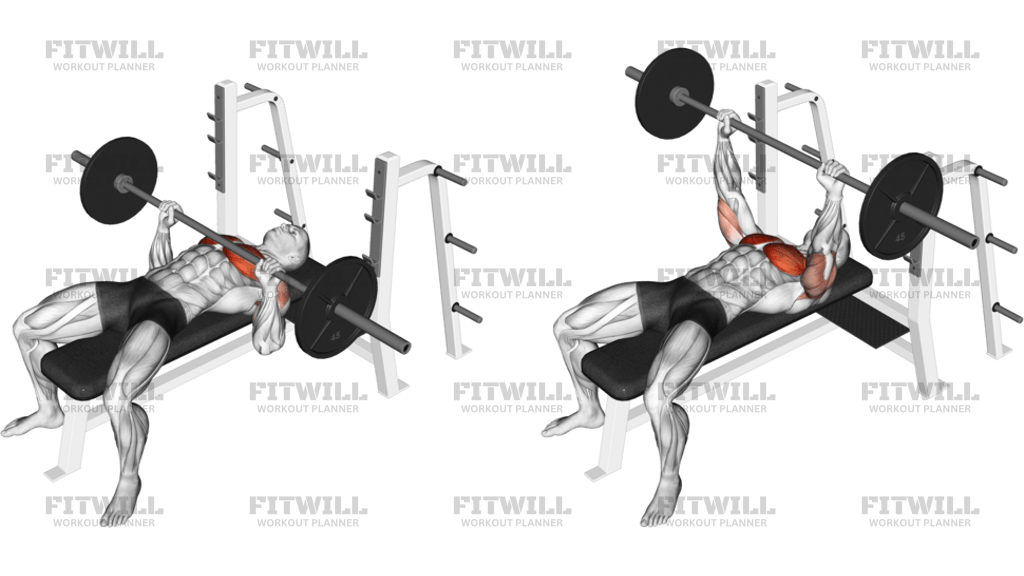
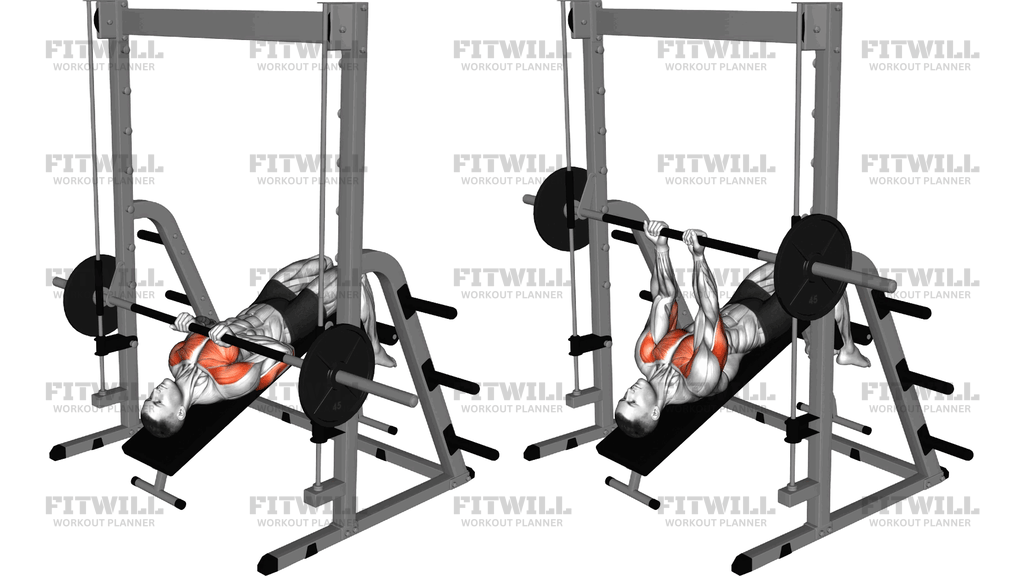
Smith Machine Reverse Decline Close-Grip Bench Press is a guided pressing exercise performed on a decline bench under a Smith machine. The fixed bar path makes it easier to keep the same pressing line on every rep, while the close grip shifts more of the work toward the triceps and the lower-to-mid chest. The reverse decline setup also changes the body angle enough to give the chest a different loading feel than a flat or standard incline press.
The main muscles working are the pecs, with the anterior delts, triceps, and core helping to stabilize the torso and keep the press clean. In technical terms, the primary tissue is the pectoralis major, with help from the anterior deltoid, triceps brachii, and rectus abdominis. Because the bar is guided, the setup matters more than usual: if the bench is not lined up correctly, the bar will land too high on the chest or force the shoulders into an awkward position.
Start by placing the bench so the unracked bar sits over the lower chest when the arms are straight. Lie back with the shoulders pinned into the pad, the chest lifted, and the feet or leg rollers anchored so the body does not slide down the bench. A narrow but not cramped grip keeps the wrists stacked over the forearms and lets the elbows stay slightly tucked instead of flaring wide.
Lower the bar under control until it reaches the lower chest or upper sternum, then press it back up along the same vertical track. The best reps feel smooth and repeatable: the shoulders stay set, the bar touches lightly rather than bouncing, and the elbows extend without losing chest tension. A short pause near the bottom can help control the descent and keep the Smith machine from turning the lift into a rebound.
This exercise is useful as a chest-and-triceps accessory lift, especially for lifters who want a more stable pressing pattern or need to keep the movement strict under fatigue. It is also a practical option for moderate to higher-rep work because the machine removes balancing demands and lets you focus on line, tempo, and effort. Use a load that lets you keep the bench position, wrist alignment, and bar path consistent from the first repetition to the last.
[ Workout Log & Planner ]
Put your next workout in Fitwill
Keep your plan and training log ready when you are.


Instructions
- Set the decline bench under the Smith bar so the unracked bar lines up over your lower chest when your arms are straight.
- Lie back on the bench with your head lower than your hips, shoulders pinned into the pad, and chest lifted.
- Lock your feet or lower legs into the bench rollers so your body stays fixed on the decline pad.
- Grip the bar just inside shoulder width and stack your wrists over your forearms.
- Unrack the bar and hold it over the lower chest with your elbows slightly tucked.
- Lower the bar slowly to the lower chest or upper sternum, keeping the bar path vertical and controlled.
- Pause briefly near the bottom without bouncing, then press the bar back up along the same line.
- Finish the rep with your elbows straight, re-rack under control, and keep your shoulders set for the next rep.
Tips & Tricks
- If the bar touches too high on your chest, slide the bench until the vertical path meets your lower chest naturally.
- Keep the wrists straight instead of letting them fold back, especially with a narrow grip.
- Let the elbows track about 30 to 45 degrees from your torso so the press stays chest-driven and not overly flared.
- Do not bounce the bar off the chest; the Smith machine makes any rebound more obvious and less forgiving.
- Use a slow lower for control, then press smoothly without jerking the bar off the bottom.
- Keep the shoulder blades pulled back and down so the front of the shoulder does not take over.
- Choose a load that lets you keep the same touch point and bar path on every rep.
- If the decline angle feels too aggressive, shorten the range of motion or reduce the load before the set gets sloppy.
Frequently Asked Questions
What does the Smith Machine Reverse Decline Close-Grip Bench Press work most?
It primarily trains the pecs, with a strong contribution from the triceps and front delts.
Can beginners perform this exercise?
Yes, as long as they set the bench correctly and keep the load light enough to control the bar path.
Where should the bar touch on the chest?
The bar should meet the lower chest or upper sternum, not drift up toward the collarbones.
How wide should my grip be?
Use a grip just inside shoulder width so the wrists stay stacked and the elbows do not flare too far out.
Is this more for chest or triceps?
It trains both, but the close grip usually increases the triceps demand while still loading the chest heavily.
What is the biggest setup mistake on this movement?
A common error is placing the bench too far forward or back so the bar lands in the wrong spot on the chest.
Should I pause at the bottom?
A short pause is useful if it helps you avoid bouncing and keeps the press under control.
What should I do if my shoulders feel irritated?
Reduce the decline angle, limit the depth, and make sure your shoulder blades stay set before pressing.