Smith Incline Shoulder Raises
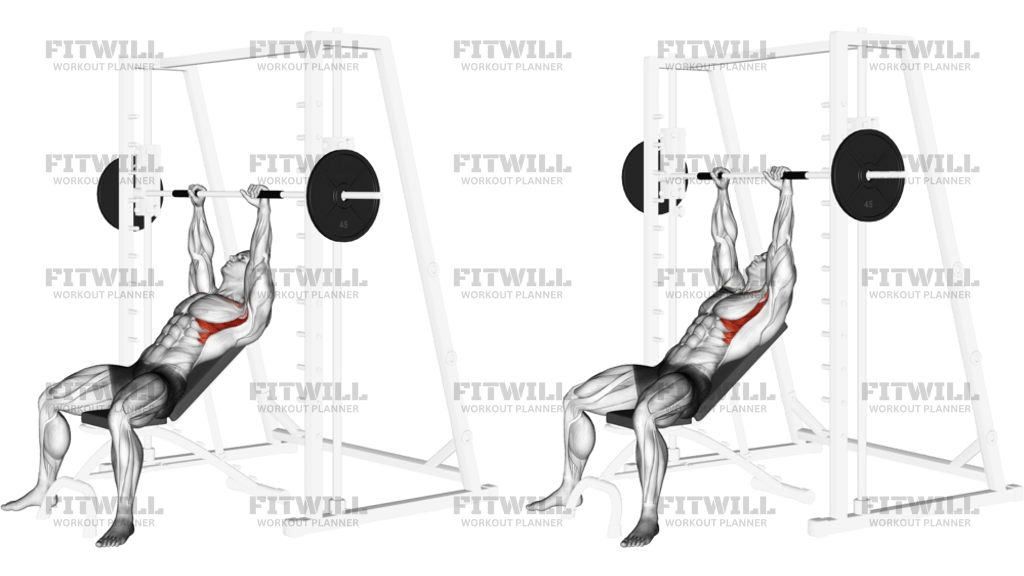
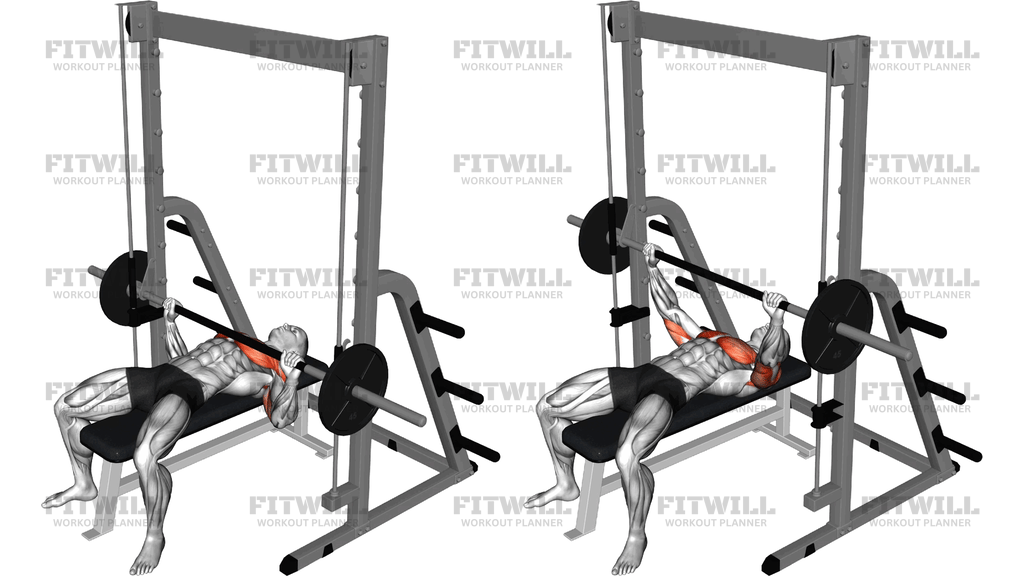
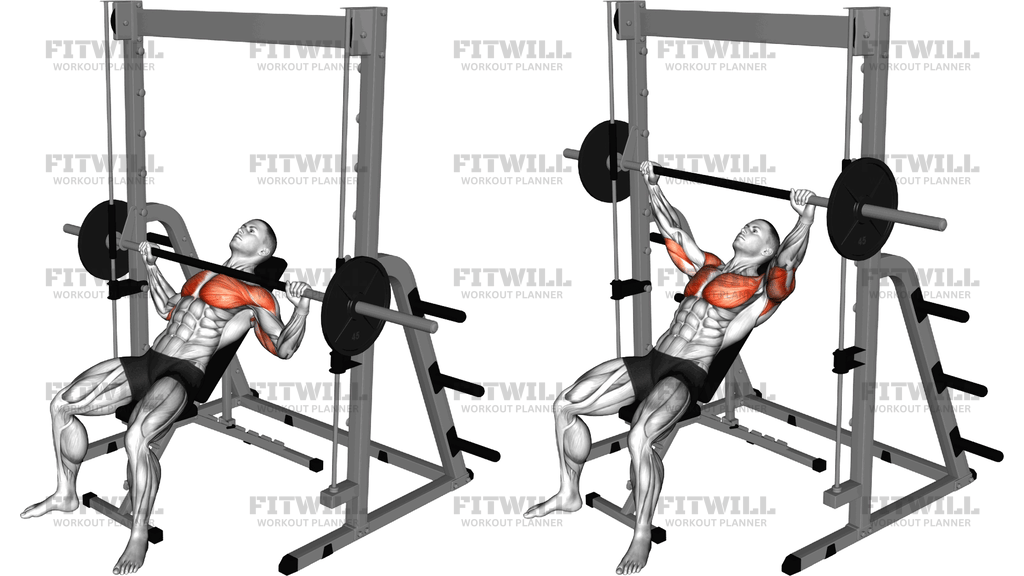
Smith Incline Shoulder Raises is a guided pressing movement performed on a Smith machine with an incline bench. The image shows the bar traveling in a fixed vertical path above the upper chest, which makes the setup more stable than a free-weight incline press and easier to repeat with clean tension. The exercise is useful when you want a chest-dominant pressing pattern with the shoulders and triceps assisting, while the machine controls the bar path for you.
The main training effect comes from pressing from a stretched position near the upper chest to full arm extension over the shoulder line. The pectoralis major is the primary mover, with the anterior deltoid and triceps brachii helping finish the press and stabilize the lockout. Because the bar is locked to the rails, the bench angle, shoulder blade position, and hand placement matter more than they would on a dumbbell press. Small setup errors are easy to repeat, which is why this movement rewards a deliberate start.
Set the bench so the bar lowers to the upper chest or upper sternum without forcing the shoulders forward. Keep the feet flat, torso tight, and wrists stacked over the elbows. If the bench is too steep, the movement shifts toward a shoulder press; if it is too flat, the press becomes more of a mid-chest pattern. The fixed path should feel smooth and repeatable, not jammed into the joint.
During each repetition, lower the bar under control until the elbows are comfortably below the bar line and the chest stays lifted. Press up by driving the bar back along the same rail path, finishing with the elbows extended but not slammed hard into the lockout. Keep the shoulder blades set, the neck long, and the rib cage from flaring excessively. Exhale through the press and reset your breath before the next descent.
Use this exercise as accessory chest work, a controlled pressing option during hypertrophy training, or a beginner-friendly way to learn an incline press pattern. It is also helpful when you want less balance demand than a barbell incline press. Stop short of any painful shoulder depth, and use a load that lets you control the full range without bouncing off the rails or losing upper-back tension.
[ Workout Log & Planner ]
Put your next workout in Fitwill
Keep your plan and training log ready when you are.


Instructions
- Set an incline bench inside the Smith machine so the bar can lower to the upper chest without the seat or bench forcing your shoulders forward.
- Lie back with your head, upper back, and hips supported; plant both feet firmly and keep a small natural arch in the lower back.
- Grip the bar slightly wider than shoulder width with wrists stacked over the forearms and elbows angled just below the bar.
- Unrack the bar and hold it above the upper chest with your shoulder blades set and your chest tall.
- Lower the bar along the Smith rails in a controlled line until it reaches the upper chest or the top of the sternum.
- Pause briefly without relaxing the upper back, then press the bar back up on the same path until the elbows are straight but not aggressively locked.
- Keep the ribs from flaring excessively and exhale as you drive through the press.
- Reset each rep from a stable shoulder position and stop the set if the bar path starts drifting or the shoulders feel pinched.
Tips & Tricks
- Choose a bench angle that still feels like a chest press; if the bench is too steep, the front delts take over quickly.
- Keep the bar over the upper chest on the way down rather than drifting toward the throat or the lower ribs.
- Stack the wrists over the elbows so the bar does not bend the wrists back at the bottom.
- Let the shoulder blades stay gently retracted on the pad; shrugging up makes the top range feel unstable.
- Use a controlled bottom position instead of bouncing the bar off the chest, which is especially tempting on a fixed rail.
- Finish the press by squeezing the chest and triceps together rather than arching harder through the lower back.
- If the rails force an awkward elbow track, reduce the bench angle or shorten the range before adding more load.
- A slower lowering phase usually improves control and keeps the bar path consistent rep to rep.
Frequently Asked Questions
What muscles work most in Smith Incline Shoulder Raises?
The chest does most of the work, especially the upper portion of the pectoralis major, with the front delts and triceps helping at the top.
Is this really a shoulder raise or more of a press?
The image shows an incline Smith-machine press pattern. The name suggests a raise, but the visible movement is a pressing action from the upper chest.
Where should the bar touch on this movement?
Lower it to the upper chest or upper sternum area, not down to the mid-belly or up toward the neck.
How steep should the incline bench be?
Use a moderate incline. Too steep shifts the load toward the shoulders, while too flat turns it into a different chest press pattern.
Can beginners use the Smith machine for this exercise?
Yes. The fixed bar path makes it easier to learn, as long as the bench setup and shoulder position feel natural.
What is the most common form mistake?
Letting the elbows flare hard and bouncing the bar off the chest are the most common problems because the rail path can hide sloppy control.
How should I breathe during reps?
Inhale as the bar lowers, brace before the press, and exhale as you drive the bar back up.
What should I do if my shoulders feel pinched?
Reduce the range of motion, lower the bench angle a little, and stop short of the painful bottom position.