Smith Reverse-Grip Press
Smith Reverse-Grip Press is a flat-bench pressing exercise performed on a Smith machine with the palms facing you. The reverse grip changes the shoulder and elbow angle compared with a standard bench press, which can make the press feel more chest-led for some lifters while still training the front shoulders and triceps. Because the bar path is fixed, the bench position and grip width matter more than they do on a free barbell press.
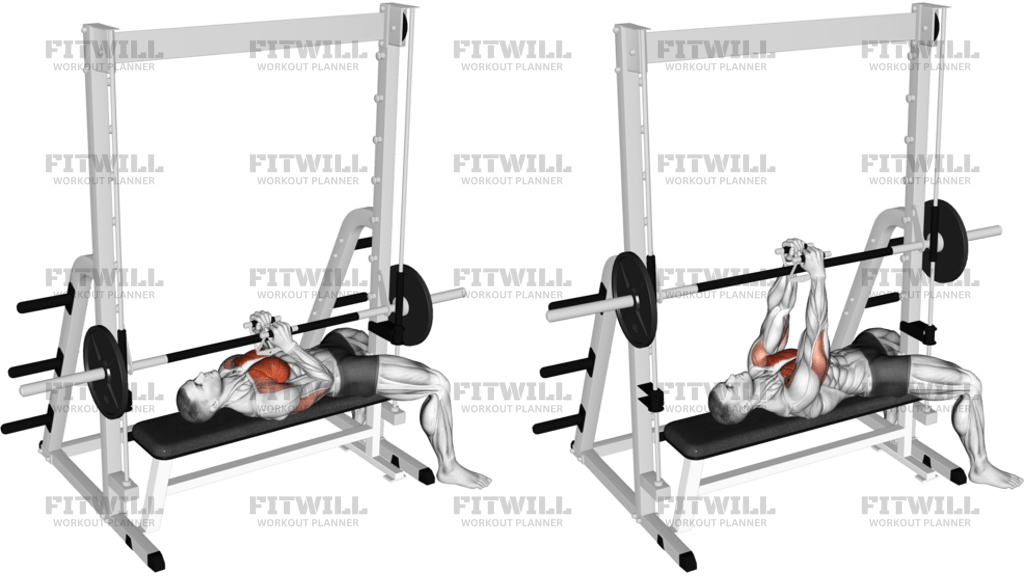
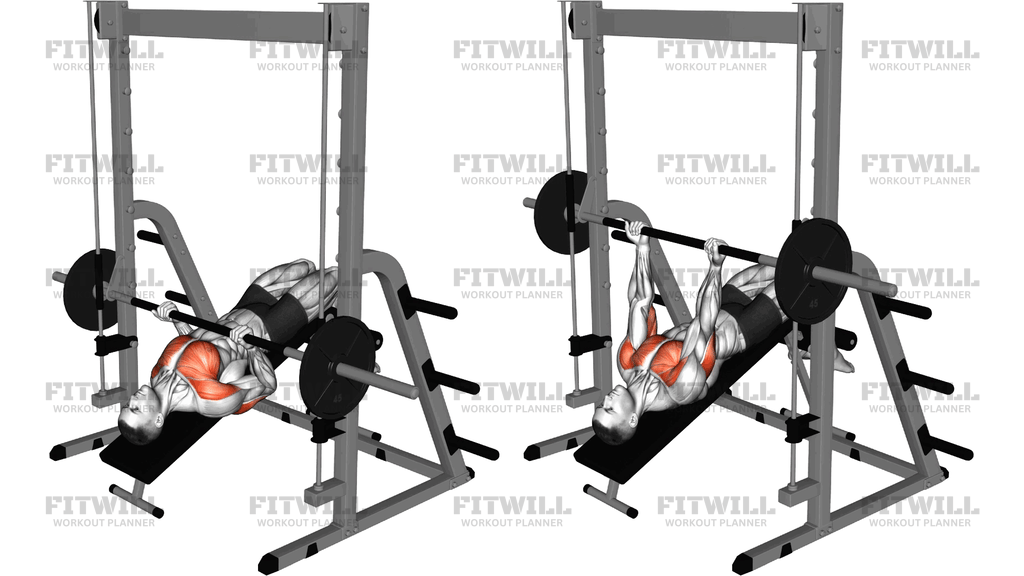
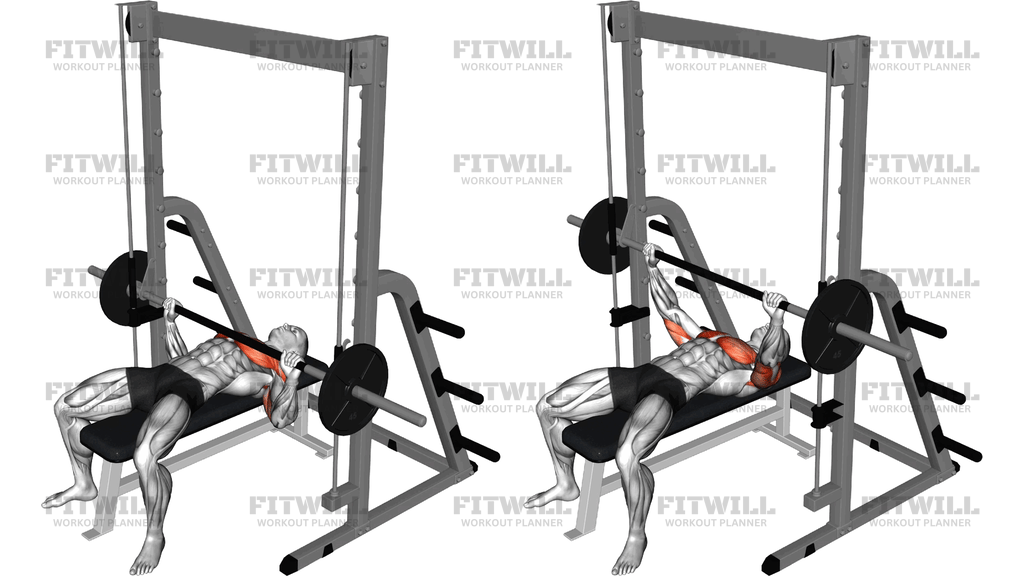
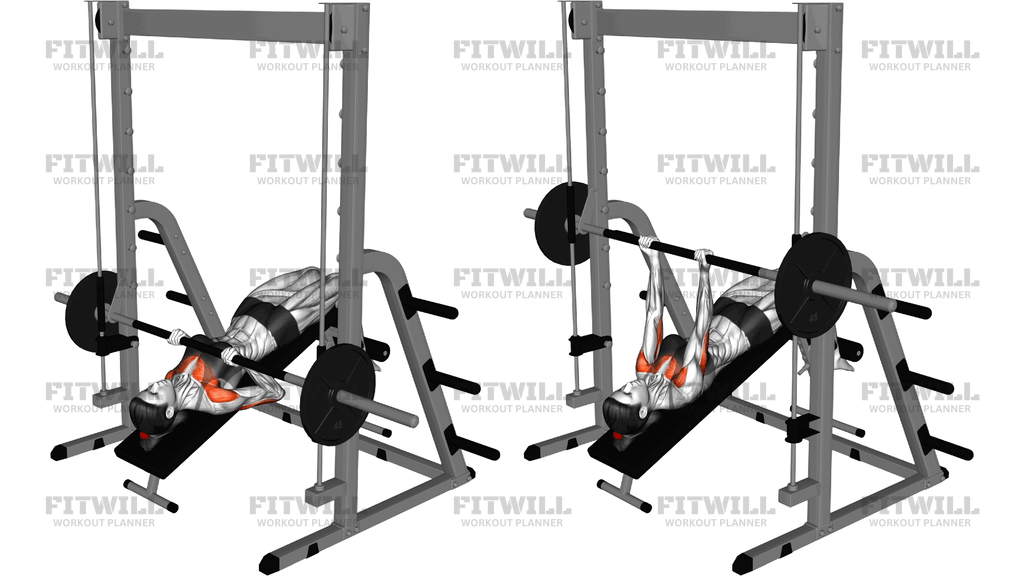
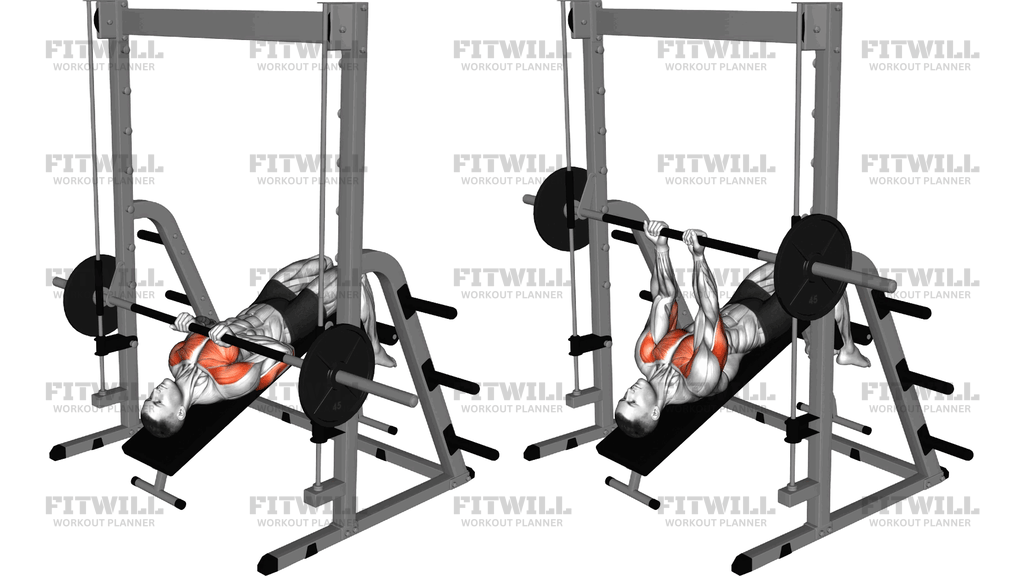
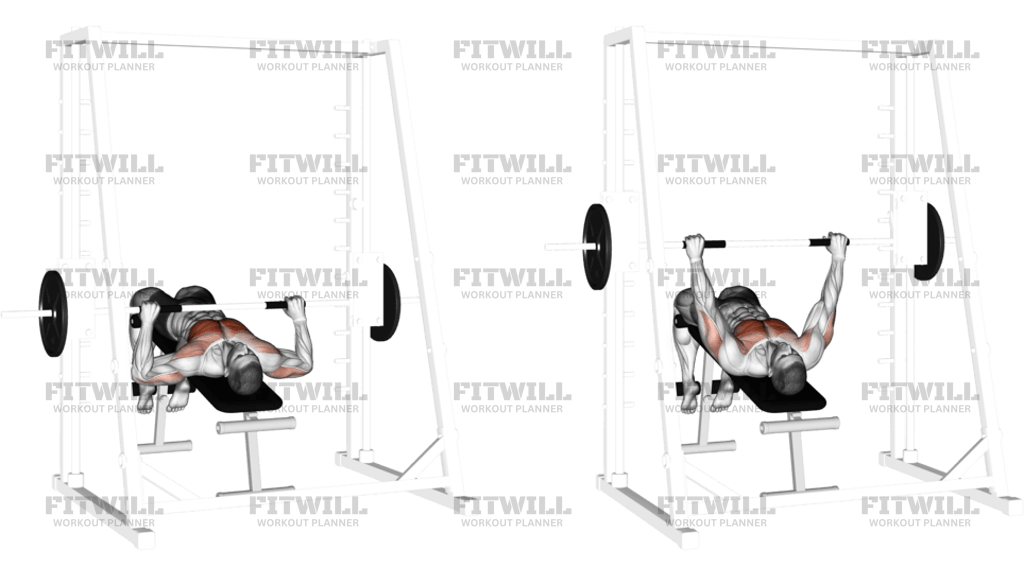
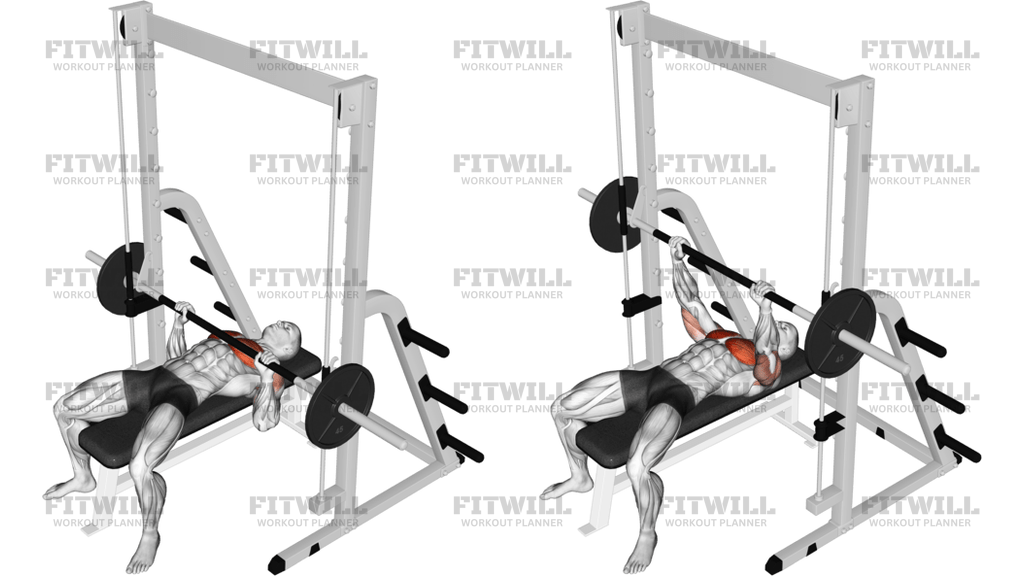
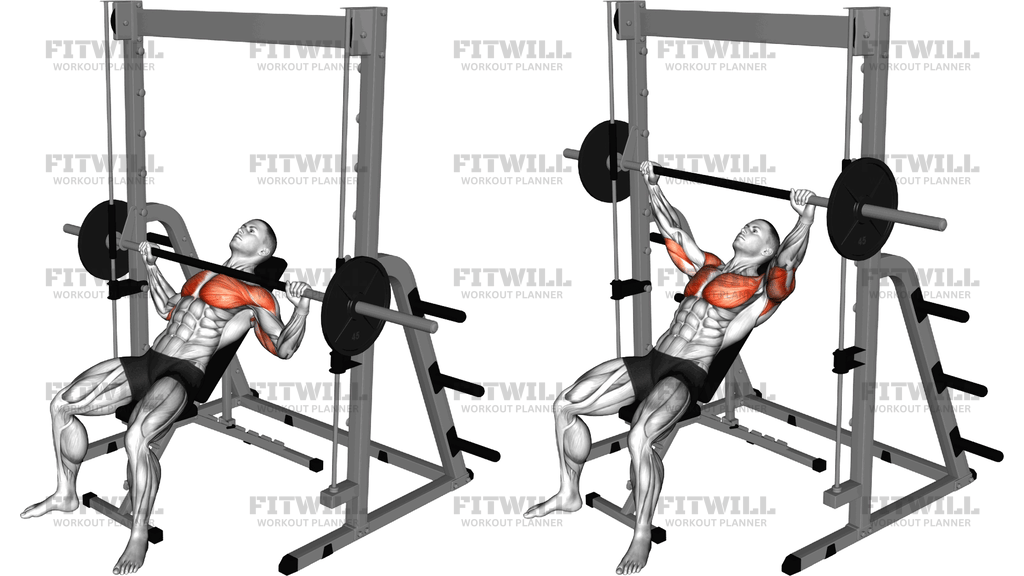
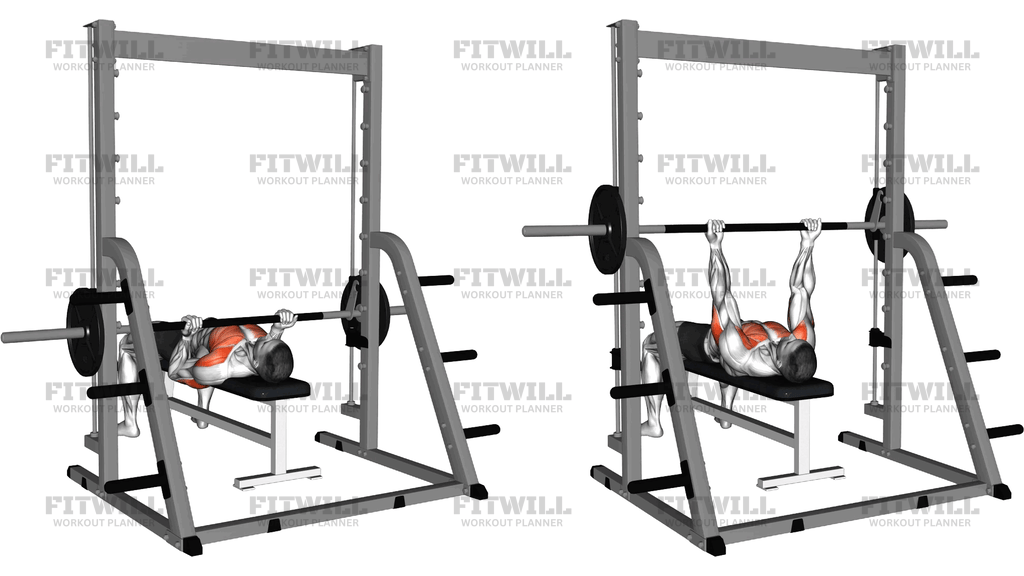
The image shows the lifter lying on a flat bench under the bar with the eyes set roughly beneath the bar path, feet planted, and the shoulder blades pinned back on the bench. That setup helps the reverse grip stay stacked over the wrists and elbows instead of drifting into an awkward angle. A good start position should feel stable before the first rep, not like you are chasing the bar to find a groove.
On each rep, lower the bar in a controlled line toward the lower chest or upper sternum, keeping the elbows tucked slightly instead of flaring hard to the sides. The reverse grip encourages a more tucked arm path, but the wrists still need to stay firm and straight. Press the bar back up along the Smith track without bouncing it off the chest, and finish with the elbows extended but not forcefully jammed into lockout.
This exercise is useful when you want a guided press that loads the chest with less balance demand than a free-weight bench press. It can be a practical accessory movement for chest size, pressing strength, or technique practice, especially if you want to focus on the bottom half of the rep and maintain a consistent path set by the machine. The fixed track also makes it easier to keep tension on the chest through the whole set if the bench is positioned correctly.
The main safety point is to respect the wrist and shoulder angles. If the grip is too wide, the wrists can bend back and the shoulders can feel pinched; if the bench is too far forward or backward, the bar may touch too high or too low on the torso. Use a load you can control for every rep, and stop the set if the reverse grip starts to feel unstable or painful.
Fitwill
Log Workouts, Track Progress & Build Strength.
Achieve more with Fitwill: explore over 9600 exercises with images and videos, access built-in and custom workouts, perfect for both gym and home sessions, and see real results.
Start your journey. Download today!




Instructions
- Set a flat bench centered under the Smith bar and lie back so your eyes are just under the bar path.
- Plant both feet firmly on the floor, squeeze your shoulder blades back and down, and keep your upper back pinned to the bench.
- Take a reverse grip with your palms facing you, hands about shoulder-width or slightly narrower, and stack the wrists over the bar.
- Unrack the bar and hold it over the lower chest with straight but not locked elbows.
- Lower the bar under control toward the lower chest or upper sternum while keeping the elbows tucked slightly.
- Pause briefly when the bar reaches the bottom position without bouncing it off the chest.
- Press the bar straight up along the Smith track until the elbows extend and the chest stays lifted.
- Keep your breath organized by inhaling on the way down and exhaling as you press up.
- Re-rack the bar only after the final rep is fully controlled and the bar is back over the hooks.
Tips & Tricks
- If your wrists bend backward, narrow the grip slightly and keep the knuckles stacked over the bar.
- Move the bench until the bar touches the lower chest or upper sternum; a poor bench position can turn this into a shoulder press.
- Keep the elbows only moderately tucked. If they flare hard, the reverse grip usually feels awkward and unstable.
- Lower the bar slowly for two to three seconds to keep tension on the chest instead of dropping into the bottom.
- Do not bounce the bar off the ribcage. A soft pause is safer and makes the press more repeatable.
- Stop the set if the shoulders feel pinched at the bottom. The reverse grip should feel controlled, not forced.
- Use a lighter load than you would on a standard Smith bench press; the hand position can reduce stability at first.
- Keep your feet planted and upper back tight so the fixed bar path does not slide you out of position.
- Pressing in a straight line matters more than chasing extra range. Match the bench setup to the machine track.
- If your grip starts to slip, end the set before the wrists collapse or the bar drifts toward the throat.
Frequently Asked Questions
What does Smith Reverse-Grip Press train most?
It mainly trains the chest, especially the pecs, with help from the front shoulders and triceps.
Why use a reverse grip on the Smith machine?
The palms-facing-you grip changes the pressing angle and can help some lifters feel more chest involvement while the Smith track keeps the path consistent.
Where should the bar touch on this press?
Aim for the lower chest or upper sternum, not the neck or high collarbone area.
How wide should my hands be?
Start around shoulder-width or slightly narrower. The grip should let your wrists stay stacked instead of bent back.
Do I need to arch my back like a powerlifting bench press?
No. Keep a natural chest-up posture with your shoulder blades retracted, but do not force an exaggerated arch.
Is this a beginner-friendly exercise?
Yes, if the load is light and the setup is stable. Beginners should practice the grip and bar path before adding weight.
What is the most common mistake on this movement?
The biggest issue is poor bench placement, which makes the bar touch too high or forces the shoulders into a bad angle.
Can I substitute another press if the reverse grip bothers my wrists?
Yes. A standard Smith bench press, dumbbell bench press, or machine chest press is usually a better choice if the wrists or shoulders dislike this grip.