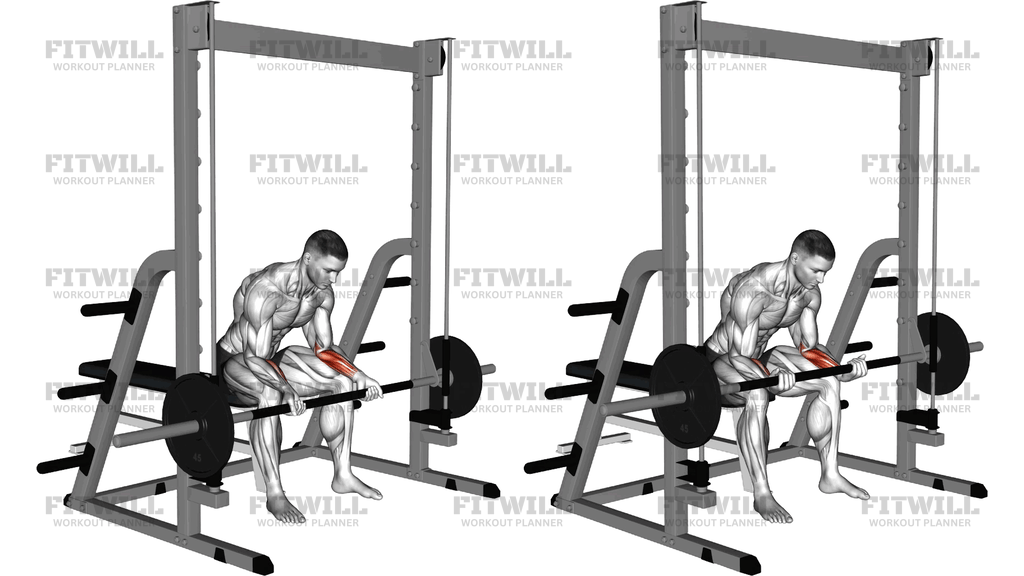
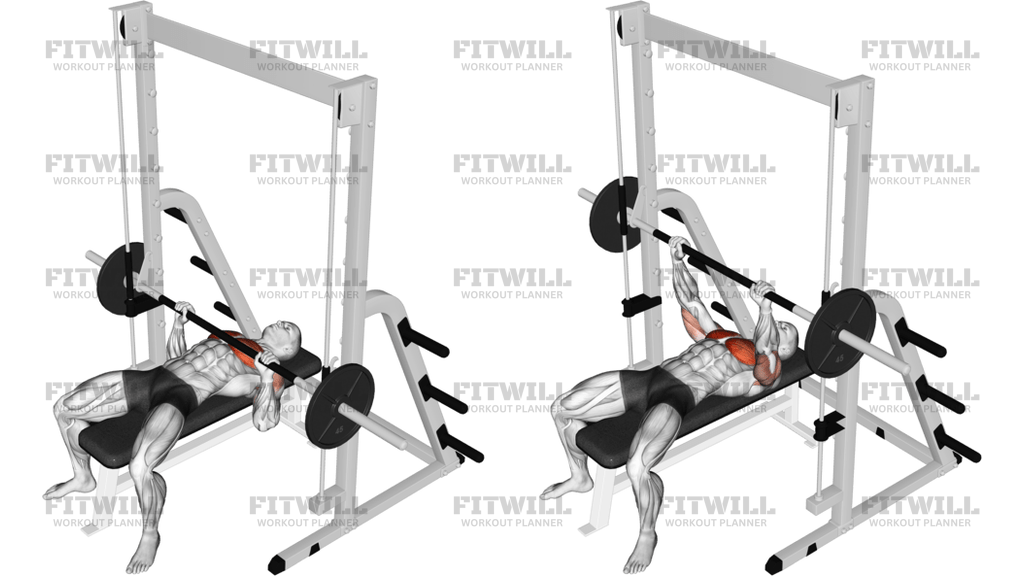
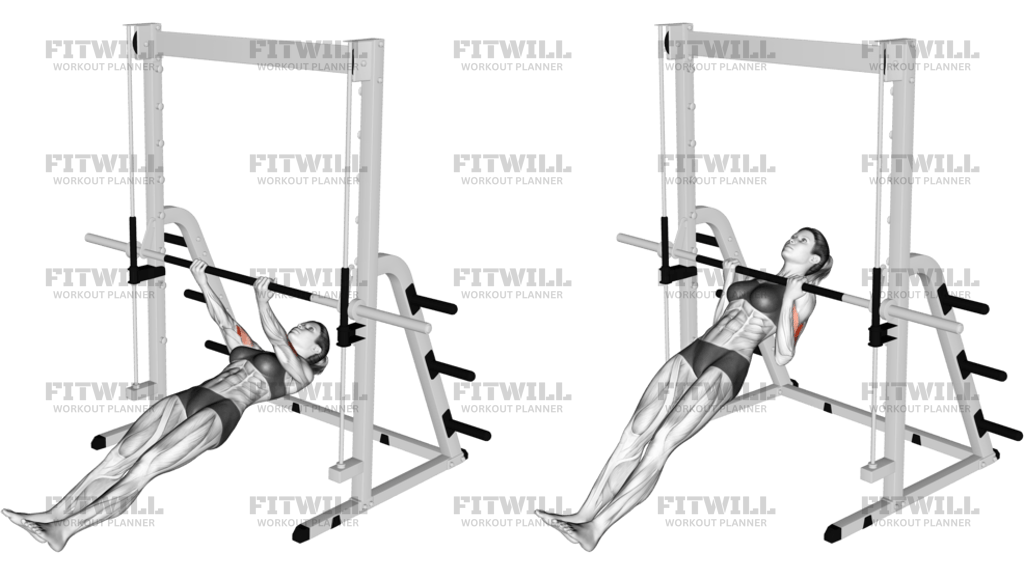
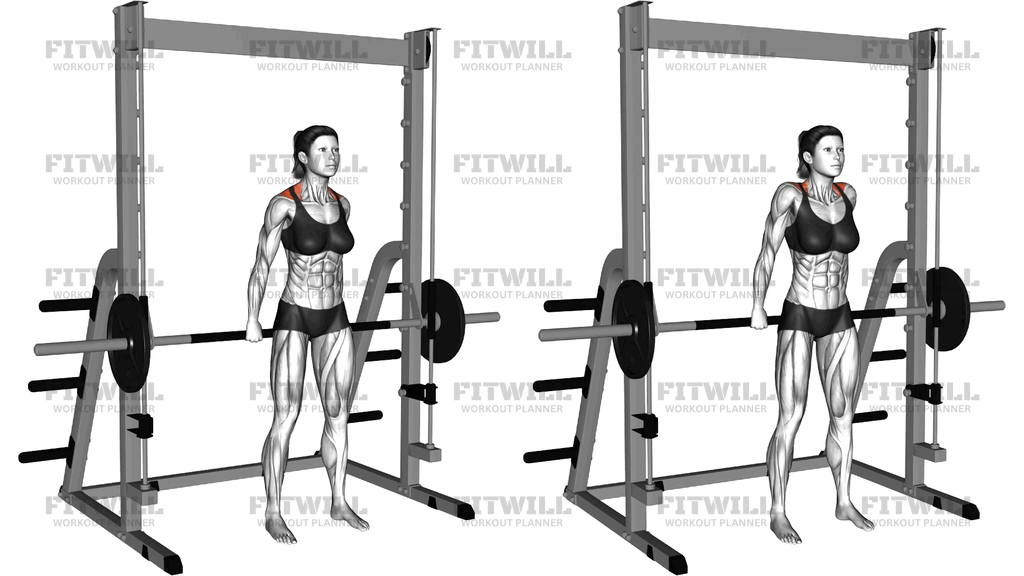
Smith Standing Back Wrist Curl
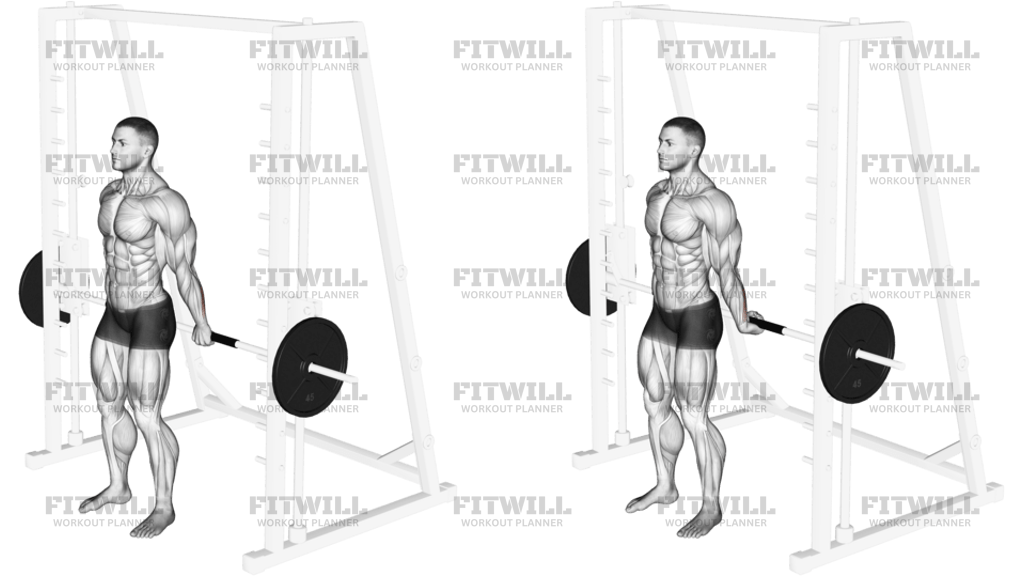
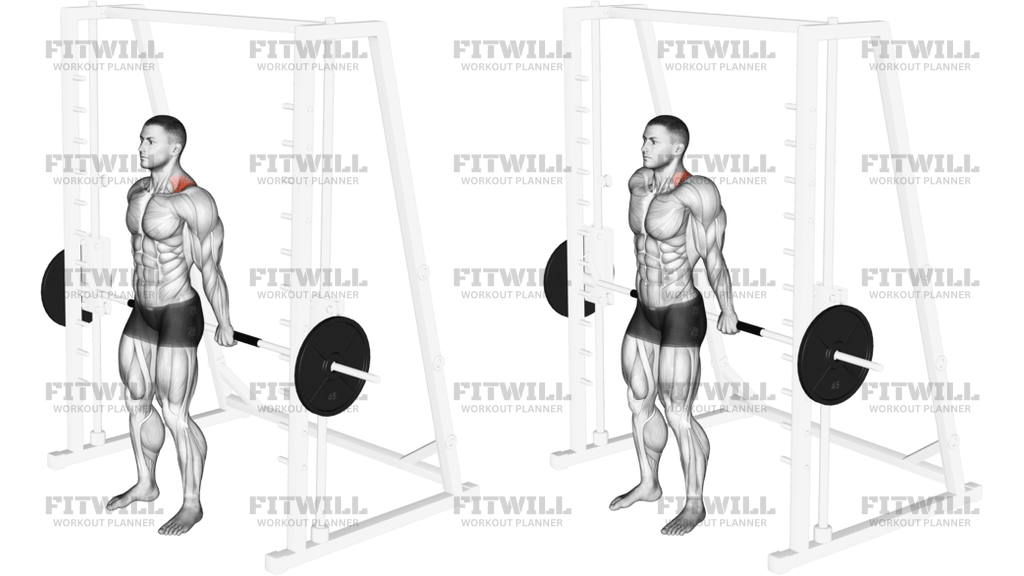
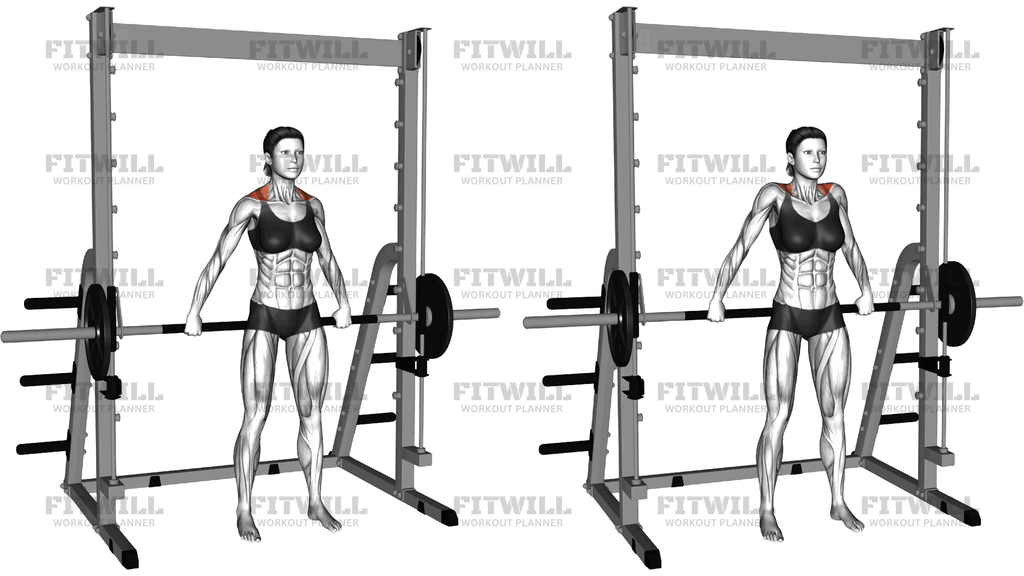
Smith Standing Back Wrist Curl is a behind-the-body forearm isolation exercise built around short, controlled wrist flexion. The Smith machine fixes the bar path, which makes it easier to keep the movement strict and focus on the wrists instead of balancing a free bar or swinging the torso.
The exercise mainly trains the wrist flexors in the forearms, with the grip, brachioradialis, biceps, and shoulders helping only to hold the position steady. Because the bar stays guided, both sides can work evenly and you can load the forearms without turning the set into a full-body lift.
A clean rep starts with the bar set behind the hips or upper thighs, an overhand grip, and the elbows held close to the sides. The bar should sit low in the fingers so the wrists can flex through a small but deliberate arc. From there, curl the wrists upward to raise the bar a few inches, then lower it slowly back into the stretch.
This movement is useful for forearm size, wrist control, and grip endurance, especially after back, arm, or pulling sessions. Keep the load modest, move only through the range you can control, and avoid leaning back, shrugging, or bouncing the bar. If the wrists or elbows start to feel irritated, reduce the load or stop the set before form breaks down.
[ Workout Log & Planner ]
Put your next workout in Fitwill
Keep your plan and training log ready when you are.


Instructions
- Set the Smith bar at about mid-thigh to upper-thigh height, then stand with your feet hip-width apart and face away from the machine so the bar sits behind your glutes.
- Reach behind your body and take an overhand grip on the bar, letting it rest low in the fingers so the wrists can move freely.
- Step forward just enough to unlock the bar and clear the hooks, keeping the bar close to the back of your legs.
- Stand tall with your ribs down, chest open, and elbows tucked close to your sides.
- Start with the wrists extended and the bar hanging in the fingers behind your body.
- Curl the wrists upward to lift the bar a few inches while keeping the forearms still and the torso quiet.
- Exhale as you lift, pause briefly at the top, then inhale as you lower the bar under control.
- Return the bar to the start with a slow stretch through the wrists, then reset before the next rep.
- When the set is finished, guide the bar back to the hooks and re-rack it safely.
Tips & Tricks
- Choose a lighter load than you would use for a standing curl; the wrists should move the bar, not the shoulders or hips.
- Keep the elbows fixed beside the torso so the set stays a wrist exercise instead of becoming a rear-arm swing.
- Let the bar roll deeper into the fingers at the bottom to get a cleaner stretch through the forearm flexors.
- Use a short, smooth range of motion; a few inches of movement is normal for this exercise.
- If the bar presses into your glutes or hamstrings, step a little farther forward or lower the bar one notch.
- Avoid leaning back or hinging at the hips to cheat the bar upward.
- Keep the neck relaxed and the shoulders down so the upper body does not take over the rep.
- Stop the set if the wrists or elbows start to ache sharply, because this movement should feel like targeted forearm work, not joint strain.
Frequently Asked Questions
What does Smith Standing Back Wrist Curl train most?
It mainly targets the wrist flexors in the forearms, with the grip and elbow flexors helping to stabilize the bar.
Why use the Smith machine for a behind-the-back wrist curl?
The guided bar path makes it easier to keep the reps strict and symmetrical, which is useful for an isolation movement like this.
Where should the bar sit during the set?
The bar should stay behind your hips or upper thighs, close enough that the wrists can flex without you leaning or swinging.
How much range of motion should I use?
Only the range you can control; this is usually a short arc, and forcing more motion usually turns the rep into body English.
Should my elbows move?
No. Keep the elbows tucked close to the sides so the wrists do the work and the upper arms stay quiet.
Can I load this exercise heavily?
Usually not. This is a small-joint movement, so light to moderate loads with slow control are usually more productive.
What if I feel it in my shoulders or lower back?
That usually means you are leaning, shrugging, or setting the bar at the wrong height. Adjust your stance and keep the torso stacked.
Is this a good finisher after back or arm training?
Yes. It fits well at the end of a session because it trains forearm endurance without needing much total-body effort.