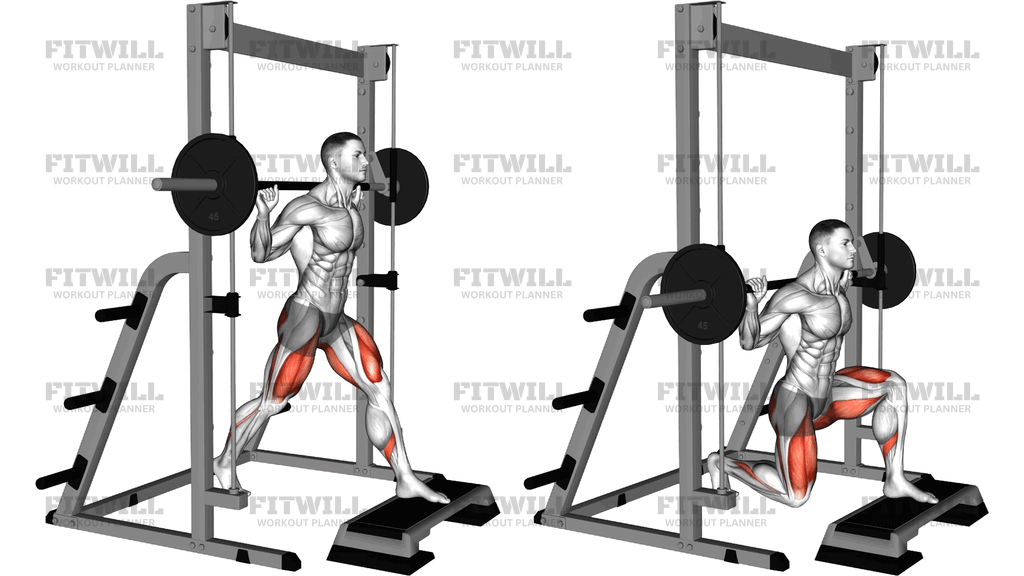
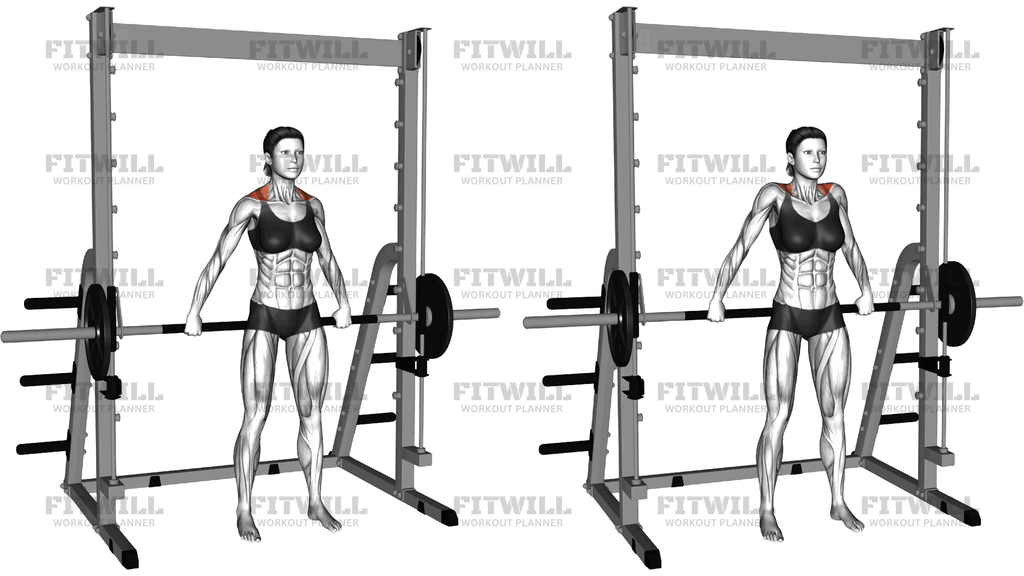
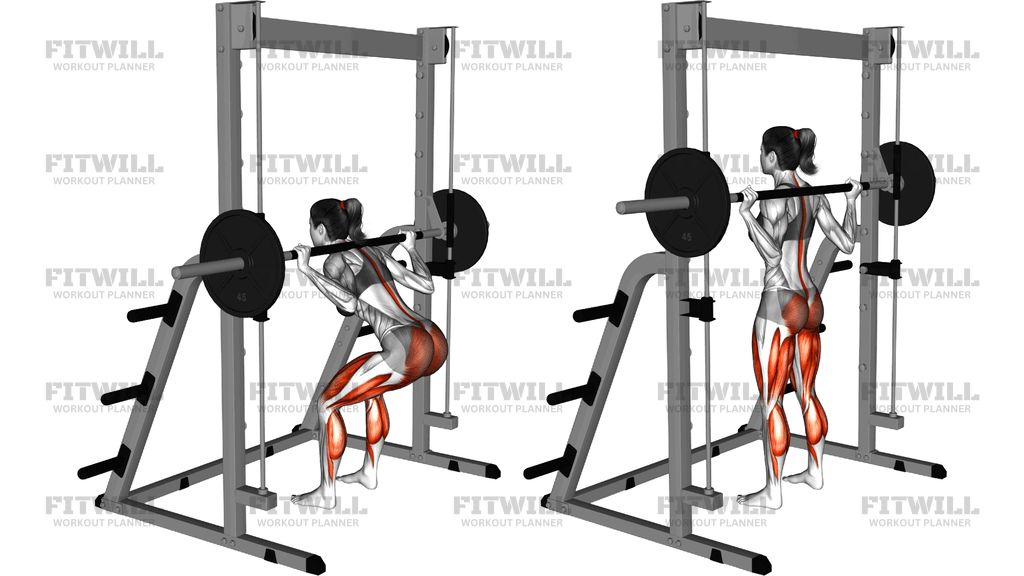
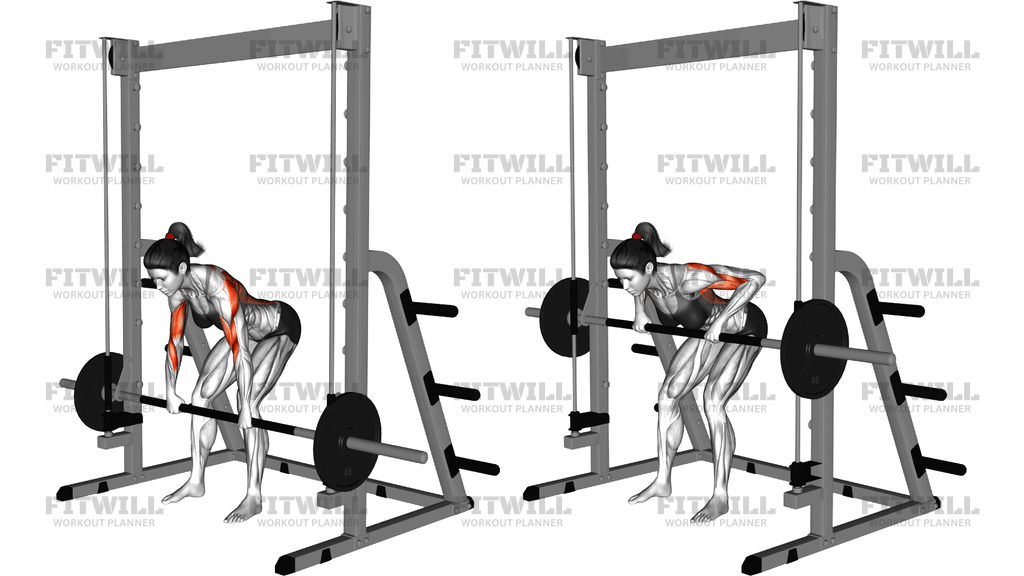
Smith One-Arm Row
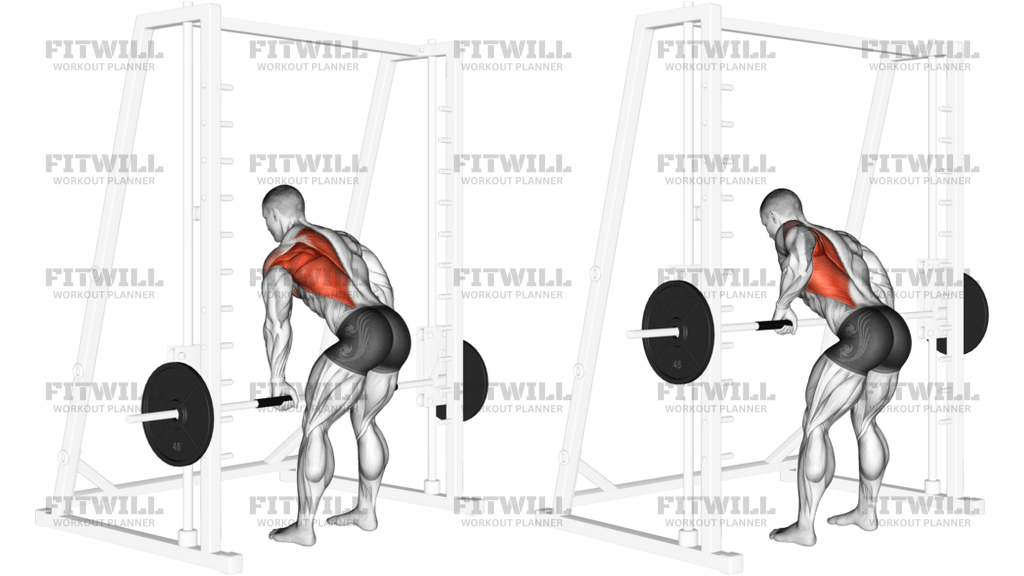
Smith One-Arm Row is a guided unilateral pulling exercise for the upper back, lats, traps, and biceps. The Smith machine gives you a fixed bar path, which makes it easier to stay strict, compare one side to the other, and focus on clean scapular movement instead of balancing a free barbell. That makes the exercise especially useful when you want a row that is easy to load but still demands control.
The main job of Smith One-Arm Row is to train strong horizontal pulling while keeping the torso steady in a hinged position. Because one arm works at a time, you can notice side-to-side differences in strength, range of motion, and shoulder control. The working side should pull smoothly from the hanging start into a strong squeeze near the hip or lower ribs, while the free side helps you stay braced and level.
Setup matters a lot on this movement. A stable stance, a solid hip hinge, and a neutral spine let the shoulder move freely without the lower back taking over. The bar should start low enough to challenge the top of the pull, but not so low that you lose position or have to round forward to reach it. Keeping the ribcage down and the neck long will help you row with the back instead of jerking the weight with body English.
During each rep, let the shoulder blade reach slightly at the bottom, then drive the elbow back and slightly in as the bar travels toward the hip or lower ribs. That path usually keeps the upper back and lats working together and reduces the temptation to shrug. The lowering phase should be deliberate, because the return is where you keep tension, control the shoulder, and avoid bouncing the plate or letting the torso twist open.
Smith One-Arm Row fits well in upper-body strength blocks, back-focused sessions, and accessory work for athletes who need stronger pulling mechanics. It is also a practical option if you want a row that does not require the coordination of a free-weight version. Treat it as a strict strength exercise: load it enough to challenge the back, but keep every repetition smooth, level, and repeatable.
[ Workout Log & Planner ]
Put your next workout in Fitwill
Keep your plan and training log ready when you are.


Instructions
- Set the Smith bar around mid-shin to knee height, then stand sideways to it with your feet staggered and your torso hinged forward.
- Grip the bar with one hand using a neutral wrist, and place your free hand on your thigh or hip for balance.
- Keep your chest angled toward the floor, your back flat, and your working arm hanging straight below your shoulder before each rep starts.
- Brace your midsection and keep your hips square so the torso does not twist as you row.
- Pull the bar toward your hip or lower ribs by driving your elbow back and slightly in.
- Squeeze your shoulder blade toward your spine at the top without shrugging your shoulder up.
- Lower the bar slowly until your arm is nearly straight and you feel a controlled stretch through the back.
- Keep your breathing steady, then finish the set by lowering the bar fully and re-racking it before switching sides.
Tips & Tricks
- Set the bar high enough that the plates clear the floor, but low enough that you still get a real stretch at the bottom.
- Keep the same hip-hinge angle through the whole set; if your chest keeps rising, the load is too heavy.
- Think about driving the elbow, not pulling with the hand, so the row finishes with the back instead of the biceps.
- Let the shoulder reach slightly at the bottom, but do not round the low back to chase extra range.
- Pull toward the hip for more lat emphasis or slightly higher toward the lower ribs for more upper-back bias.
- Use a slower lowering phase than the pull up if you want to keep tension on the working side longer.
- If the torso starts rotating open, shorten the range and lighten the load before the set gets sloppy.
- A staggered stance usually feels more stable than standing square because it helps resist twisting.
- Stop the set when you start shrugging the working shoulder or bouncing the Smith bar off the bottom.
Frequently Asked Questions
What muscles does Smith One-Arm Row work most?
It mainly trains the upper back and traps, with strong help from the lats, rear delts, and biceps.
Why use a Smith machine for a one-arm row?
The fixed bar path makes it easier to stay strict and focus on the pulling pattern without worrying about balance or bar drift.
Where should the bar travel on Smith One-Arm Row?
Most lifters do best pulling toward the hip or lower ribs, depending on whether they want more lat or upper-back emphasis.
Can beginners do Smith One-Arm Row?
Yes, if they start light and keep the torso locked in the hinge. The fixed path is often easier to learn than a free-weight row.
Should my torso move during Smith One-Arm Row?
A small amount of body shift is normal, but the torso should stay mostly fixed. If you have to swing to finish the rep, the load is too heavy.
How low should I lower the bar?
Lower it until the arm is nearly straight and the shoulder can reach without rounding the low back or losing position.
Is this exercise more for lats or traps?
It can hit both. Pulling closer to the hip usually shifts more work to the lats, while a slightly higher row path emphasizes the upper back and traps.
What is the biggest mistake to avoid?
Shrugging the working shoulder and twisting the torso to cheat the bar upward are the most common errors.