Split Squat
Split Squat is a bodyweight single-leg strength exercise that builds the legs and hips without needing momentum or a long running start. The fixed staggered stance lets you load one side at a time, which makes this movement useful for improving unilateral strength, balance, pelvic control, and the ability to keep the trunk steady while the legs do the work.
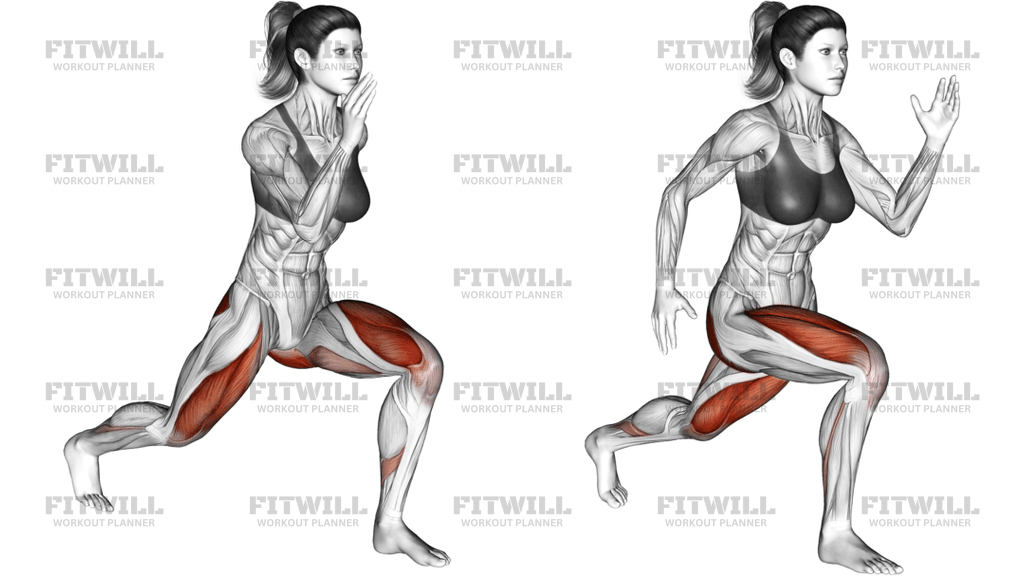
In the image, the front foot stays flat, the rear foot remains on the toes, and the torso stays tall while the body lowers straight down between the two feet. That upright posture shifts a lot of the work to the front leg while still asking the rear leg to help stabilize the pelvis and guide the descent. The main muscles working are the glutes, with the quads, hamstrings, and core contributing to control and drive.
Setup matters more here than in many other lower-body exercises. A stance that is too short crowds the knees and makes the repetition feel cramped, while a stance that is too long turns the movement into a balance drill instead of a clean split squat. The goal is to place the feet far enough apart that you can lower under control, keep the front heel planted, and let the front knee travel naturally as the hips drop.
During each rep, lower with control until the rear knee approaches the floor or you reach your available range without twisting the pelvis. Then drive up through the front foot, keeping pressure through the heel and midfoot, and finish with the hips and ribs stacked instead of leaning back. The arms in the image are raised for balance, but you can keep them wherever helps you stay stable and upright.
This exercise is a good fit for warmups, accessory blocks, bodyweight strength work, and unilateral leg training when you want quality reps rather than heavy loading. It is also a practical option for beginners because the movement is easy to scale: shorten the range, hold onto a support, or slow the tempo if balance is the limiting factor. Keep the motion smooth, breathe with each rep, and stop short of any sharp knee, hip, or back discomfort.
[ Workout Log & Planner ]
Put your next workout in Fitwill
Keep your plan and training log ready when you are.


Instructions
- Stand in a staggered split stance with your front foot flat, your back foot on the ball of the foot, and your feet far enough apart that you can lower straight down without collapsing the stance.
- Keep your torso tall, square your hips forward, and raise your arms or hold them at chest height if that helps you balance.
- Brace your midsection before you start the first rep so your ribs stay stacked over your pelvis.
- Lower straight down by bending both knees, letting the front knee track naturally over the toes while the back knee moves toward the floor.
- Keep the front heel down and the front foot tripod engaged so the leg stays stable from heel to big toe.
- Descend until the rear knee is just above the floor or until you reach your comfortable range without twisting or bouncing.
- Drive up through the front leg and return to the start under control, finishing with the hips and shoulders level.
- Exhale as you stand, then reset your stance before the next repetition.
- Repeat for the planned number of reps, then switch sides if you are training one leg at a time.
Tips & Tricks
- If the front heel lifts, move the feet a little farther apart or shorten the descent until you can keep pressure through the heel and midfoot.
- A small forward lean is fine, but if your chest collapses toward the front thigh, slow the lowering phase and keep the ribs stacked over the pelvis.
- Think about lowering the rear knee straight down instead of reaching it forward, which helps keep the pelvis square and the stance organized.
- Let the front knee travel naturally over the toes if the heel stays down and the knee tracks in line with the second or third toe.
- Use the arms for balance instead of swinging them, especially when fatigue makes the torso wobble.
- Pause briefly at the bottom if you tend to bounce out of the split to keep tension on the front leg.
- If balance is the limiting factor, lightly hold a wall, rack, or pole so the legs can do the work instead of the ankles.
- Choose a stance length that lets the front shin and back knee move comfortably; too short feels jammed, too long shifts the exercise toward a stretch instead of a squat pattern.
- Stop the set when the front knee caves inward or the pelvis starts rotating because those are the first signs that the working leg is losing control.
Frequently Asked Questions
What muscles does Split Squat work most?
It primarily trains the glutes and quads, with the hamstrings and core helping keep the split stance stable.
Why are the arms raised in the image?
Raised arms help with balance and keep the torso tall, but they are not required if another arm position feels more stable.
How far apart should my feet be in a split squat?
Place the feet far enough apart that you can lower without feeling cramped, but not so far that the movement turns into a stretch instead of a controlled squat.
Should my front knee go past my toes?
Yes, it can travel forward naturally if the front heel stays down and the knee tracks in line with the toes.
How low should I lower on each rep?
Lower until the rear knee is close to the floor or until you reach your pain-free range without losing a square pelvis.
What is the biggest form mistake to avoid?
The most common issue is letting the torso tip forward and the front knee cave inward instead of keeping the stance controlled.
Is Split Squat good for beginners?
Yes, it is beginner-friendly because you can use body weight, shorten the range, or hold onto support while learning the pattern.
How can I make Split Squat harder?
You can slow the lowering phase, add a pause at the bottom, increase range, or hold dumbbells once bodyweight reps are clean.