Standing Hip Abduction
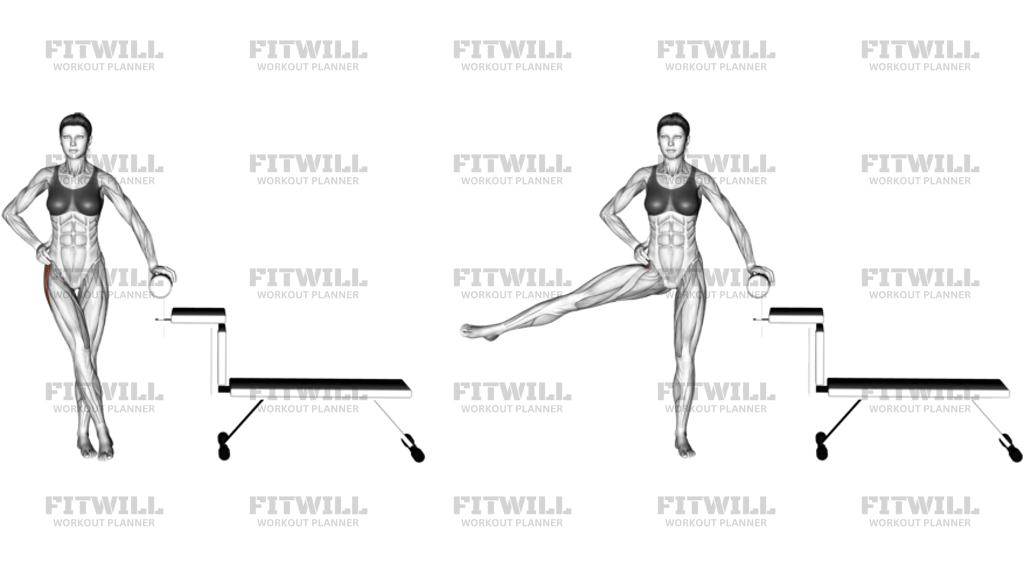
Standing Hip Abduction is a bodyweight standing hip exercise that trains the outer hip and glute-driven control while one hand lightly holds a bench or other sturdy support. It is a simple-looking movement, but the standing position makes it useful for balance, pelvic control, and teaching the hip to move cleanly without the torso taking over.
The main job is to move the free leg out to the side while the standing leg stays planted and the pelvis stays level. That makes this exercise valuable for the glute medius and the smaller stabilizers around the hip, which help keep the knees, pelvis, and trunk organized during walking, running, single-leg training, and change-of-direction work. The support hand is only there to steady you; if you are leaning on it hard, the set is usually too difficult or too fast.
Setup matters more than range. Stand sideways next to the bench or rail, keep the standing foot flat, and set the ribs and pelvis in a neutral stack before the leg moves. A small, controlled arc is better than kicking the leg high. The working leg should travel from the hip, not from a swing of the low back or a big shift of the body. Many lifters do best with the toes mostly forward or slightly down, which helps keep the emphasis on hip abduction instead of turning the rep into rotation.
This exercise fits well as a warm-up, accessory movement, rehab-style control drill, or low-load glute finisher. It is beginner-friendly because body weight is enough to learn the pattern, but the set should stop when the torso starts swaying or the standing hip starts to collapse. If you want more challenge, increase time under tension, add a pause at the top, or use a light band or ankle weight while keeping the same clean body position.
Common mistakes include leaning away from the support, hiking the hip, turning the toes out too far, or swinging the leg higher than the pelvis can control. Keep the standing knee softly unlocked, breathe steadily, and lower the leg under control on every rep so the outer hip does the work instead of momentum.
Fitwill
Log Workouts, Track Progress & Build Strength.
Achieve more with Fitwill: explore over 9600 exercises with images and videos, access built-in and custom workouts, perfect for both gym and home sessions, and see real results.
Start your journey. Download today!




Instructions
- Stand sideways next to a bench, rail, or other sturdy support and rest the inside hand on top of it for light balance.
- Shift all of your weight onto the standing leg, keep that foot flat, and square your hips and chest forward.
- Let the working leg start slightly in front of or just across the standing leg if that feels most stable, with the toes mostly forward.
- Keep the standing knee softly unlocked, stack your ribs over your pelvis, and brace before the leg moves.
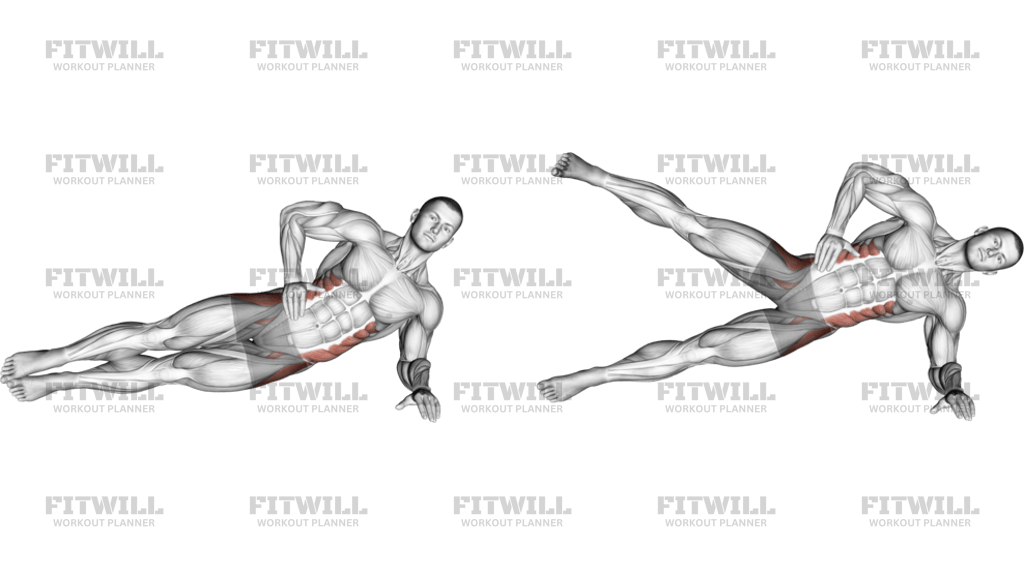
- Lift the free leg out to the side in a smooth arc from the hip without leaning the torso or twisting the pelvis.
- Raise the leg only until the standing hip starts to hike or the trunk begins to sway.
- Pause briefly at the top, then lower the leg back along the same path under control.
- Reset your balance between reps, exhale as the leg lifts, inhale as it lowers, and repeat for the planned reps.
- If the support hand starts bearing most of your weight, shorten the range or slow the tempo before continuing.
Tips & Tricks
- Keep the support hand light; if you are pressing into the bench to stay upright, the working leg is probably not controlling the movement.
- A smaller arc with a level pelvis is more useful than a big leg lift that twists the torso.
- Let the standing knee stay soft instead of locked out so the hip can stabilize without the whole body rocking.
- Keep the toes mostly forward or slightly down to avoid turning the rep into hip rotation.
- Move slowly on the way down so the outer hip has to resist the return instead of letting the leg drop.
- If you feel this in the low back, shorten the range and keep the ribs stacked over the pelvis.
- The standing foot should stay quiet on the floor; arch collapse or heel popping usually means the set is too aggressive.
- Add a pause at the top before adding load if you want more challenge without losing the pattern.
- Stop the set when balance becomes the limiter rather than the outer hip.
Frequently Asked Questions
What muscle does Standing Hip Abduction target most?
It mainly targets the outer hip muscles, especially the glutes, with the standing leg and trunk helping you stay balanced.
Why is there a hand on the bench or support?
The support is there to help you balance, not to hold your body up. If you are leaning hard on it, the set is usually too fast or too hard.
Should my working foot point forward or turn out?
Mostly forward or slightly down is usually best. Turning the toes out too far often reduces the hip-abduction focus and adds unwanted rotation.
How high should I lift the leg?
Only as high as you can keep the pelvis level and the torso still. A smaller controlled lift is better than a high swing.
Is it okay if the working leg starts slightly in front of the standing leg?
Yes. A small crossover start can help you organize the hip before moving out to the side, as long as you keep the pelvis square.
What should I feel in the standing leg?
You should feel the standing hip stabilizing you, not the knee collapsing inward or the arch folding. The standing foot should stay planted and quiet.
Can beginners perform this exercise?
Yes. It is usually beginner-friendly because bodyweight and a support point make the hip pattern easy to learn.
How can I make Standing Hip Abduction harder?
Slow the lowering, add a pause at the top, or use a light band or ankle weight while keeping the same upright body position.