Step-Up
Step-Up is a bodyweight lower-body exercise built around a simple but demanding task: place one foot on a bench or box, stand up onto it without bouncing, then lower yourself back down under control. It looks basic, but the setup changes how much work the glutes, quads, hamstrings, and core have to do, especially if the step is high enough to challenge hip extension and balance. The movement is useful when you want unilateral leg strength without loading the spine with external weight.
The main training effect comes from the working leg that lands on the platform and drives the body upward. That leg has to push through the heel and midfoot while the hip and knee extend together, while the other leg stays quiet instead of kicking off the floor. In anatomy terms, the primary driver is the Gluteus maximus, with help from the quadriceps, biceps femoris, rectus abdominis, and erector spinae. If the torso leans forward, the hips usually take more of the load; if the torso stays tall, the quads and glutes share the work more evenly.
Setup matters because a sloppy first step turns the exercise into a hop. Use a stable bench or step that does not move, place the whole foot flat on the platform, and keep the standing knee tracking over the toes. Before you rise, brace lightly through the trunk and keep the chest stacked over the hips so you can drive straight up instead of shifting sideways. The image shows a controlled, upright finish on the platform, which is the position you want to own before coming back down.
On the way up, press the platform foot into the bench and bring the body to full standing without pushing off hard from the floor leg. Finish with the hips fully extended, then pause for a moment so the top position is clean rather than rushed. On the way down, step back to the floor with control and reset your balance before the next rep. Breathing should stay steady: inhale or brace before the drive, then exhale as you stand tall.
Step-Up is a good choice for lower-body accessory work, warmups, home training, and conditioning blocks because it trains leg strength while also exposing balance differences from side to side. It also teaches useful mechanics for climbing, hiking, jumping, and general single-leg control. Keep the step height realistic: too high and the pelvis will tilt or the lower back will take over; too low and the movement loses the hip challenge that makes Step-Up worthwhile. Use clean reps and stop the set when you need to push off, collapse the knee inward, or lose a smooth descent.
[ Workout Log & Planner ]
Put your next workout in Fitwill
Keep your plan and training log ready when you are.


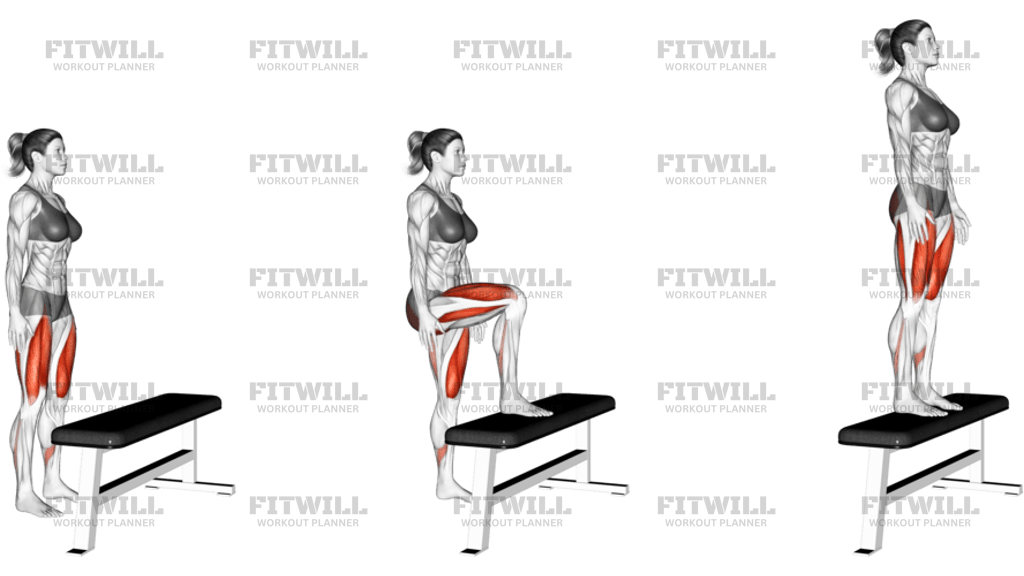
Instructions
- Stand facing a stable bench or step and place one whole foot flat on the platform, with the other foot on the floor close behind you.
- Keep your torso tall, your chest stacked over your hips, and your working knee pointing in the same direction as your toes.
- Lightly brace your trunk before you drive, and keep your hands relaxed at your sides or lightly counterbalanced if needed.
- Press through the heel and midfoot of the foot on the bench to stand up without kicking off hard from the floor leg.
- Bring the trailing leg up only after the working leg has lifted you; finish with both hips extended and the standing leg straight.
- Pause briefly at the top with full foot contact on the platform so the repetition ends in a stable standing position.
- Step back down under control, placing the same foot back to the floor before the other leg resets.
- Reset your balance, inhale, and repeat for the planned number of repetitions before switching sides if you are alternating legs.
Tips & Tricks
- Use a bench height that lets you stand up without rocking your torso or pushing off aggressively from the floor foot.
- Keep the entire working foot on the platform; a hanging heel makes balance worse and reduces power through the glute.
- Think about driving the knee up and the hip through together instead of reaching forward with the chest.
- If your knee caves inward on the way up, lower the step height or slow the tempo until the leg tracks cleanly.
- Avoid bouncing off the back foot; the floor leg should help you balance, not start the rep.
- A short pause at the top makes Step-Up much stricter and exposes whether you really own the standing position.
- Descend the same way you climbed: controlled and quiet, with no drop onto the floor.
- If your lower back takes over, shorten the range or choose a lower platform so the hips can finish the rep instead of the spine.
Frequently Asked Questions
What muscles does Step-Up work most?
Step-Up mainly trains the glutes and quads, with the hamstrings and core helping you stay stable as you stand on the bench.
Is Step-Up good for beginners?
Yes, as long as the bench is low enough that you can step up without jumping or twisting. Start with slow reps and focus on balance before adding speed or load.
How high should the bench be for Step-Up?
Use a height that keeps your working foot flat and lets you stand without your hips folding forward. A lower step is usually better than a high one if your knee or lower back starts compensating.
Should I push off the floor leg during Step-Up?
No heavy push-off should be needed. The foot on the bench should do the work; the floor leg is only there to balance and help you reset between reps.
What is the biggest form mistake in Step-Up?
The most common mistake is letting the knee cave inward or bouncing up with momentum. Keep the knee aligned with the toes and stand up smoothly.
Do I need to alternate legs every rep?
You can alternate legs or complete all reps on one side first. Alternating can be useful for conditioning, while same-side sets make it easier to focus on strength and balance.
What should I do if I feel this more in my lower back than my legs?
Lower the step and keep your torso more upright. If the back still takes over, the platform is probably too high or you are leaning too far forward.
Can I add weight to Step-Up later?
Yes. Once bodyweight reps are smooth, you can hold dumbbells or use a loaded vest, but only if you can still keep the bench foot flat and the descent quiet.