Suspended Abdominal Fallout
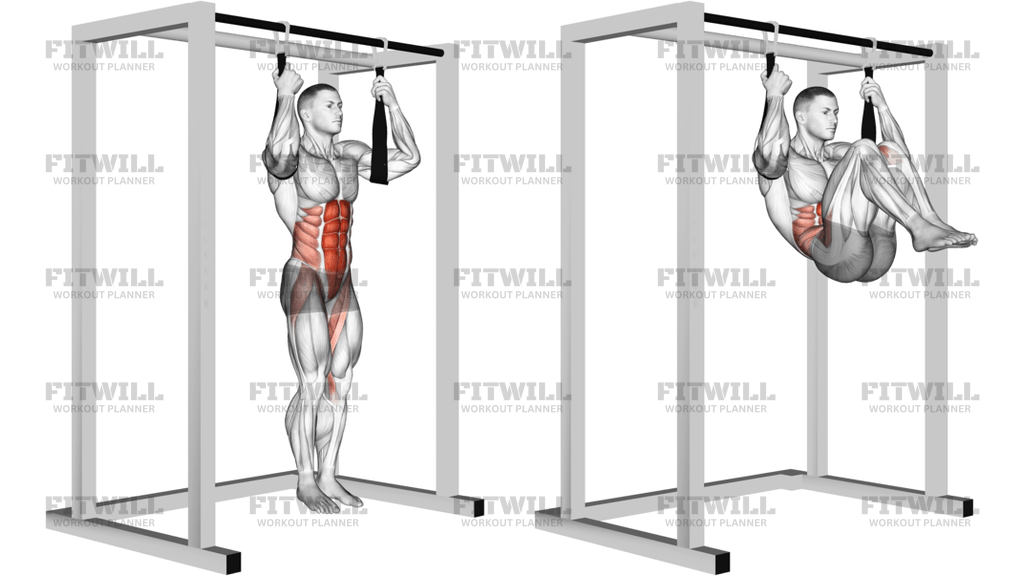
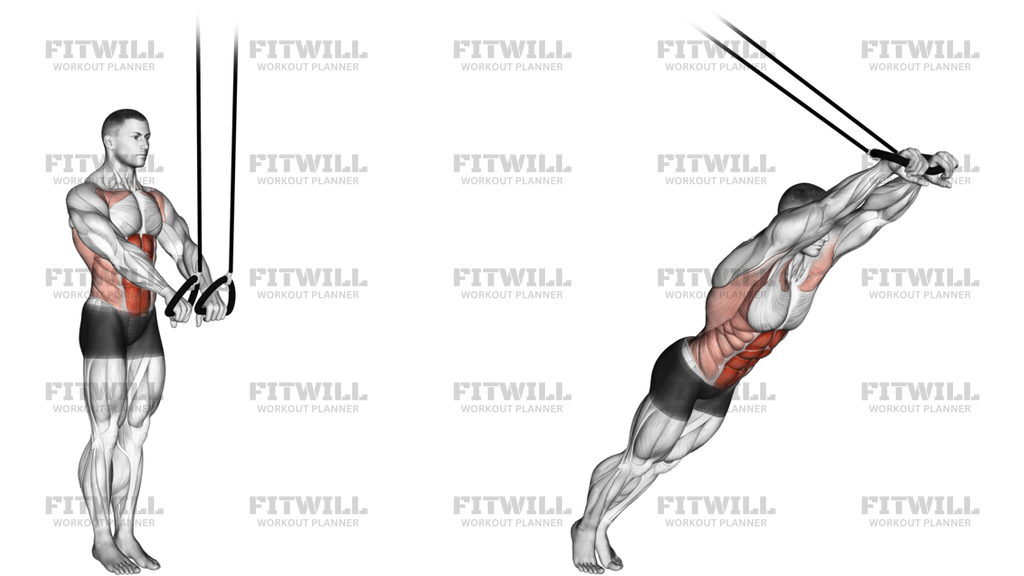
Suspended Abdominal Fallout is a standing suspension-trainer core exercise that challenges the abs to resist extension while the body reaches away from the anchor. The straps create a long lever, so the rep is not about swinging or falling forward; it is about staying stacked, keeping the ribs controlled, and moving as one solid line from the feet through the hands. That makes the exercise useful for building stronger bracing, better trunk control, and cleaner force transfer through the midsection.
The main demand comes from the rectus abdominis, with the obliques and deep core muscles working hard to keep the pelvis from tipping and the lower back from arching. The shoulders, lats, and hip stabilizers also have to stay organized because the handles are overhead and the body is moving on an angle. In practice, the exercise rewards people who can keep tension through the whole chain instead of letting the shoulders, hips, or low back take over.
Setup matters a lot. Shortening the straps or stepping closer to the anchor makes the movement more manageable, while a longer reach increases leverage and difficulty. Start upright with the handles in front of the thighs, feet planted, and a soft bend in the knees. From there, brace the abs, keep the ribs down, and let the body lean forward as the arms travel overhead without bending the elbows or collapsing through the midsection.
Use a controlled range that you can own from the first rep to the last. The best version of the movement feels like a slow, deliberate reach out and a strong return to tall posture, not a drop and yank. It works well in core-focused sessions, warmups, or accessory blocks when you want anti-extension work without loading the spine directly. Keep the motion pain-free, stop short of any lower-back pinch, and progress by increasing the reach or slowing the tempo before you chase more reps.
[ Workout Log & Planner ]
Put your next workout in Fitwill
Keep your plan and training log ready when you are.


Instructions
- Adjust the suspension straps to a mid-length position and stand facing the anchor with the handles in front of your thighs.
- Plant your feet about hip-width apart and keep a slight bend in the knees so you can lean without locking out the joints.
- Hold the handles with straight arms, palms neutral or slightly turned down, and stack your ribs over your pelvis.
- Brace your abs and lightly squeeze your glutes before you move so your lower back does not arch.
- Reach the handles forward and up as you let your body lean into a long diagonal line away from the anchor.
- Keep the elbows mostly straight and let the movement come from the shoulders and trunk, not from a pull of the arms.
- Stop the lean when your core is fully loaded and you can still keep the torso rigid and the pelvis under control.
- Exhale as you reach out, then pull the handles back toward your thighs to return to the tall start under control.
- Reset your stance and breathing before the next repetition.
Tips & Tricks
- Shorten the straps or stand closer to the anchor if the lean turns into a lower-back arch.
- Keep the elbows soft but mostly fixed; bending them too much shifts the work out of the abs.
- Think about pulling the ribs down as the hands travel forward so the chest does not flare up.
- A light glute squeeze helps keep the pelvis from dumping forward at the bottom of the rep.
- Move the body as one unit; if the hips slide back or the shoulders shrug, the range is too big.
- Use the hardest angle you can hold for a clean pause instead of chasing a dramatic forward fall.
- Exhale through the reach to help maintain abdominal tension and avoid holding your breath too long.
- If the shoulders burn before the core, reduce the range and keep the hands lower on the return.
- Slow down the outward phase before adding reps or extra distance from the anchor.
- Stop the set as soon as the low back starts to take over or the body starts swinging.
Frequently Asked Questions
What does Suspended Abdominal Fallout train most?
It mainly trains the abs to resist extension, with the obliques and deep core muscles helping stabilize the trunk.
Is this the same as a suspension rollout?
It is very similar, but the standing version usually starts more upright and uses the straps to create a long, controlled forward reach.
How should my hands and elbows move during the rep?
Keep the handles in line with your shoulders and let the arms stay mostly straight so the core, not the biceps, controls the motion.
What is the most common mistake with the straps?
People often lean too far and let the straps pull them into a low-back arch instead of keeping the ribs and pelvis stacked.
Can beginners do Suspended Abdominal Fallout?
Yes, but they should stand closer to the anchor, use a shorter range, and keep the lean small enough to stay in control.
Why do my shoulders get tired before my abs?
The straps may be too long or the reach too aggressive. Shorten the setup and keep the hands lower until the core can stay ahead of the shoulders.
Where should I feel this exercise?
You should feel strong tension through the front of the trunk and obliques, with the shoulders only acting as stabilizers.
How can I make it harder without adding weight?
Step a little farther from the anchor, slow the lowering phase, or hold the extended position for a brief pause.