Suspended Reverse Crunch
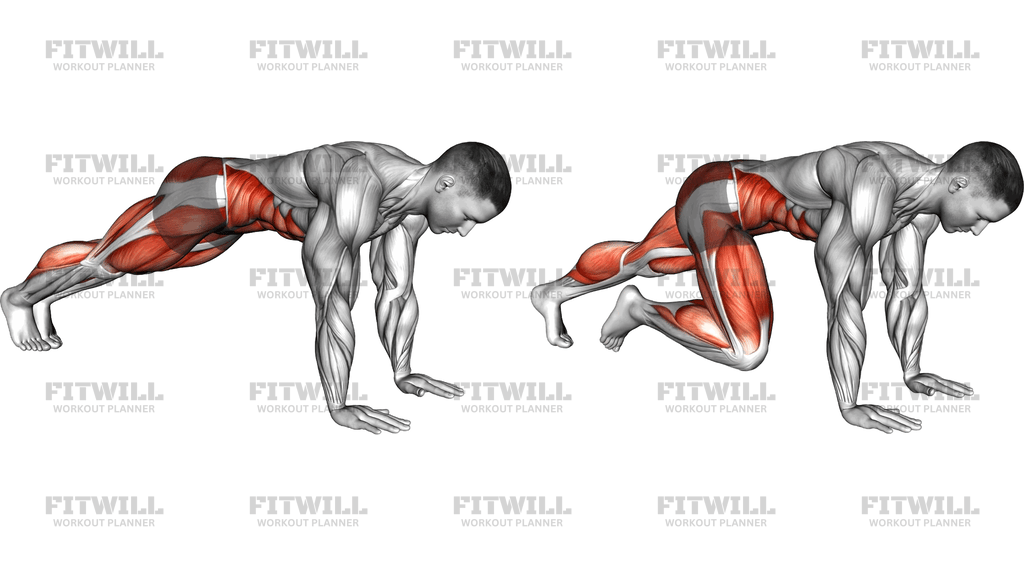
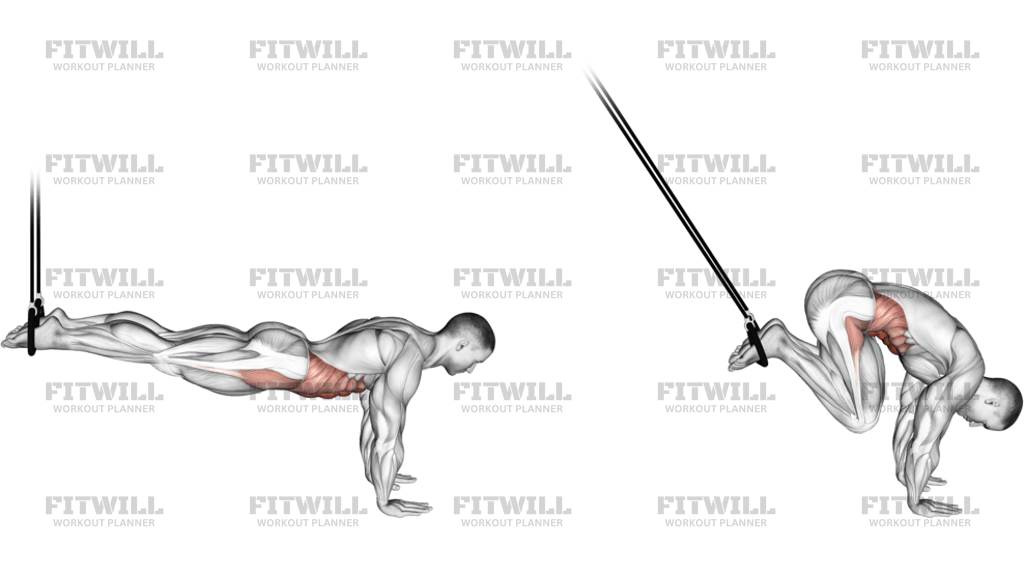
Suspended Reverse Crunch is a bodyweight core exercise performed with your feet supported in suspension straps while your hands stay on the floor. From a strong plank, you pull the knees toward the chest and curl the pelvis upward, then return to the start with control. The movement looks small, but it is demanding because the straps remove a lot of lower-body support and make the trunk stabilize every inch of the rep.
It mainly trains the rectus abdominis, with the obliques, transverse abdominis, hip flexors, and shoulders working to keep the body from wobbling. The exercise is useful when you want anterior-core strength, better pelvic control, and cleaner trunk flexion without loading the spine with external weight. Because the feet are suspended, even a small swing or hip drop changes the difficulty a lot.
Setup is the difference between a useful rep and a sloppy one. The hands should be under the shoulders, the straps should hold the feet evenly, and the body should begin in a long, straight plank. Before each rep, lock the ribs down, squeeze the glutes, and keep pressure through the palms so the shoulders stay steady while the lower body moves.
On each repetition, drive the knees forward and let the pelvis roll up instead of simply bending the knees and kicking the straps. The best reps finish with the abs fully shortened, the lower back rounded under control, and the neck relaxed. Lower the legs back to the start slowly, keeping the straps quiet and the torso from sagging.
Use this exercise as a controlled core accessory or part of a conditioning circuit when you want strict bodyweight tension. Keep the range pain-free, slow the return, and stop the set if the hips start swinging or the lower back starts arching. That usually means the straps are too low, the reps are too fast, or the set has gone past your current control.
Fitwill
Log Workouts, Track Progress & Build Strength.
Achieve more with Fitwill: explore over 9600 exercises with images and videos, access built-in and custom workouts, perfect for both gym and home sessions, and see real results.
Start your journey. Download today!




Instructions
- Adjust the straps so your feet sit securely and you can start in a straight-arm plank with the hips level.
- Place your hands under your shoulders and set your feet into the cradles with both straps even.
- Brace your midsection, squeeze your glutes, and make a straight line from head to heels.
- Keep your shoulders steady and bend your knees toward your chest.
- Curl your pelvis up as the knees travel in, keeping the movement smooth rather than jerky.
- Pause briefly when your abs are fully shortened and your knees are closest to your chest.
- Extend your legs back out under control until you are again in a rigid plank.
- Reset your breath, keep the straps quiet, and repeat for the planned reps.
Tips & Tricks
- Set the straps high enough that you can return to a plank without your shoulders collapsing.
- Exhale as the knees come in to help keep the ribs down.
- Keep pressure through the palms so the upper body does not drift forward.
- Think "curl the pelvis" rather than "just lift the knees."
- If the lower back arches on the way out, shorten the range and slow the eccentric.
- Keep both feet moving together so one strap does not lag behind the other.
- A small, controlled tuck is better than a big swing.
- Stop the set when the straps start swinging more than your torso.
Frequently Asked Questions
What muscles do Suspended Reverse Crunch work?
The main target is the abs, especially the rectus abdominis, with the obliques and deep core helping stabilize the torso.
Is this the same as a hanging reverse crunch?
No. In this version your hands stay on the floor while your feet are supported in straps, so the shoulders and trunk have to stabilize differently.
How should my body look at the start?
Start in a straight-arm plank with your hands under your shoulders, glutes squeezed, and feet evenly secured in the suspension straps.
What should move first on each rep?
Let the knees travel in while the pelvis curls upward. If the feet just swing and the hips do not round, the rep is losing its core focus.
Can beginners do this exercise?
Yes, if they can hold a solid plank and control the return. Shorter range and slower reps make it much more manageable.
What is the most common mistake?
Letting the hips sag or swing as the legs come back out. That usually means the set is too fast or the straps are set too low.
Should I feel this more in my hip flexors or abs?
You will feel both, but the abs should lead the movement. If the hip flexors dominate, slow down and emphasize the pelvic curl.
How can I make it harder?
Use slower eccentrics, longer pauses at the top, or a larger but still controlled tuck while keeping the shoulders and straps stable.